How does very short OCI's hurt an engine?

Status
Not open for further replies.
Originally Posted By: ericthepig
Originally Posted By: TomYoung
..having the car fall off the jackstand, starting the car by accident when the oil is drained...


I have the heavy plastic ramps from Wallies. I scare myself to death every time I drive up on them. Also, one of these days, as I get older, I can see myself starting the car with everything drained.

Here's an old favorite from web site (edited for brevity).

Woman changing oil - drive up to Jiffy Lube, sit and relax. Pay $30.

Man changing the oil -
(1) Wait until Saturday, drive to auto parts store and buy a case of oil, filter, kitty litter, hand cleaner and a scented tree, write a check for $50.00
(2) Stop by liquor store and buy a case of beer, write a check for $20.00, drive home.
(3) Open a beer and drink it.
(4) Spend 30 minutes looking for jack stands. Jack car up.
(6) In frustration, open another beer and drink it.
(7) Place drain pan under engine.
(8) Look for 9/16 box end wrench.
(9) Give up and use crescent wrench.
(10) Drop drain plug in pan of hot oil: splash hot oil on face and arms in process. Cuss.
(11) Crawl out from under car to wipe hot oil off of face and arms. Throw kitty litter on spilled oil.
(12) Have another beer while watching oil drain.
(13) Spend 30 minutes looking for oil filter wrench.
(15) Crawl out from under car with dripping oil filter splashing oil everywhere from holes. Cleverly hide old oil filter among trash in trash can to avoid environmental penalties.
(22) Install new oil filter making sure to apply a thin coat of oil to gasket surface.
(23) Dump first quart of fresh oil into engine.
(24) Remember drain plug from step 11.
(25) Hurry to find drain plug in drain pan.
(26) Remember that the used oil is buried in a hole in the back yard along with drain plug.
(28) Shovel out hole and sift oily mud for drain plug. Re-shovel oily patch of ground and avoid environmental penalties. Wash drain plug in lawnmower gas.
(29) Discover that first quart of fresh oil is now on the floor. Throw kitty litter on oil spill.
(30) Drink beer.
(31) Crawl under car getting kitty litter into eyes. Wipe eyes with oily rag used to clean drain plug. Slip with stupid crescent wrench tightening drain plug and bang knuckles on frame.
(32) Bang head on floorboards in reaction to step 31.
(33) Begin cussing fit.
(34) Throw stupid crescent wrench.
(36) Beer.
(37) Clean up hands and forehead and bandage as required to stop blood flow.
(38) Beer.
(40) Dump in five fresh quarts of oil.
(42) Lower car from jack stands.
(43) Accidentally crush remaining case of new motor oil.
(44) Move car back to apply more kitty litter to fresh oil spilled during steps 23 - 43.
(45) Beer.
(46) Test drive car.
(47) Get pulled over: arrested for driving under the influence.
(48) Car gets impounded.
(49) Call loving wife, make bail.
(50) 12 hours later, get car from impound yard.

Money Spent
Parts: $50.00
DUI: $2500.00
Impound fee: $75.00
Bail: $1500.00
Beer: $40.00
Total: $4165.00 -- But you know the job was done right!


this cracked me up!
 
I believe it's "possible" to do 'less good' when performing a shorter OCI(with a mechanically sound engine app that can do beyond short 3k intervals mind you) than a slightly longer OCI when comparing them side by side. The pro's/con's. But there is obvious room for speculation on my part, theory somewhat, but I don't have my facts in order.

Perhaps 5,000 instead of 3,000 is optimum, for instance/example only. The 3,000 doesn't hurt, but the 5,000 could in theory be more ideal overall if there is some truth to a longer interval allowing the once fresh oil to do it's most good.(Clarity: Miles in use is under the assumption a change isn't generally considered an 'extended' extended interval time wise, eg 6+ months yet only 3,000...as some may have more benefit changing by then of course).

An oil change in itself won't hurt(outside of money), in the context of good/bad for the engine; but compared to a longer interval there could be more benefit to be had is all from the overall sense of things.

Call me crazy, but after 3,000 on my first fill of AMSOIL Signature Series, the car performed much smoother than the fresh fill of Amsoil. Placebo? No. Unwisely attributed to the oil SIMPLY being ran longer instead of other factors(the 'variables' we all know about; product in of itself having certain affects on seals over time etc etc)? More than likely partially the oil and other factors combined, though we'll see after 3,000 into this interval.
grin2.gif
thumbsup2.gif


19.gif
 
Last edited:
It does matter.

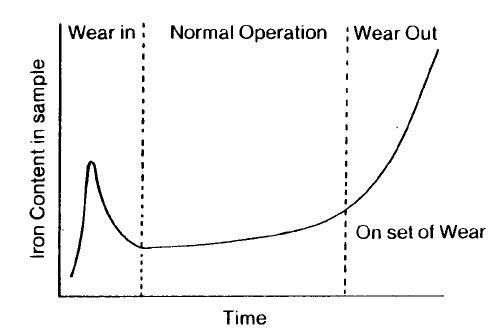
It takes some amount of heat & pressure cycles to activate the anti-wear additives in the oil. The amount of wear has been quantified via radionuclide testing (RNT) while an engine is running. Until activation has taken place the wear rates go up. After the additives become active, wear rates decrease until the additives become depleted, as in this graph from an SAE paper on additive activation:
Additive_activation_cycle.jpg


Prove it yourself: take an oil sample immediately after an oil change and every 500 miles afterwards. Dollars to doughnuts the used oil analysis will show wear rates (ppm/k mile) go up, then down & level off.

Changing your oil too frequently is a waste of money, resources, contributes to premature engine wear and is bad for the environment.
 
I think you may have nailed it, scurvy. If someone wants to take the time to do a search here, there are several threads that have discussed this idea that engine wear is higher during the first 1,000 miles +/- of an OCI, then drops down as shown in your ilustration.

So, this information then gets spun into the idea that too frequent oil changes actually causes more wear to your engine. This is counter intuitive to common thinking that new oil is best all the time.

I imaging that changing the oil every 500 to maybe 1,500 miles "might" make a difference over 10 or 20 years. But does the data show a significant difference between a 3K OCI and longer ones....5 to 10K? I'm going to guess no, but I am open to proof.
 
That chart posted by scurvy is not the wear pattern of one OCI. It's the wear pattern over the life of an engine. It means nothing in this discussion.

Ed
 
I've read it too, and think it's a bunch of baloney. Maybe the fresh oil is doing some additional cleaning and releasing some wear metals that might have accumulated, and weren't drained with the old oil. These metals are detected in a used oil analysis after a short run with the fresh oil and are blamed for additional wear?
 
I have heard it involves how the additives are dispersed in the oil . Changing too soon does not allow the full dispersion to take place - or something to that effect .
 
I believe that if an oil is designed to be good for, say 8000 miles, then at some point it will have its peak performance.

If the oil performs best when it has been driven 5000 miles, then it can be understood why more wear can happen if you change it too soon.

I don't know if it really is so, but I like the idea.

Besides, if you think about it, it is many decades since the 3000 mile OCI was the only truth, and the R&D departments of oil companies and others, have done a lot of work to prolong OCI.

Only trouble is that most oil companies want you to buy MORE from them, not LESS.

This can be the reason to why they are more reluctant to tell you how long you really can go with their oil.
 
Originally Posted By: ericthepig
Originally Posted By: TomYoung
..having the car fall off the jackstand, starting the car by accident when the oil is drained...


I have the heavy plastic ramps from Wallies. I scare myself to death every time I drive up on them. Also, one of these days, as I get older, I can see myself starting the car with everything drained.

Here's an old favorite from web site (edited for brevity).

Woman changing oil - drive up to Jiffy Lube, sit and relax. Pay $30.

Man changing the oil -
(1) Wait until Saturday, drive to auto parts store and buy a case of oil, filter, kitty litter, hand cleaner and a scented tree, write a check for $50.00
(2) Stop by liquor store and buy a case of beer, write a check for $20.00, drive home.
(3) Open a beer and drink it.
(4) Spend 30 minutes looking for jack stands. Jack car up.
(6) In frustration, open another beer and drink it.
(7) Place drain pan under engine.
(8) Look for 9/16 box end wrench.
(9) Give up and use crescent wrench.
(10) Drop drain plug in pan of hot oil: splash hot oil on face and arms in process. Cuss.
(11) Crawl out from under car to wipe hot oil off of face and arms. Throw kitty litter on spilled oil.
(12) Have another beer while watching oil drain.
(13) Spend 30 minutes looking for oil filter wrench.
(15) Crawl out from under car with dripping oil filter splashing oil everywhere from holes. Cleverly hide old oil filter among trash in trash can to avoid environmental penalties.
(22) Install new oil filter making sure to apply a thin coat of oil to gasket surface.
(23) Dump first quart of fresh oil into engine.
(24) Remember drain plug from step 11.
(25) Hurry to find drain plug in drain pan.
(26) Remember that the used oil is buried in a hole in the back yard along with drain plug.
(28) Shovel out hole and sift oily mud for drain plug. Re-shovel oily patch of ground and avoid environmental penalties. Wash drain plug in lawnmower gas.
(29) Discover that first quart of fresh oil is now on the floor. Throw kitty litter on oil spill.
(30) Drink beer.
(31) Crawl under car getting kitty litter into eyes. Wipe eyes with oily rag used to clean drain plug. Slip with stupid crescent wrench tightening drain plug and bang knuckles on frame.
(32) Bang head on floorboards in reaction to step 31.
(33) Begin cussing fit.
(34) Throw stupid crescent wrench.
(36) Beer.
(37) Clean up hands and forehead and bandage as required to stop blood flow.
(38) Beer.
(40) Dump in five fresh quarts of oil.
(42) Lower car from jack stands.
(43) Accidentally crush remaining case of new motor oil.
(44) Move car back to apply more kitty litter to fresh oil spilled during steps 23 - 43.
(45) Beer.
(46) Test drive car.
(47) Get pulled over: arrested for driving under the influence.
(48) Car gets impounded.
(49) Call loving wife, make bail.
(50) 12 hours later, get car from impound yard.

Money Spent
Parts: $50.00
DUI: $2500.00
Impound fee: $75.00
Bail: $1500.00
Beer: $40.00
Total: $4165.00 -- But you know the job was done right!


MAN U MADE MY DAY !! i read this at work, and im LOL so hard, cant wait to get home give a good comment, anyway here I am , good post !!
 
If this theory of "short OCI would hurt the engine" is true then one can conclude that even long interval husts the engine but with less frequency. That just makes no sense.

I am no oil expert but from past readings and involvemets I learned short OCI meaning real short not 3k miles.
Basides as long as you don't change type and brand even super oci should not be harmfull to the engine but rather less effective only during that OCI. Full potenteial is reached withing a few hundred for new type/brand oil and well below 100 miles for the same type/brand oil ONLY if you have gone too long OCI last time..

As long as you are not doing 500 miles and less REGULARLY it won't matter.

My unbacked opinion is do not change type/brand too frequently specially associated with super short oci not because it damages your engine but rather bacuase you may have NOT maximized on the oil yet.
I am extra carefull with my motors so every time I change brand I take it easy a bit for a few 100 miles and change my oil every 6 months regardless which is ususally about no more than 4000 miles..
I have never had a car that lasted over 100k miles that needed oil during OCI.
 
Originally Posted By: scurvy
It does matter.


Prove it yourself: take an oil sample immediately after an oil change and every 500 miles afterwards. Dollars to doughnuts the used oil analysis will show wear rates (ppm/k mile) go up, then down & level off.

Changing your oil too frequently is a waste of money, resources, contributes to premature engine wear and is bad for the environment.


+1

Here is a link to a long term study where the oil was run out to 18,000 miles with a used oil analysis every 1000 miles. Quote from the study:

While the wear metals all accumulated steadily over the course of the test, the highest concentrations of accumulation per mile occurred in the first 3,000 miles of the test! From the 3,000-mile mark all the way to 18,000 miles, only lead showed an increase in per-mile wear beyond 3,000 miles. Yet even with an increased wear rate, lead wore the least in terms of absolute wear. For iron and copper, the longer the oil remained in service, the lower the wear rate got.

And:

Engine wear actually decreases as oil ages. This has also been substantiated in testing conducted by Ford Motor Co. and ConocoPhillips, and reported in SAE Technical Paper 2003-01-3119. What this means is that compulsive oil changers are actually causing more engine wear than the people who let their engine's oil get some age on it.

http://neptune.spacebears.com/cars/stories/mobil1.html
 
Originally Posted By: demarpaint
I've read it too, and think it's a bunch of baloney. Maybe the fresh oil is doing some additional cleaning and releasing some wear metals that might have accumulated, and weren't drained with the old oil. These metals are detected in a used oil analysis after a short run with the fresh oil and are blamed for additional wear?
+1. Oil is a fluid. Like all fluids, it's going to deteriorate over time/miles.
 
Originally Posted By: edhackett
That chart posted by scurvy is not the wear pattern of one OCI. It's the wear pattern over the life of an engine.


Yes it is. It's the rate of wear metals generated during one OCI in a RNT-equipped test engine.

Believe it or don't, the facts are that most of the wear occurs early in an OCI. More frequent oil changes = more periods of inactive antiwear additives = more engine wear.

You're free to believe whatever you want or change your oil whenever you want - it's your car. The facts are what they are.
21.gif
 
Originally Posted By: ericthepig
Originally Posted By: TomYoung
..having the car fall off the jackstand, starting the car by accident when the oil is drained...


I have the heavy plastic ramps from Wallies. I scare myself to death every time I drive up on them. Also, one of these days, as I get older, I can see myself starting the car with everything drained.

Here's an old favorite from web site (edited for brevity).

Woman changing oil - drive up to Jiffy Lube, sit and relax. Pay $30.

Man changing the oil -
(1) Wait until Saturday, drive to auto parts store and buy a case of oil, filter, kitty litter, hand cleaner and a scented tree, write a check for $50.00
(2) Stop by liquor store and buy a case of beer, write a check for $20.00, drive home.
(3) Open a beer and drink it.
(4) Spend 30 minutes looking for jack stands. Jack car up.
(6) In frustration, open another beer and drink it.
(7) Place drain pan under engine.
(8) Look for 9/16 box end wrench.
(9) Give up and use crescent wrench.
(10) Drop drain plug in pan of hot oil: splash hot oil on face and arms in process. Cuss.
(11) Crawl out from under car to wipe hot oil off of face and arms. Throw kitty litter on spilled oil.
(12) Have another beer while watching oil drain.
(13) Spend 30 minutes looking for oil filter wrench.
(15) Crawl out from under car with dripping oil filter splashing oil everywhere from holes. Cleverly hide old oil filter among trash in trash can to avoid environmental penalties.
(22) Install new oil filter making sure to apply a thin coat of oil to gasket surface.
(23) Dump first quart of fresh oil into engine.
(24) Remember drain plug from step 11.
(25) Hurry to find drain plug in drain pan.
(26) Remember that the used oil is buried in a hole in the back yard along with drain plug.
(28) Shovel out hole and sift oily mud for drain plug. Re-shovel oily patch of ground and avoid environmental penalties. Wash drain plug in lawnmower gas.
(29) Discover that first quart of fresh oil is now on the floor. Throw kitty litter on oil spill.
(30) Drink beer.
(31) Crawl under car getting kitty litter into eyes. Wipe eyes with oily rag used to clean drain plug. Slip with stupid crescent wrench tightening drain plug and bang knuckles on frame.
(32) Bang head on floorboards in reaction to step 31.
(33) Begin cussing fit.
(34) Throw stupid crescent wrench.
(36) Beer.
(37) Clean up hands and forehead and bandage as required to stop blood flow.
(38) Beer.
(40) Dump in five fresh quarts of oil.
(42) Lower car from jack stands.
(43) Accidentally crush remaining case of new motor oil.
(44) Move car back to apply more kitty litter to fresh oil spilled during steps 23 - 43.
(45) Beer.
(46) Test drive car.
(47) Get pulled over: arrested for driving under the influence.
(48) Car gets impounded.
(49) Call loving wife, make bail.
(50) 12 hours later, get car from impound yard.

Money Spent
Parts: $50.00
DUI: $2500.00
Impound fee: $75.00
Bail: $1500.00
Beer: $40.00
Total: $4165.00 -- But you know the job was done right!


Straight out of the Chilton Manual.
crackmeup2.gif
 
Originally Posted By: mva
scurvy said:
It does matter.


Prove it yourself: take an oil sample immediately after an oil change and every 500 miles afterwards. Dollars to doughnuts the used oil analysis will show wear rates (ppm/k mile) go up, then down & level off.

Changing your oil too frequently is a waste of money, resources, contributes to premature engine wear and is bad for the environment.


+1

Here is a link to a long term study where the oil was run out to 18,000 miles with a used oil analysis every 1000 miles. Quote from the study:

While the wear metals all accumulated steadily over the course of the test, the highest concentrations of accumulation per mile occurred in the first 3,000 miles of the test! From the 3,000-mile mark all the way to 18,000 miles, only lead showed an increase in per-mile wear beyond 3,000 miles. Yet even with an increased wear rate, lead wore the least in terms of absolute wear. For iron and copper, the longer the oil remained in service, the lower the wear rate got.

And:

Engine wear actually decreases as oil ages. This has also been substantiated in testing conducted by Ford Motor Co. and ConocoPhillips, and reported in SAE Technical Paper 2003-01-3119. What this means is that compulsive oil changers are actually causing more engine wear than the people who let their engine's oil get some age on it.

http://neptune.spacebears.com/cars/stories/mobil1.html /quote

+2.....How many times have we read on this board "I change my oil every 3000 miles, blah, blah, blah". These folks think that their doing their engines a favor (i.e.less wear)...and are proud it as well.

The above quotes from a substantial study....shows that short OCI's are actually more harmful....and additionally, a waste of money, time and resources.
____________________________________________
03' Ford Focus (2.3L Duratec PZEV), 98,500
Pennzoil Platinum 5w30 / Purolator PureOne / OCI: 8,000 +/-
 
By 12k miles they added 5 qts of fresh oil to the crankcase since 3k mile mark.
The visc started going up from 7k miles.
They changed the filter at 12k miles.
They drove the car 12k miles in 9 months.

Considering all that and wear pettern of all metals this oil should have been changed right around 7.5k miles.
 
Originally Posted By: scurvy

You're free to believe whatever you want or change your oil whenever you want - it's your car. The facts are what they are.
21.gif


I've found that when it comes to a lot of things, "belief" matters more than facts...
 
Originally Posted By: FZ1
Originally Posted By: demarpaint
I've read it too, and think it's a bunch of baloney. Maybe the fresh oil is doing some additional cleaning and releasing some wear metals that might have accumulated, and weren't drained with the old oil. These metals are detected in a used oil analysis after a short run with the fresh oil and are blamed for additional wear?
+1. Oil is a fluid. Like all fluids, it's going to deteriorate over time/miles.


Oil doesn't "wear out". It can become contaminated, its additives can become depleted and its viscosity can change--but it doesn't lose its lubricity. As long as those 3 things are in check, the oil can last forever. It's not milk. It's not gonna spoil.

I seriously doubt the increased wear from new oil is going to reduce the service life of an engine, and I think most people either go too long between oil changes, or don't check the oil level often enough. I also doubt any of those people are reading this forum...

That said, from a theoretical standpoint I don't doubt for a single second that changing your oil more often than necessary does increase wear. Let's not stick our fingers in our ears and ignore reality just because it doesn't suit our beliefs.
 
Status
Not open for further replies.
Back
Top Bottom