0W-16 Strength & Durability

Status
Not open for further replies.
That certainly addresses one of my initial questions. Let's flesh that out a bit more. Generally, in what way are journal bearings designed differently for 0W-16 oil? What other design differences might be incorporated into the engine to allow for the use of thinner oil?

You use the term xW-20 and xW-16. Is there a 5W-16 or any other xW-16 besides 0W?

Might a roller-bearing crank offer some advantage when using thinner oils?
Even if capable - even if you had space - a roller bearing is a slip on bearing - not a split bearing like a crank needs.
 
The question really is, does Japan have CAFE? I’m sure gas is $$$$, but that’s not the question. It is do they have CAFE type requirements. Because otherwise why would they care either. Old engines, new engines, or whatever else.

I suspect it’s a bit more complex than that it doesn’t matter. Especially when we see now thst high mileage engines operating on lower viscosity oils exist. Other factors such as surface finish in a journal, etc. come into play in terms of how much viscosity you need to establish a specific wedge In a bearing. If it’s accomplished through quality manufacturing, and it allows other benefits, then great.


They don’t have CAFE in the same sense that we do but they push for higher efficiency vehicles through the use of taxes plus the high cost of fuel. The engine size is critical. If a engine goes over a certain displacement then a tax is added on. This is why Kei cars are popular there.
 
They don’t have CAFE in the same sense that we do but they push for higher efficiency vehicles through the use of taxes plus the high cost of fuel. The engine size is critical. If a engine goes over a certain displacement then a tax is added on. This is why Kei cars are popular there.

I think it's much the same over there with motorcycles. 1 liter sport bikes there are extremely rare. As is most anything 600 CC or above. It is also very difficult to obtain a motorcycle license for those big displacement motorcycles. You have to be a very skilled rider. Not like here, where if you can manage not to fall off the thing, they'll license you.
 
What technical issues did these engines have? What cars had problems? What's a normal highway speed in the area, likewise a typical summer temperature? Thanks!
What are you hinting at with these questions? What framework are you hoping to set up? Are you open to answers that will deconstruct your pre-made opinions? Thank you
 
With 0W-16 in the crankcase?


You said this:

“This brings up yet another good point about questioning engine longevity with this stuff. Simply put, the Japanese don't care about long engine life.”


You just cannot believe that todays lower viscosity oils are so much better than yesterdays straight grade oils. Todays engines coast along at less that 2000rpm at freeway speeds. The combination of improved friction reduction and better low viscosity oil makes the engines of today far better than anything in the past when it comes to durability.
 
You said this:

“This brings up yet another good point about questioning engine longevity with this stuff. Simply put, the Japanese don't care about long engine life.”


You just cannot believe that todays lower viscosity oils are so much better than yesterdays straight grade oils. Todays engines coast along at less that 2000rpm at freeway speeds. The combination of improved friction reduction and better low viscosity oil makes the engines of today far better than anything in the past when it comes to durability.
You didn't answer my question. You're bragging about how you've put all these hundreds of thousands of miles on Japanese engines. So what? Many have. Unless you've done it with 0W-16 in the crankcase you've proven nothing. And you haven't. If you had done so, you would have said that. That is what this conversation is about.

And don't quote snippets. Read my entire post #57 that you quoted from, as to why long engine life in Japan is not a concern.

And no, I don't believe low viscosity oils are, "so much better". Especially under high temperature, severe operating conditions. The owners manuals tell you as much, and you have several posts here, one quoting from one of the best engine builders in the country, telling you why. And no one is even talking about straight grade oils.

 
What technical issues did these engines have? What cars had problems? What's a normal highway speed in the area, likewise a typical summer temperature? Thanks!
about 80mph. some eu ford (and similar) family van tdci, xw30 ,i remember complains about check engine light. and sound rattling can of nails.
with kids on board, solution was to cool down, and continue to destination carefully. refill the oil level.
i know eu ford ain´t same as us ford, but still..

i found info on oils used in some psa engines, africa climate they use *w40, in nordic countries *w20. and europe is between... these all have each specific psa norms.:oops: yeah, same engine.

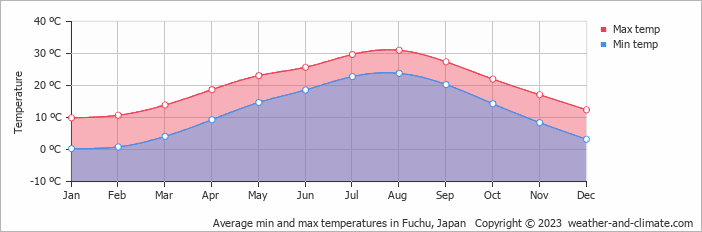
regarding the japan thin oils- this looks mild weather to me. i expected "arabian roast" temperatures.
average-temperature-japan-fuchu-tokyo-prefecture-jp.png

https://carfromjapan.com/article/industry-knowledge/owning-a-car-in-japan/
 
Last edited:
You didn't answer my question. You're bragging about how you've put all these hundreds of thousands of miles on Japanese engines. So what? Many have. Unless you've done it with 0W-16 in the crankcase you've proven nothing. And you haven't. If you had done so, you would have said that. That is what this conversation is about.

And don't quote snippets. Read my entire post #57 that you quoted from, as to why long engine life in Japan is not a concern.

And no, I don't believe low viscosity oils are, "so much better". Especially under high temperature, severe operating conditions. The owners manuals tell you as much, and you have several posts here, one quoting from one of the best engine builders in the country, telling you why. And no one is even talking about straight grade oils.


And all this based on…..?
 
What are you hinting at with these questions? What framework are you hoping to set up? Are you open to answers that will deconstruct your pre-made opinions? Thank you
I'm "hinting" at nothing, just asking questions in response to a few statements made by another poster. I have no "pre-made" opinions. Just trying to understand how 0W-16 oil is designed and constructed so that it can offer good protection, the same as I might for any other oil. It seems that YOU have a "pre-made" opinion about what I may be thinking and what my motives are. I have no motives ... just curiosity.

Now go to your room ...
 
I'm "hinting" at nothing, just asking questions in response to a few statements made by another poster. I have no "pre-made" opinions. Just trying to understand how 0W-16 oil is designed and constructed so that it can offer good protection, the same as I might for any other oil. It seems that YOU have a "pre-made" opinion about what I may be thinking and what my motives are. I have no motives ... just curiosity.

Now go to your room ...
The tide does not seem to be going so well about you wanting to prove thick oils are better. Just sayin' 🤷
 
The tide does not seem to be going so well about you wanting to prove thick oils are better. Just sayin' 🤷
“Tide”? What are you talking about? Is this some kind of popularity contest rather than a discussion of facts?

So you still at your same job as before?
 
“Tide”? What are you talking about? Is this some kind of popularity contest rather than a discussion of facts?

So you still at your same job as before?
If OP is advocating for thicker oil. Plenty of info to the contrary. He states he is asking about 0W-16 then counters.

What would you say about 0W-16?
 
The tide does not seem to be going so well about you wanting to prove thick oils are better. Just sayin' 🤷
*** are you talking about? I'm just trying to get some facts and information. You certainly have a rich fantasy life.
 
Status
Not open for further replies.
Back
Top Bottom