Snap On TechWrench

Status
Not open for further replies.
Oh man, JOD, how many torque wrench horrors stories I have heard....just recently at my workplace a $1000 dollar mistake to a chipper using a faulty 600 ft. lb. wrench....."I kept turning, but it never clicked".

On important and/or delicate fasteners I always use my wrenches on an appropriate sized bolt/nut clamped in the vise just to make sure it's working right. Then, you have the controversial advice to lower the torque value when using lube/antiseize.

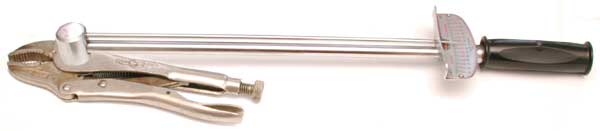
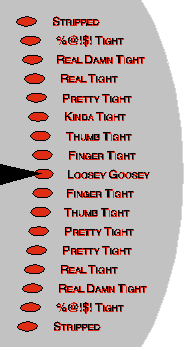
Here's a wrench for The Critic:
tork-grip.jpg
tork-calibration.gif
 
The 20% of the scale makes a lot of sense but it's not what the USAF teaches, which is where I got my info from.

Critic, I don't care what you buy, I just hope that by playing devil's advocate I make you think twice. After come critical thinking if it is still what you need then that's great. Sometimes it seems like folks associate "best" as "most expensive" and the two really aren't correlated.
 
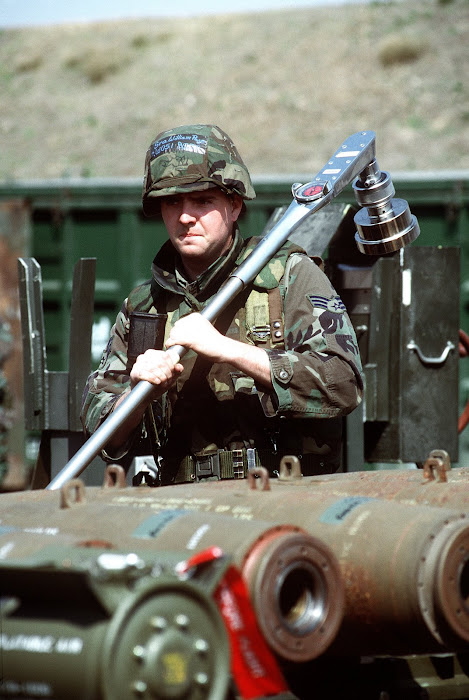
I tend NOT to argue with military personnel working with big torque wrenches and/or other "tools"
DF-ST-98-03274.jpg
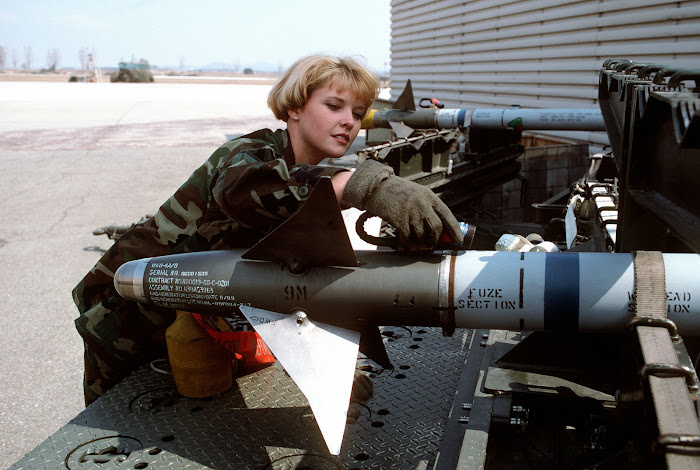
SarahEsparza.jpg

Oh man, Too much coffee for me tonight.....see everyone tommorrow.
 
You're nuts, Wan. You spend more on tools than half the guys in the shop I work with.

Clicker vs electronic. Used em both - I don't like the electronic. Why? Because when you hit the torque spec it vibrates. Then it shows you how much torque you actually applied. It just doesn't feel accurate to me. I've used em' to torque bolts to around 80 ft/lbs, being very careful, then look down to see it was actually 94 ft/lbs. Not accurate enough.

I like the feel of the click to know that I hit the mark exactly.
 
Also keep in mind Wan that 90 percent of the bolts on a car aren't torque critical. I only use mine for things like certain suspension bolts, drain plugs, lug nuts, and maybe a few more.
 
JOD,

I agree completely with not blindly trusting a torque wrench, or any equipment really for that matter. My point was that going by wrist feel to determine if a TW is good, i.e. calibrated, is downright silly.

Yep, transmission pan bolts (with a rubber gasket) come to mind as consumables if trying to use a TW with factory specs especially if cork or RTV was original.
 
Originally Posted By: benjamming
Critic,

Don't take this the wrong way, but it is my opinion that TooManyWheels & doitmyself are spot on. Going by wrist feel is downright silly to put it bluntly. However, if you feel your PI is garbage, the USPS/UPS/Fed-ex man will gladly pick up your garbage & deliver it to me. :)

We use PI torque wrenches at work for nuclear applications. They calibrate/certify fine. I assume that your TW was bought new & came with a certificate of calibration? If not, you may want to look up http://www.teamtorque.com/.

You're right, and I probably would've trusted the torque wrench 100% if it wasn't using it on a spark plug. But something just did not feel right to me, and I wasn't going to crack my cylinder head to find out.

The torque wrench was calibrated and I do have the original calibration certificate. I was probably using the wrench at the 20 ft-lb mark, which is the high-end of the recommended torque range for my spark plugs, which explains why something didn't feel right to me.

Originally Posted By: tom slick
The 20% of the scale makes a lot of sense but it's not what the USAF teaches, which is where I got my info from.

Critic, I don't care what you buy, I just hope that by playing devil's advocate I make you think twice. After come critical thinking if it is still what you need then that's great. Sometimes it seems like folks associate "best" as "most expensive" and the two really aren't correlated.


So who's right then, Tom? You or the the torque wrench makers? Now I'm puzzled.

I understand your concern and I appreciate it, along with the constructive criticism of others. At the time of the original post, I was probably a bit too excited about the Techwrench. Now that I've sat back and thought about it a bit, yes, I do need a quality 1/2" drive torque wrench to replace my HF clicker. However, a Techwrench may not be the answer since it is overkill for my application. After researching the Techwrench and learning that the overhaul cost is quite reasonable ($80), I'll still consider it if I can purchase one on eBay for $150 near-new. But considering their popularity, that probably isn't going to happen.

I did find a Snap-On QD3R250 torque wrench for $125 shipped from someone. The wrench has only been used a dozen of times and is in prestine condition. I may just jump on that deal once I figure out this 20% to full-scale issue since the QD3R250 has a 50-250 ft lb range and I plan to use it for torquing 80 ft-lb lug nuts.

 
I'm sticking to my beam wrenches. I got an 0-150 and 0-50 ftlb. I like to be able to see the torque going up.

You should be able to sense something is wrong by wrist feel. Use it as a manure detector.
 
You're right, and I probably would've trusted the torque wrench 100% if it wasn't using it on a spark plug. But something just did not feel right to me, and I wasn't going to crack my cylinder head to find out.

In the end, it is all about knowing what works or does not, and what to trust. Everything you have done here has had to do with finding out what works for YOU. Other peoples experiences might be completely different, but since you were the guy who would suffer the consequences, you were right to trust YOUR instincts. If the experience of using a clicker doesn't work for you, then you are correct to look at other options.

One obvious thing that I haven't seen mentioned - When using a clicker, make sure you don't have it in a bind. I.E., make sure the beam and the socket are at 90 degrees. Having it in a bind will raise the click point substantially.

But keep looking for what works for you, using your instincts as a guide. That is the process that builds experience and wisdom.
 
Critic and doitmyself, I think the wrench manuf. is probably correct. The basic information in training and training manuals are often based on old information that has been re-written over and over without confirmation.

One thing I do know for sure, when selecting a wrench you want to shoot for mid scale, it is most accurate and the best for the longevity of the wrench. i.e. if desired torque is 50 ftlb use a 100 ftlb not a 60 ftlb.
 
I would rather be higher on the scale. At least you are making feel better about the 80 foot pounds for lug nuts and i forget what for spark plugs both with antisieze.
 
Originally Posted By: tom slick
One thing I do know for sure, when selecting a wrench you want to shoot for mid scale, it is most accurate and the best for the longevity of the wrench. i.e. if desired torque is 50 ftlb use a 100 ftlb not a 60 ftlb.


The accuracy stated on the calibration (traceable to NIST) papers is the maximum at anywhere in the stated range. 3% is perfectly acceptable for any automotive work for sure. I don't have our calibration charts with me now so I can't comment if the deviation is statistically significant around the midpoint.

Does socket/wrench size for the bolt head not come into play as well, at least if we are splitting hairs?

What is your basis for the comment about longevity? That is a new one for me.
 
benjamming,

It makes some sense that a wrench might be more accurate at it's mid scale, but you are right that it will also be within the stated 3-4% accuracy at both ends. That mid scale thing might just be an urban legend.....who knows? Critic, call CDI and let us know.

MY Techwrench calibration shows it is most accurate at full scale (+0.1%), less at mid scale (+0.2%) and worst at low scale(at 20% scale, +0.9%). Tolerance is +/-2% so this new wrench is spot on. Accuracy of calibrator is =/-0.25%.

Here's something the CDI tech. shared with me regarding wrench length. Both a 100lb. and 250 lb. wrench will torque accurate at 90 ft. lbs. But with the shorter 100 ft. lb. wrench, you will be pulling harder and can more likely pull out of line, etc. and throw off the outcome. This is more likely to happen when torquing many times a day, i.e. a tire shop.

Here is a link from Sturdevant that touches on the idea of different wear at different conditions. But, it doesn't quite answer your question.

http://www.srtorque.com/faqcalib.html

The bottom line is you need at least three wrenches that overlap a bit to cover most fasteners on autos/trucks. Pros need more.

At my workplace I have: 5-20 ft.lb Tech Wrench 1/4", 20 -100 Precision Instrument Split Beam, and 50-250 ft. lb. PI split beam. I'm a tad weak at the 20 lb. area for overlap..can't be perfect!
 
Last edited:
As part of earning a degree in chemistry years ago, I was taught how to select equipment for making various measurments. If you want to measure out 1 ml of something, you use a 1 ml pipet, not a 100 ml graduate calibrated in ml. You should be able to get 1 ml +-0.001 ml or even 0.0001. If you want to weight out a gram of material to do an acid number, you use the balance calibrated in milligrams, not the one with a line for each gram.

So with my 0-150 foot pound torque wrench it is calibrated in increments of 5. With care, I can read it to 0.5. the is 10% of 5 footpounds, 1% of 50,and 0.33% of 150. So if I want to tighten up a lug nut to 80, I may be off 0.5, or 0.625%. of course when the pointer is exactly on 80, their is another error of a certain magnitude. There is a good chance the lug nuts will allbe tightenoughto stay on without distorting the rotor.

Now, maybe I a doing spark plugs and the torque is 17 foot pounds. I am still off the 0.5 plus whatever the wrench is off. So with good reason, I use my 0-50 and wish it was a little lower range.
 
doitmyself,

That link to SR was good. I had forgotten about reading it a while back. I would think that the least wear occurs at the lowest setting (all else being equal of course). They don't explicity say though.

How do you like the 1/4" Tech Wrench? I need a 1/4" drive wrench.

labman,

If I am following the logic in your 1st paragraph correctly, we should have a torque wrench for each value, say 25 ft-lb & then another wrench for 50 ft-lb, etc. We have that at work in areas where there is a group of fasteners with the same torque. The main reason behind that though was to avoid user error when setting the TW, etc.

I was taught that when reading a scale, if one mark is 5 & the next mark is 10, it is not possible to read 5.5. It's not marked that fine. Now we both know that one can tell if it is closer to 5 than the middle but the resolution is not there to back it up. If you need more resolution that that, you are using the wrong equipment (as I think you stated in your 1st paragraph). This was from my Organic Lab, Heat & Mass Transfer lab, & Measurement Uncertainty class.
 
Snap-on states the longevity in their documentation. Look at the bottom of pg. 3 and top of pg. 4 for their statement about the techwrench.
Techwrench FAQ

They state 5000 cycles at the highest setting and 4x that amount mid scale. Not an issue for any hobbyist but in aircraft and industry that's not a long time.

The point of my previous post is if had an application that I needed to torque one bolt to 20 and another to 100, repeatedly, I'd use 2 different wrenches, not one with a 20-100 range although it would technically do the job. once again not really an issue for a hobbyist or even the average auto mechanic.
 
Good discussion here.....I LOVE torque wrench talk....but, we are entering the realm of OCD level, almost. Excellent info tom, especially regarding keeping the discussion in perspective for diy use.

benjamming, here is the logic I used in choosing my workplace wrenches. A pro mechanic at my workplace showed me his Snap On version of the PI split beam. I had to over come my bias of knowing only of micrometer style. Re the PI split beam...No CCW use, lower "precision" scale, 4% vs. 2 or 3% accuracy are moot points for me....remember my +/- 30% error statement above. I figured the PI would hold up better in shop conditions and give usable results, end of story.

The 1/4" Techwrench decision: My opinion is at this level, you are more apt to strip/break delicate fasteners and I personally don't trust clickers here. Bending beam are great, but hard to read at awkward positions. Ditto for dial type, which I considered (with an indicator light).

The Techwrench shows advancing torque like a dial (for delicate situations), but can be used in awkward viewing positions like a clicker. Bingo.

The vibrating sensor does take practice vs. the clicker. Over torquing is the natural tendency. I searched the net and communicated with aviation engineers/mechanics that said the Techwrench has performed well in daily use situations. One just has to treat it (plastic/electronics)as the tool it is.

Getting a huge educational discount eased my decision.

Warning, keep the vibrating wrench locked up if you have female mechanics in your shop
crackmeup2.gif
 
Originally Posted By: benjamming

The accuracy stated on the calibration (traceable to NIST) papers is the maximum at anywhere in the stated range. 3% is perfectly acceptable for any automotive work for sure.


I don't mean to beat a dead horse here, but talking about torque wrench accuracy is almost akin to talking about 'what's the best truck scale to measure a feather'.

Estimating bolt tension by measuring installation torque is so fraught with error that I honestly think there's not much point worrying about it. When an new assembly joint can have variations of 60-70%, does it really doesn't matter that much if your torque wrench is accurate within 3% or 10%? Sure you're compounding the error, but still...
 
Status
Not open for further replies.
Back
Top Bottom