
I have never seen this lug nut issue personally but have heard of it several times. Coincidentally it was always on a GM vehicle however I’m sure it’s happened to all make at one time or another.

No everything is stock. Yes, I have seen where antiseize can cause it to be over torque as well. I am hoping this, under torque with the torque stick, is just the cause.Are you running stock rims?
If you run after market rims and the center bore is bigger than your hub - that's a big possibility for lug nuts to get loose. If the center bore of after market rims don't match the OEM rim specs, regardless of how much you torque your lug nuts - they'll always get loose. The weight of the vehicle is on the center bore of the rim, not on the studs. Studs are just used to keep the wheel in place.
Also, once I tried to put grease on my studs and my mechanic told me to don't do that. I watched video where people proved when you use any kind of grease or anti-seize it helps to over torque that nut or bolt.

Yup. When I was trailering SeaDoo's I had constant problems with rusty lugs. I used grease, and eventually Corrosion X MaxWax with good results, they never came loose. I always torque with a Beam Torque Wrench. Old school style, where one can HOLD THE TORQUE for bolt stretch. Click type and torque sticks do not hold a torque and will always be insufficient for stretch applications.Sounds like the lugs were under torqued...
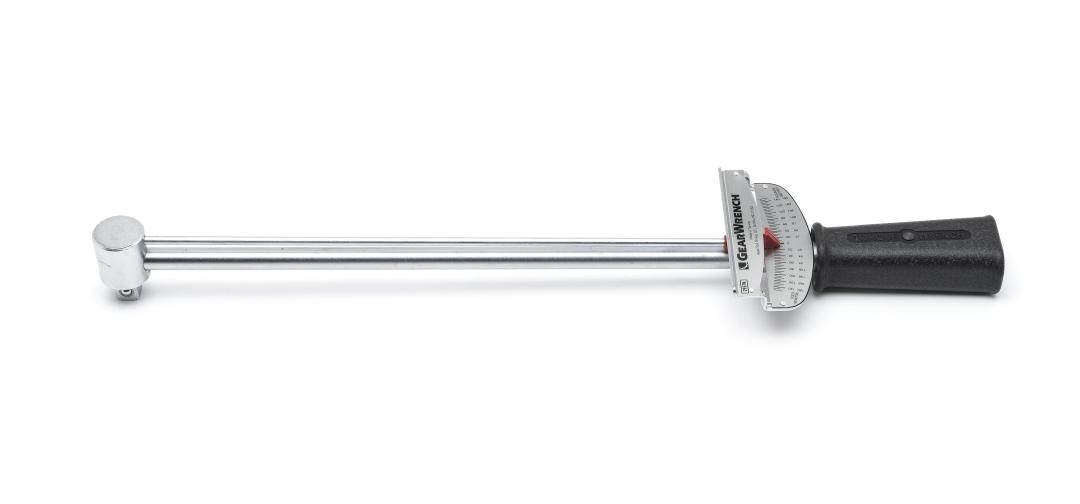


That is a neat item I have never seen. I have never used anti-seize on wheel lugs. Lucky to not live in the "rust belt" where roads are salted and exposure to ice , snow etc.... that I can see could cause some issues.I just tried the Digital Torque Adaptor I bought 7 years ago.
https://www.amazon.com/dp/B009GLISI0/ref=twister_B0D5YFSP8N?_encoding=UTF8&th=1
It can be used with a breaker-bar or ratchet.
Kinda nice.
Put it on a TW and compare the accuracy of both.
Two of my favorite tools I used every day on and off the job was a wire wheel and a sandblaster. Every nut and bolt I worked with , before going back in service either got blasted or wheeled until clean and new looking for two reasons. # 1) So I could get a real good look to see if replacement was called for #2 ) So that the next time they needed to be removed , they could be without a torch or giant breaker (back breaker too) bar like in so many cases.My Toyota dealer after rotating my tires always made a note that I anti seized the center hub and lugs.I never had one come loose or failed to be able to loose with normal breaking bar.I also as previously posted,agree that the wire brush is a very important tool to use especially for us living in the rust belt.I may be weird,but I recheck,shop or myself.peace of mind for a important part of operating a vehicle.

Antiseize is a lubricant and would cause the studs to stretch or break off in an extreme case.This can definitely cause problems.
This almost never happens because a stud is stretched. A yielded stud still has elasticity and will still hold torque. You have to get into massive amounts of yield and actually necking the stud for there to be a net loss of clamping.Maybe the studs are stretched and can no longer hold proper torque?
That's not quite accurate.Are you running stock rims?
If you run after market rims and the center bore is bigger than your hub - that's a big possibility for lug nuts to get loose. If the center bore of after market rims don't match the OEM rim specs, regardless of how much you torque your lug nuts - they'll always get loose. The weight of the vehicle is on the center bore of the rim, not on the studs. Studs are just used to keep the wheel in place.
Also, once I tried to put grease on my studs and my mechanic told me to don't do that. I watched video where people proved when you use any kind of grease or anti-seize it helps to over torque that nut or bolt.
I don't use this approach (home gamer, no blast cab in my 3rd garage stall). But I do find that chasing rusty threads with my Lang thread chaser set has been a habit I was long overdue to adopt. Especially my wrenching quite often involves old and rusty fasteners, chasing the threads and then wire brushing off has become my standard practice that I regret not adopting earlier.Two of my favorite tools I used every day on and off the job was a wire wheel and a sandblaster. Every nut and bolt I worked with , before going back in service either got blasted or wheeled until clean and new looking for two reasons. # 1) So I could get a real good look to see if replacement was called for #2 ) So that the next time they needed to be removed , they could be without a torch or giant breaker (back breaker too) bar like in so many cases.
I like those as well. It is a very fine/simple tool that I like a lot for most home garage/shops. Also readily available and not too expensive for its value where safety is of concern to all DIYers like many of us. I am of age and limited physical health to do much for myself these days so I am at the mercy of "shops" if my nephew is not available. He is a very fine young mechanic and I thank the Lord I have someone like him we can depend on to do things right the very first time. On the rare occasion I get forced to use some type of mechanical shop for any work, I watch them as closely as I can. I cringe when I see every tire facility use mechanics who grab the impact wrenches FIRST to reinstall lug nuts. Ugh....I'm agreeing with the tool Cujet uses.I know for my situation what I have done.If halfway thru my rotation or going on a very long trip or vacation,I can recheck.Since I'm the only driver of my vehicle,I've built a little confidence into my maintenance plan.I also am a big believer in the thread restorer kit,living in the rust belt
Steel has a finite modulus. EVERY threaded steel fastener is a "stretch" application. Just like every substrate that is bolted is also being compressed. It's a fallacy to distinguish between the two when they are both ever-present in every bolted joint.Yup. When I was trailering SeaDoo's I had constant problems with rusty lugs. I used grease, and eventually Corrosion X MaxWax with good results, they never came loose. I always torque with a Beam Torque Wrench. Old school style, where one can HOLD THE TORQUE for bolt stretch. Click type and torque sticks do not hold a torque and will always be insufficient for stretch applications.
Note: Head bolts/studs and rod bolts are stretch applications. As are most wheel studs. A few exceptions include the bolts used by Volkswagen from WWII, where the steel wheel was designed to compress instead of the bolt stretching.
Been putting anti seize, grease, motor oil, gear oil on wheel studs since the 1990s never had anything come off. But I also used a torque wrench not those stupid torque sticks or German torque. Those torque sticks things are useless and dangerous.Was looking at my 07 Impala today and noticed 2 pass rear and 1 on driver rear lug nuts came off. The threads looked fine, but they were gone. Had the car inspected in July for an annual inspection, and I know my mechanic pulled the tires as I watched him. He used torque sticks when reinstalling, but it was kinda weird. He does use antiseize on the threads, maybe the problem? I can't say I have had this happen all that often, maybe 6 years ago I had it happen where some came off an old Merc 190 I had, but before that, never.
Just odd, PSA...so remember to check them periodically I guess.
Yes, and nobody dies of lung cancer the first time they smoke.Been putting anti seize, grease, motor oil, gear oil on wheel studs since the 1990s never had anything come off. But I also used a torque wrench not those stupid torque sticks or German torque. Those torque sticks things are useless and dangerous.
If the wheel studs still look like they have some lube on them I don't add any. On my 12x1.5mm lug nuts I torque them to 70ft*lb drive 3 to 25 miles then torque them again to 80 imperial units.


