
You are using an out of date browser. It may not display this or other websites correctly.
You should upgrade or use an alternative browser.
You should upgrade or use an alternative browser.
Bolt extractor and max torque?
- Thread starter vavavroom
- Start date
- Status
- Not open for further replies.


Generally, if the bolt broke from corrosion while removing it which is the usual case in the salt belt there is little hope for an extractor and honestly not worth trying in my experience. Removing broken extractors (and taps) especially the spiral ones can make a hard PITA job much worse.
If the bolt broke while tightening it or it sheared for some reason there is a much better chance with an extractor, broke while tightening put a lot of stress on the threads but once it broke the threads relaxed and the broken piece is nowhere near as tight as it was when it snapped.
You may need a spiral or fluted type depending on if you can get a solid hammer blow on the tool, if it is possible the fluted type and probably the best option if not the spiral type can thread itself into the bolt.
It takes a lot of hands on experience to determine the best course of action and not get yourself in a real pickle, good extractors are very hard and take an even harder and more brittle drill bit to remove them. In some cases the part needs to be removed and an "Elox" drill used on them.
No video or amount of instruction can give you the "feeling" needed to use these tools safely only lots of hands on.
I prefer going with a left handed drill bit, the shorter the better in most situations.
If the bolt broke while tightening it or it sheared for some reason there is a much better chance with an extractor, broke while tightening put a lot of stress on the threads but once it broke the threads relaxed and the broken piece is nowhere near as tight as it was when it snapped.
You may need a spiral or fluted type depending on if you can get a solid hammer blow on the tool, if it is possible the fluted type and probably the best option if not the spiral type can thread itself into the bolt.
It takes a lot of hands on experience to determine the best course of action and not get yourself in a real pickle, good extractors are very hard and take an even harder and more brittle drill bit to remove them. In some cases the part needs to be removed and an "Elox" drill used on them.
No video or amount of instruction can give you the "feeling" needed to use these tools safely only lots of hands on.
I prefer going with a left handed drill bit, the shorter the better in most situations.
Well, I got it out. Took about 30 minutes all in all. Didn't go by the book as far as drill size and extractor size were concerned.
1. Broken steel bolt that had sheared off in aluminum transfer case had been marinating in Liquid Wrench for a week
2. Froze the area
3. Heated the area
4. Bolt was broken off a good 1/4" inside the hole. I machined a 1/2" long guide out of steel with an outside diameter of 11mm and inside diameter of 6mm. I inserted the guide in the hole to ensure I'd center the drill. That worked like a charm
5. I use a 6mm left-0handed cobalt drill bit in my cordless and got the drill started nicely in the center of the broken bolt. I cooled the bit throughout drilling.
6. Once I had a decent divot I removed the guide so I could better see if I was drilling in line with the centerline of the bolt.
7. I drilled to a total depth of 1/2 inch. That wasn't deep enough for the #4 extractor to bite. I didn't want to drill deeper because I didn't want to accidentally drill into the transfer case.
8. I tapped a #5 extractor lightly in. I used vise grip to turn the extractor. The broken bolt has a tightening torque spec of 25 foot pounds. It took me at least twice as much to break it loose. Once it broke free it came out easily. I expected to see thread lock on the bolt but there wasn't any. I could not tell how much the extractor got twisted because the vise grips were bending more. I took my time and didn't rush it. With every go I increased torque just a bit. I'm pretty sure that if the drilled hole had been deep enough and if I had used a #4 extractor, I would certainly have snapped it off.
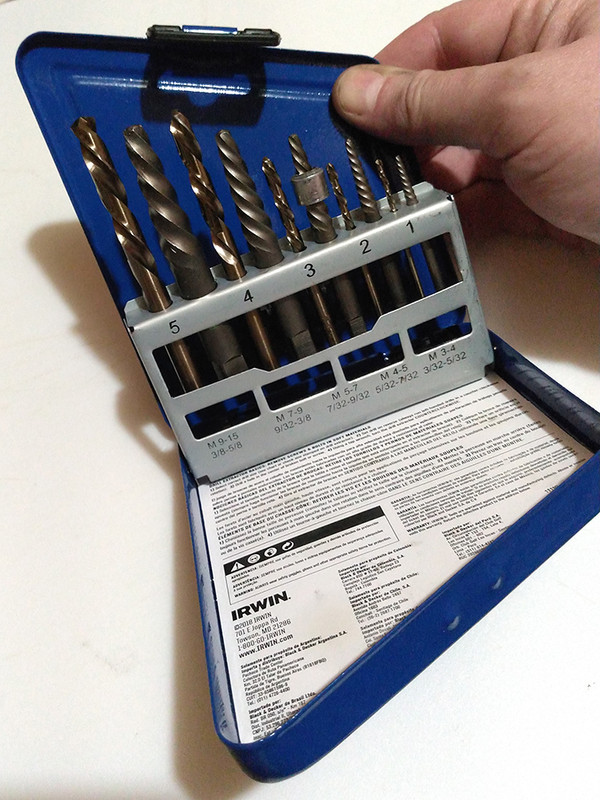
The extractor set I used was by Hanson-Irwin. It comes with left-handed cobalt drill bits. I got it Napa for around $40.
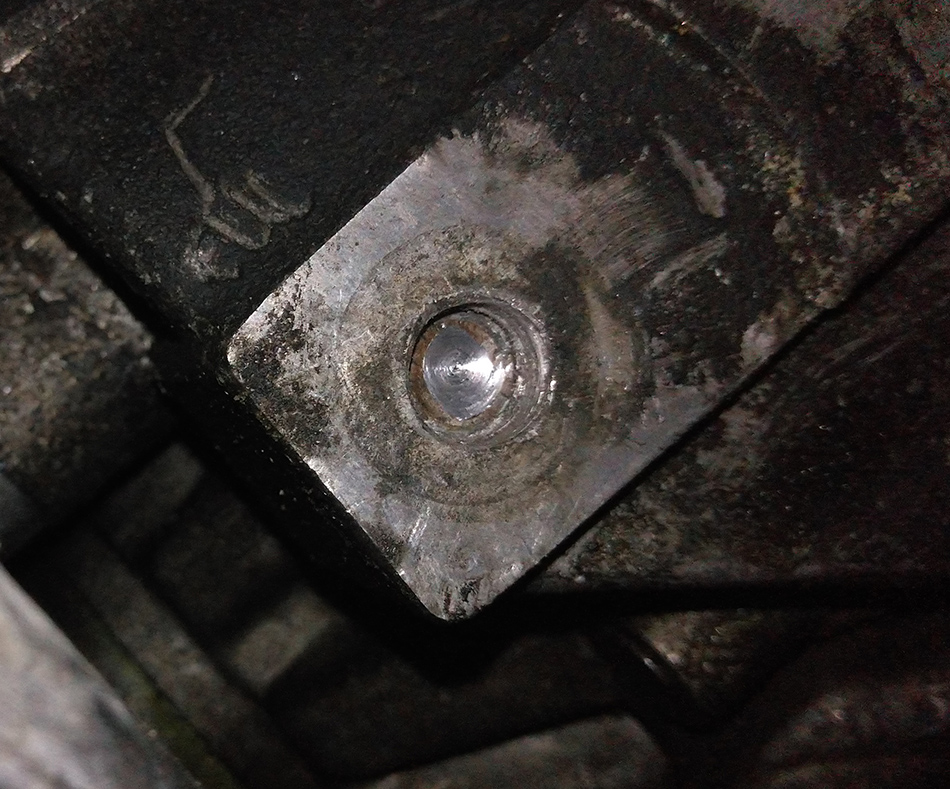
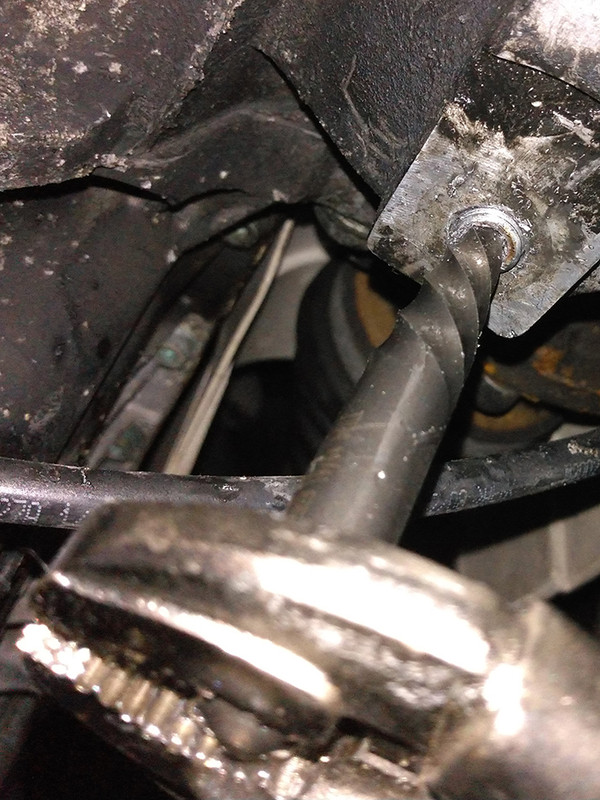
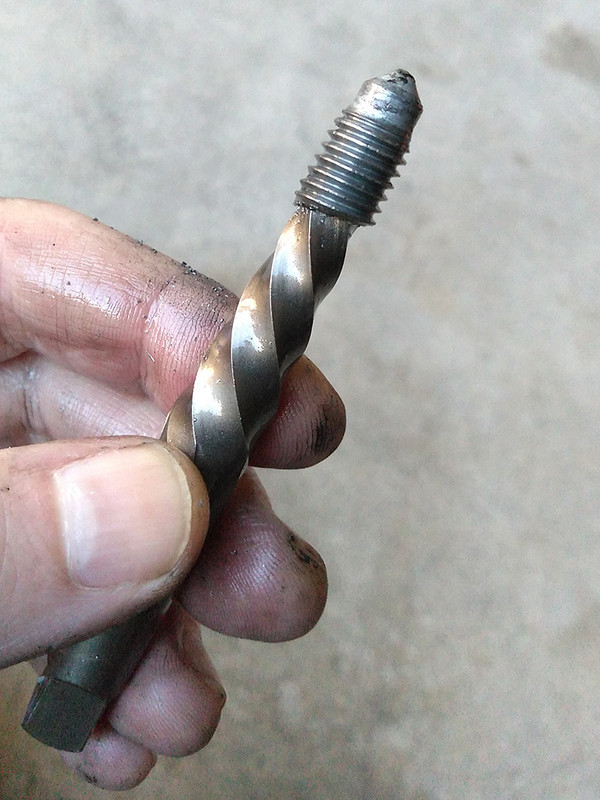
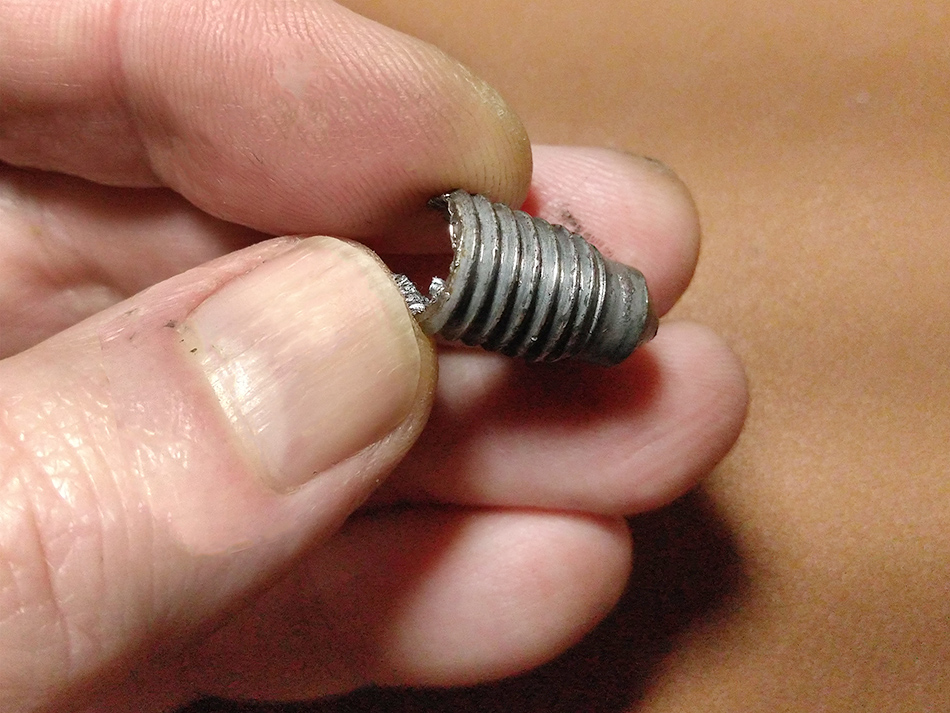
1. Broken steel bolt that had sheared off in aluminum transfer case had been marinating in Liquid Wrench for a week
2. Froze the area
3. Heated the area
4. Bolt was broken off a good 1/4" inside the hole. I machined a 1/2" long guide out of steel with an outside diameter of 11mm and inside diameter of 6mm. I inserted the guide in the hole to ensure I'd center the drill. That worked like a charm
5. I use a 6mm left-0handed cobalt drill bit in my cordless and got the drill started nicely in the center of the broken bolt. I cooled the bit throughout drilling.
6. Once I had a decent divot I removed the guide so I could better see if I was drilling in line with the centerline of the bolt.
7. I drilled to a total depth of 1/2 inch. That wasn't deep enough for the #4 extractor to bite. I didn't want to drill deeper because I didn't want to accidentally drill into the transfer case.
8. I tapped a #5 extractor lightly in. I used vise grip to turn the extractor. The broken bolt has a tightening torque spec of 25 foot pounds. It took me at least twice as much to break it loose. Once it broke free it came out easily. I expected to see thread lock on the bolt but there wasn't any. I could not tell how much the extractor got twisted because the vise grips were bending more. I took my time and didn't rush it. With every go I increased torque just a bit. I'm pretty sure that if the drilled hole had been deep enough and if I had used a #4 extractor, I would certainly have snapped it off.
The extractor set I used was by Hanson-Irwin. It comes with left-handed cobalt drill bits. I got it Napa for around $40.
Last edited:
That a brake bleeder?
Nice job! If the bolt ran smoothly at the top of the hole, you probably don't need the chase the threads. ( the bolt sort of did).
Last edited:
I wish I would have had a T-handle. I was close to applying so much force that I would have given up on the vise grips and gone and got a T-handle. I'll definitely get one now, just in case I get another "opportunity."The idea is to make certain it’s centered and square. Any sort of off center force will snap it. An open end wrench is a bad idea vs a t handle.
Breaking strengths will be dependent on that as well as the quality of the tool.
No, it was a 3" locating bolt with a bullet tip.The broken tip does look like a brake bleeder.That a brake bleeder?
Way less drama and cheaper is just drilling out the sheared bolt. Use sharp bits, lotsa oil and let the drill do the work 
That's another problem, warranting another thread, I think. The bolt did not break off flush with the transfer case but it sheared off a little over q 1/4" inside the hole. On its way out the bolt took with it an equal amount of threads. I think I will have to drill out the threads and cut new threads for a large bolt.Nice job! If the bolt ran smoothly at the top of the hole, you probably don't need the chase the threads. ( the bolt sort of did).
Irwin-Hanson kitt
You can see the drill guide I made on the #3 extractor.
Last edited:
Well yes, but I don't drill for a living and didn't have time for an apprenticeship. I had no lift and only 15" ground clearance. Lying under the car with the car tilted, it would have been difficult, at least for me, to get the angle right for drilling out the full length of the bolt. I was also hoping I could avoid having to cut new threads and using an oversized bolt. Alas, I'll have to do exactly that and it will be problematic.Way less drama and cheaper is just drilling out the sheared bolt. Use sharp bits, lotsa oil and let the drill do the work
Last edited:
Do you have room to time-sert it?

AutoMechanic
Site Donor 2026
Steel bolt in aluminum sounds like a good idea for some anti seize. Otherwise you might be drilling again.
This bolt requires thread lock because it's constantly exposed to vibration and varying load. The bolt sheared off because another bolt came loose and a now loose support mount applied enough torque via leverage to shear off the other bolt. No problem with seizing. No inclement climate and no corrosion on the bolt or galling on the threads. I do suspect the bolt had been over-tightened and I did not find any traces of thread lock. The other bolt that came loose also had no thread lock on it. I suspect a sloppy install many years ago.Steel bolt in aluminum sounds like a good idea for some anti seize. Otherwise you might be drilling again.
That should work. I've never done this but it may be the preferred option. I can't drill and tap for M12 because the bolt must fit through a metal bushing with an 11.5mm diameter hole and I really can't drill out the bushing because there's not enough meat on it.Do you have room to time-sert it?
Last edited:
Another option is 2 open end wrenches to make a t if you’re in a pinch and if there’s enough room.I wish I would have had a T-handle. I was close to applying so much force that I would have given up on the vise grips and gone and got a T-handle. I'll definitely get one now, just in case I get another "opportunity."
Access was very limited. I could only get one arm and hand in position because I could not position myself directly under the workspace. I'll have to raise the vehicle higher so I can cut the threads for the insert.Another option is 2 open end wrenches to make a t if you’re in a pinch and if there’s enough room.
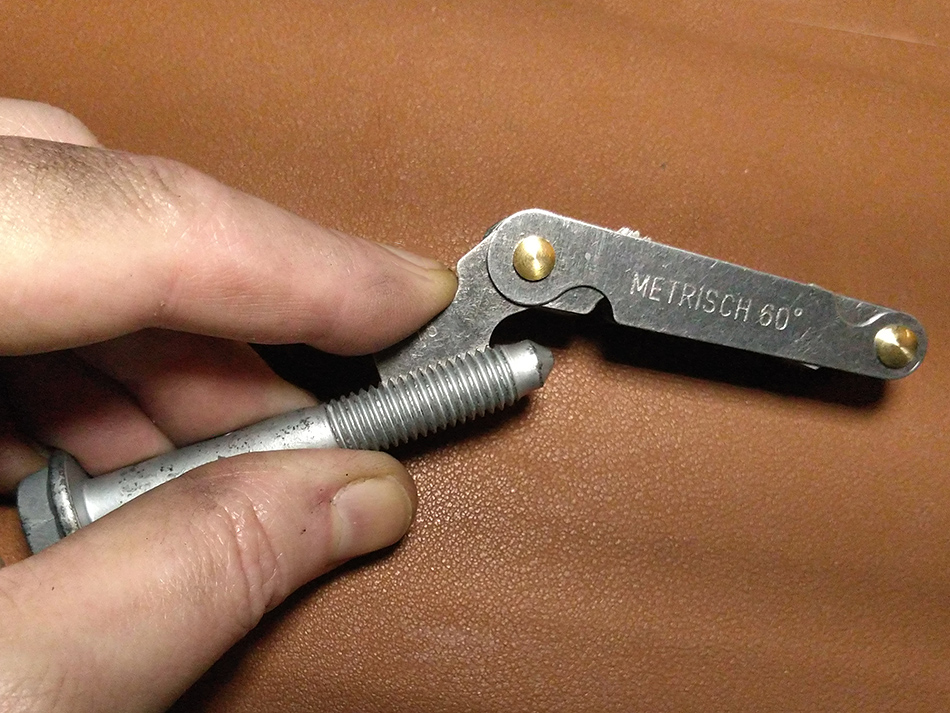
As mentioned earlier, when the bolt broke it took more than a 1/4" worth of threads with it. The bolt size is M10x70x0.5. My plan is to drill the hole out to 14mm diameter and to the length of the E-Z Lok insert and tap for an M10 (OD M14x2.0) E-Z Lok insert. McMaster-Carr has M10 E-Z Lok inserts that are 17mm long in 316, 18-8, and in black phosphate coated steel. I think the 316 would be best, or will it be too weak? Other opinions? I'd use red thread lock on the insert. What did I miss?
AutoMechanic
Site Donor 2026
Red thread lock is more of a permanent solution till you heat it up. Perhaps Orange that is the same strength as red but removable with hand tools too.
If this is a bolt that is seldom removed then a standard Helicoil is the best.
The bolt is the center bolt for a pendulum mount. It is exposed to a fair amount of pulling and pushing. It's a diesel engine and may be rocking more than a gasser. Wouldn't a Helicoil be more likely to get ripped out than a threaded insert? If using a Helicoil is safe I prefer using that over a threaded insert. There is usually no need to remove the mount until it goes bad after several years.If this is a bolt that is seldom removed then a standard Helicoil is the best.
Last edited:
- Status
- Not open for further replies.
Similar threads

- Replies
- 33
- Views
- 72K