Toyota/Lexus Owners

Status
Not open for further replies.
Originally Posted By: Garak
Originally Posted By: Gokhan
Originally Posted By: Shannow
I've never come across a study on the colorimetry of used oil filters, hope that you can link me to some.

I guess you insist on colorimetry before you vacuum your carpet as well.

The real point is that colour tells us so little. As mentioned, OCI, oil formulation, original filter colour, lighting, air filtration efficiency, and so forth can all affect what you see on the same engine, much less trying to compare two different vehicles.

I wasn't even talking about color and then Shannow brought up colorimetry. That was the reason for the sarcasm. No, I was referring to the amount of dirt collected by the two filters. Of course, when there is more dirt, you not only see more visible dirt on the media but the media also appears darker. Somehow he jumped onto colorimetry and oil oxidation from there. From what I've seen, cartridge and cartridge-core-canister Thailand Denso oil filters, not Thailand Denso oil filters in general, consistently don't collect as much dirt as other oil filters. This is in no ways scientific but consistent with the scientific tests conducted by the independent laboratory for Amsoil. Again, this is a simple observation on many images posted on the Internet and I don't see why it gets cherry-picked, while the critics find no counter examples. Besides, it's not necessarily a bad thing. Some people find low efficiency useful as it allows longer OCIs and very high-efficiency oil filters may clog very early during the OCI.

I also don't understand brand loyalty when it comes to oil filters. Fram, Purolator, Champion Laboratories, etc. oil filters vary wildly in quality, anything from unacceptable to as good as it gets. Denso, having its oil filters manufactured by third-party companies in many places around the world, is no exception. Some Denso oil filters are excellent and others are so - so. However, I agree that none are unacceptable and they will all be adequate in the intended applications. To argue that you can never do better filtration than even the cheapest Denso oil filter as some have been on this thread is silly. We are talking about low-grade-paper Denso oil filters that sell for $3.84 versus Fram Ultra, Mobil 1 Extended Performance, etc. for God's sake and the cost to the Toyota dealer is probably under $3.

https://www.toyotapartsdeal.com/oem/toyota~filter~s~a~oil~90915-yzzf2.html
https://www.toyotapartsdeal.com/oem/toyota~replaceable~element~04152-yzza6.html

It turns out TBDN Tennessee Company makes the USA-made oil filters for Denso. Their other customers include Toyota, GM, FCA, Honda, Mitsubishi, Subaru, Benz, Ford, and Hino.

TBDN Tennessee Company

My answer to the OP's question: Yes, no need to say, of course, it's OK to use the Toyota/Denso OEM oil filter, even the made-in-Thailand version I'm skeptical about. However, since you seem to be interested in experimenting for better alternatives, of course, there are better alternatives as well. In your case, experimentation is actually simple and fun. You have a cartridge oil filter and you can actually see how the filter did when you change the oil. Simply experiment with different oil filters, anything from the lowly Fram Extraguard to the mighty Amsoil and Royal Purple, along with the Denso, and see if the cartridges hold up physically and how much dirt they actually seem to have sucked in the media. (If you want to get scientific, you can even compare the weights of the new wet cartridge to the used wet cartridge but that requires a scale.) You can then be the judge and decide which oil filter is the best yourself and even create a thread with the pictures from each experiment.
 
Originally Posted By: Gokhan
[ wasn't even talking about color and then Shannow brought up colorimetry. That was the reason for the sarcasm. No, I was referring to the amount of dirt collected by the two filters. Of course, when there is more dirt, you not only see more visible dirt on the media but the media also appears darker. Somehow he jumped onto colorimetry and oil oxidation from there.


That's EXACTLY my point...

you stated it there in this quote...

You are using the colour of the filter to claim that one is filtering better and holding more dirt.

Optical patch colorimetry is the SCIENCE of using filter membranes to identify levels of contaminants in an oil, whicj is exactly what you were claiming...colour equals dirt collection.

I asked you for the SCIENCE behind your statement that the photos represented the facts that you were claiming.

However...
the light filter is the first (short) change on the Factory fill
the dark filter is at least the end of the second OCI on the mobil.

They aren't even comparable, even without any shred of science behind your statement.
 
Originally Posted By: Shannow
I'd appreciate commentary on this one...


We're getting my wife a diesel Captiva in the near future, so I was researching servicing, not looking for counter arguments.

That's the easiest-accessible oil filter I've ever seen. I managed to remove my 2009 Corolla's oil-filter cap without raising the car but every time my arm felt like grew an extra inch while I was trying to reach far under the car. Service tip: Get a good wrench and do not overtighten the cap -- somewhat less torque than the OEM spec should be sufficient. People often damage it by overtigtening.

As for the cartridge, it appears strangely clean. Compare it to Hyundai Verna CRDi:

1424560d1444239950-diy-engine-oil-filter-change-hyundai-verna-crdi-dsc03468.jpg


High-resolution:

http://www.team-bhp.com/forum/attachment...di-dsc03468.jpg

http://www.team-bhp.com/forum/diy-do-you...verna-crdi.html


As I answered the OP's question, you can experiment with different oil filters if you like to see how they hold up and how much dirt they collect. Or stick with the OEM if you don't want to think about it.
 
Originally Posted By: Shannow
Originally Posted By: Gokhan
[ wasn't even talking about color and then Shannow brought up colorimetry. That was the reason for the sarcasm. No, I was referring to the amount of dirt collected by the two filters. Of course, when there is more dirt, you not only see more visible dirt on the media but the media also appears darker. Somehow he jumped onto colorimetry and oil oxidation from there.


That's EXACTLY my point...

you stated it there in this quote...

You are using the colour of the filter to claim that one is filtering better and holding more dirt.

Optical patch colorimetry is the SCIENCE of using filter membranes to identify levels of contaminants in an oil, whicj is exactly what you were claiming...colour equals dirt collection.


Intuitively, the statement "colour equals dirt collection" seems reasonable. Quantifying it would of course be tricky, but as a non-quantitative subjective evaluation I don't get why you have such a problem with it.

The filter media will acquire some colour from soaking up dirty oil. You could control for that with a piece of clean filter material dipped in dirty oil.

The filter media might also acquire some colour from discolouration due to being cooked in hot dirty oil. That'd be a bit more difficult to control for.

You'd either have to keep a piece of non-filtering filter material in the engine for the filter change interval, (which would replace the above-mentioned control) or you'd have to completely clean any filtered material off a piece the filter. Since this might not be possible (though close-enough might be), the in-engine control patch is probably best, though tricky to arrange.

(OTOH if you wash material off the filter that gives you another potential data source you could use to compare with your filter-medium colorimetry.)

Any excess of colour over the control is dirt collection.

Of course that doesn't address all the variables affecting an engine in service, but that's another, and much more general issue. It could probably only be addressed with a huge sample. At least used oil filters are cheap.
 
Originally Posted By: Ducked
Intuitively, the statement "colour equals dirt collection" seems reasonable. Quantifying it would of course be tricky, but as a non-quantitative subjective evaluation I don't get why you have such a problem with it.


I don't...see the machinery lubrication article that I posted.

Go back in the thread to the two filter pictures that were posted to PROVE a point regarding the filtering efficiency of one filter over another.

That's where I have the issue.
* one was the OEM filter on the factory fill (allegedly) changed short
* one was an aftermarket, so there were at least two OCIs on the engine.
* different environment and lighting.
 
How do they measure filter efficiency to begin with? Particle counts? Also there seems to be a presumption that cellulose is not as good as synthetic. That would depend on the type of each material, the thickness, the way the media is shaped and constructed etc. There must be different grades of cellulose media just as there are different grades of any material.

There are a lot of variables in this so to just say one is better is not based on any testing or other proof.
 
Originally Posted By: PimTac
How do they measure filter efficiency to begin with? Particle counts?


An educational video with reference to the Filter Manufacturers Council for further study.
 
The answer meant a lot... But you put your head in the proverbial sand. But whatever. Go find out how many VWs lasted hardly past 100k miles.

That having been stated.. you post later about all that entailed filter analysis was really good. Great job there. Hope you've had a good day today.
 
Originally Posted By: PimTac
Also there seems to be a presumption that cellulose is not as good as synthetic.

Yes, that presumption seems to be correct. All premium oil filters use some sort of synthetic media. One can be suspicious that this could be a marketing gimmick but it doesn't seem to be the case. Here are two nice write-ups on cellulose vs. synthetic. Irregular structure of cellulose restricts flow while it doesn't help with efficiency.

www.emea.donaldson.com/fr/ih/support/datalibrary/037008.pdf
https://lenzinc.com/sites/default/files/pdf_49da3d7423a10.pdf
 
Originally Posted By: Shannow
Originally Posted By: Gokhan
[ wasn't even talking about color and then Shannow brought up colorimetry. That was the reason for the sarcasm. No, I was referring to the amount of dirt collected by the two filters. Of course, when there is more dirt, you not only see more visible dirt on the media but the media also appears darker. Somehow he jumped onto colorimetry and oil oxidation from there.


That's EXACTLY my point...

you stated it there in this quote...

You are using the colour of the filter to claim that one is filtering better and holding more dirt.

Optical patch colorimetry is the SCIENCE of using filter membranes to identify levels of contaminants in an oil, whicj is exactly what you were claiming...colour equals dirt collection.

I asked you for the SCIENCE behind your statement that the photos represented the facts that you were claiming.

However...
the light filter is the first (short) change on the Factory fill
the dark filter is at least the end of the second OCI on the mobil.

They aren't even comparable, even without any shred of science behind your statement.
Right. Methinks the whole premise that the black color of one of those used filters somehow proves better filtration is nonsense. The -YZZA6 Denso I took off looked similar to the one in Gokhan's photo. If that was because it failed to capture the black "dirt" we supposedly see on the other filter, where was the "dirt"? It certainly wasn't in the oil, because the oil was less black, less opaque than I've ever seen in oil drained from other cars, despite much higher mileage. The black filter in the photograph shows nothing except that the oil was, for whatever reason, a lot blacker than mine or the oil associated with the -YZZA6 in Gokhan's photo.
 
Originally Posted By: Gokhan
The real point is that colour tells us so little. As mentioned, OCI, oil formulation, original filter colour, lighting, air filtration efficiency, and so forth can all affect what you see on the same engine, much less trying to compare two different vehicles.

I wasn't even talking about color and then Shannow brought up colorimetry. That was the reason for the sarcasm. No, I was referring to the amount of dirt collected by the two filters. Of course, when there is more dirt, you not only see more visible dirt on the media but the media also appears darker.[/quote]
Even then, some of the same caution must be exhibited. Have we turned every other variable into a constant?
wink.gif


On the other hand, I don't worry much about higher efficiency filters clogging early in an OCI. How much grit are these engines really generating?
 
Originally Posted By: gaijinnv
... But the YZZA4 relies on the strength of the pleated filter for support:
So does the smaller, similarly constructed YZZA6, which appears to have far better structural integrity than some aftermarket substitutes I've seen with plastic end caps. Aside from any differences in the mechanical properties of the media material, that's because the inside diameter of the YZZA6 media bundle is smaller, which means:
1) The media is adequately supported against radial collapse by the center tube of the housing cover;
2) The axial spring forces on the ends of the filter are directly in line with the inside folds of the media, instead of cantilevered over empty space, putting extra stress on the plastic end cap and on the media.

Look at photos that have appeared of cartridge filters that have collapsed, even partially. See any Densos?
 
Last edited:
Originally Posted By: CR94
Right. Methinks the whole premise that the black color of one of those used filters somehow proves better filtration is nonsense. The -YZZA6 Denso I took off looked similar to the one in Gokhan's photo. If that was because it failed to capture the black "dirt" we supposedly see on the other filter, where was the "dirt"? It certainly wasn't in the oil, because the oil was less black, less opaque than I've ever seen in oil drained from other cars, despite much higher mileage. The black filter in the photograph shows nothing except that the oil was, for whatever reason, a lot blacker than mine or the oil associated with the -YZZA6 in Gokhan's photo.

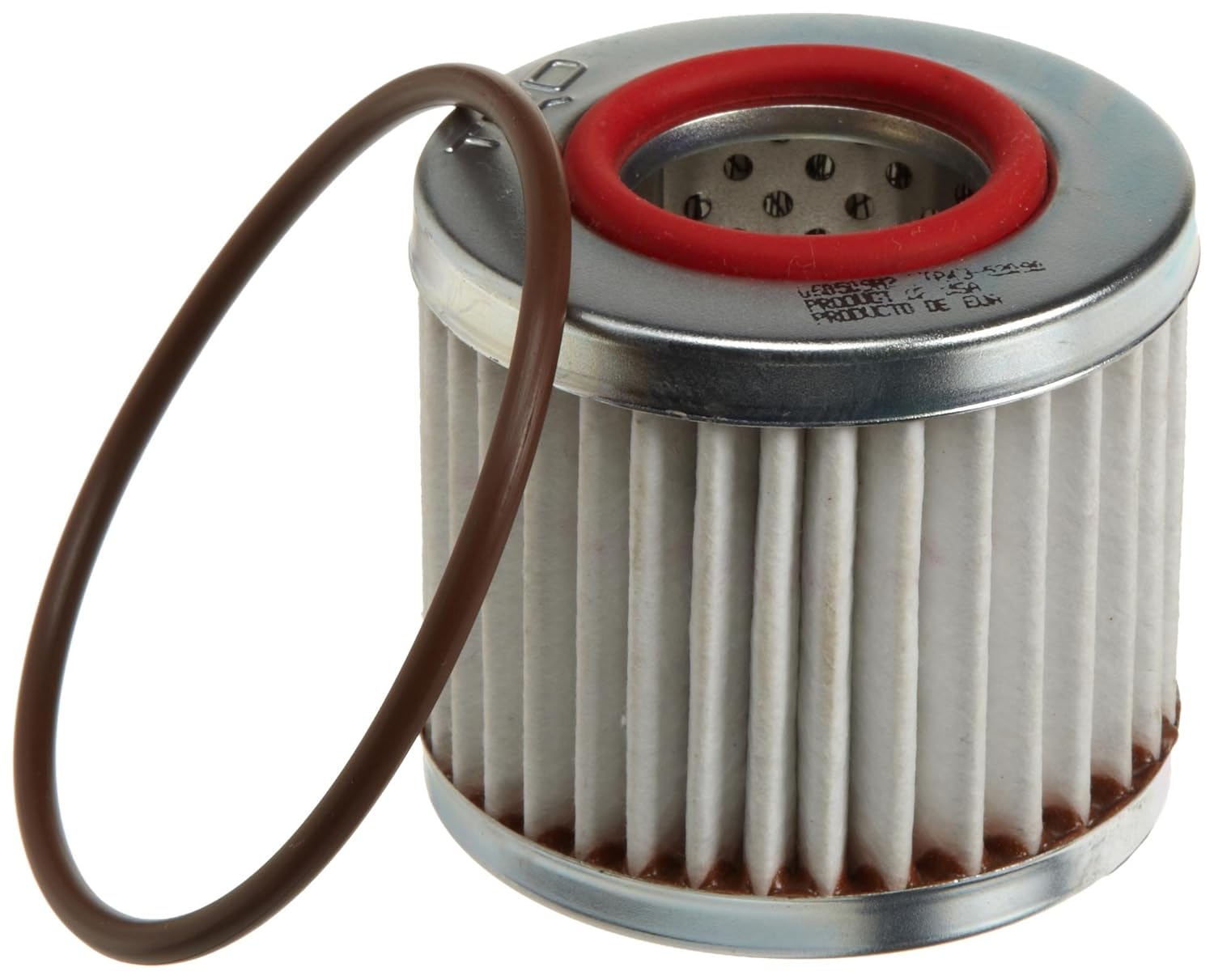
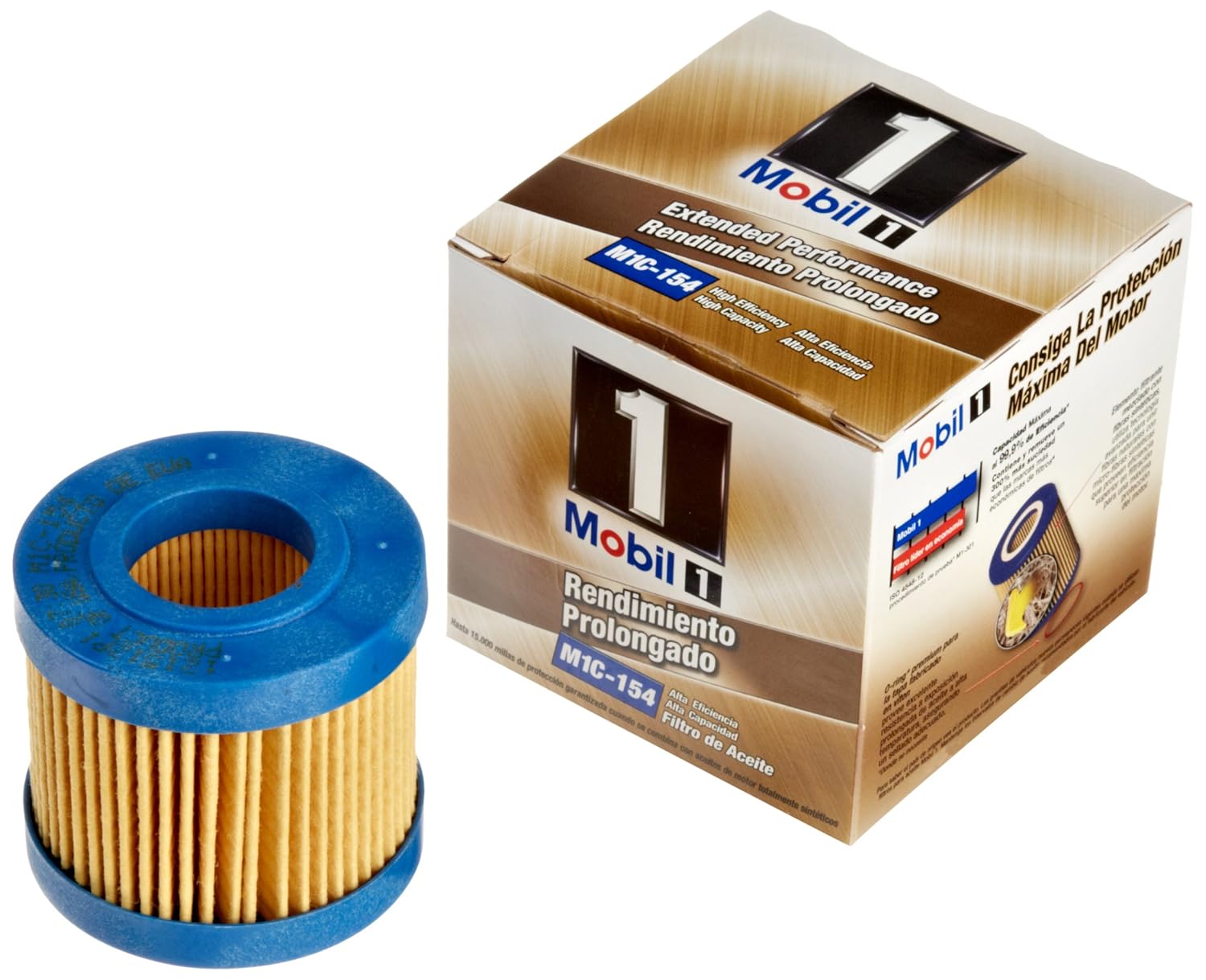
Except, you've run only half of the experiment so far. As I answered the OP's question, run the Mobil 1 Extended Performance M1C-154/M1C-154A or even better the Fram Ultra XG10358 or similar in the next OCI and see how it compares.

4da13c27-8e46-4010-aa73-6b58a2a33b31_1.7c5209f328f67b828271c3c985ab4c43.jpeg

d50abb67-c9b9-451d-bff1-0a446ffe402e_1.36fe6fa58e42150235559accda600007.jpeg
 
Looking at the two photos, clearly the Mobil filter has higher efficiency, as it's darker from the box.
 
Originally Posted By: Shannow
Looking at the two photos, clearly the Mobil filter has higher efficiency, as it's darker from the box.

That was Fram Ultra. Mobil 1 Extended Performance is medium-color.
wink.gif


81q0Eif1gZL._SL1500_.jpg


The Mobil 1 Extended Performance cartridge is a synthetic blend, possibly made in China these days, and the efficiency has reportedly dropped with the recent A (Annual Protection?) suffix. The Fram Ultra is a full synthetic and probably so is the TRD. Amsoil, Royal Purple, and Wix XP/Napa Platinum are among other full synthetics.

I would probably go with one of the wire-backed full synthetics if I wanted to stray from the Thailand-made Toyota/Denso OEM conventional-cellulose-media oil filter. Therefore, Mobil 1 Extended Performance wouldn't be my first choice.
 
Just a point on the China made stuff.

Years ago, I was talking to a Chinese company about getting a whole bunch of filters made...I was intrigued with a website http://www.gasgoo.com/ and was exploring getting filters from them.

$1.06US at the dock, as long as I bought 500 of them (they would do the packaging even to Nissan OEM for a price).

They used (well promised) South Korean Filter Paper, so COO is not necessarily the all determining factor.

For giggles...
http://www.gasgoo.com/auto-products/filter-element-960/2006005.html

Does the OP want 500 ?
 
Last edited:
Sounds like a counterfeiting operation. Nissan OEM knockoffs. It's mind boggling the number of knockoff items over here.
 
Status
Not open for further replies.
Back
Top Bottom