Toyota 90915-YZZF2 C&P

Status
Not open for further replies.
Originally Posted By: Gokhan
What's the micron rating of the Toyota oil filter? If it's more than 20 microns, the Amsoil comparison doesn't seem fair.


The chart is comparing all those filters' efficiency at 20 microns per test spec ISO 4548-12 (ie, 'apples-to-apples'). Not sure what you're asking.
 
Every filter has a sharp micron-cutoff rating (design spec) beyond it won't work. I meant if a filter isn't made to filter 20-micron particles, there is no point in testing it for that particle size. It could be that Toyota was designed for 25 microns or larger.
 
CHEVROLET
smile.gif


You get the second best oil filter in the world and don't have to go to Amsoil.
 
Originally Posted By: Gokhan
Every filter has a sharp micron-cutoff rating (design spec) beyond it won't work. I meant if a filter isn't made to filter 20-micron particles, there is no point in testing it for that particle size. It could be that Toyota was designed for 25 microns or larger.


There is no "sharp micron-cutoff". See graphs showing how a typical filter works over the entire particle size range down to 5 microns.

 
Originally Posted By: Gokhan
Thanks for the plot. It's useful.

Sharp or not there is a cutoff, which is also known as the micron rating.


Don't know what your getting at. Filters will even catch some 1 micron particles, but the efficiency at that size will be near zero. There's no real "cut-off".
 
Originally Posted By: ZeeOSix
Originally Posted By: Gokhan
Thanks for the plot. It's useful.

Sharp or not there is a cutoff, which is also known as the micron rating.

Don't know what your getting at. Filters will even catch some 1 micron particles, but the efficiency at that size will be near zero. There's no real "cut-off".

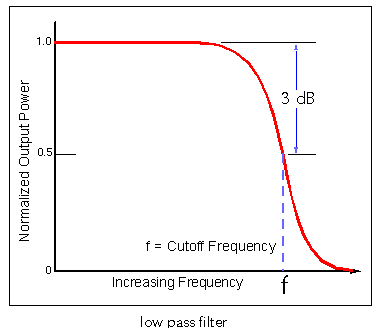
Every filter, oil filter, electronic frequency filter, etc., has a cutoff. Electronic filters define cutoff where the output decreases 3 decibels from the input, which is half the power. Cutoff is never 100% abrupt but it's always well-defined. In oil-filter terminology, cutoff is referred to as the micron rating. I believe Wix or some other major company lists the micron ratings for their filters.

low_pass_filter%20freq%20response.gif
 
^^^ You're comparing electronic filters to physical filters ... no comparison. Physical filters like oil and air filters will catch the whole range of particle sizes as the graphs I posted show.
 
Originally Posted By: ZeeOSix
^^^ You're comparing electronic filters to physical filters ... no comparison. Physical filters like oil and air filters will catch the whole range of particle sizes as the graphs I posted show.

Electronic filters are physical filters, made from physical capacitors, inductors, etc. That graph is very similar to the graph you posted.

Particles range in size from electrons, protons, atoms to planets and galaxies.
wink.gif


Just like the cutoff is defined for -3 dB [= 10 * log(50%)] for electronic filters, oil-filter nominal micron rating is defined by 50%:

The two most popular reported media ratings are a nominal micron rating (50%)
and an absolute micron rating (98.7%). A nominal rating usually means the filter's
media can capture a given percentage of particles of a stated size. For example,
a filter might be said to have a nominal rating of 50% for particles 10 micrometers
in size or larger. An absolute micron rating can be determined by single-pass or
multi-pass testing and is usually obtained by passing a test fluid containing
particles of a known size through a small, flat sheet of filter media. Any particles
that pass through the media are captured and measured. An absolute rating is
also expressed in the form of a percentage of the size of particles captured.


www.hastingsfilter.com/Literature/TSB/89-5R3.pdf

http://www.baldwinfilter.com/ProductHighlights122010.html
 
Originally Posted By: Gokhan
Originally Posted By: ZeeOSix
^^^ You're comparing electronic filters to physical filters ... no comparison. Physical filters like oil and air filters will catch the whole range of particle sizes as the graphs I posted show.

Electronic filters are physical filters, made from physical capacitors, inductors, etc. That graph is very similar to the graph you posted.

Particles range in size from electrons, protons, atoms to planets and galaxies.
wink.gif


Just like the cutoff is defined for -3 dB [= 10 * log(50%)] for electronic filters, oil-filter nominal micron rating is defined by 50%:

The two most popular reported media ratings are a nominal micron rating (50%)
and an absolute micron rating (98.7%). A nominal rating usually means the filter's
media can capture a given percentage of particles of a stated size. For example,
a filter might be said to have a nominal rating of 50% for particles 10 micrometers
in size or larger. An absolute micron rating can be determined by single-pass or
multi-pass testing and is usually obtained by passing a test fluid containing
particles of a known size through a small, flat sheet of filter media. Any particles
that pass through the media are captured and measured. An absolute rating is
also expressed in the form of a percentage of the size of particles captured.


www.hastingsfilter.com/Literature/TSB/89-5R3.pdf

http://www.baldwinfilter.com/ProductHighlights122010.html


Your "cherry picks" have nothing to do with trying to associate electronic filters - which attract particles by electrical forces - to filters using actual MEDIA ... that's what I meant by physical filters. Not "attractive force" driven filters like an electronic filter which acts in a different manner than media type filters. You're links are just describing how filter efficiency has been defined with terms like "absolute micron rating" and "nominal micron rating".

There is no distinct "cut-off" with media type filters. Their efficiency curve will be like I posted ... not like the graph you posted of electronic filters.

Here's a couple more media type filter examples ... there is not "cut-off" to speak of.

Air Filter


Oil Filter
 
Originally Posted By: ZeeOSix
Your "cherry picks" have nothing to do with trying to associate electronic filters...

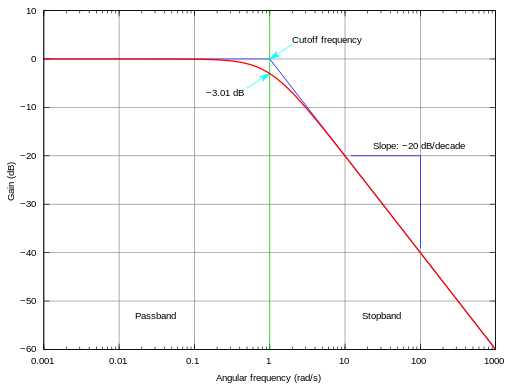
I don't understand why you say I "cherry-pick" and keep arguing about this. These curves are no different than cutoff curves for electronic filters. With simple, passive electronic filters, cutoff is gradual as well, happening over multiple octave scales in frequency. That's why they plot the frequency on a logarithmic axis. You just define the cutoff at the -3 db (50%) point and you do the same for the oil filter, defining 50% as the nominal micron rating. I don't understand why you keep claiming they are not analogous.

The only reason why this plot appears to have a sharp cutoff is because the frequency axis is logarithmic. You would get the same or even sharper cutoff if you plotted the particle size on a logarithmic axis:

512px-Butterworth_response.svg.png
 
Originally Posted By: Gokhan
Originally Posted By: ZeeOSix
Your "cherry picks" have nothing to do with trying to associate electronic filters...

I don't understand why you say I "cherry-pick" and keep arguing about this.


Because your examples of electronic filters have nothing to do with how media type filters work - have you ever seen electrical terminals on an oil filter? ... LoL. There is no 'apples to apples' correlation - they are two separate technologies that don't behave the same while filtering. Don't know why you think filtering media like found in oil filters behaves like an electronic filter.

You see a efficiency "cut-off" on this air filter example? - graph near the end of the page.
https://www.aafintl.com/en/browse-products/commercial/box-filters/varicel-ii

As shown, oil filters (and any media type filter for that matter) will have a similar curve ... not the curve you keep showing for electric filters which filter based on electromagnetic forces between particles and collective surfaces, not physical media like what oil and air filters use.
 
Originally Posted By: Gokhan
I don't understand why you say I "cherry-pick" and keep arguing about this. These curves are no different than cutoff curves for electronic filters. With simple, passive electronic filters, cutoff is gradual as well, happening over multiple octave scales in frequency. That's why they plot the frequency on a logarithmic axis. You just define the cutoff at the -3 db (50%) point and you do the same for the oil filter, defining 50% as the nominal micron rating. I don't understand why you keep claiming they are not analogous.


Then plot some of these oil filter curves on a logarithmic scale and see what you get.

Originally Posted By: Gokhan
In oil-filter terminology, cutoff is referred to as the micron rating. I believe Wix or some other major company lists the micron ratings for their filters.


Not really sure where you're getting this or going with that. Every filter will have some efficiency vs particle size curve, as I've shown examples of. No filter manufactures refers to any kind of "cut-off" micron rating. And no, it's not the "absolute" or "nominal" efficiency ... those are just terms made up to define a couple of defined efficiency points, and of course there should also be a particle size associated with the absolute and nominal efficiency or else it doesn't mean anything.
 
Originally Posted By: ZeeOSix
... of course there should also be a particle size associated with the absolute and nominal efficiency or else it doesn't mean anything.

You still don't understand it.

There is no particle size associated with the nominal or absolute rating. They associate a filtration percentage. Then the micron size is measured and reported as the micron rating.

And that's how you exactly report an electronic filter. You associate a percentage and then test and measure the frequency for that percentage. It's a one-by-one correspondence with the media filters.
 
Originally Posted By: Gokhan
Originally Posted By: ZeeOSix
... of course there should also be a particle size associated with the absolute and nominal efficiency or else it doesn't mean anything.

You still don't understand it.

There is no particle size associated with the nominal or absolute rating. They associate a filtration percentage. Then the micron size is measured and reported as the micron rating.

And that's how you exactly report an electronic filter. You associate a percentage and then test and measure the frequency for that percentage. It's a one-by-one correspondence with the media filters.


What are you talking about? ... there HAS to be a particle size associated with the nominal or absolute rating.

Below is from what you quoted in and earlier post. The bottom line is that every efficiency % rating has to have a particle size associated with it. That's what these efficiency % vs particle size curves show. Best re-evaluate who doesn't understand.
grin.gif


From your previous post - note the part in red:

"The two most popular reported media ratings are a nominal micron rating (50%)
and an absolute micron rating (98.7%). A nominal rating usually means the filter's
media can capture a given percentage of particles of a stated size. For example,
a filter might be said to have a nominal rating of 50% for particles 10 micrometers
in size or larger.
An absolute micron rating can be determined by single-pass or
multi-pass testing and is usually obtained by passing a test fluid containing
particles of a known size through a small, flat sheet of filter media. Any particles
that pass through the media are captured and measured. An absolute rating is
also expressed in the form of a percentage of the size of particles captured.
"
 
Particle size is not associated with the micron rating. It's a result of the micron rating. They associate a percentage -- such as 50% or 98.7% -- and then measure the particle size vs. output and find out what particle size corresponds to the associated percentage. It could be 24 microns, 9 microns, 2 microns, or any other micron -- it's a result of the measurement.

Electronic filters are rated exactly the same way -- you associate a percentage -- such as 1 dB (80%) or 3 db (50%) -- and then measure the frequency vs. output and find out what frequency corresponds to the associated percentage. It could be 21 kHz, 30 kHz, 120 kHz, etc.

I still have no idea what you are arguing about and why. It's just a simple one-to-one correspondence that I pointed out.
 
Originally Posted By: Gokhan
Particle size is not associated with the micron rating. It's a result of the micron rating. They associate a percentage -- such as 50% or 98.7% -- and then measure the particle size vs. output and find out what particle size corresponds to the associated percentage. It could be 24 microns, 9 microns, 2 microns, or any other micron -- it's a result of the measurement.

I still have no idea what you are arguing about and why. It's just a simple one-to-one correspondence that I pointed out.


You sure like to try and twist things up, and are just parroting what I've already said. I said there is a specific particle size that is associated with each percentage of filter efficiency - that includes the "nominal" and "absolute" defined efficiency. The micron size of particles associated with those "defined" efficiencies will vary depending how efficient the filter is. For every efficiency percentage there is a corresponding micron size (as shown in the graphs) - it's really simple basic stuff.
 
Originally Posted By: ZeeOSix
Originally Posted By: Gokhan
Particle size is not associated with the micron rating. It's a result of the micron rating. They associate a percentage -- such as 50% or 98.7% -- and then measure the particle size vs. output and find out what particle size corresponds to the associated percentage. It could be 24 microns, 9 microns, 2 microns, or any other micron -- it's a result of the measurement.

I still have no idea what you are arguing about and why. It's just a simple one-to-one correspondence that I pointed out.

You sure like to try and twist things up, and are just parroting what I've already said. I said there is a specific particle size that is associated with each percentage of filter efficiency - that includes the "nominal" and "absolute" defined efficiency. The micron size of particles associated with those "defined" efficiencies will vary depending how efficient the filter is. For every efficiency percentage there is a corresponding micron size (as shown in the graphs) - it's really simple basic stuff.

I'm not twisting or parroting things. You were just not getting it that as far as the micron rating and frequency cutoff is concerned, there is a one-to-one correspondence between oil filters and electronic filters. Besides, you hadn't even heard about the term micron rating before this discussion started. So, now, you have learned both about the micron rating and electronic filters.
 
Originally Posted By: Gokhan
Originally Posted By: ZeeOSix
You sure like to try and twist things up, and are just parroting what I've already said. I said there is a specific particle size that is associated with each percentage of filter efficiency - that includes the "nominal" and "absolute" defined efficiency. The micron size of particles associated with those "defined" efficiencies will vary depending how efficient the filter is. For every efficiency percentage there is a corresponding micron size (as shown in the graphs) - it's really simple basic stuff.


I'm not twisting or parroting things. You were just not getting it that as far as the micron rating and frequency cutoff is concerned, there is a one-to-one correspondence between oil filters and electronic filters. Besides, you hadn't even heard about the term micron rating before this discussion started. So, now, you have learned both about the micron rating and electronic filters.


LoL ... that's pretty funny. You obviously do not hang out in the oil filter forum very much do ya.

There is NOT a "one-to-one" correlation between oil filters and electronic filters. They work in totally different ways on how they capture particles. Electronic air filters for instance, work on the principle of charging the particles, so the way the filter surface captures particles is in no way shape or form how media in an oil or air filter captures particles. Electronic air filters for instance, rely on how much differential charge they can produce, and how large and far away the charged particle is from the collector plate. If you think oil filters work like that then you're obviously way off base.
 
Status
Not open for further replies.
Back
Top Bottom