Recommend 1/4" torque wrench

Another vote for the Tekton TRQ21101 here. Its range is 10-150 in-lbs..... Useful for carbon fiber bikes where often the spec is for some number in-between 10 and 20 in-lbs and the more-common 20-150 wrenches are too much.

Generally a good rule of thumb is you don't use the bottom of top 20% of a torque wrench, usualy they are ok at full scale but some don't even use the upper 10%

So that's 39-135in-lb. If you wanted to torque something that was 10-20 inch-lb I wouldn't use that torque wrench depending on the criticality.

Though Its not as bad as when a torque spec on a drain plug for example is 15ft/lb and people decide to use their lug Nut 0-150ft/lb wrench on it (39ft/lb 20% rule). Then people posts about how that torque spec is wrong and shearing bolts. I much prefer FSMs use inch-lb when it comes to lower torque specs as that would potentially help a DIYer use a more appropriate tool.
 
I use a Force brand torque wrench. It's made in Taiwan and comes with a calibration certificate. So far it's been great.
 
Generally a good rule of thumb is you don't use the bottom of top 20% of a torque wrench, usualy they are ok at full scale but some don't even use the upper 10%

So that's 39-135in-lb. If you wanted to torque something that was 10-20 inch-lb I wouldn't use that torque wrench depending on the criticality.
Oh, I agree completely. If I saw something like, say a 5-50 inch-lb torque wrench I'd buy it as fast as I could pull out my CC. I'm sure such a tool exists, I've just never seen one.

Similar situation exists here at work. A common apparatus we use measures soil strength from 0 to 9000 PSF..... But on the occasions where we need it the most - when marginal (soft) soils are encountered - are at the extreme low range of the scale where it is the least accurate and the most likely to suffer calibration variables from instrument to instrument. I'd like to have a more-accurate instrument that only measures 0 to maybe 3000 or so.
 
For the money, I am a fan of the Taiwanese CAPRI TOOLS Torque Wrenches. Even though the adjustable scale is marked 20 - 150 in-lbs., Capri conservatively rates it as being accurate from 30-150 in-lbs. since the bottom ~20% of the scale is assumed to be questionable at best. No plastic parts and the retracting lock ring design is top-notch for being practical and error-proof. Very discernible "click" when the set torque value is reached and the reversing lever requires a deliberate effort to switch directions.
 
For the money, I am a fan of the Taiwanese CAPRI TOOLS Torque Wrenches. Even though the adjustable scale is marked 20 - 150 in-lbs., Capri conservatively rates it as being accurate from 30-150 in-lbs. since the bottom ~20% of the scale is assumed to be questionable at best. No plastic parts and the retracting lock ring design is top-notch for being practical and error-proof. Very discernible "click" when the set torque value is reached and the reversing lever requires a deliberate effort to switch directions.
Does the Capri click even at low torque settings? I have the Tekton and my only complaint is that the click is only audible over about 100 lb in. Below that it just kinda releases and you have to learn to feel for it.
 
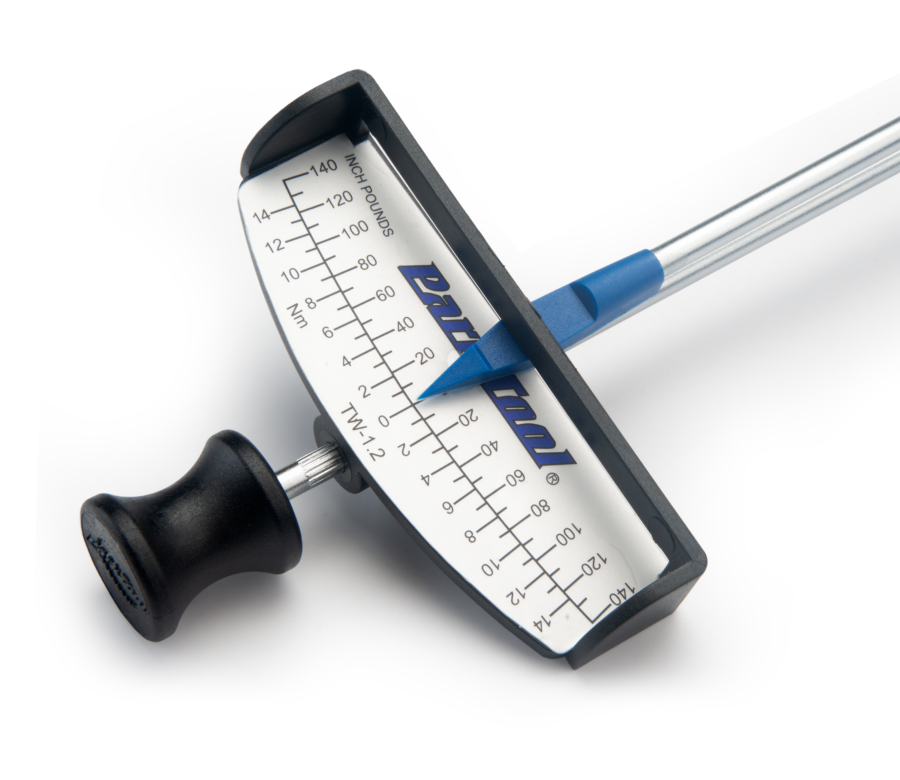
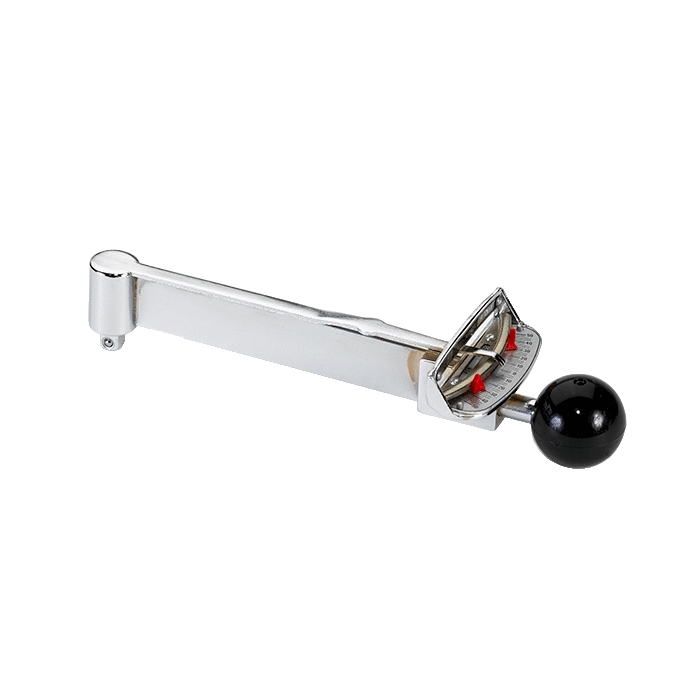
Modern high tech beam or dial. The rest fall short of being able to do certain jobs correctly, as holding a torque is required for proper fastener stretch. Connecting rod bolts and head bolts/studs come to mind.

TW-1.2_002.jpg


18bcdb83f3844d3f.png


Here is a story from the light aircraft world, where the pilot crashed a plane due to a click type torque wrench:

The culprit was the cylinder #1 connecting rod, which became disconnected from the crank when a bolt sheared, punching a couple of holes in the crankcase in the process. The reason the bolt failed is that it was not properly stretched, which takes minutes of torque held on the nut. When the bolt is not stretched, the cyclic loads fatigue the steel into failure. When it is stretched, the bolt never feels any more load than the stretch load.

2017.10.11-05.50-flyhpa-59de5a0061059.jpg
Would you explain "minutes of torque" please? Are you referring to minutes as fractions of degrees or rotation or time? I haven't heard it phrased that way before.
 
Would you explain "minutes of torque" please? Are you referring to minutes as fractions of degrees or rotation or time? I haven't heard it phrased that way before.
Same here, haven't heard it described this way. Is it possible to share a snapshot of a repair procedure that uses this process?
 
Does the Capri click even at low torque settings? I have the Tekton and my only complaint is that the click is only audible over about 100 lb in. Below that it just kinda releases and you have to learn to feel for it.
I have never used any 1/4" drive analog torque wrench that has a pronounced "click" at the lower range settings. The Capri has a audible click starting around the 55 in-lb. setting and gets louder as you go up in torque settings. I think only the digital torque wrenches will give a clear audible alert at the lowest settings.
 
  • Like
Reactions: D60
Modern high tech beam or dial. The rest fall short of being able to do certain jobs correctly, as holding a torque is required for proper fastener stretch. Connecting rod bolts and head bolts/studs come to mind.

TW-1.2_002.jpg


18bcdb83f3844d3f.png


Here is a story from the light aircraft world, where the pilot crashed a plane due to a click type torque wrench:

The culprit was the cylinder #1 connecting rod, which became disconnected from the crank when a bolt sheared, punching a couple of holes in the crankcase in the process. The reason the bolt failed is that it was not properly stretched, which takes minutes of torque held on the nut. When the bolt is not stretched, the cyclic loads fatigue the steel into failure. When it is stretched, the bolt never feels any more load than the stretch load.

2017.10.11-05.50-flyhpa-59de5a0061059.jpg
Have you ever seen a properly stretched bolt also do this same thing? I have.
 
Sorry to bring up an old thread, but I have a request: Could you guys recommend a decent 1/4" drive torque wrench for the the advanced amateur mechanic? I have a HF one that has let me down with a an improperly torqued oil filter cap. Is there a reliable, repeatable clip style that is affordable to the average Joe?
 
How much do they charge for calibration if needed, warranty?

NON-COMMERCIAL USE


LIFETIME CONSUMER GUARANTEE PROGRAM​


Wrenches purchased for personal, non-commercial, non-industrial use are guaranteed for life. If the wrench fails to operate properly and requires repair, and you ship it to us, we will do all required work, provide all required parts, and ship it back to you within 5 working days of its receipt. At our option, we may substitute another wrench, either new or reconditioned, which is of equal or better quality.


*To be eligible, please register your wrench within 30 days of the original date of purchase. You can access the product registration form by clicking “Here”.

Calibration Services​


– Free Lifetime Calibrations –


If your eTORK wrench requires re-calibration and/or accuracy re-certification, no problem, we are here to help. Simply complete the form below, ship it to us, we will do all required work, provide all required parts, and ship it back to you for a fee of $15.00 per wrench (to cover return shipping). Please have your eTORK or Amazon order number handy when completing the calibration request form.


After completing the form below, please mail the wrench to be calibrated to:


eTORK – Calibration Service
1200 Northmeadow Pkwy
Suite 120
Roswell, GA 30076
 
Modern high tech beam or dial. The rest fall short of being able to do certain jobs correctly, as holding a torque is required for proper fastener stretch. Connecting rod bolts and head bolts/studs come to mind.

TW-1.2_002.jpg


18bcdb83f3844d3f.png


Here is a story from the light aircraft world, where the pilot crashed a plane due to a click type torque wrench:

The culprit was the cylinder #1 connecting rod, which became disconnected from the crank when a bolt sheared, punching a couple of holes in the crankcase in the process. The reason the bolt failed is that it was not properly stretched, which takes minutes of torque held on the nut. When the bolt is not stretched, the cyclic loads fatigue the steel into failure. When it is stretched, the bolt never feels any more load than the stretch load.

2017.10.11-05.50-flyhpa-59de5a0061059.jpg
Seriously? Whats the spec. 60ftlb for 10min? Those are going to be some strong mechanics
 
Yeah....absurd as usual.

They make great tools, but Imagine how many tools they could sell if they were priced within reason.
the typical user for SO stuff is a professional tech that can deduct tool cost on taxes. Accordingly, they can greatly reduce their cost and get great/best tools. And SO pockets the huge profits.
 
I have all three sizes of Tekton clickers and overall I like then better than the HF Pittsburgh units I had previously. Both brands are pretty accurate and dependable, but I replaced the HF wrenches because they have engraved numbers that are hard to read without reading glasses. The Tekton have black numbers that are easier on the eyes.

I like the 1/4 overall but my only complaint is that it doesn't really click below about 100 lb in; it is more of a release. Practice first at low settings to avoid stripping small bolts.
 
Back
Top Bottom