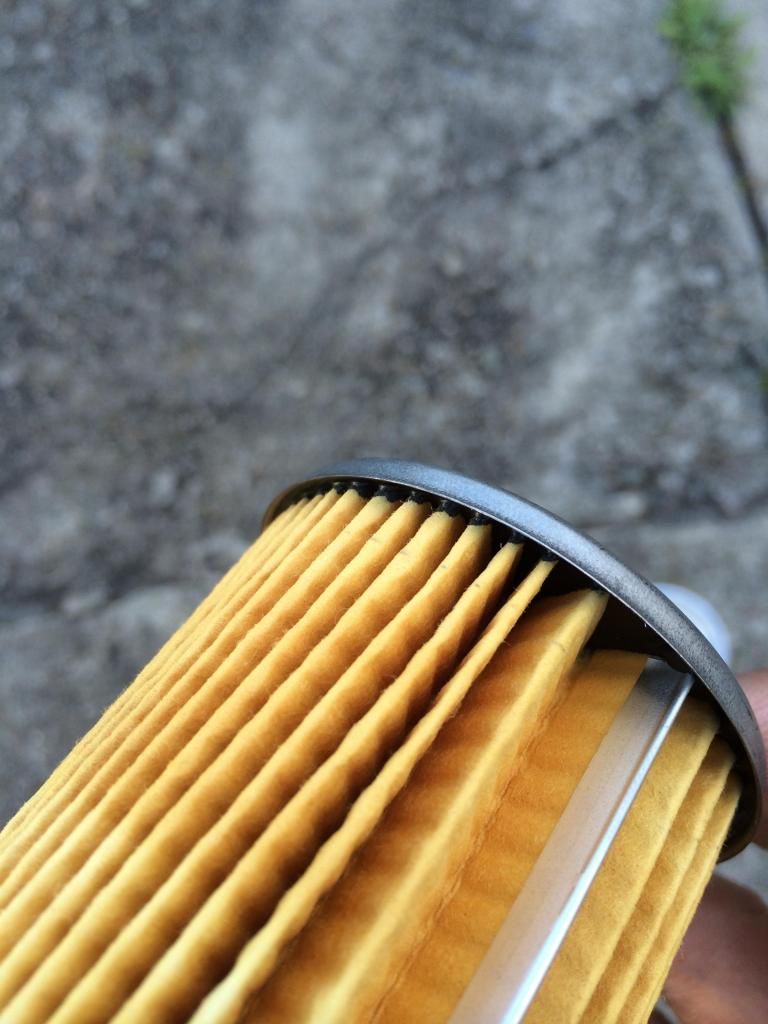
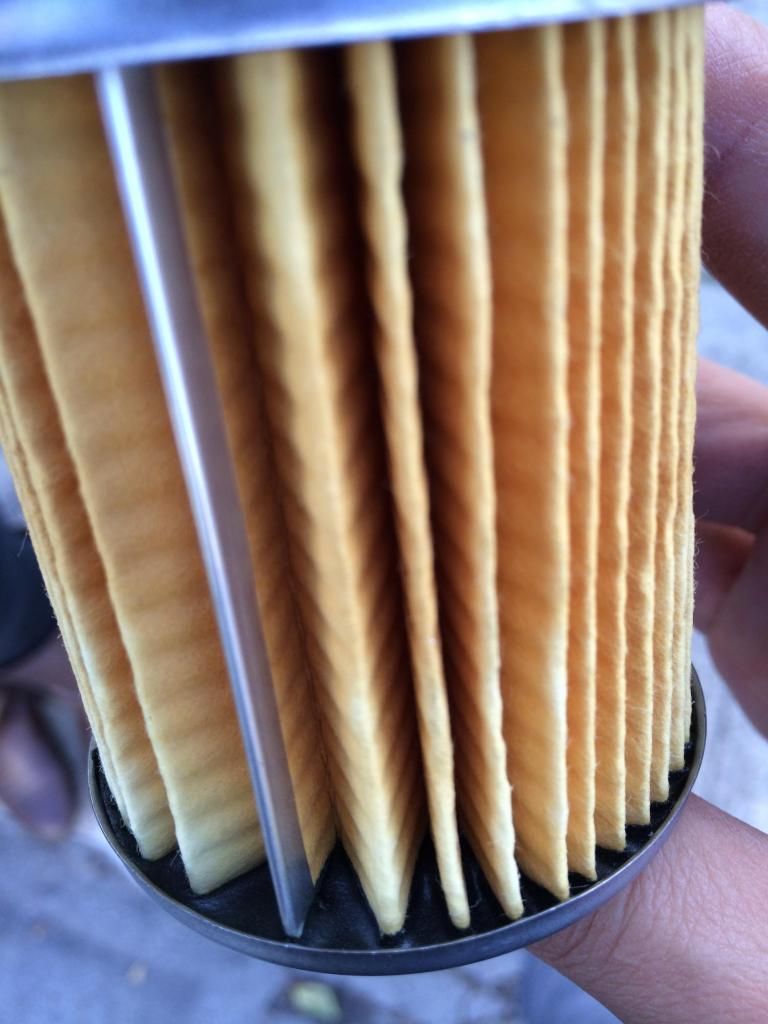
Purolator Classic p14610 NEW - Ripped opened

Status
Not open for further replies.
Joined
Jun 14, 2010
Messages
882
Location
USA
Theres no doubt that the recent trend of failing purolator classics have scared me. I have a few p14610 i got from pepboys sale last year so i decided to tear one open to see the paper media strength. No tears on a brand new unit but i can see how they can rip under stressful conditions. The paper can EASILY tear. Where they commonly fail is near the glue, so i applied a little finger tip pressure and sure enough, the paper tore. Makes sense, the longer the oil saturates the paper media, the softer it will get overtime thus potentially tearing.
I did the same on a PureOne with 7.1k miles of use in the past and it was much harder to tear the media.

Perhaps the classic is truly a 3k filter
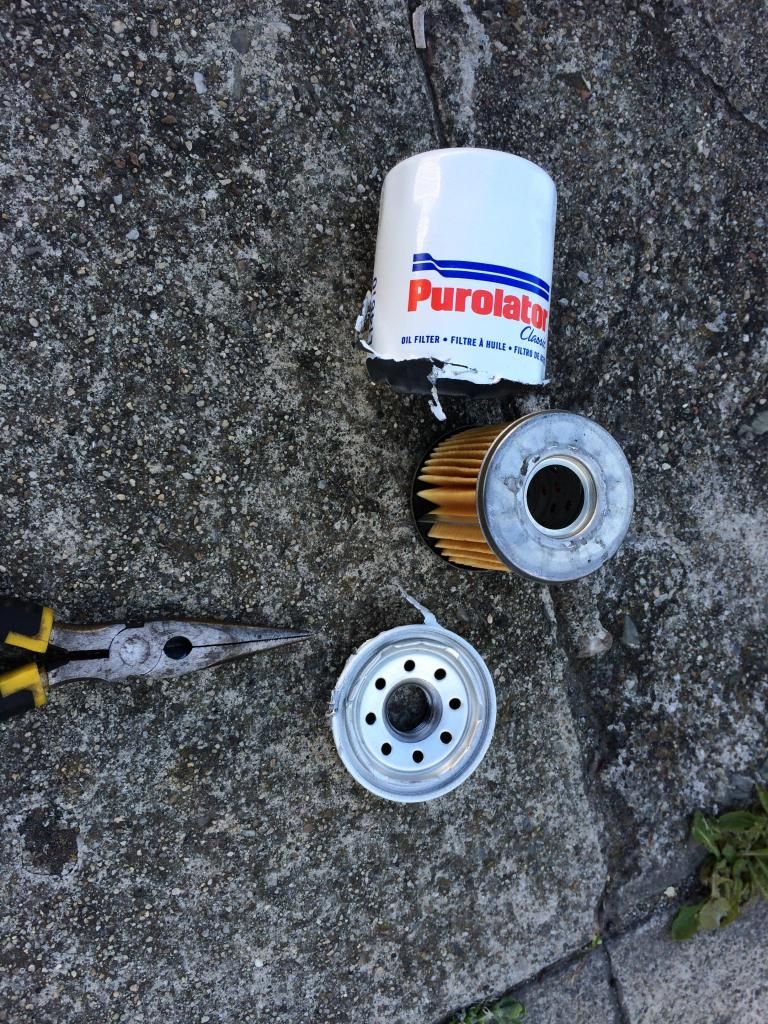
photo1_zpsdba2d080.jpg

photo2_zps0101827a.jpg

photo3_zpsade3e10a.jpg
 
I did the exact same thing with this exact filter, this media really is like cheap paper. It just tears so easily! I applied pressure to a new TG 7317 (equivalent of this filter) and the media is much more sturdy.
 
This particular specimen doesn't seem to have excessively wide spaced pleats near the seam, or large "V" shape at the base of the pleats next to the seam, so that also helps.

Widely spaced pleats that also have a very large "V" shape at the base where it's glued to the end cap, along with weak brittle and easy torn media, seems to be the perfect combo for media tears to happen.
 
Pleat spacing even around the metal seam pleat looks fine to me, and completely in line with every PL14610 I've ever used(at least a dozen), and never had an issue. I see nothing out of the ordinary here, and it is complete conjecture that this L14610 would not have been just fine for ~5k+ miles regardless of the opinion(s) expressed about media feel and unproven conclusions 'in this case'. My .02

Thanks for the pics.
 
I don't read were anyone said it wouldn't last 5K miles.
 
Originally Posted By: garlicbreadman
..... Perhaps the classic is truly a 3k filter.

Close enough 'for me' to conclude that the point/conclusion was made that said L14610 couldn't make it 5k miles.
 
Guess it's no different that anyone else making any other kinds of conclusions about filters around here.

Based on the pleat spacing and V-spread, I'd say it would probably go 10K. Now if we could just weld it back together, run it 10K and re-cut it open to verify, it would be awesome.
grin.gif
 
I recently opened up a Mann clone of the classic L14610. It was on my niece's Infiniti for exactly 5,000 miles. Sorry, no pics, but the pleat next to the seam that was the wider gap of the two was torn on both ends. No harsh treatment. Oil was Mobil Super 5w30.
 
Originally Posted By: tightwad
I recently opened up a Mann clone of the classic L14610. It was on my niece's Infiniti for exactly 5,000 miles. Sorry, no pics, but the pleat next to the seam that was the wider gap of the two was torn on both ends. No harsh treatment. Oil was Mobil Super 5w30.


Hummm ... a new twist to the media tearing plot.
 
A shame, I'm glad I'm done with them. It might take quite a while for me to use one again, that's if I ever use one again.

Seeing how there's a lot of positive talk lately about some of the Fram offerings, Purolator can turn this around I think. Wake up Purolator!
 
Nice demo. I'm sure media strength is a factor here, but more important, you very cleanly show the outstanding problem of improper pleat arrangement.

Edit: Just a note. Having seen many images of many filter brands' pleating, none are ever arranged like these Classics. And for very simple and good reason.
 
Last edited:
Originally Posted By: ZeeOSix
This particular specimen doesn't seem to have excessively wide spaced pleats near the seam, or large "V" shape at the base of the pleats next to the seam, so that also helps.

Widely spaced pleats that also have a very large "V" shape at the base where it's glued to the end cap, along with weak brittle and easy torn media, seems to be the perfect combo for media tears to happen.


Disagree. The gapping looks pretty substantial,
 
Originally Posted By: gregk24
I did the exact same thing with this exact filter, this media really is like cheap paper. It just tears so easily!

The media IS paper.

Pro:

Cellulose and Synthetic filter media

Con:

Fiberglass vs Cellulose

The manufacturers of cellulose filter media start with the same processes used to make paper, generally beginning with a wood source, but perhaps including other material such as cotton.

They can produce anything from medical filter media to coffee filters in a bewildering variety of characteristics. They can also produce tissues for cleaning your tushy, your nose, and your optical equipment, from cheap and dirty to the sky's the limit.

If you want filtration, you want soft and fluffy, not stiff and cardboardy.

Cellulose filter media can do some things that synthetics can't or do some things better, particularly adsorption, where particles collect on the fluffy fibers on the surface and don’t travel farther into the media. The more this happens, the more small particles are removed before they reach the small pore spaces in the media, keeping the filter from being plugged. Cellulose media is manufactured with fibers of various sizes with the surface of the media fluffed up, rather than compacted down like cardboard.

Synthetic media typically has the same pore size and same fiber diameter through the media. The low flow resistance properties of synthetic media aren't very important in engine lube oil filtration because engine oil tends to heat rapidly.

Some filter manufacturers try get the best of both worlds by using cellulose/synthetic blend media. Mobil 1 filters take this approach.

In actual use in engines, soft adsorbent cellulose media often outperforms expensive synthetic media in the only thing you care about - keeping the engine clean and the wear low.
 
Quote:
Is purolator made in CHINA Now???

It sorta looks like a Driveworks filter.....

33.gif


Absolutely not. The OP's L14610 is made in US.

And other than using an abbreviated version of the Purolator numbering system there is no evidence of any relationship between Purolator and the AAP DW.

Again, having used many PL14610 and variants like the AAP Total Grip, I see nothing out of the ordinary with said L14610.

Below is a link to one of those variants which is very very close to the Classic shown. This is for those stating they've never seen a seam plaet spacing as shown in this thread. Loos quite similar to me. Aparently some folks don't have much experience with Classics like the L14610 and it's varients
56.gif


Advance Auto Total Grip Dissected.

AAPTotalGrip7317001-1.jpg
 
Originally Posted By: TriboGeek
Originally Posted By: ZeeOSix
This particular specimen doesn't seem to have excessively wide spaced pleats near the seam, or large "V" shape at the base of the pleats next to the seam, so that also helps.

Widely spaced pleats that also have a very large "V" shape at the base where it's glued to the end cap, along with weak brittle and easy torn media, seems to be the perfect combo for media tears to happen.


Disagree. The gapping looks pretty substantial,


The qualifying term was "excessive". Yes, they are somewhat widely spaced and a little on the large side of V-spread. But I've seen plenty with about this arrangement on the two adjacent seam pleats that didn't tear. Of course, remember too that other factors involved that could contribute to media tearing are use conditions, ie, 4000 RPM runs with oil at 0 deg F, etc kind of factors.

I think we all pretty much know by now that the BEST way to make an oil filter is to make all the pleats closely spaced apart, and minimum V-spread on each individual pleat ... that should be the main goal IMO when manufacturing an oil filter.
 
Originally Posted By: ZeeOSix
I think we all pretty much know by now that the BEST way to make an oil filter is to make all the pleats closely spaced apart, and minimum V-spread on each individual pleat ... that should be the main goal IMO when manufacturing an oil filter.

The main goal in manufacturing an oil filter is to produce a filter that removes subject contaminants which can be sold at a profit.

Beauty contests are for the beach.
 
Originally Posted By: ZeeOSix
Originally Posted By: TriboGeek
Originally Posted By: ZeeOSix
This particular specimen doesn't seem to have excessively wide spaced pleats near the seam, or large "V" shape at the base of the pleats next to the seam, so that also helps.

Widely spaced pleats that also have a very large "V" shape at the base where it's glued to the end cap, along with weak brittle and easy torn media, seems to be the perfect combo for media tears to happen.


Disagree. The gapping looks pretty substantial,


The qualifying term was "excessive". Yes, they are somewhat widely spaced and a little on the large side of V-spread. But I've seen plenty with about this arrangement on the two adjacent seam pleats that didn't tear. Of course, remember too that other factors involved that could contribute to media tearing are use conditions, ie, 4000 RPM runs with oil at 0 deg F, etc kind of factors.

I think we all pretty much know by now that the BEST way to make an oil filter is to make all the pleats closely spaced apart, and minimum V-spread on each individual pleat ... that should be the main goal IMO when manufacturing an oil filter.


All well and good. My main point is that proper pleating, which pretty much every other decent manufacturer achieves, would pretty much eliminate all risk of tearing (in normal usage) almost regardless of media strength.
 
Originally Posted By: Wilhelm_D
Originally Posted By: ZeeOSix
I think we all pretty much know by now that the BEST way to make an oil filter is to make all the pleats closely spaced apart, and minimum V-spread on each individual pleat ... that should be the main goal IMO when manufacturing an oil filter.

The main goal in manufacturing an oil filter is to produce a filter that removes subject contaminants which can be sold at a profit.

Beauty contests are for the beach.


That's pretty hard to do when there are large tears in the media. In this case of the Purolator media tears, if the pleats were spaced out better it probably wouldn't be happening ... so you see, there is more to nice even pleat spacing than a "beauty contest".
 
Status
Not open for further replies.
Back
Top Bottom