I busted my last ratchet like that this morning tighting shock bolts on the Ram. I learned the hard way with those as well, and was only using it as backup, with it biting on the axle while actually tightening with a Stanley ratchet, so no blood lost.

You are using an out of date browser. It may not display this or other websites correctly.
You should upgrade or use an alternative browser.
You should upgrade or use an alternative browser.
How to unscrew these bolts?
- Thread starter sentra
- Start date
- Status
- Not open for further replies.
Some PB Blaster will be your best friend here.
I know this is trivial but your question needed to be answered in the simplest of manner. Find a bolt anywhere on the car. Use the *same* ratchet to unscrew it just a little. You will need to set your ratchet lever "correctly". Use that position, as a matter of fact, take the ratchet and swap the required hex socket on it and then use it to loosen your transmission drain plug. At that point, it does not matter if you are on your back or standing on your head!
dont worry about breaking the socket, thats the least of your worries, buy a breaker bar at sears, 20 bucks, if that thing is a tight as it looks (not trying to insult your tools,) it could kill the ratchet if you use a cheater pipe. Tap it hard on the face with a ball peen hammer. Grab the socket with your left hand and rotate it with the other feel if its going counter clockwise. Remembering the old valvoline commercial, blood and oil mix well, put some gloves on.
Last edited:
Originally Posted By: defektes
dont worry about breaking the socket, thats the least of your worries, buy a breaker bar at sears, 20 bucks, if that thing is a tight as it looks (not trying to insult your tools,) it could kill the ratchet if you use a cheater pipe. Tap it hard on the face with a ball peen hammer. Grab the socket with your left hand and rotate it with the other feel if its going counter clockwise. Remembering the old valvoline commercial, blood and oil mix well, put some gloves on.

dont worry about breaking the socket, thats the least of your worries, buy a breaker bar at sears, 20 bucks, if that thing is a tight as it looks (not trying to insult your tools,) it could kill the ratchet if you use a cheater pipe. Tap it hard on the face with a ball peen hammer. Grab the socket with your left hand and rotate it with the other feel if its going counter clockwise. Remembering the old valvoline commercial, blood and oil mix well, put some gloves on.
A little penetrating fluid and a few bangs on the socket will help.
The breaker bar/pipe extension is gonna make this real easy.
Get teflon tape or teflon plumbing sealant for those threads.
It will stop leaks and make future removal easy.
The breaker bar/pipe extension is gonna make this real easy.
Get teflon tape or teflon plumbing sealant for those threads.
It will stop leaks and make future removal easy.
sentra
Thread starter
Thanks you for all the replies. They have been very helpful. So, as advised, i went out and got the PB Blaster and a Mastercraft Breaker Bar With Ratchet Head
I think i should be fine now, and i will report back?
Between, can i use copper anti-seize, the type used on spark plugs, on the transmision plugs? I forgot to pick up the teflon sealant.
I think i should be fine now, and i will report back?
Between, can i use copper anti-seize, the type used on spark plugs, on the transmision plugs? I forgot to pick up the teflon sealant.
That looks like a good breaker bar. Since it is ratcheting, you set it to "loosen" position first and then don't have to worry if it needs to be moved right or left or up or down!
You really don't need anti-sieze on the transmission drain plug. Just tighten it snug. It needs just enough torque so that it will not vibrate itself loose. Use your regular ratchet to tighten it.
- Vikas
You really don't need anti-sieze on the transmission drain plug. Just tighten it snug. It needs just enough torque so that it will not vibrate itself loose. Use your regular ratchet to tighten it.
- Vikas
The breaker bar is my favorite tool. I've got them in 15, 17, and 25in lengths.
If you still have trouble with the breaker bar, consider using it with the non-recommended floor Jack trick. Well, I'm sure few recommend it ... But many have found it useful....
If you still have trouble with the breaker bar, consider using it with the non-recommended floor Jack trick. Well, I'm sure few recommend it ... But many have found it useful....
Originally Posted By: sentra
Between, can i use copper anti-seize, the type used on spark plugs, on the transmision plugs? I forgot to pick up the teflon sealant.
I would not use anti-seize on drain plugs.
Ford recommends their TA-25 Threadlock and Sealer for drain and filler plugs. You can get this at any Ford parts department.
Loctite PST 567 can also be used to seal drain and fill plugs. But the TA-25 is probably easier to obtain.
Between, can i use copper anti-seize, the type used on spark plugs, on the transmision plugs? I forgot to pick up the teflon sealant.
I would not use anti-seize on drain plugs.
Ford recommends their TA-25 Threadlock and Sealer for drain and filler plugs. You can get this at any Ford parts department.
Loctite PST 567 can also be used to seal drain and fill plugs. But the TA-25 is probably easier to obtain.
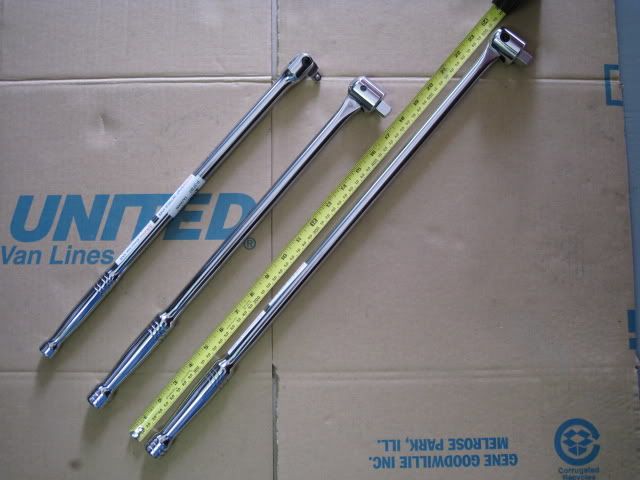
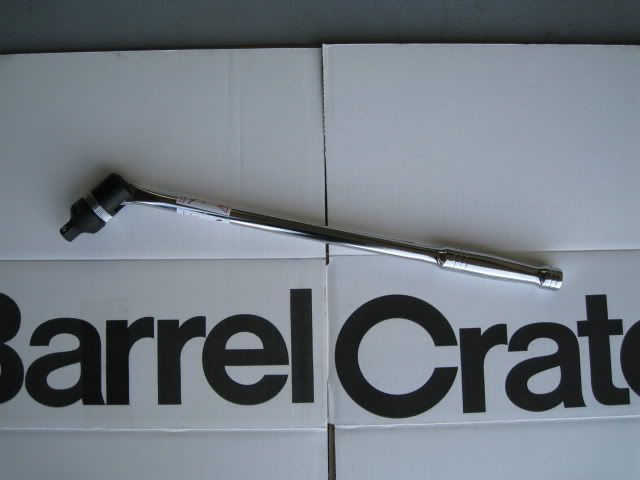

LOL
How many pages does it take to discuss unscrewing a bolt on BITOG?

How many pages does it take to discuss unscrewing a bolt on BITOG?
Sentra, about your reasoning, its fine. The common rule is full of assumptions. You just aren't clear on them yet. (OK, its not full of them, there's only 3.)
First, assume that you're facing the head of a bold or stud. (If you're facing some other way, you might as well do something else.)
Now imaging the bolt (or nut on stud) twisting. Notice what happens at the top of the bolt (closest to your head.) It moves to the right or left, correct. Also, notice that the bottom moves in the opposite direction. So, clockwise or counter-clockwise can been seen to move in both directions.
In my mind, the RULE apples to the TOP of the bolt. You had your socket pointing down, so you were considering the BOTTOM of the bolt's 'twist.'
Note that this rule applies just the same if you happened to be hanging upside down. It doesn't apply if the head of the bolt is facing away from you (i.e. the first assumption noted above.)
HTH
First, assume that you're facing the head of a bold or stud. (If you're facing some other way, you might as well do something else.)
Now imaging the bolt (or nut on stud) twisting. Notice what happens at the top of the bolt (closest to your head.) It moves to the right or left, correct. Also, notice that the bottom moves in the opposite direction. So, clockwise or counter-clockwise can been seen to move in both directions.
In my mind, the RULE apples to the TOP of the bolt. You had your socket pointing down, so you were considering the BOTTOM of the bolt's 'twist.'
Note that this rule applies just the same if you happened to be hanging upside down. It doesn't apply if the head of the bolt is facing away from you (i.e. the first assumption noted above.)
HTH
Last edited:
sentra
Thread starter
Update: I sprayed the plugs with PB Blaster last night and this morning i get underneath the car to loosen the fill plug first. Using the breaker bar, i apply some force, and the plug doesn't budge. I push a little harder-- still nothing. A little bit more force and i hear a cracking noise.
I think that i have success, but no. The $%&^*#% hex bit socket has fractured in two spots. It was the Mastercraft brand which comes with a "lifetime warranty," and is quite cheap. I remember payng around $35-40 for 7 piece hex bit set. Their products are made in China, though.
Upon close inspection of the fill plug, i think it may be the sealant on it is holding it from becoming loose, but i am not sure.
I think that i have success, but no. The $%&^*#% hex bit socket has fractured in two spots. It was the Mastercraft brand which comes with a "lifetime warranty," and is quite cheap. I remember payng around $35-40 for 7 piece hex bit set. Their products are made in China, though.
Upon close inspection of the fill plug, i think it may be the sealant on it is holding it from becoming loose, but i am not sure.
sentra
Thread starter
Yes, i will be taking it to my mechanic in the coming days. I had a chat with him today, and he was a little busy to accomodate me.
sentra
Thread starter
Thanks you for the response, KeithG. It makes sense to me now. I just got confused in this case, and i just didn't want to take a chance.
Lefty loosie..rightie tightie.
Originally Posted By: sentra
Update: I sprayed the plugs with PB Blaster last night and this morning i get underneath the car to loosen the fill plug first. Using the breaker bar, i apply some force, and the plug doesn't budge. I push a little harder-- still nothing. A little bit more force and i hear a cracking noise.
I think that i have success, but no. The $%&^*#% hex bit socket has fractured in two spots. It was the Mastercraft brand which comes with a "lifetime warranty," and is quite cheap. I remember payng around $35-40 for 7 piece hex bit set. Their products are made in China, though.
Upon close inspection of the fill plug, i think it may be the sealant on it is holding it from becoming loose, but i am not sure.
I had a feeling you would break either the socket or the ratchet. Good thing it has a warranty. Spray it with more PB and whack it a couple more times. Go get the replacement socket, and give her another go! No reason to quit now, remember the next time will always be easyer.
Update: I sprayed the plugs with PB Blaster last night and this morning i get underneath the car to loosen the fill plug first. Using the breaker bar, i apply some force, and the plug doesn't budge. I push a little harder-- still nothing. A little bit more force and i hear a cracking noise.
I think that i have success, but no. The $%&^*#% hex bit socket has fractured in two spots. It was the Mastercraft brand which comes with a "lifetime warranty," and is quite cheap. I remember payng around $35-40 for 7 piece hex bit set. Their products are made in China, though.
Upon close inspection of the fill plug, i think it may be the sealant on it is holding it from becoming loose, but i am not sure.
I had a feeling you would break either the socket or the ratchet. Good thing it has a warranty. Spray it with more PB and whack it a couple more times. Go get the replacement socket, and give her another go! No reason to quit now, remember the next time will always be easyer.
Last edited:

- Status
- Not open for further replies.
Similar threads
- Replies
- 11
- Views
- 614
- Replies
- 33
- Views
- 2K

- Replies
- 10
- Views
- 770
- Replies
- 120
- Views
- 16K