0W-8 in 2026 Toyota Prius

Mobil1 0W-8 has around 4x variation in thickness simply going from 104F/40C to 212F/100C.

If this statement be true, then please explain how the oil pump/engine is able handle start up/initial warm up cycle at freezing temperatures (or even at any livable temperature for that matter) when the oil viscosity could be 10x greater than at operating temperature?

https://www.mobil.com/en-us/passenger-vehicle-lube/pds/us-xx-mobil-1-0w-8
You seem to think that viscosity change due to temperature is a new phenomenon. Modern oils with a high viscosity index are actually much more viscosity stable over temperature ranges, compared to years ago. A 4x variation in viscosity is probably not such a big deal. Modern engines are designed to accommodate this range.

How do you explain that auto engines even functioned decades ago, when oils were far less well designed? My dad used to put a pan of charcoal under his car in Minnesota winters back in the 60's to get it started. It's amazing that his car ran for all those years on the oil available, and the infrequent service that he provided. The oils back then were far inferior to today's synthetics.

I'm not too worried about Toyota engines and the new thin oils. The engineering by Toyota has been pretty good over the years. They are designing engines to work with these sophisticated oils.
 
You seem to think that viscosity change due to temperature is a new phenomenon. Modern oils with a high viscosity index are actually much more viscosity stable over temperature ranges, compared to years ago. A 4x variation in viscosity is probably not such a big deal. Modern engines are designed to accommodate this range.

How do you explain that auto engines even functioned decades ago, when oils were far less well designed? My dad used to put a pan of charcoal under his car in Minnesota winters back in the 60's to get it started. It's amazing that his car ran for all those years on the oil available, and the infrequent service that he provided. The oils back then were far inferior to today's synthetics.

I'm not too worried about Toyota engines and the new thin oils. The engineering by Toyota has been pretty good over the years. They are designing engines to work with these sophisticated oils.
It appears you are not clear on which side of the argument I’m on.
 
THere's something called temperature sensors that feed information into the ECU
So if the ECU and oil pump is capable of adjusting pressure and volume based on the need then why are you saying it’s hyper sensitive to a change in viscosity?
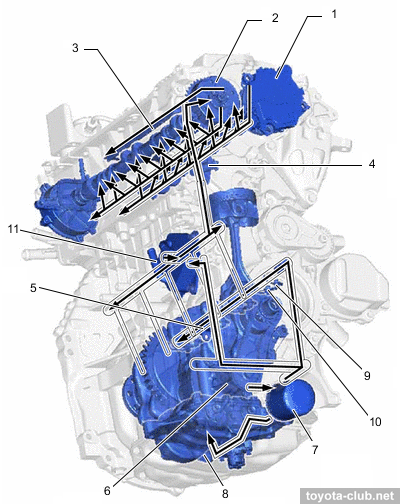
lub_system.png

1 - VVT-iE controller, 2 - VVT-i controller, 3 - oil delivery pipe, 4 - chain tensioner, 5 - oil pressure control valve, 6 - oil pump, 7 - oil filter, 8 - oil strainer, 9 - oil nozzle 1, 10 - oil nozzle 2, 11 - oil cooler.


The main innovation is a variable-discharge oil pump - the second generation, with the principle of operation different from AR and ZR series.

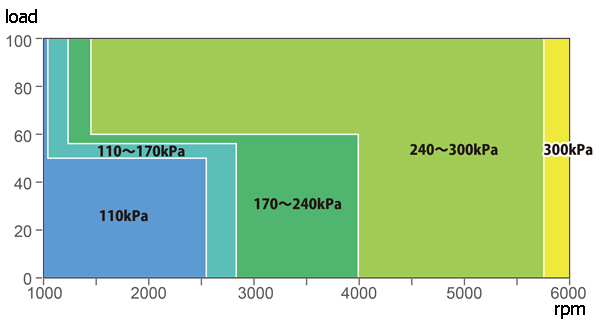
lub_pump_pressure.png


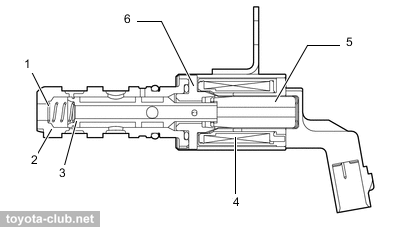
Trochoidal pump is driven via an additional short chain. The ECM controls the pump operation by oil pressure control valve, depending on the engine temperature, speed and other parameters.

lub_oil_pressure_valve.png

1 - spring, 2 - sleeve, 3 - valve, 4 - coil, 5 - plunger, 6 - yoke


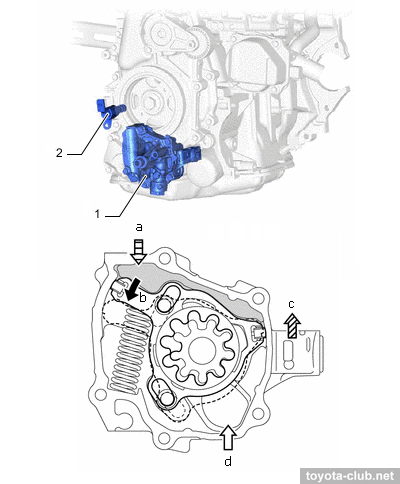
Under the action of pressure in the control chamber, a regulator moves and changes the mutual position of the internal and external rotors, thereby achieving a smooth change of the oil charge volume.

lub_oil_pump_1.png

1 - oil pump, 2 - oil pressure control valve. a - from oil pressure control valve, b - movement of oil pump regulator, c - to oil system, d - from oil strainer


lub_oil_pump_2.png

1 - regulator, 2 - control chamber, 3 - rotor


The oil filter is installed horizontally at the engine front.It is a normal spin-on type filter, unlike the popular on previous engine generation but absolutely vicious "economical" replaceable paper cartridges.
 
The usual some other market owner's manual.

The US/Canada owner's manual states otherwise....

View attachment 301607

In the event you get warranty issues related to lubrication and its effects on the engine, Toyota standard procedure is to send out an oil sample for a used oil analysis to help determine if Toyota will cover the repair through warranty.

Plus, the oil pump is a special variable discharge oil pump that is controlled by the ECU with 0w8 properties. If you use a too thick of an oil, the increased oil pressure can fool the ECU, and will dump excessive oil of the pump, leading to insufficient volume of oil flow to the engine.
Please post the Toyota diagnostic flow charts that lead to a viscosity caused failure.

Also include Toyota’s used oil analysis standard procedures for determining starting viscosity on a failed engine.

Thanks
 
So my brother bought a 2025 Toyota Camry and after 8000 mostly highway miles, the 0w-8 oil was very clean and not dark at all....
Good to hear that. But it isn't surprise because that is one of easiest conditions for motor oil to deliver. No fuel dilution, optimal temperature etc...
 
If you were driving a 6.2, perhaps it would have.
My friend has a Silverado ZR2 Bison that tows Rubicon’s and side by sides up to the trails - on wider trails he just uses the ZR2 for comfort, cargo, and camping, etc … He’s got a heavy foot both on/off the highway …
That 6.2L runs 0W20 AC Delco bcs it was purchased right after the Mexico crankshaft problem …
 
Last edited:
0w8 i guess is good for auto start stop, not wearing starters /batteries out as quick, i turn that stuff off so non issue.

But The toyota and HPL seem very identical on excessive additives, to keep them from collasping.

My case 0w8 is about to dissapear, im not in cold climates running highway conditions.
 
Purchased it 2 weeks ago , it’s not my aunts Prius. 😂200 hp , quiet , nice drive.
850 miles on it, will do an oil analysis now. The 0w8 is like water , obviously, but the new oil is very dark in color. There must be a lot of additives in this oil, Toyota oil, made by Mobil 1 …..
Dark in color?

maybe you had a moly dump


my 0w8 was clear as water, could hardly see it on the dipstick.
 
Don’t forget the tiny “tolerances” and passages for the US. VVT won’t operate correctly.🤣
The two Mickey Mouse shaped gaskets on the valve train of Toyota 2AR-FE (4 cyl. Camry, RAV4, Scion tC) are where the VVT oil holes are.
I think they are pretty tiny (aren't they) and compared to the neighboring 12 mm and/or 14 mm bolt heads, I would guess their diameter is no larger than 5-8 mm (0.02-0.03").
The 3rd circled hole on the background is even smaller and yet smaller on the valve cover (on the 2nd picture).

D75F2388-05EF-4883-B521-0D0FE4A82941.webp


The same size holes (if not smaller) are on the inner side of the valve cover.
3FE0AFF0-F794-445C-962E-19E6A45818CE.webp
 
Last edited:
The two Mickey Mouse shaped gaskets on the valve train of Toyota 2AR-FE (4 cyl. Camry, RAV4, Scion tC) are where the VVT oil holes are.
I think they are pretty tiny (aren't they) and compared to the neighboring 12 mm and/or 14 mm bolt heads, I would guess their diameter is no larger than 5-8 mm (0.02-0.03").
The 3rd circled hole on the background is even smaller and yet smaller on the valve cover (on the 2nd picture).

View attachment 328754

The same size holes (if not smaller) are on the inner side of the valve cover.
View attachment 328755
So are you claiming that only an -8 grade oil will fit through those passages? A -30 or -40 would have molecules that are too large?

I wonder how any oil fits in the bearing clearances?
 
Oil with very high content moly, you heat them hot enough they will dump all their moly, oil immediately turns black. Ive seen Redline do it, which normally has very high moly content.
So I tried to read about this a bit, and I think this is folklore. Do you have any technical information on this "moly dump" phenomenon?
 
So I tried to read about this a bit, and I think this is folklore. Do you have any technical information on this "moly dump" phenomenon?
Ive seen it (no literature needed). I can make it happen right now. With Redline, not hard at all, its really the only oil Ive seen do that with 770 ppm moly. it was 10w30 grade about 30 years ago.

The strongest motor oil ive seen sustain heat was Castrol super bike oil, the name has died, but that oil never blinked from heat.

Power one is a new name, not sure if they changed the formulation, ive not tested it.

BTW amsoil can be made to dump red Phosphorous. But this was way back too.
 
Ive seen it (no literature needed). I can make it happen right now. With Redline, not hard at all, its really the oil Ive seen do that with 770 ppm moly. it was 10w30 grade about 30 years ago.

The strongest motor oil ive seen sustain heat was Castrol super bike oil, the name has died, but that oil never blinked from heat.

Power one is a new name, not sure if they changed the formulation, ive not tested it.

BTW amsoil can be made to dump red Phosphorous.
K.
 
Back
Top Bottom