U.S. Retail Electricity Rate Trends Analysis

I've taken the whole house to off-grid solar except for heat (wood) and hot water (propane), for under $5000. The payback on this is going to be pretty quick. If I had an EV I'd probably need to double it to be able to store enough during work every day to recharge from commuting. Again that would pay off well within my lifetime vs. the $60 per week I'm spending on gas now.

So my philosophy is divorce the grid. It is of no use to me. Fortunately I'm in a State where that is allowed. There will be cloudy days but I'm confident the Sun is going to come up again without anyone needing to kiss any mullah's backside.

Independent grid storage operations could and should exist, except like any other business they need to be able to run on the principle of buying low and selling high. In the present market the demand for grid electricity is so high during the day that that isn't happening.
 
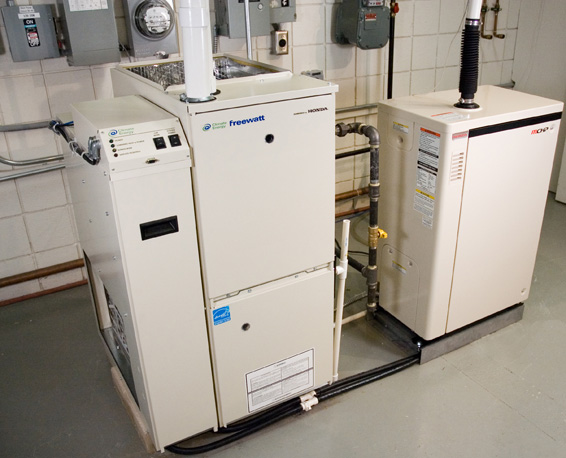
For a while when fuel costs were not excessive, a 'Combined Heat and Power' (often called microcogen) setup could in fact be less expensive than paying the utility company. Small and efficient liquid cooled engine drives a generator, the cooling system heats the house and water. Even the exhaust heat is utilized. Coupled with a heat pump and over unity is fairly easy to achieve in moderate climates.

01.jpg
 
Sure thing.

Nem 3.0 brought numerous changes

1. Forced entry into solar - New homes are burdened with "mandatory" solar whether the owners want it or not.
In a panel only config the power company enjoys re-billing any unused output at tremendous markup while avoiding at least part of the burden of daytime power generation. I believe one can now choose to non export without a battery if they wish.

2. The only way to really get any kind of reasonable payback is to purchase a battery.
Batteries make the systems more complicated as well as have a finite life, and are expensive up front.

Why should utilities pay more than wholesale to repurchase homeowner produced electricity?

Im not saying they should. A plan with over 500 buyback TOU options is ridiculous though.
Just like I shouldn't be forced to buy anything I don't want to buy, I should not be forced to connect to a grid if I so choose to deal with my own electricity.
Why cant I legally defect from the grid?

In what case does the homeowner not carry the cost of solar

When they choose not to have it at all.
In what other state is a new home buyer forced to add solar to their home?
The forcing of new solar is the only part of this update that I'm opposed to. The state already has too much, this is utterly moronic. If people CHOOSE to add solar, and feed it into the grid, they should get the market rate; they should receive the VALUE of that electricity, just like any other generator.

Batteries should also be an option that people can CHOOSE to add to their solar, to increase the capture price of their generation, by exporting it at a time with a higher market price.
 
I've taken the whole house to off-grid solar except for heat (wood) and hot water (propane), for under $5000. The payback on this is going to be pretty quick. If I had an EV I'd probably need to double it to be able to store enough during work every day to recharge from commuting. Again that would pay off well within my lifetime vs. the $60 per week I'm spending on gas now.

So my philosophy is divorce the grid. It is of no use to me. Fortunately I'm in a State where that is allowed. There will be cloudy days but I'm confident the Sun is going to come up again without anyone needing to kiss any mullah's backside.

Independent grid storage operations could and should exist, except like any other business they need to be able to run on the principle of buying low and selling high. In the present market the demand for grid electricity is so high during the day that that isn't happening.
You must live where it's sunny and doesn't get real winter. My buddy has over 30K into his off-grid setup, which includes two large Lithium iron phosphate batteries that everything runs through, and he's running gensets all winter because there's nowhere near enough solar output. We've discussed damming his creek and putting in a small hydro turbine, but he doesn't have the time to do something like that presently.
 
The forcing of new solar is the only part of this update that I'm opposed to. The state already has too much, this is utterly moronic. If people CHOOSE to add solar, and feed it into the grid, they should get the market rate; they should receive the VALUE of that electricity, just like any other generator.

Batteries should also be an option that people can CHOOSE to add to their solar, to increase the capture price of their generation, but exporting it at a time with a higher market price.

I thought my late nem 2 contract was a good balance of what they paid me for what I sent them. It's not as phat as what Jeff gets though. They mark it all up and resell it without generation cost involved. Pretty good deal for them, sure it's thinner than bare cost, but they dont have to supply the load during the day.

On too much solar - I remember when solar wasnt a player in Cali- peak loads were simply at different times. Peak load was 1-4 but they really didnt have the ability to bill TOU then, they resorted to rolling blackouts during high heat days and I remember hollywood going dark multiple times times one summer.

Some companies allow arbitrage others do not - you may not be able to sell after hours, or even during peak at a higher rate- this is all over the map and not consistent from company to company. Other companies will not allow the grid to charge a home backup battery to prevent arbitrage (SCE)

If I'm to be considered a "generator" why shouldn't I be able to choose to withdraw from the system altogether?
No other "generator" is forced into a business with a contract decided by one party.
Feels like Im being forced to pay for the power companies poisoning people and burning whole towns to the ground.

I wish we had benevolent well run entities here like you have in Canada.

My router UPS tracks power hits, this is the number of disruptions I've had in the last 15 months. The guys on the ground are awesome.
The guys in the office - not so much.

IMG_7692.webp
 
Last edited:
For a while when fuel costs were not excessive, a 'Combined Heat and Power' (often called microcogen) setup could in fact be less expensive than paying the utility company. Small and efficient liquid cooled engine drives a generator, the cooling system heats the house and water. Even the exhaust heat is utilized. Coupled with a heat pump and over unity is fairly easy to achieve in moderate climates.

01.jpg
These are killer.
 
I thought my late nem 2 contract was a good balance of what they paid me for what I sent them. It's not as phat as what Jeff gets though. They mark it all up and resell it without generation cost involved. Pretty good deal for them, sure it's thinner than bare cost, but they dont have to supply the load during the day.
Energy is worth whatever the market is willing to pay for it when it is produced. When you don't have much solar on the grid, that price is driven by, typically, single cycle gas peakers, which will bid in until demand is met. Unlike a gas peaker, solar isn't dispatchable, it's going to generate when it generates and that's highly dependent on the time of year and the weather. On top of that, it's correlated, so it all shows up and disappears at once.

When you have little solar, its value correlates well with those gas peakers. As you add more solar, you drive that value down until you hit your saturation point, where you don't need the gas peakers anymore. Any additional capacity added beyond that point simply drives down the value, because it's surplus. At the same time, you are now creating new peaks: the morning/evening ramp periods, where those same peaker plants now have to run for short periods, and so the value of that generation is very high. Batteries, which are also paid exuberant sums, are replacing some of this capacity currently, but these are now the highest value hours.

Unless PG&E owns the peakers, they aren't paying those generation costs either, it's all handled by the market. It's the contracted solar, which is paid whatever that fixed rate is, that screws the market up, because this stuff is displacing market demand, but isn't bidding in, as it's compensation is being netted out with the consumer after the fact.
On too much solar - I remember when solar wasnt a player in Cali- peak loads were simply at different times. Peak load was 1-4 but they really didnt have the ability to bill TOU then, they resorted to rolling blackouts during high heat days and I remember hollywood going dark multiple times times one summer.
That's still happening, you had rolling blackouts last year or the year before. And yes, with too much solar, now the peaks are at different times, we've just moved them around and made them more costly, because the operator is now compensating for huge volumes of energy being paid retail, which means the volumes being purchased from other plants will be at higher rates. They can demand more due to scarcity, and they need to, because they are being displaced by these NUG's.
Some companies allow arbitrage others do not - you may not be able to "sell after hours" at a higher rate- this is all over the map and not consistent from company to company.
Yes, the lack of consistent and coherent policy in the state is a huge issue, no disagreement from me there.
If I'm to be considered a "generator" why shouldn't I be able to choose to withdraw from the system altogether?
You absolutely should be able to, that's another issue I have with this solar mandate.
No other "generator" is forced into a business with a contract decided by one party.
Feels like Im being forced to pay for the power companies poisoning people and burning whole towns to the ground.
A contract makes sense if you are going to be selling energy into the grid. But you should, as you lament, be able to also sign a contract opting out of that participation.
I wish we had benevolent well run entities here like you have in Canada.
I mean, we had some wind and solar idiocy here in Ontario, and we just got a bit more of it with some new contracts signed for a small amount of wind capacity that's being paid about double what it's worth. I'm hopeful that these contracts don't have curtailment compensation clauses, but those details aren't being disclosed. On the plus side, the solar part of the signing was at an average of 8.7 cents, which, since it will be displacing peaking gas, is pretty darn good.
My router UPS tracks power hits, this is the number of disruptions I've had in the last 15 months. The guys on the ground are awesome.
The guys in the office - not so much.

View attachment 336144
I've got a server downtown that's fed from what must be old service and I get event warnings weekly, I've probably had as many, if not more, than you. So that's not a Cali only thing. On the other hand, things are very stable at my house, only a few blocks away 🤷‍♂️
 
I just noticed. No sales tax on your electricity in TN? That is your actual payment?

Yeah no sales tax - it was a shock to me after moving from Georgia where sales tax is applicable to electric but never really dug into it. Appears all residential utilities are exempt from sales tax.
 
Back
Top Bottom