Use a vacuum gauge.You'll be surprised at how easy it is to go in the red,where you waste the most gas.Using a grill block should also help. www.ecomodder.com is a good site for this

You are using an out of date browser. It may not display this or other websites correctly.
You should upgrade or use an alternative browser.
You should upgrade or use an alternative browser.
Share your gas saving tips...
- Thread starter synthetic_crazy
- Start date
- Status
- Not open for further replies.
Originally Posted By: daves66nova
Use a vacuum gauge.You'll be surprised at how easy it is to go in the red,where you waste the most gas.Using a grill block should also help. www.ecomodder.com is a good site for this
had my Bissell all loaded up in the car and then I came back in to re-read your post...oops...vacuum gauge. Drat.
Use a vacuum gauge.You'll be surprised at how easy it is to go in the red,where you waste the most gas.Using a grill block should also help. www.ecomodder.com is a good site for this
had my Bissell all loaded up in the car and then I came back in to re-read your post...oops...vacuum gauge. Drat.
Park where you never need reverse. Backing in and out of stuff eats gas and eats tires on a FWD a lot too.
Timing lights is a big one, already mentioned.
If you have a lot of errands, go to the farthest one first which should make your engine warmer on the trip home.
Timing lights is a big one, already mentioned.
If you have a lot of errands, go to the farthest one first which should make your engine warmer on the trip home.
biggest improvement of all: shave off some body weight on the occupant + driver.
Q.
Q.
90 mpg
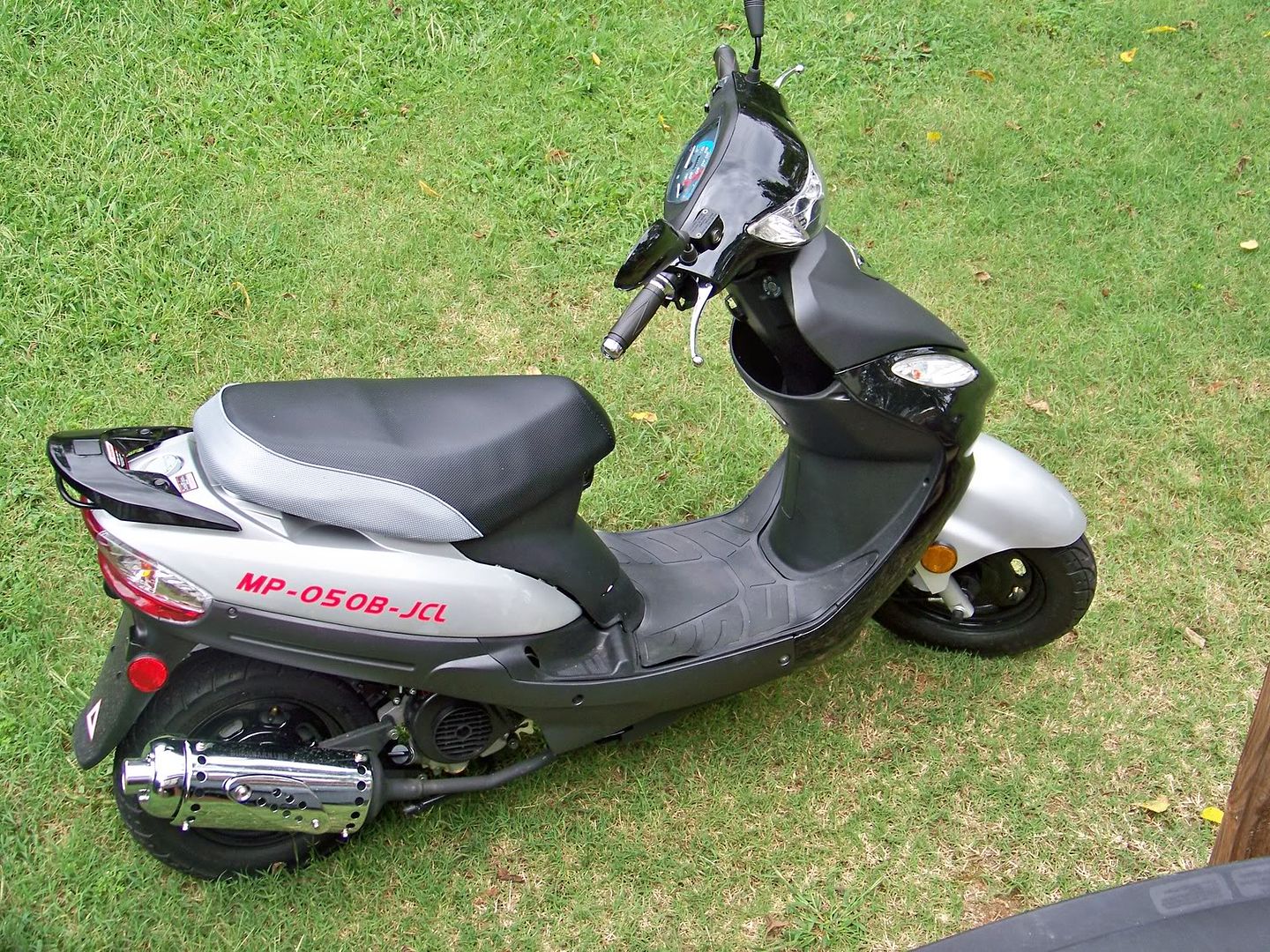
The brake pedal is expensive to use. Try to stay off it as much as possible.
When accelerating don't go too slow. Your mileage will not improve because of pumping losses. A few years ago BMW published some data that showed that being too light on the gas at start up hurt mileage. Of course the article said to use common sense and don't take this as an invitation to over do it.
The fact that you are trying to get better mileage will show an improvement.
Don't tail gate. Hang back a few car lengths when traveling on freeways.
When accelerating don't go too slow. Your mileage will not improve because of pumping losses. A few years ago BMW published some data that showed that being too light on the gas at start up hurt mileage. Of course the article said to use common sense and don't take this as an invitation to over do it.
The fact that you are trying to get better mileage will show an improvement.
Don't tail gate. Hang back a few car lengths when traveling on freeways.
Originally Posted By: synthetic_crazy
3. Anticipate stops at redlights by coasting as far back as possible from the light.
The people in my hometown don't understand that concept.
3. Anticipate stops at redlights by coasting as far back as possible from the light.
The people in my hometown don't understand that concept.
Originally Posted By: synthetic_crazy
As gas prices have begun their upward trek more quickly as of late, I have reverted to some of my 2008 gas saving techniques. Here are a few that I use:
1. I try to keep my highway speeds less than 65, preferably closer to 60.
2. I don't use cruise and as a result allow the car to lose around 5 mph while ascending hills on the interstate. (I maintain the position of my foot on the gas; I don't press farther to maintain the speed up the hill)
3. Anticipate stops at redlights by coasting as far back as possible from the light.
4. No more warm-ups; I wait about 8 seconds after start-up and the car is in gear and rolling.
So far, this has increased my mileage by about 2mpg. I was averaging 29 in my Corolla(3speed automatic transmission) and have increased it to 31 around town. Anybody else have other techniques?
Good ideas except #2 is not contributing to your increase in MPG(IMOA). Using CC on the highway actually helps your MPG as the vehicle maintains a steady speed at the optimum speed/RPM range for the vehicle. While you may be saving a very tiny, minute, amount of fuel going up hills and letting the engine slow down vs the CC giving it more gas to maintain speed, as you say, the CC actually would be saving you more on the flat sections than it is costing you on the hills.
You just can't maintain that nice steady even 60 MPH with your foot over a long drive. No one can if they are honest. You are going to slow down and speed up and slow down and speed up and etc... This takes you in and out of the optimum speed/RPM range constantly. That means you are giving more gas constantly to get back to the 60 MPH when you fall under it even if you don't realize it. You will also use more gas when you are going faster than that 60 MPH sweet spot too. CC will keep you there in that best MPG zone. Use CC along with those other things you are doing and chances are you see more of an increase. Certainly I would doubt a loss.
For me 60 MPH in CC highway gets me the best MPG it seems regardless of the vehicle I have owned. Actually, I even use CC at speeds as low as 40-45 MPH when possible as CC always helps my MPG for the reasons I mention above. I just can not keep the truck in the sweet spot with my foot as effectively as CC can. Hilly regions excluded of course.
If people would simply slow down they would increase their MPG significantly. Going 70, 75, 80, 85+ KILLS MPG even in small economy 4 cyl vehicles and mild mannered V6's never mind trucks and suv's with gas guzzling V8's. Drop it to 60-65 and your MPG will go up if you are one of those lead foot lunatics that literally flies down the highway( will also cut down on traffic accident fatalaties out there too ). Also, accelerating easily from a stop vs flooring it like you are in a drag race also will help your MPG significantly.
Other tips would be...
1 - reduce the weight in your vehicle. Take out everything that isn't needed. Your vehicle is not a storage bin. Lighten the load and MPG will rise.
2 - keep your tires properly inflated. I like to run just a couple PSI higher( cold )than the door jamb sticker says. The factory setting is too low. Properly inflated tires will help MPG vs running them low.
3 - synthetic fluids all around. Not a huge gain but some vehicles can actually see 1-2 MPG from this( i.e. diff's, transmission, engine ).
4 - keep your vehicle properly tuned up and make sure the air filter is clean. IF the filter looks like it just came out of the inside of your exhaust pipe vs the air box change it.
5 - running a good fuel injector cleaner once every 1-2 months helps keep the fuel system clean.
These tips help "some". The biggest thing you can do though to help your MPG is to SLOW DOWN!
As gas prices have begun their upward trek more quickly as of late, I have reverted to some of my 2008 gas saving techniques. Here are a few that I use:
1. I try to keep my highway speeds less than 65, preferably closer to 60.
2. I don't use cruise and as a result allow the car to lose around 5 mph while ascending hills on the interstate. (I maintain the position of my foot on the gas; I don't press farther to maintain the speed up the hill)
3. Anticipate stops at redlights by coasting as far back as possible from the light.
4. No more warm-ups; I wait about 8 seconds after start-up and the car is in gear and rolling.
So far, this has increased my mileage by about 2mpg. I was averaging 29 in my Corolla(3speed automatic transmission) and have increased it to 31 around town. Anybody else have other techniques?
Good ideas except #2 is not contributing to your increase in MPG(IMOA). Using CC on the highway actually helps your MPG as the vehicle maintains a steady speed at the optimum speed/RPM range for the vehicle. While you may be saving a very tiny, minute, amount of fuel going up hills and letting the engine slow down vs the CC giving it more gas to maintain speed, as you say, the CC actually would be saving you more on the flat sections than it is costing you on the hills.
You just can't maintain that nice steady even 60 MPH with your foot over a long drive. No one can if they are honest. You are going to slow down and speed up and slow down and speed up and etc... This takes you in and out of the optimum speed/RPM range constantly. That means you are giving more gas constantly to get back to the 60 MPH when you fall under it even if you don't realize it. You will also use more gas when you are going faster than that 60 MPH sweet spot too. CC will keep you there in that best MPG zone. Use CC along with those other things you are doing and chances are you see more of an increase. Certainly I would doubt a loss.
For me 60 MPH in CC highway gets me the best MPG it seems regardless of the vehicle I have owned. Actually, I even use CC at speeds as low as 40-45 MPH when possible as CC always helps my MPG for the reasons I mention above. I just can not keep the truck in the sweet spot with my foot as effectively as CC can. Hilly regions excluded of course.
If people would simply slow down they would increase their MPG significantly. Going 70, 75, 80, 85+ KILLS MPG even in small economy 4 cyl vehicles and mild mannered V6's never mind trucks and suv's with gas guzzling V8's. Drop it to 60-65 and your MPG will go up if you are one of those lead foot lunatics that literally flies down the highway( will also cut down on traffic accident fatalaties out there too ). Also, accelerating easily from a stop vs flooring it like you are in a drag race also will help your MPG significantly.
Other tips would be...
1 - reduce the weight in your vehicle. Take out everything that isn't needed. Your vehicle is not a storage bin. Lighten the load and MPG will rise.
2 - keep your tires properly inflated. I like to run just a couple PSI higher( cold )than the door jamb sticker says. The factory setting is too low. Properly inflated tires will help MPG vs running them low.
3 - synthetic fluids all around. Not a huge gain but some vehicles can actually see 1-2 MPG from this( i.e. diff's, transmission, engine ).
4 - keep your vehicle properly tuned up and make sure the air filter is clean. IF the filter looks like it just came out of the inside of your exhaust pipe vs the air box change it.
5 - running a good fuel injector cleaner once every 1-2 months helps keep the fuel system clean.
These tips help "some". The biggest thing you can do though to help your MPG is to SLOW DOWN!
Originally Posted By: NHHEMI
Good ideas except #2 is not contributing to your increase in MPG(IMOA). Using CC on the highway actually helps your MPG as the vehicle maintains a steady speed at the optimum speed/RPM range for the vehicle. While you may be saving a very tiny, minute, amount of fuel going up hills and letting the engine slow down vs the CC giving it more gas to maintain speed, as you say, the CC actually would be saving you more on the flat sections than it is costing you on the hills.
That simply isn't correct in many circumstances.
I can easily gain a 2-3 MPG trip average by coasting uphill and letting gravity help with some of my acceleration downhill. While I don't advocate or practice it on the Interstate or when there is traffic on a 2 lane highway, I frequently do it on my way to town, especially early on a Saturday or Sunday when there isn't any traffic.
I take it a step further and allow my speed to drop from 60 MPH down to about 45 MPH. Then on the downhill side I gently bring the speed back up to 60 in anticipation of the next hill, trying to time it so I hit 60 just as I begin the next climb.
I'll agree that using the cruise control on relatively level terrain works best. But on my hilly drive, when conditions are right, I'll achieve a better result by using my foot and following the above technique.
2-3 MPG simply isn't "tiny, minute" amount of fuel in my book.
Good ideas except #2 is not contributing to your increase in MPG(IMOA). Using CC on the highway actually helps your MPG as the vehicle maintains a steady speed at the optimum speed/RPM range for the vehicle. While you may be saving a very tiny, minute, amount of fuel going up hills and letting the engine slow down vs the CC giving it more gas to maintain speed, as you say, the CC actually would be saving you more on the flat sections than it is costing you on the hills.
That simply isn't correct in many circumstances.
I can easily gain a 2-3 MPG trip average by coasting uphill and letting gravity help with some of my acceleration downhill. While I don't advocate or practice it on the Interstate or when there is traffic on a 2 lane highway, I frequently do it on my way to town, especially early on a Saturday or Sunday when there isn't any traffic.
I take it a step further and allow my speed to drop from 60 MPH down to about 45 MPH. Then on the downhill side I gently bring the speed back up to 60 in anticipation of the next hill, trying to time it so I hit 60 just as I begin the next climb.
I'll agree that using the cruise control on relatively level terrain works best. But on my hilly drive, when conditions are right, I'll achieve a better result by using my foot and following the above technique.
2-3 MPG simply isn't "tiny, minute" amount of fuel in my book.
Originally Posted By: willix
90 mpg
Don't know if I, plus the wife and three kids can all fit on that thing.

90 mpg
Don't know if I, plus the wife and three kids can all fit on that thing.
Retire from work! I used to squeeze 2 weeks out of a tankful from my '04 350Z (short drive, since I live only 9.5k from where I used to work). Now I'm retired, I get a month-and-a-half per tankful! S-w-e-e-t!!!
________________________________________________________
62-year-old happy camper drivin' a flawless '04 Touring Coupe!
________________________________________________________
62-year-old happy camper drivin' a flawless '04 Touring Coupe!

JHZR2
Staff member
Originally Posted By: OneEyeJack
The brake pedal is expensive to use. Try to stay off it as much as possible.
When accelerating don't go too slow. Your mileage will not improve because of pumping losses. A few years ago BMW published some data that showed that being too light on the gas at start up hurt mileage. Of course the article said to use common sense and don't take this as an invitation to over do it.
The fact that you are trying to get better mileage will show an improvement.
Don't tail gate. Hang back a few car lengths when traveling on freeways.
That is a good point. Ive noticed that on the realtime MPG gauge on my 91 BMW. Be too light and you dont really go up in MPGs fast. No mechanical advantage getting through the gears.
Saab also did a study sometime back that found that best mileage and no appreciable wear was obtained skip shifting to the point just where lugging the engine stops. I dont have a citation on it, but it was discussed on here years ago.
So short shifting with reasonable acceleration is how I do it and it works well. I generally beat EPA highway numbers for city-mixed driving on my cars. I drive like there is an egg between my foot and the pedal, and try to respect physics.
The brake pedal is expensive to use. Try to stay off it as much as possible.
When accelerating don't go too slow. Your mileage will not improve because of pumping losses. A few years ago BMW published some data that showed that being too light on the gas at start up hurt mileage. Of course the article said to use common sense and don't take this as an invitation to over do it.
The fact that you are trying to get better mileage will show an improvement.
Don't tail gate. Hang back a few car lengths when traveling on freeways.
That is a good point. Ive noticed that on the realtime MPG gauge on my 91 BMW. Be too light and you dont really go up in MPGs fast. No mechanical advantage getting through the gears.
Saab also did a study sometime back that found that best mileage and no appreciable wear was obtained skip shifting to the point just where lugging the engine stops. I dont have a citation on it, but it was discussed on here years ago.
So short shifting with reasonable acceleration is how I do it and it works well. I generally beat EPA highway numbers for city-mixed driving on my cars. I drive like there is an egg between my foot and the pedal, and try to respect physics.
JHZR2
Staff member
Originally Posted By: Pop_Rivit
I take it a step further and allow my speed to drop from 60 MPH down to about 45 MPH. Then on the downhill side I gently bring the speed back up to 60 in anticipation of the next hill, trying to time it so I hit 60 just as I begin the next climb.
I'll agree that using the cruise control on relatively level terrain works best. But on my hilly drive, when conditions are right, I'll achieve a better result by using my foot and following the above technique.
2-3 MPG simply isn't "tiny, minute" amount of fuel in my book.
I believe that is called a pulse and glie in some circles. Ive found the same. CC just isnt good at providing optimum fuel economy in any real varied terrain. It can help to optimize on very flat terrain where it can minimize throttle input to maintain speed, but IMO it isnt good enough at it when loads change. Ive found a few MPG difference doing it manually too if care is taken.
Most do not take the care and will not see it.
I take it a step further and allow my speed to drop from 60 MPH down to about 45 MPH. Then on the downhill side I gently bring the speed back up to 60 in anticipation of the next hill, trying to time it so I hit 60 just as I begin the next climb.
I'll agree that using the cruise control on relatively level terrain works best. But on my hilly drive, when conditions are right, I'll achieve a better result by using my foot and following the above technique.
2-3 MPG simply isn't "tiny, minute" amount of fuel in my book.
I believe that is called a pulse and glie in some circles. Ive found the same. CC just isnt good at providing optimum fuel economy in any real varied terrain. It can help to optimize on very flat terrain where it can minimize throttle input to maintain speed, but IMO it isnt good enough at it when loads change. Ive found a few MPG difference doing it manually too if care is taken.
Most do not take the care and will not see it.
I have also noticed, especially with the Acura, that getting up to speed and then letting the transmission lock into 5th with the TCC is best for mileage. Accelerating slow just burns more fuel in that car. Now in the Toyota, where the TCC will engage every gear starting with 3rd, accelerating slow seems to work just as well as accelerating fast, because there's no slippage in the transmission to waste fuel.
Cruise control saves fuel for me only on super flat land. Any hills at all, and I think it's worse, for an attentive driver at least. By its very nature, cruise control is a reactive device, and you'll always use more energy trying to react to a change than you'll use if you can anticipate that change.
Cruise control saves fuel for me only on super flat land. Any hills at all, and I think it's worse, for an attentive driver at least. By its very nature, cruise control is a reactive device, and you'll always use more energy trying to react to a change than you'll use if you can anticipate that change.
Use public transit
Gently accelerate up hills and put it in idle going down hills. This reduces your average rpm's. Your engine is most efficient when making power under moderate load with low rpm's, not making the required power on a steady rate at higher average rpm.
Think how much you have to depress the pedal to feed more gas to the engine to increase rpm's from idle to 2,500 or 3,000 rpm while making NO more add'l useful power. Lots of gas required just to hold engine at highway rpm's.
Think how much you have to depress the pedal to feed more gas to the engine to increase rpm's from idle to 2,500 or 3,000 rpm while making NO more add'l useful power. Lots of gas required just to hold engine at highway rpm's.
My tips are:
Get a scan gauge or something similar to give you instantaneous mileage and throttle position feed back.
Coast in N down the hills if they aren't steep enough to need engine braking. No harm doing this in a manual car and I do this in my autotragic Neon too, but its a tough old 3 speed. Tickling the throttle to maintain speed shows 60-70mpg, but just rolling in N at 60 mph gives 120mpg, which adds up even if its only a mile in my 30 mile commute.
Do these and many of the tips above get my old car from 30mpg driving normally to 36+mpg tanks and sometimes 40mpg.
Get a scan gauge or something similar to give you instantaneous mileage and throttle position feed back.
Coast in N down the hills if they aren't steep enough to need engine braking. No harm doing this in a manual car and I do this in my autotragic Neon too, but its a tough old 3 speed. Tickling the throttle to maintain speed shows 60-70mpg, but just rolling in N at 60 mph gives 120mpg, which adds up even if its only a mile in my 30 mile commute.
Do these and many of the tips above get my old car from 30mpg driving normally to 36+mpg tanks and sometimes 40mpg.
Originally Posted By: addyguy
Slowing down, I've found, makes for the most profound gas savings. Staying a 55-60mph on highway trips, as opposed to 70-75mph, saves me about 1/8th of a tank per trip!
It's the same benefit as paying $2.60 for gas when the pump price is $3.
Slowing down, I've found, makes for the most profound gas savings. Staying a 55-60mph on highway trips, as opposed to 70-75mph, saves me about 1/8th of a tank per trip!
It's the same benefit as paying $2.60 for gas when the pump price is $3.

Look at your weekend routines. Combine as many trips as you can at one time. Like going to Walmart and then getting home and realizing you need to fill up, or return a DVD, etc. etc. Get a credit card that pays 2% on gas purchases, Discover has one that STAYS at 2%. Don't fall for those 5% deals, they are for a limited time and by all means, never EVER pay annual fees on them. If your Walmart has a gas station, get a gift card and put some money in it, it knocks off 5 cents a gallon if you use it there. Anything above around 2.50 a gallon, you better off using a 2% cash back credit card though.
- Status
- Not open for further replies.
Similar threads

- Replies
- 116
- Views
- 4K

- Replies
- 36
- Views
- 2K
- Replies
- 48
- Views
- 2K

- Replies
- 19
- Views
- 23K