Does the cold weather performance of synthetic oils degrade as the miles and time accumulate? For example, if you did a MRV and CCS test on a fresh batch of 0w30 or 0W40 oil, and then ran that oil for 6000 miles over 10 months, and then repeated the MRV and CCS tests, would you see a big difference in the test results?

You are using an out of date browser. It may not display this or other websites correctly.
You should upgrade or use an alternative browser.
You should upgrade or use an alternative browser.
Oil Cold Temp Performance Degrades With Use?
- Thread starter SubLGT
- Start date

- Status
- Not open for further replies.
I think that depends on the base oil chemistry,but looking at used oil analysis should give an indication of 'stay-in-grade' function.Or is this still too ambiguous?
It's a good question I have often wondered myself.
One attribute that does often drop if an oil shears is an oil's VI resulting in a thicker oil on start-up.
The only practical way that I can see of determining if an oil's cold start-up performance is deteriorating is with an oil pressure gauge. Assuming the gauge doesn't peg on a very cold start, if the initial OP grows higher as the miles accumulate it's a sure fire indicator that the oil is getting thicker.
One attribute that does often drop if an oil shears is an oil's VI resulting in a thicker oil on start-up.
The only practical way that I can see of determining if an oil's cold start-up performance is deteriorating is with an oil pressure gauge. Assuming the gauge doesn't peg on a very cold start, if the initial OP grows higher as the miles accumulate it's a sure fire indicator that the oil is getting thicker.
I don't know about synthetics, but I've seen good group II oils with a -20 something pour point just sit in the side of the engine like gelatin when you pull the filter housing off, or sit in the filter when you turn it over when the oil has 3 times the recommended hours on it.
According to UOA, it was fine at normal temperatures,
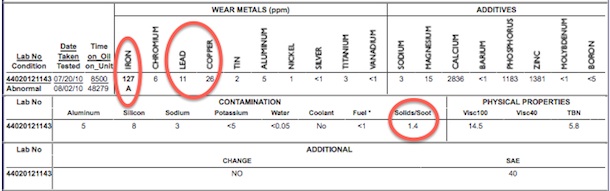
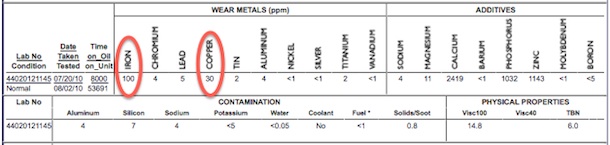
According to UOA, it was fine at normal temperatures,
I did find this 1980 abstract at SAE: "Low Temperature Viscosity Characteristics of Used Engine Oils".
Abstract:
"This paper presents the data from an SAE F&L 2 investigation into the viscosity increase at −18°C of crankcase oils as a function of mileage, engine type, type of service, viscosity grade and base oil type (petroleum or synthetic). The total data base from the survey is 1,530 viscosity measurements. These have been classified to show the viscosity increase for each of the major viscosity grades. The data show that 50% of all SAE 5W-X and SAE 10W-X oils go out of grade by 2,500 miles of use. SAE 15W-X and SAE 20W-X oils show better stability and remain in their respective low temperature viscosity grades for approximately 11,000 miles. While this survey has quantified the amount of viscosity increase in typical passenger car service, it does not provide any data to show the effects of this viscosity increase on startability in the field. A second survey is currently underway to cover this and the results will be published in a future paper."
http://papers.sae.org/800366
Abstract:
"This paper presents the data from an SAE F&L 2 investigation into the viscosity increase at −18°C of crankcase oils as a function of mileage, engine type, type of service, viscosity grade and base oil type (petroleum or synthetic). The total data base from the survey is 1,530 viscosity measurements. These have been classified to show the viscosity increase for each of the major viscosity grades. The data show that 50% of all SAE 5W-X and SAE 10W-X oils go out of grade by 2,500 miles of use. SAE 15W-X and SAE 20W-X oils show better stability and remain in their respective low temperature viscosity grades for approximately 11,000 miles. While this survey has quantified the amount of viscosity increase in typical passenger car service, it does not provide any data to show the effects of this viscosity increase on startability in the field. A second survey is currently underway to cover this and the results will be published in a future paper."
http://papers.sae.org/800366
A 1987 SAE paper: "Factors Affecting the Low Temperature Pumpability of Used Engine Oils"
Abstract:
"A large number of studies have been published on the low temperature pumpability characteristics of fresh oils; however, less is known about the effects of oil aging on this property. In laboratory viscometric tests, fuel dilution, mechanical shearing, oxidative degradation and oil contaminants were all shown to significantly affect low temperature fluidity of multigrade engine oil formulations sensitive to slow cool gelation. Moreover, the cooling and shear rate applied to the test oil was found to play an important role in the overall impact of these factors. For example, fuel dilution may improve cold cranking viscosity while degrading slow-cool MRV performance. These laboratory viscometric studies have been supplemented by full scale All-Weather Chassis Dynamometer testing comparing the pumpability performance of new and used SAE 10w30 engine oils."
http://papers.sae.org/872049
Abstract:
"A large number of studies have been published on the low temperature pumpability characteristics of fresh oils; however, less is known about the effects of oil aging on this property. In laboratory viscometric tests, fuel dilution, mechanical shearing, oxidative degradation and oil contaminants were all shown to significantly affect low temperature fluidity of multigrade engine oil formulations sensitive to slow cool gelation. Moreover, the cooling and shear rate applied to the test oil was found to play an important role in the overall impact of these factors. For example, fuel dilution may improve cold cranking viscosity while degrading slow-cool MRV performance. These laboratory viscometric studies have been supplemented by full scale All-Weather Chassis Dynamometer testing comparing the pumpability performance of new and used SAE 10w30 engine oils."
http://papers.sae.org/872049
A 2000 SAE paper: "Deterioration in Used Oil Low Temperature Pumpability Properties"
Abstract:
"A significant deterioration in low temperature pumpability properties (as measured by the mini-rotary viscometer; MRV) was observed in certain commercial-quality engine oils in a taxi field test program. A detailed investigation demonstrated that contamination by carry-over of the factory fill oil in combination with oil aging was the cause of the marked deterioration in low-temperature pumpability properties; no evidence of new oil incompatibility was observed using industry-standard test procedures. A subsequent investigation identified a number of commercial ILSAC GF-2 quality engine oils which also caused large MRV viscosity increases when added in concentrations as low as 1 wt% to used engine oils. A root-cause evaluation established that low concentrations of certain viscosity index improvers caused large MRV viscosity increases when added to used oils. Results from this investigation suggest that a new industry standard may be required to ensure used oil compatibility over a lubricant's normal drain interval."
http://papers.sae.org/2000-01-2942
Abstract:
"A significant deterioration in low temperature pumpability properties (as measured by the mini-rotary viscometer; MRV) was observed in certain commercial-quality engine oils in a taxi field test program. A detailed investigation demonstrated that contamination by carry-over of the factory fill oil in combination with oil aging was the cause of the marked deterioration in low-temperature pumpability properties; no evidence of new oil incompatibility was observed using industry-standard test procedures. A subsequent investigation identified a number of commercial ILSAC GF-2 quality engine oils which also caused large MRV viscosity increases when added in concentrations as low as 1 wt% to used engine oils. A root-cause evaluation established that low concentrations of certain viscosity index improvers caused large MRV viscosity increases when added to used oils. Results from this investigation suggest that a new industry standard may be required to ensure used oil compatibility over a lubricant's normal drain interval."
http://papers.sae.org/2000-01-2942

Another 2000 SAE paper, following up on the taxi field test noted above:
"Low Temperature Rheology of Engine Lubricants: Investigation of High Used Oil Pumping Viscosity"
Abstract:
"A taxi field test in 1999 resulted in unusually high used oil MRV TP-1 viscosity in the first 16,000-kilometer drain oil. A subsequent root cause investigation revealed that contamination of the test oil by carry-over of the factory-fill oil followed by oil aging in the vehicle was responsible for the unusual high MRV TP-1 viscosity. Contamination by the factory-fill oil alone cannot account for the high MRV TP-1 viscosity; oil aging in vehicles is an essential co-factor. While the precise mechanism has not been determined, high MRV TP-1 viscosity and yield stress appear to be the consequence of reduction in PPD effectiveness but not PPD degradation. However, the MRV TP-1 viscosity and yield stress of such used oil can be restored to acceptable levels by an optimized PPD system. The study found that used oil MRV TP-1 pumping viscosity and yield stress can be highly dependent on the viscosity index improvers used in the oils involved. However, oil robustness can be enhanced by a rigorous field test protocol."
http://papers.sae.org/2000-01-2944
"Low Temperature Rheology of Engine Lubricants: Investigation of High Used Oil Pumping Viscosity"
Abstract:
"A taxi field test in 1999 resulted in unusually high used oil MRV TP-1 viscosity in the first 16,000-kilometer drain oil. A subsequent root cause investigation revealed that contamination of the test oil by carry-over of the factory-fill oil followed by oil aging in the vehicle was responsible for the unusual high MRV TP-1 viscosity. Contamination by the factory-fill oil alone cannot account for the high MRV TP-1 viscosity; oil aging in vehicles is an essential co-factor. While the precise mechanism has not been determined, high MRV TP-1 viscosity and yield stress appear to be the consequence of reduction in PPD effectiveness but not PPD degradation. However, the MRV TP-1 viscosity and yield stress of such used oil can be restored to acceptable levels by an optimized PPD system. The study found that used oil MRV TP-1 pumping viscosity and yield stress can be highly dependent on the viscosity index improvers used in the oils involved. However, oil robustness can be enhanced by a rigorous field test protocol."
http://papers.sae.org/2000-01-2944
Another 2000 SAE paper: "Low Temperature Rheological Properties of Aged Crankcase Oils"
Abstract:
"The low-temperature pumpability of engine oil throughout the engine at startup is an important property. Insuring that fresh oils can be pumped at low temperatures has been a requirement of crankcase lubricants for approximately two decades. Extending the assurance of the oil's low temperature pumpability as it ages under engine operation has been the concern of car manufacturers and lubricant marketers for some time. In order to determine the factors influencing the aged oil's low temperature pumpability, we have undertaken a fleet test. We found that as lubricants are aged, excellent low temperature pumping properties can be maintained if lubricants are formulated with viscosity-index improvers incapable of forming polymer networks, base oils with a low tendency to form wax networks, effective pour-point depressants, and if oil drain intervals are not extended beyond the performance limitations of the specific lubricant category."
http://papers.sae.org/2000-01-2943
Abstract:
"The low-temperature pumpability of engine oil throughout the engine at startup is an important property. Insuring that fresh oils can be pumped at low temperatures has been a requirement of crankcase lubricants for approximately two decades. Extending the assurance of the oil's low temperature pumpability as it ages under engine operation has been the concern of car manufacturers and lubricant marketers for some time. In order to determine the factors influencing the aged oil's low temperature pumpability, we have undertaken a fleet test. We found that as lubricants are aged, excellent low temperature pumping properties can be maintained if lubricants are formulated with viscosity-index improvers incapable of forming polymer networks, base oils with a low tendency to form wax networks, effective pour-point depressants, and if oil drain intervals are not extended beyond the performance limitations of the specific lubricant category."
http://papers.sae.org/2000-01-2943
A 2010 SAE paper: "Assessment of Ageing Mechanisms in Lubricants and Their Effects on Retained Low Temperature Pumpability of Top Tier Oils"
Abstract:
"Low temperature pumpability is an important requirement for engine lubricants. It ensures that sufficient oil reaches the parts of the engine requiring wear protection on engine start-up. Until recently, most industry emphasis has been on the low temperature pumpability of the fresh oil. However, the oil can undergo a number of changes during its lifetime in the engine which adversely affect low temperature pumpability. Industry stakeholders are now expressing concerns about the potential risk of engine failures due to deterioration of low temperature pumpability of oils during their life cycle in the engine. Concerns have also been raised over the last few years that the move to Group III base stocks, while improving many of the properties of oil formulations, may also impact their retained low temperature pumpability. The increasing use of biodiesel, particularly when coupled with extended oil drain intervals, has also been shown to impact low temperature pumpability performance of some oils."
http://papers.sae.org/2010-01-2177
Abstract:
"Low temperature pumpability is an important requirement for engine lubricants. It ensures that sufficient oil reaches the parts of the engine requiring wear protection on engine start-up. Until recently, most industry emphasis has been on the low temperature pumpability of the fresh oil. However, the oil can undergo a number of changes during its lifetime in the engine which adversely affect low temperature pumpability. Industry stakeholders are now expressing concerns about the potential risk of engine failures due to deterioration of low temperature pumpability of oils during their life cycle in the engine. Concerns have also been raised over the last few years that the move to Group III base stocks, while improving many of the properties of oil formulations, may also impact their retained low temperature pumpability. The increasing use of biodiesel, particularly when coupled with extended oil drain intervals, has also been shown to impact low temperature pumpability performance of some oils."
http://papers.sae.org/2010-01-2177
Originally Posted By: CATERHAM
It's a good question I have often wondered myself.
One attribute that does often drop if an oil shears is an oil's VI resulting in a thicker oil on start-up.
The only practical way that I can see of determining if an oil's cold start-up performance is deteriorating is with an oil pressure gauge. Assuming the gauge doesn't peg on a very cold start, if the initial OP grows higher as the miles accumulate it's a sure fire indicator that the oil is getting thicker.
Perhaps these folks at Delphi Labs are thinking along the same lines:
"A methodology for measuring oil viscosity in an internal combustion engine has been developed that is based on measured values of oil pressure and oil temperature at a relatively low engine speed near idle. Engine oil pressure results from the resistance of the oil to flow under the pumping action of the oil pump. The resistance to flow, in turn, is a function of both the viscosity of the oil and the flow rate. At a constant oil flow rate, a higher oil viscosity will result in a higher oil pressure. Oil viscosity is an important factor in determining the ability of the oil to provide effective lubrication and, for example, can be used as an indicator of the need to change the oil. This report describes the operational principles of the methodology for determining engine oil viscosity and a proof of concept based on a simple vehicle test."
From a 2006 SAE paper "Engine Oil Viscometer Based on Oil Pressure Sensor"
http://papers.sae.org/2006-01-0701
It's a good question I have often wondered myself.
One attribute that does often drop if an oil shears is an oil's VI resulting in a thicker oil on start-up.
The only practical way that I can see of determining if an oil's cold start-up performance is deteriorating is with an oil pressure gauge. Assuming the gauge doesn't peg on a very cold start, if the initial OP grows higher as the miles accumulate it's a sure fire indicator that the oil is getting thicker.
Perhaps these folks at Delphi Labs are thinking along the same lines:
"A methodology for measuring oil viscosity in an internal combustion engine has been developed that is based on measured values of oil pressure and oil temperature at a relatively low engine speed near idle. Engine oil pressure results from the resistance of the oil to flow under the pumping action of the oil pump. The resistance to flow, in turn, is a function of both the viscosity of the oil and the flow rate. At a constant oil flow rate, a higher oil viscosity will result in a higher oil pressure. Oil viscosity is an important factor in determining the ability of the oil to provide effective lubrication and, for example, can be used as an indicator of the need to change the oil. This report describes the operational principles of the methodology for determining engine oil viscosity and a proof of concept based on a simple vehicle test."
From a 2006 SAE paper "Engine Oil Viscometer Based on Oil Pressure Sensor"
http://papers.sae.org/2006-01-0701
It nice to know at least one SAE member agrees with me.
Here is a link to a pdf of the full paper from Infineum: "Assessment of Ageing Mechanisms in Lubricants and Their Effects on Retained Low Temperature Pumpability of Top Tier Oils"
http://www.infineum.com/Documents/Crankc...icants-2010.pdf
http://www.infineum.com/Documents/Crankc...icants-2010.pdf
I wonder if it could be "refreshed" part way through a longer OCI to maintain cold weather performance?
Originally Posted By: SubLGT
Here is a link to a pdf of the full paper from Infineum: "Assessment of Ageing Mechanisms in Lubricants and Their Effects on Retained Low Temperature Pumpability of Top Tier Oils"
http://www.infineum.com/Documents/Crankc...icants-2010.pdf
Wow! That's an awesome paper. One point they make in there is that topping up with a different oil can have a large adverse effect on Cold Pumpability.
Here is a link to a pdf of the full paper from Infineum: "Assessment of Ageing Mechanisms in Lubricants and Their Effects on Retained Low Temperature Pumpability of Top Tier Oils"
http://www.infineum.com/Documents/Crankc...icants-2010.pdf
Wow! That's an awesome paper. One point they make in there is that topping up with a different oil can have a large adverse effect on Cold Pumpability.
- Joined
- Aug 28, 2006
- Messages
- 2,330
Thank you SubLGT for posting that information. Great reading.
Originally Posted By: dparm
I wonder if it could be "refreshed" part way through a longer OCI to maintain cold weather performance?
^^^I sometimes do just this by changing out the filter, and draining ~ a quart, often times topping off with a lower viscosity oil of the same brand (i.e.; Red Line 0W-20), especially if we are having an extended cold spell.
I wonder if it could be "refreshed" part way through a longer OCI to maintain cold weather performance?
^^^I sometimes do just this by changing out the filter, and draining ~ a quart, often times topping off with a lower viscosity oil of the same brand (i.e.; Red Line 0W-20), especially if we are having an extended cold spell.
Here is a short powerpoint presentation from Infineum:
"In-Service Low Temperature Pumpability: The benefits of Amorphous Polymer Viscosity Modifiers in Modern and Emerging Crankcase Lubricants "
http://www.infineum.com/Documents/Crankc...ssia%202007.pdf
"In-Service Low Temperature Pumpability: The benefits of Amorphous Polymer Viscosity Modifiers in Modern and Emerging Crankcase Lubricants "
http://www.infineum.com/Documents/Crankc...ssia%202007.pdf
- Status
- Not open for further replies.
Similar threads
- Locked
- Replies
- 7
- Views
- 2K
- Replies
- 7
- Views
- 2K
- Replies
- 4
- Views
- 1K
- Locked
- Replies
- 0
- Views
- 681

- Locked
- Replies
- 25
- Views
- 6K