New ride itch. Possible upgrade from CR-V.

Status
Not open for further replies.
Is there a way to take the negative camber out of these vehicles? I'd rather have better tire wear if it came down to it. I don't take turns at high speeds to need the extra grip.
 
Originally Posted By: badtlc
Is there a way to take the negative camber out of these vehicles? I'd rather have better tire wear if it came down to it. I don't take turns at high speeds to need the extra grip.


I can't speak for other models, but assume availability of a camber kit. For a Civic you can buy several different camber kits which allow for a few degrees of camber adjust. I am sure it can be done for others models too.
 
Wouldn't you want to take the camber out when not towing/under a load then?
 
Originally Posted By: Miller88
Originally Posted By: Hokiefyd
Originally Posted By: Miller88
And they have SEVERE camber issues with any sort of load in the back.


This is by design, and is a trait held by most vehicles with an independent rear suspension subject to lots of loading. Negative camber gain increases vehicle stability, though generally does so at the expense of tire wear. This is why it's beneficial to have some negative camber gain when loaded, but to have less negative camber when unloaded.


I understand they do it for better handling ... but, wow, I wouldn't be able to afford to keep tires on them! Ever see one with 7 people in it? The tire is riding on the sidewall. I'd be worried about tread separation - i imagine the inside of the tire is pretty hot.


+1, I see it all the time mostly on MDX's and Odyssey's though.
 
Originally Posted By: Miller88
I understand they do it for better handling ... but, wow, I wouldn't be able to afford to keep tires on them! Ever see one with 7 people in it? The tire is riding on the sidewall. I'd be worried about tread separation - i imagine the inside of the tire is pretty hot.


You're talking to an owner of one of these vehicles. We use our third row regularly. Not most of the time, but regularly. The tire isn't riding on the sidewall, and believe it or not, tire wear remains even across the tread.

Camber kits are available for these, and our MDX does have one. The kit is essentially an adjustable camber control link (sort of like a tie rod end). As the suspension settles over time (from bushing or coil spring wear), camber can get out of specification. I'm not denying that there are vehicles out there with too much camber that is out of spec. If that is the case, then it is indeed out of spec (and not operating as designed); this can be corrected.

I used to make fun of this when I owned a minivan with a solid rear axle. I'd say (to myself), "get a real vehicle, one that won't sit on the ground with a load." I'm here to say that vehicle stability when loaded is simply not in the same league. Our minivan would wallow all over the interstate with a load in the back; the MDX stays planted and controlled. After owning both types of rear suspensions, and mocking the one with negative camber, I've come to appreciate the benefits of IRS and believe that the benefits far outweigh the negatives (for a family-type vehicle used to haul moderate loads).

Here is a picture of the camber kit on our MDX. I have not yet installed one on the CR-V, though I may in the future.

2010-12-04_14-23-25_429.jpg
 
Originally Posted By: Hokiefyd
Originally Posted By: Miller88
I understand they do it for better handling ... but, wow, I wouldn't be able to afford to keep tires on them! Ever see one with 7 people in it? The tire is riding on the sidewall. I'd be worried about tread separation - i imagine the inside of the tire is pretty hot.


You're talking to an owner of one of these vehicles. We use our third row regularly. Not most of the time, but regularly. The tire isn't riding on the sidewall, and believe it or not, tire wear remains even across the tread.

Camber kits are available for these, and our MDX does have one. The kit is essentially an adjustable camber control link (sort of like a tie rod end). As the suspension settles over time (from bushing or coil spring wear), camber can get out of specification. I'm not denying that there are vehicles out there with too much camber that is out of spec. If that is the case, then it is indeed out of spec (and not operating as designed); this can be corrected.

I used to make fun of this when I owned a minivan with a solid rear axle. I'd say (to myself), "get a real vehicle, one that won't sit on the ground with a load." I'm here to say that vehicle stability when loaded is simply not in the same league. Our minivan would wallow all over the interstate with a load in the back; the MDX stays planted and controlled. After owning both types of rear suspensions, and mocking the one with negative camber, I've come to appreciate the benefits of IRS and believe that the benefits far outweigh the negatives (for a family-type vehicle used to haul moderate loads).

Here is a picture of the camber kit on our MDX. I have not yet installed one on the CR-V, though I may in the future.

2010-12-04_14-23-25_429.jpg


I didn't know they sold camber kits. It's an adustable control arm thing? Not sure what to call it. I will say that probably THE best midsize sedan I drove was a 2005 Honda Accord - they do have a very sophisticated rear suspension. I didn't realize that it carried over to the SUVs as well.

I always assumed one could use airbags with heavy loads to keep the camber in line. I've considered it a few times on the Focus after seeing how bad the rear tires are with two people in the back.

 
I found a rented Equinox not a comfortable fit for 5 adults. Not sure if comfortable for 5 means 3 adults across the back. CRV seemed to be the same too.
 
Originally Posted By: Miller88
I didn't know they sold camber kits. It's an adustable control arm thing? Not sure what to call it. I will say that probably THE best midsize sedan I drove was a 2005 Honda Accord - they do have a very sophisticated rear suspension. I didn't realize that it carried over to the SUVs as well.


Yes, the camber kit replaces a hard upper control link with an adjustable one...that's really all the kit is. I like it better than using cam bolts, because this is easier for a DIYer to adjust. Of course, I'd have preferred if they installed it at the factory instead of a hard link...

The Accord's IRS is different than what's on the SUV platform. The SUV chassis uses a lateral link that supports the coil spring, a lower toe control link (you can see this just behind the shock) and a very large and flexible trailing link (what you see going to the left). Ford's "Control Blade" suspension is very similar to this (like what I think you have in your Focus). If I recall correctly, the Accord uses five different links instead of four as in the SUVs. The Accord doesn't have the "control blade" but instead uses a number of links to achieve the same behavior.

Originally Posted By: Miller88
I always assumed one could use airbags with heavy loads to keep the camber in line. I've considered it a few times on the Focus after seeing how bad the rear tires are with two people in the back.


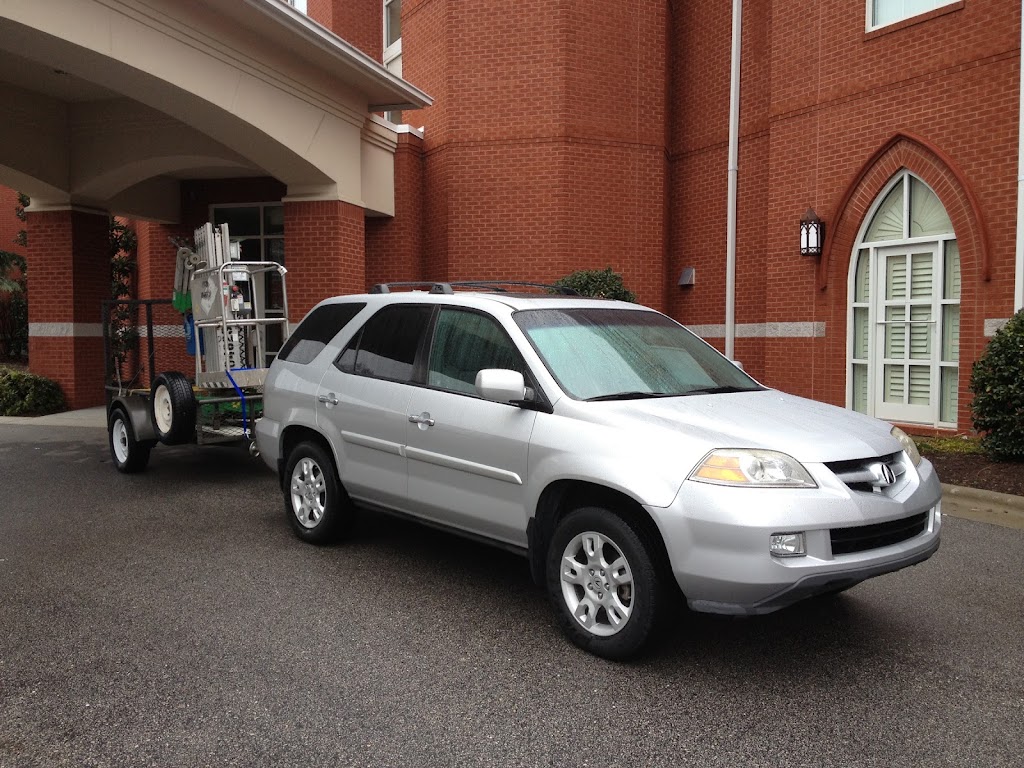
I think the problem with the Hondas is the coil springs tend to get saggy over time. As the springs sag, the rear suspension will gain negative camber (the same way that it would if it were new and a load was applied to it). Apply a load to a worn rear suspension, and the rear camber becomes out of specification. When we first got our MDX, the rear camber was out of spec (too negative), and these adjustable camber links were installed to correct it. You can see in the picture below that even with a pretty good load applied to it (that's a 1,000 pound electric man lift that we used to change light bulbs in the church gym one day), the rear suspension maintains a pretty good stance.

IMG_0429.JPG
 
Status
Not open for further replies.
Back
Top Bottom