"last reliable cars" (before 'designed to break')

Status
Not open for further replies.
You can google for Mercedes soft rotors, and find matches for BMW soft rotors too. Soft meaning replace both rotors and pads every time.

I've heard a radio personality talking about this WRT Mercedes for a few decades now, and I'm sure he wasn't the one who discovered it. I don't think Mr. Kilmer has original content, but he has a personality.
 
Originally Posted By: ToadU
Cars are more reliable, safer, fuel efficient and cost per mile less expensive to buy and maintain than ever before. The difference between the best car in the market today and the worst car realiability wise is really infinately small. Even the "least" reliable car today is way way more reliable than ones from the past.


Ever heard of Civic VX?
 
It's hard to say. On the one hand, modern cars can be very reliable. On the other hand "cheap" and stupid designs can often be major downfalls of a particular car.

Examples:

-1999-2002 Jeep 4.0 Cylinder heads cracking
-2006-2009 Honda Civic 1.8L engine blocks cracking
-2003-2010 (and maybe newer) Ford Powerstroke diesel problems
-Any newer diesel emissions control systems
-Early BMW 3-series e46 subframe cracking issues, suspensions, cooling systems
-BMW plastic electric waterpumps
-Honda van transmissions
-Dodge van, SUV, and truck transmissions
-Subaru head gaskets and oil burning
-Toyota oil burning

While not all of the vehicles associated with the above problems will actually experience those issues, when they do it is often expensive to repair or even not worth repairing.

I feel while newer vehicles may have fewer problems, the problems they do have are very expensive if not catastrophic.

While I feel Scotty is often dramatic in order to increase his views, I do think that his point about increased dependence on electronics is valid. Who keeps a cell phone for more than 5 years? Not many people. How about a laptop? 4 years before it breaks? I work in the IT field and while the advances in electronic devices may include more features, faster processors, and more storage, they don't seem to include longevity. Even reliability can vary from brand to brand.
 
Last edited:
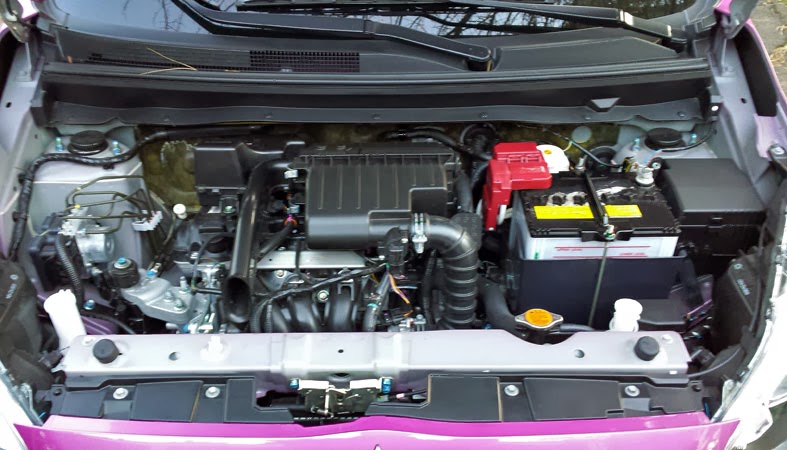
For me it's the packaging that makes working on cars today more difficult.

My first new car, a 66 Renault R8 was very reliable and really easy to work on even though with points and condenser and solid lifters it required more "fiddling". There was plenty of space around the engine and everything was easy to reach.

Anything around the engine on my Honda can be difficult to even touch to say nothing of getting a wrench down there.
 
Originally Posted By: skyactiv
Originally Posted By: ToadU
Cars are more reliable, safer, fuel efficient and cost per mile less expensive to buy and maintain than ever before. The difference between the best car in the market today and the worst car realiability wise is really infinately small. Even the "least" reliable car today is way way more reliable than ones from the past.


He's right guys, that's why you should all buy a new Dodge.


lol.gif
35.gif
 
I don't know that because Mercedes brakes leave a groove on the rotor it necessarily means that they're made to fail like that.

My mom's Buick Rendezvous does that to it's brakes.
 
Originally Posted By: mclasser
Interestingly, ETCG posted a video recently about planned obsolescence. I'd say the powertrains of most (of course there are exceptions) modern cars are more reliable than they used to be. Unless you get a lemon, there's no reason an engine today shouldn't go 200K miles with proper maintenance. Will all the 'driver assistance' tech like lane departure warning, adaptive cruise control, cross traffic alert, blah blah last that long? Probably not.


Eric The Car Guy's video was totally on point. I would add just a few notes to his excellent video on the "planned obsolescence" conspiracy theory:

1) Engineering is possibly the only human endeavor that scales infinitely with money, i.e. the more money have, the better/bigger/faster you can build something. Refer to the space shuttle, oil tankers, suspension bridges, et cetera.

2) The only reason that Toyota, Honda, or Ford doesn't just build a perfectly reliable car is that it would cost too much money for most consumers. (Refer to airplanes, where every system is redundant. Two ignition systems, two fuel tanks, and so forth.) Even if someone engineered a perfect car, Nissan or Dodge would clean up by continuing to sell [censored] cars.

We live in a world where people think of cars as appliances and are primarily concerned with MSRP when car shopping, so there won't be any perfect cars available for purchase, like, ever. That's why we're all running synthetic oil.

coffee2.gif
 
I've noticed that auto manufacturers care less and less about their gas burners the instant that the warranty period expires. At that point, if a model starts falling apart, it's no longer a CNN headline, it's now the problem and headache of the owner and in MOST cases, the second and third owner at that point, which makes fighting with the dealership over premature wear and tear that much harder. Auto manufacturers simply don't care about last years model. They focus on the stuff in the works that will come out 4-5 years from now.

I think if we all were to keep our vehicles 10+ years and not trade them in for the next model each and every year, perhaps the auto manufacturers would make them reliable or else you'd have hundreds of thousands of customers complaining about their broken car and that would only be from one model.

I feel that because we swap cars so often, auto manufacturers don't see any reason to over engineer anything these because that vehicle will be sold and traded in once the warranty is up and no one will care much about it because the next model is on the showroom floor.

I prefer to keep my cars for at least 10 years. I usually pay them off in under 5 years and then enjoy 5 years of no payments before considering to upgrade simply because I want and can afford something newer, safer, nicer, etc.

So in conclusion, I feel that perhaps cars these days are designed to last at least 100k worry free for the original buyer and after that, it may be time to get your hands dirty.

Our 1998 Toyota Camry V6 is still in the family and nearing 300k miles. They have been easy miles with regular maintenance and normal wear and tear replacement items such as alternator, starter, and one radiator fan. Other then that, original everything.
 
Originally Posted By: mclasser
Will all the 'driver assistance' tech like lane departure warning, adaptive cruise control, cross traffic alert, blah blah last that long? Probably not. [/video]


Oh the horrors. What will we do when lane assist dies?

Actually, snark aside, I hope that failure doesn't trigger a CEL. 'cuz I'd like to ignore it when it fails.

But I have to wonder if it will fail. Expensive system, but many "expensive" items seem to make it the lifetime of the car now. Guess how complex an ECU is, or the other various control modules inside a car.
 
The Crown Vic. Given proper maintenance they are super reliable. The later years seem even better, for example Ford seems to have finally improved their cursed window motors. The cars are (usually) easy to work on and parts are (usually) inexpensive.

My only gripe with the Vic is the heat blend door actuator. It's a cheap part that's prone to breaking but it's practically inaccessible so it costs a fortune in labor to repair. I've been driving all winter with no heater because the blend door is stuck on cold.
 
Every fullsize Buick I or my family owned with a 3800 engine went over 250k miles with no major failures. On the series II engines you do want to do the intakes, but the series I engines were super well built. Oil was changed every 4 to 5 thousand miles and transmissions were serviced ever 25 to 30 thousand miles.
 
Lets use the term "durable" vs reliable, I would say that the typical Toyota, or Honda from the mid-80s until the mid 90s was the pinnacle of a durable car.


Most cars made from the mid-2000s onward may be reliable (during the period of time they were engineered to be so) but after that time, replacing and maintaining those cars will be very difficult to impossible economically..can you imagine the cost of some complex electronic parts like gauge clusters when they fail?
LOL
 
Cars today are more reliable than they have ever been, I can't remember the last time I had a car problem. Maintenance is barely needed, change the oil at long OCIs and put gas in them, and you'll still get 200k out of any new car you buy.

Yes we can point to an outlier here or there, but those are the exception.
 
Originally Posted By: GiveMeAVowel
Most cars made from the mid-2000s onward may be reliable (during the period of time they were engineered to be so)


So, how do you engineer a car to start failing after a predetermined amount of use? These cars go to Alaska and Texas, they get driven by grandmas and teenagers, they get stored in garages and in corn fields... How would you actually implement "planned obsolescence"?
 
1981 was supposed to be the death of the automobile as we knew it. Everyone said that the computer would fail and the car would be junk. Well, I have 1980's cars and have had zero computer issues ever. They are now antique vehicles according to Texas. Hmmm... an "antique" computerized car. Nobody saw that coming in 1980.

People over hype almost everything, and the world keeps turning.
 
If anybody has a car with a computerized dash and decides to junk the car because of the dash cluster, I am sorry but dash clusters go out on old cars all the time regardless of what decade they are from. The circuits go bad and need resoldering most of the time. There are also people who specialize in repairing malfunctioning dash clusters. Plenty of cars have had the dash cluster rebuilt, and yes,even the 1980's corvettes with their futuristic clusters can be rebuilt.... Many cars of the 1990's have had them rebuilt now too (GM trucks).
 
If your criteria is made to be rebuilt it would have to be the W123/W126 Mercedes and the G wagon. The older ones were that way as well.

A lot of the parts on them are fixable, alternators, PS pumps, seat switch's, climate control, etc. Instead of just replacing the part you can take it apart and rebuild it. For example on a W123 instead of replacing the PS pump like you would on say a Honda, you can buy a rebuild kit and rebuild the pump yourself. The pump is not cheaply stamped together its designed to be taken apart and fixed. The same with Mercedes seat switch's of this vintage, they are made to be take apart and fixed. The entire body of the seat switch is held together with screws so you can get it apart to access the guts.

Rolls Royce is very similar, until recently the entire vehicle could be rebuilt. They really have great factory support as well. The engineering is just not up to the Germans though.

Modern vehicles are just about replacing parts, the flip side is they are designed better and have fewer failures. The average buyer doesn't care and is not going to pay more for a vehicle because its designed to be fixed.
 
Last edited:
Originally Posted By: hattaresguy
If your criteria is made to be rebuilt it would have to be the W123/W126 Mercedes and the G wagon. The older ones were that way as well.

A lot of the parts on them are fixable, alternators, PS pumps, seat switch's, climate control, etc. Instead of just replacing the part you can take it apart and rebuild it. For example on a W123 instead of replacing the PS pump like you would on say a Honda, you can buy a rebuild kit and rebuild the pump yourself. The pump is not cheaply stamped together its designed to be taken apart and fixed.

Rolls Royce is very similar, until recently the entire vehicle could be rebuilt. They really have great factory support as well. The engineering is just not up to the Germans though.

Modern vehicles are just about replacing parts, the flip side is they are designed better and have fewer failures. The average buyer doesn't care and is not going to pay more for a vehicle because its designed to be fixed.


+1
 
Status
Not open for further replies.
Back
Top Bottom