Originally Posted By: Vikas
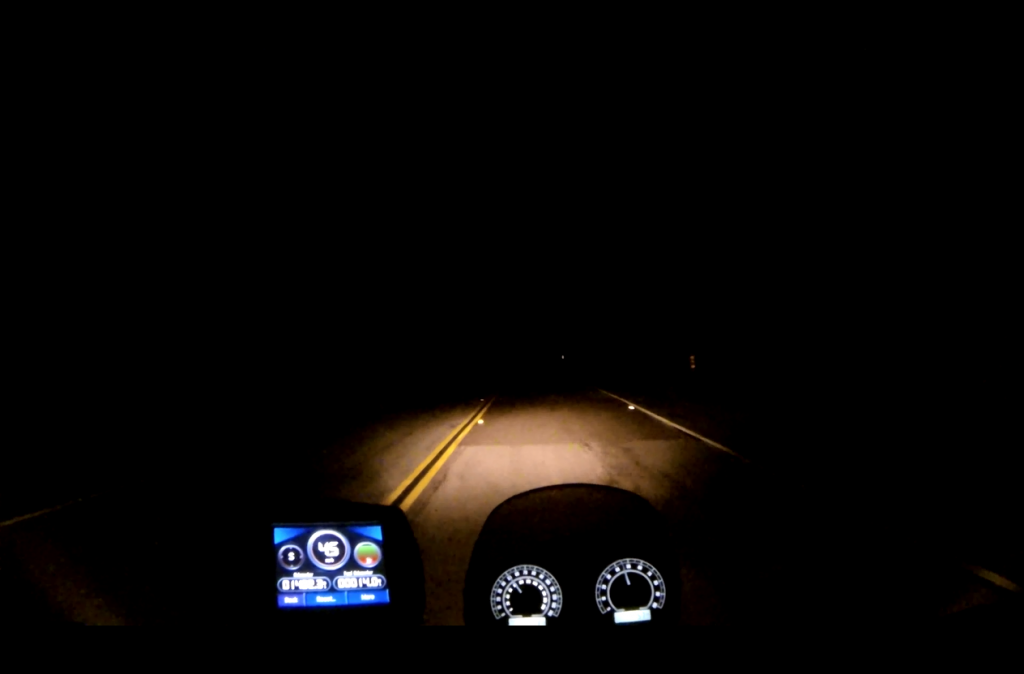
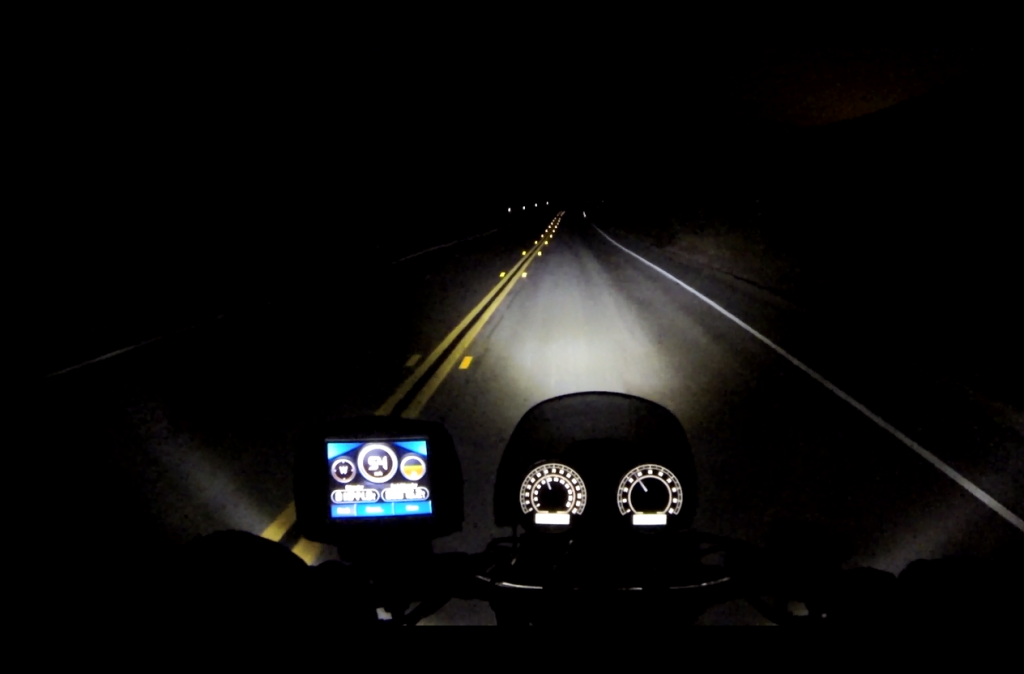
If one doesn't care for oncoming traffic or for the guy driving in front...
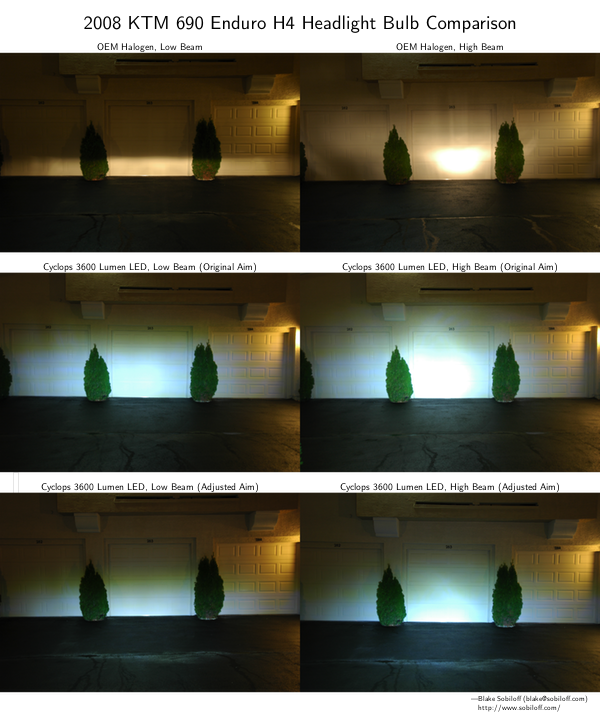
Or one's own ability to see any distance at night. Look at the intensity of the hot spot with those LED drop-ins. It's FAR brighter than with the H4. Brighter = good, right? More is better, right?
Not necessarily, and for two reasons.
First, the hot spot disappears to some degree against that non-reflective parking surface on the "re-aimed" picture, but it's still there, and is still as intense as ever. On many road surfaces, that bright hot spot that is now relatively close to the vehicle and pointed down low will be illuminated pretty bright, and will naturally draw the eyes down and wash out other less intense light sources (such as items down the road that you need to see as you're moving). Your distance vision, if these are re-aimed to try to compensate for the poorly defined cutoff, is likely reduced.
This is sort of like driving at night with fog lamps on. Turn 'em off, and your distance vision will increase notably. Fog lamps illuminate the first 20-30 feet in front of you. You don't care what's 20-30 feet in front of you when you're driving 30, 40, 50, 60 mph -- you want to see what's 100, 200, 300 feet in front of you.
Second, and making the situation worse, because the lamp source is not an H4, the beam pattern is poorly defined and the hot spot is found far BELOW the "cutoff" that is now very non-distinct. This is the opposite of what you want. Notice in the first picture how the brightest part of the beam pattern is JUST below the cutoff. In fact, and by design, the cutoff "slices through" the upper part of the hot spot, which offers the most down-road light possible.
H4/HB2 housings can be interesting animals, and there are some very good ones out there. But for many reasons, they're notably poor choices for light source retrofits like this.