Turbochargers - Bearings, Cooling, General Info...

Status
Not open for further replies.
Originally Posted By: ls1mike
I also had an 86 GLH. Man those cars were fun back in the day. Wish I had kept one of them.


Cant you also get that on a Conquest TSi? (They also made a GLHS. Turbo Omni. WANT.)

I actually have a LPT (Low-Pressure Turbo) on a car I have now.. Need to verify if its oil or coolant cooled or both, though my car's community mentioned oil line when I asked about the newly sprung leak it has, so.

When/if the LPT goes, everyone puts in a HPT. I forget the exact size.
smile.gif


Its not an Omni, though.
 
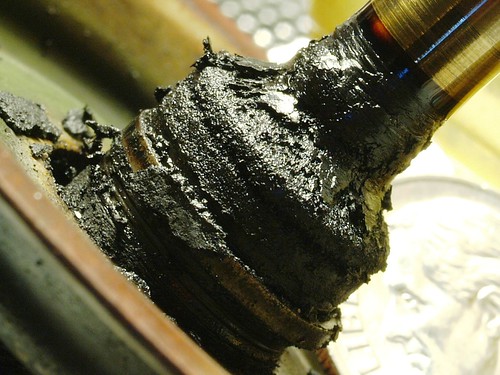
Just a quick note. All turbos, including those with water cooled bearing housings will coke up, if conditions are correct.

Exhaust gas temperature must be high enough to fry the oil. It's a safe bet that many modern engines normal operational conditions don't exhibit particularly high EGT's.

Engine oil must be capable of withstanding the heat on the turbine side of the shaft. Those who choose poorly still pay the price. Quite simply, automotive turbochargers last longest with an oil capable of withstanding very high temperatures.

There is no question that water cooled housings help. However, the cooled housings do not reduce the shaft temperature just inside of the turbine itself. Oil does come in contact with this section of the shaft.

Don't kid yourself. Coking still happens. Manufacturers simply have methods of controlling both the rate and the effects of this buildup. Some simply use more clearance and different geometry, so the coking is less likely to cause operational problems.

dy...line=1340633610


3336488663_dfebc7c11e.jpg
 
Originally Posted By: artificialist
Originally Posted By: yvon_la
i dont know on your car butg on big rig oil is cooled ,the air charge is cooled the oil transmission is cooled we got variable turbo charger

Very few gasoline engines had a VGT turbo.

Also the reason turbocharges on diesels are different is because the EGT of a diesel is lower than that of a gasoline engine. This might allow diesel engines to only be cooled by oil flow, wheras gasoline engine typically have water cooling.

During much of the 1980s, a large number of gasoline engines had oil cooled turbos. That is why if you didn't wait 1-2 minutes before shutdown, the turbo would eventually build up sludge and then fail.


All VG turbos on the newer heavy commercial diesels are also water cooled. Only the traditional turbos (both waste gate and non) have only oil to them. And true, diesel EGTs are considerably less than gasoline EGT's. The old turbos prior to the 90's used babbitt bearings that there was indeed an issue with proper cool down. Turbos haven't used babbitt bearings in a long time. The Holset turbo I had on a '95 Cummins N-14 I took to 1.4 million miles with no problems and didn't worry about any proper cool down procedure. Same for my Detroit with a Borg Warner turbo on it now that just turned over 528,000 miles. Neither water cooled.

And I have used turbo blankets on the exhaust side for years. No issues.
 
Status
Not open for further replies.
Back
Top Bottom