
You are using an out of date browser. It may not display this or other websites correctly.
You should upgrade or use an alternative browser.
You should upgrade or use an alternative browser.
Trunk Mount Filter Setup
- Thread starter acewiza
- Start date
- Status
- Not open for further replies.
- Joined
- Sep 28, 2002
- Messages
- 39,793
I was searching for a sandwich that I recalled having two sets of ports ..vertical and horizontal ..but perhaps I was just imagining it. There are adapters that offer this feature ..but (at least I couldn't find one) no sandwiches.

Sorta like the filter adapter on the right there ..but a sandwich instead.

Sorta like the filter adapter on the right there ..but a sandwich instead.
I understand the issues to be:
"The orientation of the sandwich requires a too-close-for-comfort routing of the lines just beneath the passenger driveshaft."
and
"the oil filter now protrudes a bit lower from the underside than I am comfortable with."
So...take off the sandwich, and find a pressurized oil port on the engine to feed the MG. The return line from the MG can go to the pan, filler tube or cap, or valve cover.
Just seems a lot easier to me than to plumb two 9'-10' lines while insuring you don't starve the engine of oil with thermostats, by-passes and such when the weather is cold.
Good luck, dude.
"The orientation of the sandwich requires a too-close-for-comfort routing of the lines just beneath the passenger driveshaft."
and
"the oil filter now protrudes a bit lower from the underside than I am comfortable with."
So...take off the sandwich, and find a pressurized oil port on the engine to feed the MG. The return line from the MG can go to the pan, filler tube or cap, or valve cover.
Just seems a lot easier to me than to plumb two 9'-10' lines while insuring you don't starve the engine of oil with thermostats, by-passes and such when the weather is cold.
Good luck, dude.
427Z06 is right on the money!!! My wife has a 2.7L 2002 Dodge Intrepid and the oil pressure switch is VERY easily accessed from under the car on the passenger side. You are asking for trouble by trying to do it your way. Hope this helps.
And yes Gary, a sandwich adapter with vertical ports would be pefect for my application, but I haven't been able to find one either.
Seems like such a simple variation, I'd think something like that would be common, but it does not appear to be...
Seems like such a simple variation, I'd think something like that would be common, but it does not appear to be...
Let me try again. The sandwich adapter you are using "bypasses" a percentage of oil that would normally flow thru the full flow filter and sends it to the MG and the oil cooler. After the MG and oil cooler, the oil in re-introduced back into the engine thru the sandwich adapter. Is this correct?
If it is, then removing the adapter, and supplying the MG and cooler with oil tapped from the oil pressure sender/switch would achieve essentially the same thing.
With standard tissue roll, 30 wt oil, 160 degree F, 50 psig the MG flows about two quarts per minute. In an engine of that size, the oil pump will output about 6 gpm at that pressure level. So I don't see a problem there.
By the way, why do you have an oil cooler on that thing? Is your wife racing it? Have you installed an accurate oil temp gauge to determine if you even need an oil cooler?
If it is, then removing the adapter, and supplying the MG and cooler with oil tapped from the oil pressure sender/switch would achieve essentially the same thing.
With standard tissue roll, 30 wt oil, 160 degree F, 50 psig the MG flows about two quarts per minute. In an engine of that size, the oil pump will output about 6 gpm at that pressure level. So I don't see a problem there.
By the way, why do you have an oil cooler on that thing? Is your wife racing it? Have you installed an accurate oil temp gauge to determine if you even need an oil cooler?
Yes, that is the configuration. The 2.7 is a known sludger. One aspect of the configuration including MG and cooler was to increase the oil capacity. The MG, cooler and associated plumbing allows for approximately one additional quart. I also believe the cooler will be more effective plumbed off the sandwich. Not sure if the pressure port would allow enough flow for this.
I expect to leverage this setup to enable extending the OCI. One might argue this is a diametrically opposed goal. I am hopeful that along with synthetic oil, the car may be able to enjoy the best of both worlds - a sludger that can safely run extended OCIs.
I expect to leverage this setup to enable extending the OCI. One might argue this is a diametrically opposed goal. I am hopeful that along with synthetic oil, the car may be able to enjoy the best of both worlds - a sludger that can safely run extended OCIs.
Since the MG will be the limiting factor in flow, neither one will have an advantage.quote:
I also believe the cooler will be more effective plumbed off the sandwich. Not sure if the pressure port would allow enough flow for this.
As far as oil temperature being the definitive reason for sludge in this engine, I don't believe that's been definitively determined. This guy thinks it's a manufacturing defect, and backs it up by disassembly his engine. It's a long thread but worth a read:
http://forums.2gss.org/index.php?showtopic=3700&st=0
I also recall something about a TSB which modified the PCV system. But you'll have to verify that.
Well....2) and 3) are kinda' iffy. Reasonably maintained engines shouldn't be failing at low miles, and engines with nothing more than what's outlined in the manual are lasting over 100K miles.
The thing that intrigued me about that thread was it went a long way to describing why some engines were failing while others seem to be doing just fine. Some victims were adamant about doing regular oil changes, yet their engines failed early anyways. Once the relief valve sticks, sludge follows, engine fails. The initial inspection would show sludge and the customer is automatically assumed responsible for the problem. Any signs of metal particles with a more in depth inspection would be assumed (or easily blamed) to be the result of the failure due to sludge. In the end, it's just a matter of luck whether your engine has this manufacturing defect or not.
And even if Chrysler is aware of the actual cause, the last thing management would want to do is admit it. Think of the cost of recalling every 2.7 made and having to remove the oil pan for inspection, and then replacing the engines with the suspected fault. Attorneys would have a field day if Chrysler acknowledged the defect due to poor quality control.
It's to bad that more people didn't have accurate oil temp and pressure gauges on their engines to watch what happens as the engine fails.
But I digress, let's get back on topic. The extra filtering and cooling can only be good for your engine as long as you don't do anything to significantly reduce oil flow to your engine. And I just was trying to give you a simpler and more cost effective solution.
Anyways, good luck in whatever you decide to do.
The thing that intrigued me about that thread was it went a long way to describing why some engines were failing while others seem to be doing just fine. Some victims were adamant about doing regular oil changes, yet their engines failed early anyways. Once the relief valve sticks, sludge follows, engine fails. The initial inspection would show sludge and the customer is automatically assumed responsible for the problem. Any signs of metal particles with a more in depth inspection would be assumed (or easily blamed) to be the result of the failure due to sludge. In the end, it's just a matter of luck whether your engine has this manufacturing defect or not.
And even if Chrysler is aware of the actual cause, the last thing management would want to do is admit it. Think of the cost of recalling every 2.7 made and having to remove the oil pan for inspection, and then replacing the engines with the suspected fault. Attorneys would have a field day if Chrysler acknowledged the defect due to poor quality control.
It's to bad that more people didn't have accurate oil temp and pressure gauges on their engines to watch what happens as the engine fails.
But I digress, let's get back on topic. The extra filtering and cooling can only be good for your engine as long as you don't do anything to significantly reduce oil flow to your engine. And I just was trying to give you a simpler and more cost effective solution.
Anyways, good luck in whatever you decide to do.
- Joined
- Sep 28, 2002
- Messages
- 39,793

Gary, I'm gonna snap a pic of this thing next time I have a chance to get up under there and PM it to you. You may be surprised at how tight it is around that filter. This device "might" work, but at the asking price I would have to pass. I am mulling over a plan to cobble together some right angle hose barbs with brass fittings that will clear the filter and shoot the lines straight down. I think a right-angle barb with about a 3/8 inch long connector into the sandwich will do it.
I am not going to relocate the full flow filter to the trunk. Too risky, and too many mods required for too little benefit. Too bad I already have the kit and all the parts!

Thanks for the help, guys! I think this thread has been worked out to a good conclusion.
I am not going to relocate the full flow filter to the trunk. Too risky, and too many mods required for too little benefit. Too bad I already have the kit and all the parts!
Thanks for the help, guys! I think this thread has been worked out to a good conclusion.
acewiza, be careful, or Gary will have your car plumbed like a Rube Goldberg machine before you know it.


j/k
j/k
You're right, I nor anyone I know of or anything I have read so far, can definitively point the finger at any one single cause of the 2.7 problem. That is why I have refused to perpetuate the myth. Some basic assumptions are however, reasonable:
1) The motor (earlier years) probably had some quality control and/or manufacturing deficiencies.
2) It is by nature of the high efficiency/low emissions design, a hot-running engine.
3) A number of issues possibly unrelated, working seperately, in unison and/or unique to the motor/owner conspire to destroy the engine in various ways once things begin going downhill in the lube system. The symptoms and ultimate results are variable.
So have I said anything others are truly unaware of at some level? Probably not. I do know that ours is a 2002 model that appears to be healthy at 60k, and I am just trying to keep it that way. A little supplemental filtering and cooling can't hurt anything.
1) The motor (earlier years) probably had some quality control and/or manufacturing deficiencies.
2) It is by nature of the high efficiency/low emissions design, a hot-running engine.
3) A number of issues possibly unrelated, working seperately, in unison and/or unique to the motor/owner conspire to destroy the engine in various ways once things begin going downhill in the lube system. The symptoms and ultimate results are variable.
So have I said anything others are truly unaware of at some level? Probably not. I do know that ours is a 2002 model that appears to be healthy at 60k, and I am just trying to keep it that way. A little supplemental filtering and cooling can't hurt anything.
- Joined
- Sep 28, 2002
- Messages
- 39,793
What are you trying to say, pal? Wait until I get the cascading thermostatically controlled multi-circuit "system" installed. Rube would be proud....
acewiza: The problem that you'll encounter with 90° fittings, of any type that I can think of, is that you have to stagger them for length. Our filters, and subsequently the mounts, tend to be so compact that the fittings would hit each other when threading them. I'm pretty sure that you can use AN swivel fittings with success ..but then you're into the Aeroquip/Russel/etc. stuff that will probably bring you up in cost a decent amount. They also are not compact ...
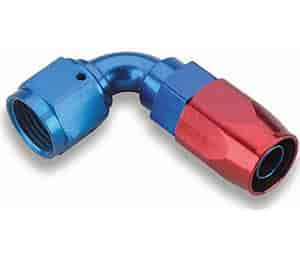
acewiza: The problem that you'll encounter with 90° fittings, of any type that I can think of, is that you have to stagger them for length. Our filters, and subsequently the mounts, tend to be so compact that the fittings would hit each other when threading them. I'm pretty sure that you can use AN swivel fittings with success ..but then you're into the Aeroquip/Russel/etc. stuff that will probably bring you up in cost a decent amount. They also are not compact ...
I purchased two 90 degree fittings from Runnings that were somewhat short. I still had to grind off a little bit to get the second one to screw in without hitting the first one, but I have been using them. I am somewhat uncomfortable about the few ribs on these fittings, though, and may replace them with something else soon. They are being used on an external transmission filter in the cooler line so they don't have to hold much pressure.
- Status
- Not open for further replies.
Similar threads

- Replies
- 45
- Views
- 835

- Replies
- 10
- Views
- 804
- Replies
- 10
- Views
- 731
- Replies
- 51
- Views
- 5K

- Replies
- 60
- Views
- 2K