Portable 2 cycle lawn equipment ratio

Status
Not open for further replies.
Originally Posted By: Mike72


Respectfully disagree. Oil builds up in all two stroke engines especially at idle and lower rpms. The amount of this build up is directly related to the mix ratio. Higher ratios of 50:1 and up minimize the build up.



I'm curious what your basis is for this?
 
Last edited:
Would you care to share your hypothesis regarding your claim?

Have you ever opened up a two cycle engine crankcase? I have.

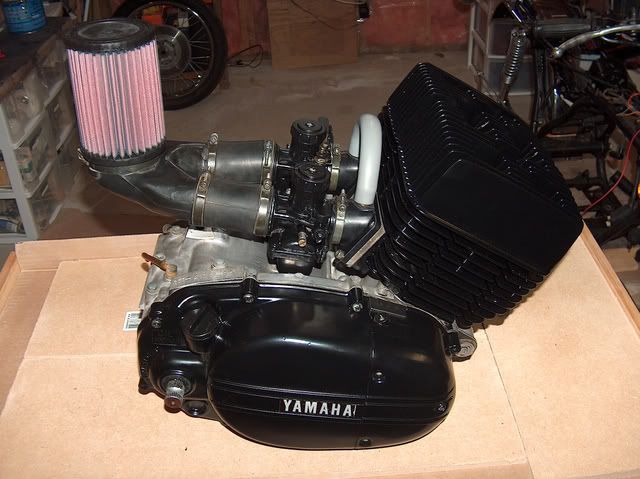
I've owned a number of vintage two cycle Yamaha motorcycles and have had the engines apart. Even on severely flogged 40 year old engines, the crank case was spotless and devoid of "oil build up".

This is one of the engines I've rebuilt/modified, a 1974 Yamaha RD350:

[img:left][/img]


Originally Posted By: Mike72
Originally Posted By: Srt20
Originally Posted By: boraticus

Oil build up in the crankcase? Really?

Do you have any idea of what goes on in a two stroke engine crankcase? Believe me, there is NO oil build up going on in there. With the furious speed of reciprocating parts and violent flow of air/fuel mixture blasting through, nothing is settling or building up in there.
Nothing wrong with 40:1 ratio. It's my preference for everything other than liquid cooled engines which get a little less oil.


Originally Posted By: Mike72
Two strokes (except for racing engines) need only a small amount of oil to function properly. Too much oil in the mix only increases the oil build up in the crankcase leading to more carbon/smoking and gains nothing. With today's oils, ratios around 50:1 are best with some synthetics going even higher.


X2. No build up happening. Two strokes are supposed to smoke. They burn oil. If you don't want a smoker buy a 4 stroke.


Respectfully disagree. Oil builds up in all two stroke engines especially at idle and lower rpms. The amount of this build up is directly related to the mix ratio. Higher ratios of 50:1 and up minimize the build up.
 
Originally Posted By: The_Eric
Originally Posted By: Mike72


Respectfully disagree. Oil builds up in all two stroke engines especially at idle and lower rpms. The amount of this build up is directly related to the mix ratio. Higher ratios of 50:1 and up minimize the build up.


I'm curious what your basis is for this?


My basis for this comes from using and observing many different two stroke engines and trying different oils and mix ratios. When a fuel oil mix enters a two stroke crankcase through either a reed or rotary valve some of the oil separates from the fuel. Two stroke engines typically have a small crankcase volume by design (stuffed) and this oil will easily reach the bearings piston(s) and rings. If for example a particular engine is receiving a mix of say 40:1 and it is changed to 32:1 (even with a carburetor adjustment if needed) there will now be more oil in the crankcase. What this extra oil will do is accumulate at idle and lower rpm . Since the oil can only leave the engine through the combustion chamber smoking and carbon will result. This inherent problem was dealt with by developing oil injection systems like the one used on the Yamaha mentioned above . By combining throttle opening with oil delivery you can deliver just the right amount of oil based on RPM, i.e. a small amount of oil at idle and an increasing amount as the throttle is opened. Two strokes without oil injection get whatever ratio mix the owner puts in them, which typically results in more oil than the engine needs.
 
Originally Posted By: ironman_gq
Most 2 stroke OPE shouldn't smoke after warm up. If it's smoking it's either got too much oil or the carb is way off. Modern oils are designed to burn pretty clean and not leave a bunch of ash behind. I've got a whole fleet of 2 stroke equipment and none of it smokes.


Ok, I didn't mean it fogs out the neighborhood. Yes the smoke is "almost" non existent after warm up. But it's still there.

I currently have 6 fuel injected 2 stroke cylinders and 6 carb'ed 2 stroke cylinders, in 6 different engines. Three of those engines are modified, with one of them putting out ~200 hp. It is also the most reliable and oldest engine of the bunch. It runs perfect and is tuned perfect. And it also smokes the most of the engines I own. But that engine is run at 32-1 pre-mix. It is liquid cooled and has survived more than one occasion of 230*+ Farenheit. Furthermore I exclusively use a cheap, $17.99/gal two stroke oil in it and all of my engines. I have never ever had an oil related failure in any engine. 2 stroke or 4 stroke.

I am a very firm believer that 2 strokes need oil, and lots of it. I also believe that the biggest benefit to synthetic 2s oil is its cold pour point and it's ability to lubricate the piston wrist pin bearing at cold temps such as start up in winter. Otherwise I think synthetic 2s oil does a poor job at rust inhibiting especially on the crankshaft bearings. I also believe it burns to easy.

But these are just my opinions from many years of having all sorts of 2s engines, modified and stock.
 
Originally Posted By: Mike72
Originally Posted By: The_Eric
Originally Posted By: Mike72


Respectfully disagree. Oil builds up in all two stroke engines especially at idle and lower rpms. The amount of this build up is directly related to the mix ratio. Higher ratios of 50:1 and up minimize the build up.


I'm curious what your basis is for this?


My basis for this comes from using and observing many different two stroke engines and trying different oils and mix ratios. When a fuel oil mix enters a two stroke crankcase through either a reed or rotary valve some of the oil separates from the fuel. Two stroke engines typically have a small crankcase volume by design (stuffed) and this oil will easily reach the bearings piston(s) and rings. If for example a particular engine is receiving a mix of say 40:1 and it is changed to 32:1 (even with a carburetor adjustment if needed) there will now be more oil in the crankcase. What this extra oil will do is accumulate at idle and lower rpm . Since the oil can only leave the engine through the combustion chamber smoking and carbon will result. This inherent problem was dealt with by developing oil injection systems like the one used on the Yamaha mentioned above . By combining throttle opening with oil delivery you can deliver just the right amount of oil based on RPM, i.e. a small amount of oil at idle and an increasing amount as the throttle is opened. Two strokes without oil injection get whatever ratio mix the owner puts in them, which typically results in more oil than the engine needs.

Going from 40-1 to 32-1 or any other realistic combo will do no noticeable difference in crankcase volume. You are talking about minute amounts of oil, and fuel for that matter.
But what that extra oil will actually do though, is it will seal the rings better. And better sealing rings makes better compression. And better compression makes better throttle response and more HP.
In fact the best fuel oil ratio for HP on a 2s engine is 18-1. After 18-1 the power starts to go down. Less than 18-1 the power also starts to go down because of the rings sealing less from less oil.

Also I will add, because I know someone will bring this up, if you are worried that if you go from say 50-1 to 32-1 and the oil will take the place of the fuel and cause a lean condition and possible piston melt down, your engine was tuned to lean to begin with. A 30*- 40* F temp change will cause more of a lean condition than going from 50-1 to 32-1.
 
Originally Posted By: Srt20
Originally Posted By: Mike72
Originally Posted By: The_Eric
Originally Posted By: Mike72


Respectfully disagree. Oil builds up in all two stroke engines especially at idle and lower rpms. The amount of this build up is directly related to the mix ratio. Higher ratios of 50:1 and up minimize the build up.


I'm curious what your basis is for this?


My basis for this comes from using and observing many different two stroke engines and trying different oils and mix ratios. When a fuel oil mix enters a two stroke crankcase through either a reed or rotary valve some of the oil separates from the fuel. Two stroke engines typically have a small crankcase volume by design (stuffed) and this oil will easily reach the bearings piston(s) and rings. If for example a particular engine is receiving a mix of say 40:1 and it is changed to 32:1 (even with a carburetor adjustment if needed) there will now be more oil in the crankcase. What this extra oil will do is accumulate at idle and lower rpm . Since the oil can only leave the engine through the combustion chamber smoking and carbon will result. This inherent problem was dealt with by developing oil injection systems like the one used on the Yamaha mentioned above . By combining throttle opening with oil delivery you can deliver just the right amount of oil based on RPM, i.e. a small amount of oil at idle and an increasing amount as the throttle is opened. Two strokes without oil injection get whatever ratio mix the owner puts in them, which typically results in more oil than the engine needs.

Going from 40-1 to 32-1 or any other realistic combo will do no noticeable difference in crankcase volume. You are talking about minute amounts of oil, and fuel for that matter.
But what that extra oil will actually do though, is it will seal the rings better. And better sealing rings makes better compression. And better compression makes better throttle response and more HP.
In fact the best fuel oil ratio for HP on a 2s engine is 18-1. After 18-1 the power starts to go down. Less than 18-1 the power also starts to go down because of the rings sealing less from less oil.

Also I will add, because I know someone will bring this up, if you are worried that if you go from say 50-1 to 32-1 and the oil will take the place of the fuel and cause a lean condition and possible piston melt down, your engine was tuned to lean to begin with. A 30*- 40* F temp change will cause more of a lean condition than going from 50-1 to 32-1.


Do you have a source for that data? I also find it hard to believe more oil seals the rings better... other than during a compression/leak-down test when the crank speed is very low (thus low chamber/ring pressure).
 
Originally Posted By: boraticus


I've owned a number of vintage two cycle Yamaha motorcycles and have had the engines apart. Even on severely flogged 40 year old engines, the crank case was spotless and devoid of "oil build up".

This is one of the engines I've rebuilt/modified, a 1974 Yamaha RD350:

[img:left][/img]


Oh, that warms my heart! I love the two stroke twins. Having owned a number of them! I should purchase another RZ350. Probably my favorite street bike ever.
 
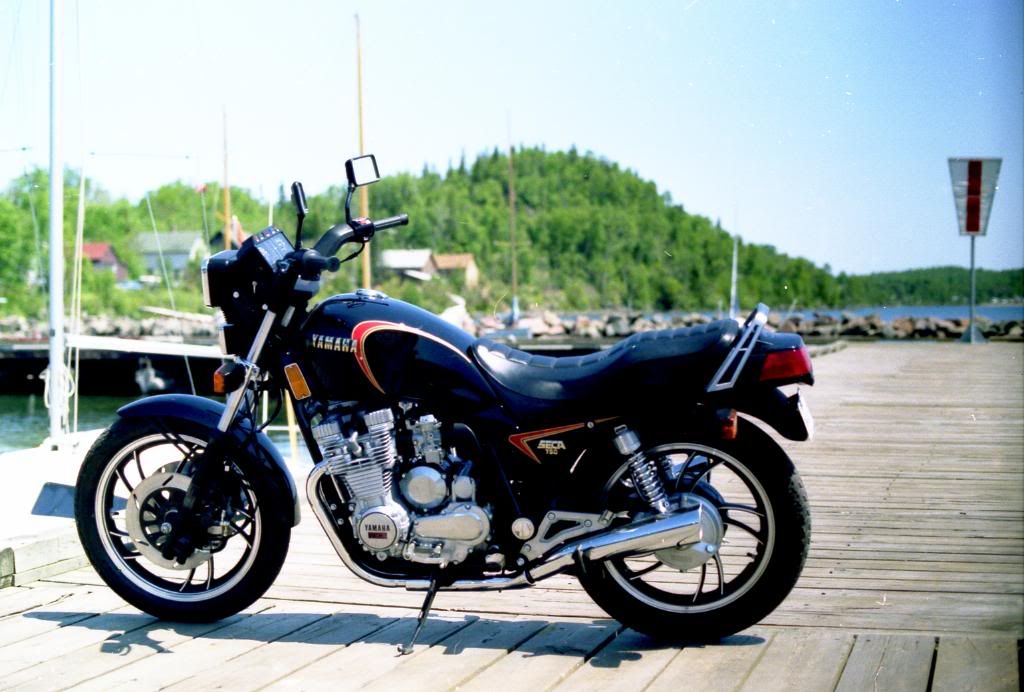
Back in the 80's I didn't have the appreciation for two strokes like I do today. In 1981, I had a choice between two hotrod Yamahas sitting on the show room floor. One was the 750 Seca and the other the RZ350. Both were in the black/gold and red paint scheme. I took the Seca at almost twice the price. I'd love to have that RZ now, sigh....

Seca50.jpg


Originally Posted By: Cujet
Originally Posted By: boraticus


I've owned a number of vintage two cycle Yamaha motorcycles and have had the engines apart. Even on severely flogged 40 year old engines, the crank case was spotless and devoid of "oil build up".

This is one of the engines I've rebuilt/modified, a 1974 Yamaha RD350:

[img:left][/img]


Oh, that warms my heart! I love the two stroke twins. Having owned a number of them! I should purchase another RZ350. Probably my favorite street bike ever.
 
Last edited:
This was my RZ. I sold it and my other bikes to purchase an airplane. I do miss it.

I ran 32 to 1, Mobil 1 in it. Ran perfectly and had zero issues.

RZ.jpg
 
Beautiful RZ!

Most fun you'd ever have with your clothes on!!


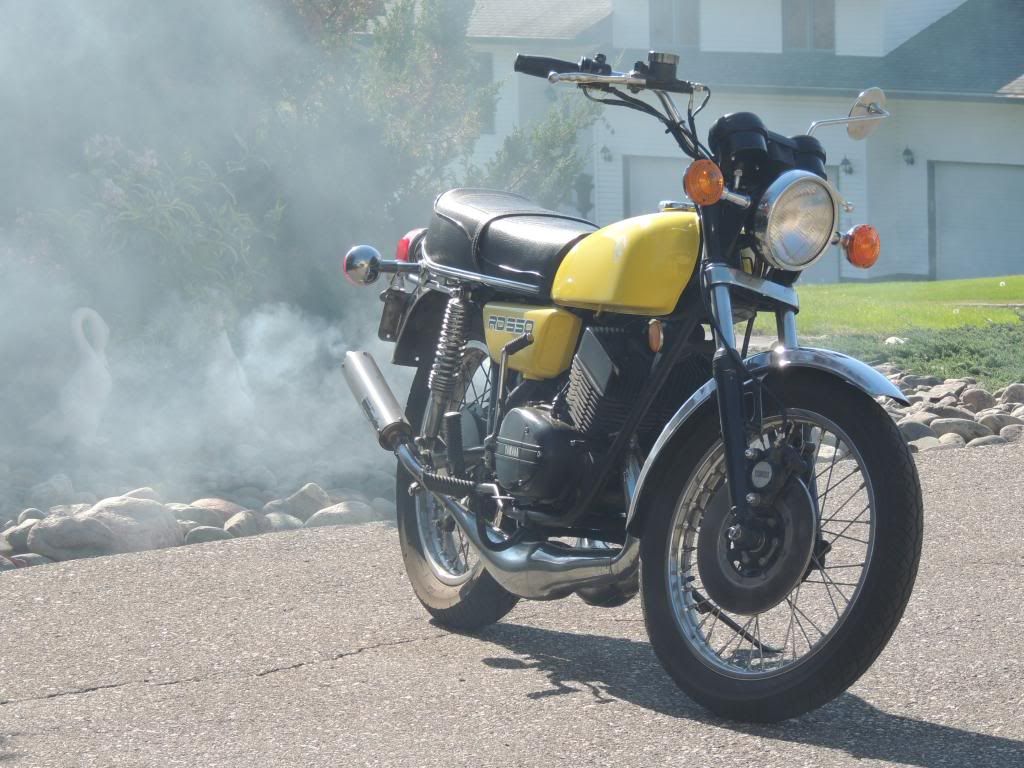
This is my old relic a '74 Yamaha RD350, rebuilt from the ground up with a bit of tuning and programmable electronic ignition. Smokes like my father on start up!


DSCN1427_zps8d560dbf.jpg


Originally Posted By: Cujet
This was my RZ. I sold it and my other bikes to purchase an airplane. I do miss it.

I ran 32 to 1, Mobil 1 in it. Ran perfectly and had zero issues.

RZ.jpg
 
Originally Posted By: Srt20
Originally Posted By: Mike72
Originally Posted By: The_Eric
Originally Posted By: Mike72


Respectfully disagree. Oil builds up in all two stroke engines especially at idle and lower rpms. The amount of this build up is directly related to the mix ratio. Higher ratios of 50:1 and up minimize the build up.


I'm curious what your basis is for this?


My basis for this comes from using and observing many different two stroke engines and trying different oils and mix ratios. When a fuel oil mix enters a two stroke crankcase through either a reed or rotary valve some of the oil separates from the fuel. Two stroke engines typically have a small crankcase volume by design (stuffed) and this oil will easily reach the bearings piston(s) and rings. If for example a particular engine is receiving a mix of say 40:1 and it is changed to 32:1 (even with a carburetor adjustment if needed) there will now be more oil in the crankcase. What this extra oil will do is accumulate at idle and lower rpm . Since the oil can only leave the engine through the combustion chamber smoking and carbon will result. This inherent problem was dealt with by developing oil injection systems like the one used on the Yamaha mentioned above . By combining throttle opening with oil delivery you can deliver just the right amount of oil based on RPM, i.e. a small amount of oil at idle and an increasing amount as the throttle is opened. Two strokes without oil injection get whatever ratio mix the owner puts in them, which typically results in more oil than the engine needs.

Going from 40-1 to 32-1 or any other realistic combo will do no noticeable difference in crankcase volume. You are talking about minute amounts of oil, and fuel for that matter.
But what that extra oil will actually do though, is it will seal the rings better. And better sealing rings makes better compression. And better compression makes better throttle response and more HP.
In fact the best fuel oil ratio for HP on a 2s engine is 18-1. After 18-1 the power starts to go down. Less than 18-1 the power also starts to go down because of the rings sealing less from less oil.

Also I will add, because I know someone will bring this up, if you are worried that if you go from say 50-1 to 32-1 and the oil will take the place of the fuel and cause a lean condition and possible piston melt down, your engine was tuned to lean to begin with. A 30*- 40* F temp change will cause more of a lean condition than going from 50-1 to 32-1.


I can appreciate your obvious interest in two strokes and oil mix ratios. Most lawn , garden equipment and chainsaws using two stroke engines run from about 1.5 HP up to about 6 HP are single cylinder and need no more oil than a 50:1 ratio. It's a little ludicrous to expect more horsepower from these engines by using more oil in the premix to increase the ring seal when the overriding factor in compression on any engine is properly seated rings not oil. These engines need long term day to day reliability without inviting the potential problems like short spark plug life and the unnecessary smoke and carbon that adding extra oil will create.
 
Mike72:


Open up a few two cycle engine crank cases (any type - any size) and let us know how much "oil build up" you discover.

Please get back to us with your findings.
 
I have to agree with Boraticus, which I usually do. Although you may have oil build up in the crankcase at idle or putting, first time you open it up, its all gone like right now. Also two strokes are not meant to idle or even be babied. Especially small lawn care two strokes. Run them hard. I have used 32:1 with no problems. I always run my weedtrimmers wide open, they last forever and never foul plugs.
 
Originally Posted By: boraticus
Mike72:


Open up a few two cycle engine crank cases (any type - any size) and let us know how much "oil build up" you discover.

Please get back to us with your findings.


I'm not new to two stroke engines, I started taking them apart and repairing them in 1963 and was a motorcycle mechanic in '69 when the unbelievable Kawasaki triples appeared. If I recall from your post you have Yamahas with auto lube injection. Do you know how much oil is injected from idle on up to full rpm in your Yamahas? The oil build up I refer to occurs in two strokes using premix although it can occur even with a malfunctioning injection system . As I mentioned earlier, oil injection was developed to handle the problem of oil build up from premix, and along with this it eliminated the bother of premixing by owners who often would mix too much oil, too little or no oil. With oil injection all the owner had to do was keep gas in the gas tank and oil in the oil tank, similar to how idiot lights prevented auto drivers from seeing ammeters, pressure and temperature gauges. As a side note your pictured Yamaha is smoking excessively even for startup, you need to investigate that.
 
Originally Posted By: Panzerman
I have to agree with Boraticus, which I usually do. Although you may have oil build up in the crankcase at idle or putting, first time you open it up, its all gone like right now. Also two strokes are not meant to idle or even be babied. Especially small lawn care two strokes. Run them hard. I have used 32:1 with no problems. I always run my weedtrimmers wide open, they last forever and never foul plugs.


Well you're also agreeing with me when you mention oil build up at idle and putting. You say you use32:1 with no problems, the kicker is you could also use 50:1 with no problems and have less smoke and carbon from oil build up.
 
I presently own three two stroke motorcycles. They all smoke when fired up cold. Once warmed up, there's very little visible smoke until out on the road at full throttle. The carbs have been rejetted to match expansion chamber flow for additional performance.

Thank you for the guidance, however as is, these old two strokes never foul plugs and, for their size and age are surprising performers. Smoke or no smoke they go.

Considering your claimed expertise, please tell me how an engine could possibly have oil build up at 10,000 rpm. Even in a premix situation. The oil flows with the fuel, how and where is it building up?

In addition, for your information, back in the day, the old RD race bikes running at 32:1 would spin standard main bearings at speeds over 11,000 rpm. As a result they had to use TZ main bearings. Seems like a bit of oil build up would be helpful in those situations.

Of all the reading I've done, I must say that your "oil build up"comments are the first I've heard of.


Originally Posted By: Mike72
Originally Posted By: boraticus
Mike72:


Open up a few two cycle engine crank cases (any type - any size) and let us know how much "oil build up" you discover.

Please get back to us with your findings.


I'm not new to two stroke engines, I started taking them apart and repairing them in 1963 and was a motorcycle mechanic in '69 when the unbelievable Kawasaki triples appeared. If I recall from your post you have Yamahas with auto lube injection. Do you know how much oil is injected from idle on up to full rpm in your Yamahas? The oil build up I refer to occurs in two strokes using premix although it can occur even with a malfunctioning injection system . As I mentioned earlier, oil injection was developed to handle the problem of oil build up from premix, and along with this it eliminated the bother of premixing by owners who often would mix too much oil, too little or no oil. With oil injection all the owner had to do was keep gas in the gas tank and oil in the oil tank, similar to how idiot lights prevented auto drivers from seeing ammeters, pressure and temperature gauges. As a side note your pictured Yamaha is smoking excessively even for startup, you need to investigate that.
 
Originally Posted By: boraticus

I presently own three two stroke motorcycles. They all smoke when fired up cold. Once warmed up, there's very little visible smoke until out on the road at full throttle. The carbs have been rejetted to match expansion chamber flow for additional performance.

Thank you for the guidance, however as is, these old two strokes never foul plugs and, for their size and age are surprising performers. Smoke or no smoke they go.

Considering your claimed expertise, please tell me how an engine could possibly have oil build up at 10,000 rpm. Even in a premix situation. The oil flows with the fuel, how and where is it building up?

In addition, for your information, back in the day, the old RD race bikes running at 32:1 would spin standard main bearings at speeds over 11,000 rpm. As a result they had to use TZ main bearings. Seems like a bit of oil build up would be helpful in those situations.

Of all the reading I've done, I must say that your "oil build up"comments are the first I've heard of.


Originally Posted By: Mike72
Originally Posted By: boraticus
Mike72:


Open up a few two cycle engine crank cases (any type - any size) and let us know how much "oil build up" you discover.

Please get back to us with your findings.


I'm not new to two stroke engines, I started taking them apart and repairing them in 1963 and was a motorcycle mechanic in '69 when the unbelievable Kawasaki triples appeared. If I recall from your post you have Yamahas with auto lube injection. Do you know how much oil is injected from idle on up to full rpm in your Yamahas? The oil build up I refer to occurs in two strokes using premix although it can occur even with a malfunctioning injection system . As I mentioned earlier, oil injection was developed to handle the problem of oil build up from premix, and along with this it eliminated the bother of premixing by owners who often would mix too much oil, too little or no oil. With oil injection all the owner had to do was keep gas in the gas tank and oil in the oil tank, similar to how idiot lights prevented auto drivers from seeing ammeters, pressure and temperature gauges. As a side note your pictured Yamaha is smoking excessively even for startup, you need to investigate that.


You may have misread my posts, I never claimed oil build up at high rpm, only idle and low rpm. The type of bearings used in a two stroke do make a difference in how much oil is needed in the premix. Some old two stroke engines used in lawn and garden equipment had bushings which needed more oil and made a lot of smoke. Most two strokes use needle, roller or ball bearings and their oil requirement is way less.
 
I used to have three 2 cycle gas cans: 32:1, 40:1 and a 50:1. After reading here and on chain saw sites I now only have one can,
50:1 for everything. And you have proffesional landscapers running their stuff at 100:1 with Opti 1 oil.
Things change.
 
So, in reality, the "oil build up" issue is of no significance if the machine is to be run a high rpms most of the time.

I've yet to work on a two cycle engine that had bushing type bearings. I know they exist, I just haven't seen nor worked on one. Even the old Lawn Boy mowers I own have a rather crude needle bearing arrangement in the big end. They come in a strip that must be laid into the bearing seat on the conrod then the into the seat of the conrod cap then the two are bolted together. I used to use grease to hold them in position until I could get the cap on.

Despite the crudeness, it makes bearing replacement much easier than disassembling the crank to change big end bearings as is necessary on most two cycle engines I've worked on.

I've got plenty of two cycle OPE and ALL of them smoke on startup regardless of the mix ratio. Doesn't matter if it's 50:1 or even 100:1 as with my outboard engines. They all smoke on start up, primarily from being choked resulting in lots of fuel&oil in the system to get things rolling. Once warmed up and running, even at slow speeds, smoke is virtually invisible.

By the way, just for clarification, from anything I've read, oil injection was invented and used simply for the convenience of not having to mix oil with the fuel. I've yet to see any literature stating that it was invented to eliminate oil build up in the crank case.

As far as the ratios it pumps oil at, it varies from virtually nothing at idle speed to very rich at full throttle. Can't recall the exact numbers but I'm fairly certain that at full throttle it can be more than 25:1 on the old Yamahas. The first thing people who race RDs (any any other racing two cycles) do is disconnect the oil injection and go straight to premix usually 32:1.

Being that you're a trained two cycle mechanic, I'm certain you've heard of the legendary A. Graham Bell. If not, you should read his book "Two Stroke Performance Tuning". Serious reading for the two cycle aficionado.
 
Status
Not open for further replies.
Back
Top Bottom