Oil cooler choices

Status
Not open for further replies.
Joined
Dec 10, 2013
Messages
1,161
Location
Kuala Lumpur ,Malaysia
I have a short geared 80s econobox, that runs with good oil temp at low rpms, like 2500rpm, and the oil temp is also pretty good even in hot traffic jams.
However, on long drives, at about 3500 to 4000rpm for 30mins , I see my bulk oil temp going up to 110C. I have not had a chance to drive longer than 30 mins at those rpms, but I don't like what I see, if I were to drive for hours at those rpms, I wont be surprised to see 120C bulk oil temps.
I always use 5W40 or 0W40 oils, and will be trying 10W30 soon.
I plan to install a thermostatic adapter block, that will control the oil flow to a small oil cooler. I have a few questions to those in the know.
I already have a sandwich adapter, and it looks like this one.

I plan to install a thermostatic flow control block before the cooler. Like this one.

I don't understand a few things about the flow of oil.
Looking at the sandwich adapter, the middle arms that hold the outer block housing to the center ,the 4 chambers are totally open. Then that's where the 2 NPT 1/8" are tapped at the bottom of the block, My sandwich adapter is similar to this ,but mine has 3 tapped holes, I probably have to tap one more to install one of the sensors.
So lets say I install oil lines to the bottom of the sandwich adapter, then run them to the thermostatic block, then from thermostatic block to the oil cooler.
Lets say I attach the oil cooler directly to the sandwich adapter (no thermostatic block for now), since the sandwich adapter is "open" on the inside without any chambers, how would the oil move from one end of the cooler to the other? Wouldn't the oil just stagnate in between the sandwich adapter, because their pressures are equal ? Am I missing something here?

Ok second question, lets say I put the thermostatic block on before the oil cooler, and when its time to do my OC, will a simple removal of the drain plug and oil filter suffice to drain the oil, or do I have to unscrew the oil cooler lines as well to drain the "trapped" oil in the cooler ?

third question, I heard some guys modding their manual transmission cars to use auto transmission radiators. The auto transmission radiator has a second chamber for the auto transmission fluid cooling. They use a small orifice for this purpose, which seem to use a rubber type hose with a crimping clamp. Can this same auto transmission fluid hose take the pressure and heat of the engine oil ..or will it deteriorate quickly ? Am I better of with a separate oil cooler , which uses specific oil cooler hoses and fittings ?
 
Last edited:
That adapter is not the type you would use. As you noted, all its ports are "out". It requires a separate return path. Mostly those are used to add gauges or supply oil to turbos which then dump the outlet oil back to the pan through another route.

Over-cooling engine oil is bad because it gets contaminated. There is actually nothing wrong with running at 120C. It should get hot enough to drive condensed gasoline and water out of it.
 
Originally Posted By: alcyon
I have a short geared 80s econobox, that runs with good oil temp at low rpms, like 2500rpm, and the oil temp is also pretty good even in hot traffic jams.
However, on long drives, at about 3500 to 4000rpm for 30mins , I see my bulk oil temp going up to 110C. I have not had a chance to drive longer than 30 mins at those rpms, but I don't like what I see, if I were to drive for hours at those rpms, I wont be surprised to see 120C bulk oil temps.
I always use 5W40 or 0W40 oils, and will be trying 10W30 soon.
I plan to install a thermostatic adapter block, that will control the oil flow to a small oil cooler. I have a few questions to those in the know.
I already have a sandwich adapter, and it looks like this one.

I plan to install a thermostatic flow control block before the cooler. Like this one.

I don't understand a few things about the flow of oil.
Looking at the sandwich adapter, the middle arms that hold the outer block housing to the center ,the 4 chambers are totally open. Then that's where the 2 NPT 1/8" are tapped at the bottom of the block, My sandwich adapter is similar to this ,but mine has 3 tapped holes, I probably have to tap one more to install one of the sensors.
So lets say I install oil lines to the bottom of the sandwich adapter, then run them to the thermostatic block, then from thermostatic block to the oil cooler.
Lets say I attach the oil cooler directly to the sandwich adapter (no thermostatic block for now), since the sandwich adapter is "open" on the inside without any chambers, how would the oil move from one end of the cooler to the other? Wouldn't the oil just stagnate in between the sandwich adapter, because their pressures are equal ? Am I missing something here?

Ok second question, lets say I put the thermostatic block on before the oil cooler, and when its time to do my OC, will a simple removal of the drain plug and oil filter suffice to drain the oil, or do I have to unscrew the oil cooler lines as well to drain the "trapped" oil in the cooler ?

third question, I heard some guys modding their manual transmission cars to use auto transmission radiators. The auto transmission radiator has a second chamber for the auto transmission fluid cooling. They use a small orifice for this purpose, which seem to use a rubber type hose with a crimping clamp. Can this same auto transmission fluid hose take the pressure and heat of the engine oil ..or will it deteriorate quickly ? Am I better of with a separate oil cooler , which uses specific oil cooler hoses and fittings ?
My concern would be how much pressure the transmission cooler in the radiator can stand. Automatic transmission plumbing on Toyota car radiators is rubber tubing and spring clamps. I don't know how much oil system pressure they would stand. I'm wary of adding a lot of extra plumbing.
 
Originally Posted By: HerrStig
Originally Posted By: alcyon
I have a short geared 80s econobox, that runs with good oil temp at low rpms, like 2500rpm, and the oil temp is also pretty good even in hot traffic jams.
However, on long drives, at about 3500 to 4000rpm for 30mins , I see my bulk oil temp going up to 110C. I have not had a chance to drive longer than 30 mins at those rpms, but I don't like what I see, if I were to drive for hours at those rpms, I wont be surprised to see 120C bulk oil temps.
I always use 5W40 or 0W40 oils, and will be trying 10W30 soon.
I plan to install a thermostatic adapter block, that will control the oil flow to a small oil cooler. I have a few questions to those in the know.
I already have a sandwich adapter, and it looks like this one.

I plan to install a thermostatic flow control block before the cooler. Like this one.

I don't understand a few things about the flow of oil.
Looking at the sandwich adapter, the middle arms that hold the outer block housing to the center ,the 4 chambers are totally open. Then that's where the 2 NPT 1/8" are tapped at the bottom of the block, My sandwich adapter is similar to this ,but mine has 3 tapped holes, I probably have to tap one more to install one of the sensors.
So lets say I install oil lines to the bottom of the sandwich adapter, then run them to the thermostatic block, then from thermostatic block to the oil cooler.
Lets say I attach the oil cooler directly to the sandwich adapter (no thermostatic block for now), since the sandwich adapter is "open" on the inside without any chambers, how would the oil move from one end of the cooler to the other? Wouldn't the oil just stagnate in between the sandwich adapter, because their pressures are equal ? Am I missing something here?

Ok second question, lets say I put the thermostatic block on before the oil cooler, and when its time to do my OC, will a simple removal of the drain plug and oil filter suffice to drain the oil, or do I have to unscrew the oil cooler lines as well to drain the "trapped" oil in the cooler ?

third question, I heard some guys modding their manual transmission cars to use auto transmission radiators. The auto transmission radiator has a second chamber for the auto transmission fluid cooling. They use a small orifice for this purpose, which seem to use a rubber type hose with a crimping clamp. Can this same auto transmission fluid hose take the pressure and heat of the engine oil ..or will it deteriorate quickly ? Am I better of with a separate oil cooler , which uses specific oil cooler hoses and fittings ?
My concern would be how much pressure the transmission cooler in the radiator can stand. Automatic transmission plumbing on Toyota car radiators is rubber tubing and spring clamps. I don't know how much oil system pressure they would stand. I'm wary of adding a lot of extra plumbing.
We test in radiator trans coolers @150 psi. But imo they are to small to be used as an engine oil cooler
 
look up the oem oil cooler for toyota tundra, gen 1, that come stock with the towing package.

It's an adapter the size of a hockey puck that sits between the oil filter and the filter mount. The oil flows through it, and there's two coolant lines (send and return) to plumb in with the cooling system. I'd think something like that would be an easy add-on.
 
Originally Posted By: Chris142
Originally Posted By: HerrStig
Originally Posted By: alcyon
I have a short geared 80s econobox, that runs with good oil temp at low rpms, like 2500rpm, and the oil temp is also pretty good even in hot traffic jams.
However, on long drives, at about 3500 to 4000rpm for 30mins , I see my bulk oil temp going up to 110C. I have not had a chance to drive longer than 30 mins at those rpms, but I don't like what I see, if I were to drive for hours at those rpms, I wont be surprised to see 120C bulk oil temps.
I always use 5W40 or 0W40 oils, and will be trying 10W30 soon.
I plan to install a thermostatic adapter block, that will control the oil flow to a small oil cooler. I have a few questions to those in the know.
I already have a sandwich adapter, and it looks like this one.

I plan to install a thermostatic flow control block before the cooler. Like this one.

I don't understand a few things about the flow of oil.
Looking at the sandwich adapter, the middle arms that hold the outer block housing to the center ,the 4 chambers are totally open. Then that's where the 2 NPT 1/8" are tapped at the bottom of the block, My sandwich adapter is similar to this ,but mine has 3 tapped holes, I probably have to tap one more to install one of the sensors.
So lets say I install oil lines to the bottom of the sandwich adapter, then run them to the thermostatic block, then from thermostatic block to the oil cooler.
Lets say I attach the oil cooler directly to the sandwich adapter (no thermostatic block for now), since the sandwich adapter is "open" on the inside without any chambers, how would the oil move from one end of the cooler to the other? Wouldn't the oil just stagnate in between the sandwich adapter, because their pressures are equal ? Am I missing something here?

Ok second question, lets say I put the thermostatic block on before the oil cooler, and when its time to do my OC, will a simple removal of the drain plug and oil filter suffice to drain the oil, or do I have to unscrew the oil cooler lines as well to drain the "trapped" oil in the cooler ?

third question, I heard some guys modding their manual transmission cars to use auto transmission radiators. The auto transmission radiator has a second chamber for the auto transmission fluid cooling. They use a small orifice for this purpose, which seem to use a rubber type hose with a crimping clamp. Can this same auto transmission fluid hose take the pressure and heat of the engine oil ..or will it deteriorate quickly ? Am I better of with a separate oil cooler , which uses specific oil cooler hoses and fittings ?
My concern would be how much pressure the transmission cooler in the radiator can stand. Automatic transmission plumbing on Toyota car radiators is rubber tubing and spring clamps. I don't know how much oil system pressure they would stand. I'm wary of adding a lot of extra plumbing.
We test in radiator trans coolers @150 psi. But imo they are to small to be used as an engine oil cooler
The Toyota trans oil coolers use barbed pipe ends and spring clamps, to run 60 psi and above I'd want to see threaded connectors.
 
I have had an Oil to Air oil cooler with hose connections, burst on me in the past. It's not something you would want to happen.

A better alternative would be an Oil to Coolant heat exchanger as described earlier.

This will also prevent over cooling.

BUT as has already mentioned, 120c is NOT too hot for your oil.

What was the recommended viscosity for your vehicle when new?
 
Originally Posted By: expat
I have had an Oil to Air oil cooler with hose connections, burst on me in the past. It's not something you would want to happen.

A better alternative would be an Oil to Coolant heat exchanger as described earlier.

This will also prevent over cooling.

BUT as has already mentioned, 120c is NOT too hot for your oil.

What was the recommended viscosity for your vehicle when new?


Recommended viscosity was 20W-50, but you must understand that was specced back when there were no 10W-40 in the malaysian market (1985).
well, I feel it is hot because most of the time my oil temp stays at 90 - 93C.
It can get to 120C on high rpm long drives. So my idea was to use lighter oils (30W) and install a thermostat controlled oil cooler. When you said oil to coolant heat exchanger, you mean like the auto trans type radiator ?
 
Last edited:
http://www.ebay.com/itm/New-Engine-Oil-Cooler-for-VW-Volkswagen-Beetle-Jetta-Golf-Audi-A4-068117021B-/171681933425?fits=Make%3AVolkswagen

This is the type I mean.
It fits between the filter and the engine block, the same as the sandwich plate you have. Except you supply it with coolant from the cylinder head near the thermostat and the coolant returns back to the engine block.
 
Originally Posted By: alcyon
Recommended viscosity was 20W-50, but you must understand that was specced back when there were no 10W-40 in the malaysian market (1985).
well, I feel it is hot because most of the time my oil temp stays at 90 - 93C.
It can get to 120C on high rpm long drives. So my idea was to use lighter oils (30W) and install a thermostat controlled oil cooler. When you said oil to coolant heat exchanger, you mean like the auto trans type radiator ?


I guess after 30 minutes drive at 3500 to 4000 rpms,the engine oil temperature has stabilized.... at 110*C.
To raise oil temperature to 120*C, you probably need to up engine rpm to say, 4500 to 5500 rpm .... namely at much higher road speed .... would it be comfortable to you considering vehicle age ?

Having said this, in terms of wear protection and engine durability in tropical climate, I would reckon a 0/5W40 FS @120*C still wins over a 10W30 @110*C(assuming 10*C temp drop at cooler) :
a )for having higher HTHS@150*C than a 10W30 fully sync ;
b )for having superior resistance to oxidation/sludging etc than a blend/mineral 10W30,and most likely
c )having higher operating viscosity @120*C than a typical 10W30 @110*C.

Just my 2 sen.
blush.gif
 
Last edited:
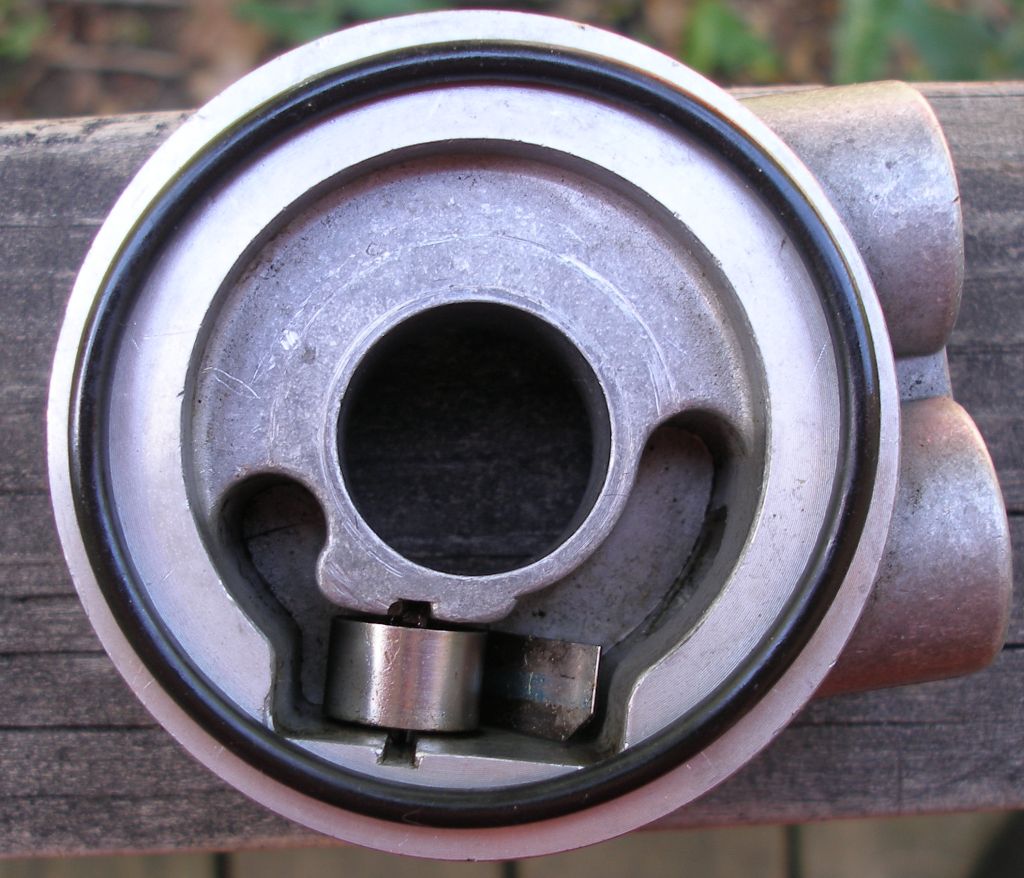
You need a cooler adapter that has a bi metal spring in it for the thermostatic control. Most are 160F but I think that is too low.

Bypass open when under 160F.

oil-cooler-bypass-open-when-cold.jpg


Bypass open to cooler.

oil-cooler-bypass-closed-when-hot.jpg


oil-cooler-adapter-and-o-ring.jpg
 
Status
Not open for further replies.
Back
Top Bottom