New furnaces much smaller?

Joined
May 6, 2005
Messages
15,066
Location
San Francisco Bay Area
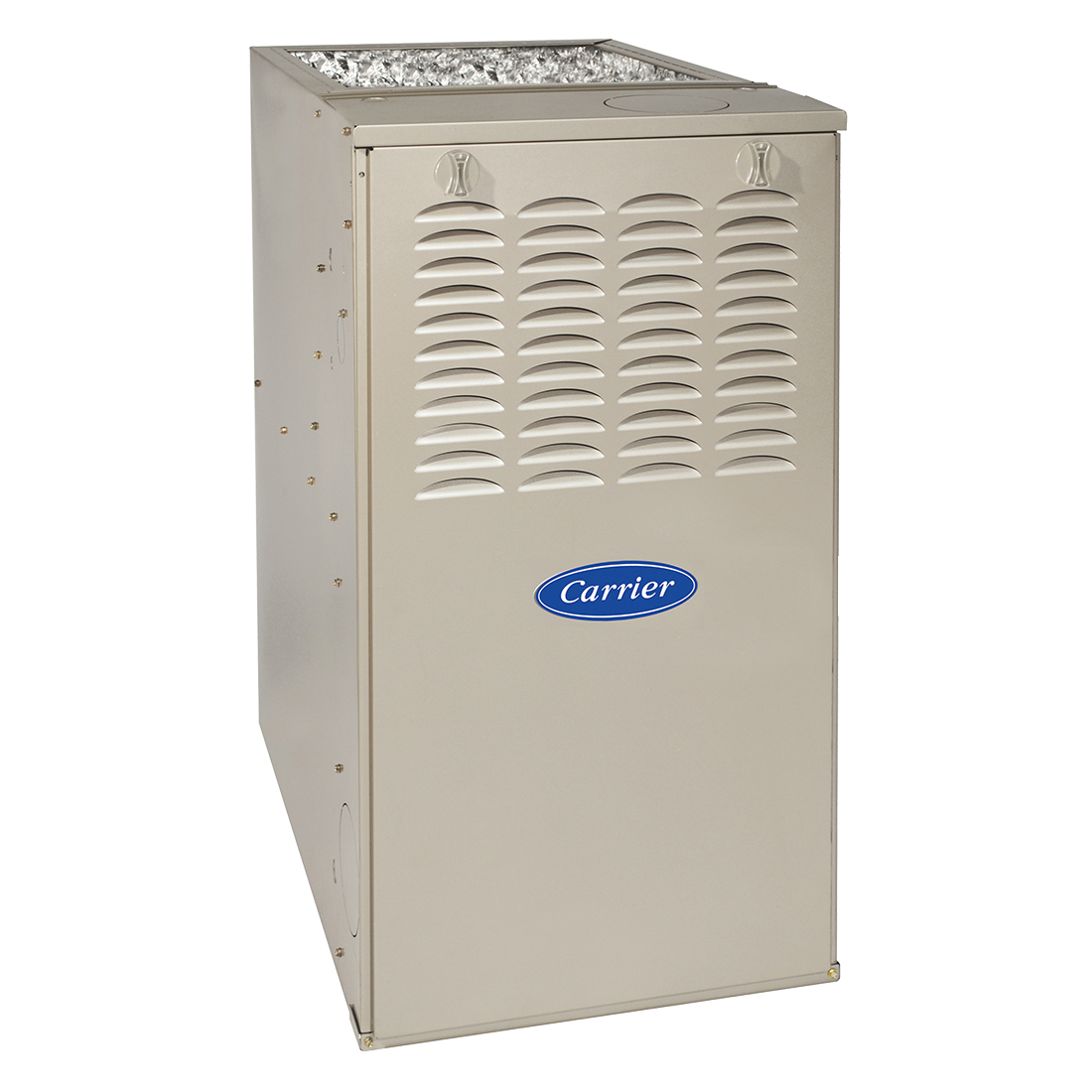
My parents were having issues with their ducts and had an inspection and minor cleaning. The inspector recommended a new natural gas furnace, although my parents didn't go with the same company that did the inspection. But yeah it was pretty obvious that the furnace was due for replacement. I think it's the original furnace from the late 1940s or early 1950s. That thing is really chunky. The replacement is from Carrier and maybe about one-fifth the volume. They don't have nor are they planning on getting A/C.

The other thing was that their old furnace was made by a local sheetmetal fabricator from the next city over. I guess that was a thing 75 years ago.
 

New furnaces much smaller?​

Of course they are. I'll bet their old furnace has huge compartments with tons of empty space. Modern units will be packaged much more efficiently and in turn will use much less sheet metal (and $$$).
I remember as kid in the 60s our gas furnace in the basement looked like robbie the robot and it was big....
Sounds like a gravity furnace. Most people describe them as an "octopus" but "Robbie the robot" gets the image across too !
 
Of course they are. I'll bet their old furnace has huge compartments with tons of empty space. Modern units will be packaged much more efficiently and in turn will use much less sheet metal (and $$$).

Sounds like a gravity furnace. Most people describe them as an "octopus" but "Robbie the robot" gets the image across too !

Oh yeah it's pretty clear there's a lot of empty space in it. But the house is old. I remember when they had a thermostat with a mercury switch. Even the replacement in the 80s had a mercury switch.

I had a house built in the late 70s and the furnace was a major brand (Day & Night). Bigger than my parents new furnace for a smaller square footage, but still much smaller than this one. But the new Carrier furnace looks really tiny. I guess one issue will be that they won't have this big box to place stuff like tools any more. Not that it was a good idea.

Their old one didn't look like a robot though. It was painted green and looked like a big box with rounded edges.
 
I remember as kid in the 60s our gas furnace in the basement looked like robbie the robot and it was big....
That was likely an old coal furnace converted to burn natural gas. A lot of those were done that way as a cheap way to avoid all the hassle of coal, as well as the odor and pollution.
Most didn't have a blower, but were gravity heat circulation, this was not very efficient, but those old furnaces came with two huge advantages:
They were very quiet,
AND they would run for weeks on a 12V car battery in the event of a power outage!

Ask me how I know.
 
That was likely an old coal furnace converted to burn natural gas. A lot of those were done that way as a cheap way to avoid all the hassle of coal, as well as the odor and pollution.
Most didn't have a blower, but were gravity heat circulation, this was not very efficient, but those old furnaces came with two huge advantages:
They were very quiet,
AND they would run for weeks on a 12V car battery in the event of a power outage!

Ask me how I know.
This one had a blower...but the one at my grandpas house did not....It was a coverted coal...The coal shut door was still there....
 
I once drove my brother in law to a ski resort to watch him single-handedly replace the furnaces for a 400 rooms hotel.

The furnaces he disconnected where four tanks which looked to me to be the size of a train tank car. I guess they were smaller than that, probably. But definitely about 15ish ft long and 5-8ft in diameter - at least. Each. They were to go out once the wall gets knocked.

He replaced them with two gizmos that were about the size of a washing machine, and were supposedly providing 20% more powerful than everything they were replacing.

I'm tempted to say - one gizmo, but it was 20 years ago and I'm not 100% sure if it was one or two. Memories drift towards one.
 
Last edited:
...I'm guessing no way it's lasting as long
I have that unholly, unproven and unbased theory that something that lasts you 50 years costs you more at the end of the day than something that you replace every 10 years, by the sheer increase of the the price of what it burns, throughout the years, and the fact that its consumption of what it burns is stuck at what it was when it was built.

Got our appartment in 2010 with a 1960's refrigerator that still worked, and gave it up a couple of months ago with the same refrigerator - still working. But electricity was part of the maintance, so while it probably bit me (other people paid for my old refrigerator's power consumption and I probably paid for theirs) - it wasn't easily quantifiable.
 
I have that unholly, unproven and unbased theory that something that lasts you 50 years costs you more at the end of the day than something that you replace every 10 years, by the sheer increase of the the price of what it burns, throughout the years, and the fact that its consumption of what it burns is stuck at what it was when it was built.

Got our appartment in 2010 with a 1960's refrigerator that still worked, and gave it up a couple of months ago with the same refrigerator - still working. But electricity was part of the maintance, so while it probably bit me (other people paid for my old refrigerator's power consumption and I probably paid for theirs) - it wasn't easily quantifiable.

No doubt it’s more efficient, but offset by my parents’ tendency to not use the heater.

It’s cool too. Electronic status/error display, although segmented. Pilotless. Mom was concerned it was mounted right at the wall, but the label says 0 distance required to the side or back. Also the filter was built onto the duct interface for easy access.
 
No doubt it’s more efficient, but offset by my parents’ tendency to not use the heater.

It’s cool too. Electronic status/error display, although segmented. Pilotless. Mom was concerned it was mounted right at the wall, but the label says 0 distance required to the side or back. Also the filter was built onto the duct interface for easy access.

Just to make it clear, the filter is not mounted inside the furnace, but covers the opening to the duct interface. My mom wanted to make sure there was a new filter and I had one heck of a time trying to get it back in place. There's a little bit of sideways tension on the rail to keep the filter in place.

This also wasn't a super efficient model. Supposedly for mild climates with 80% efficiency. This model family, although theirs' has one latch while their photo on their website shows two. All the cool stuff is under the panel. Wasn't like the old furnace where a lot of the stuff could be seen through several separate panels.

https://www.carrier.com/residential/en/us/products/furnaces/58sb1/

comfort-80-gas-furnace-58sb.png
 
Just to make it clear, the filter is not mounted inside the furnace, but covers the opening to the duct interface. My mom wanted to make sure there was a new filter and I had one heck of a time trying to get it back in place. There's a little bit of sideways tension on the rail to keep the filter in place.

This also wasn't a super efficient model. Supposedly for mild climates with 80% efficiency. This model family, although theirs' has one latch while their photo on their website shows two. All the cool stuff is under the panel. Wasn't like the old furnace where a lot of the stuff could be seen through several separate panels.

https://www.carrier.com/residential/en/us/products/furnaces/58sb1/

comfort-80-gas-furnace-58sb.png
This is the model that I have and it has been great.. It was installed in 2017 after my Goodman went bad after 19 years of no problem service...
 
I kind of doubt like, they will not last that long mostly 20 years is average, they trade efficiency for longtivity now these days.
One of the irritants of the high efficiency gas furnaces is that if there is no floor drain close to the furnace, it will have an electric pump to transfer the acidic condensate water to the drain through a length of plastic tubing. Just another thing to fail.
 
Your folks did the right thing by going with the minimum efficiency 80% standard gas furnace allowed to be sold in the U.S. today. They are much more reliable due to the simplicity of the components as compared to the high efficiency 96%+ units. The basic 80% units are cheaper to purchase, maintain and self-repair with a trade-off in fuel consumption. I like to use the analogy of a Port Injected, SOCH 1990's engine compared to a 2025 GDI turbocharged engine with variable valve timing, start/stop and cylinder deactivation technology.

 
Last edited:
Back
Top Bottom