Link
Quote:
We already see SAE 0W-16 in the market, and some OEMs are beginning to look at viscosities as low as SAE 0W-8, or even 0W-4. In this low viscosity era it is becoming increasingly important for us to understand the implications this has on the formulation envelope and on hardware protection.
Quote:
Low viscosity and durability challenges
The first formulation challenge presented by moving to lower viscosity lubricants is how to balance the desire for fuel economy with the need to protect the engine and all its components.
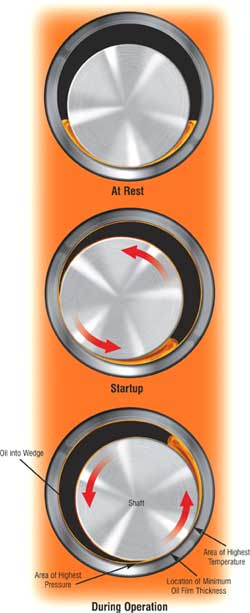
The thinner oil films associated with low viscosity fluids mean it is harder for the oil to keep the loaded contact surfaces in the engine sufficiently apart from each other. This can lead to accelerated wear rates, and even locally increased friction.
It makes little commercial sense to trade engine durability for fuel economy gains.
Infineum studies indicate that, in some engines, reducing lubricant viscosities to 2.3 HTHS presents little risk of engine component wear. Below this level, specific engine components, for example the top ring and bearings, observe higher wear rates. To ensure ultra low viscosity lubricants deliver fuel economy and wear protection it is becoming increasingly important to co-engineer the vehicle hardware and lubricant system.
Quote:
We already see SAE 0W-16 in the market, and some OEMs are beginning to look at viscosities as low as SAE 0W-8, or even 0W-4. In this low viscosity era it is becoming increasingly important for us to understand the implications this has on the formulation envelope and on hardware protection.
Quote:
Low viscosity and durability challenges
The first formulation challenge presented by moving to lower viscosity lubricants is how to balance the desire for fuel economy with the need to protect the engine and all its components.
The thinner oil films associated with low viscosity fluids mean it is harder for the oil to keep the loaded contact surfaces in the engine sufficiently apart from each other. This can lead to accelerated wear rates, and even locally increased friction.
It makes little commercial sense to trade engine durability for fuel economy gains.
Infineum studies indicate that, in some engines, reducing lubricant viscosities to 2.3 HTHS presents little risk of engine component wear. Below this level, specific engine components, for example the top ring and bearings, observe higher wear rates. To ensure ultra low viscosity lubricants deliver fuel economy and wear protection it is becoming increasingly important to co-engineer the vehicle hardware and lubricant system.