
Both of 'em. All of them?I postulate there is only one infinite universe
Someone asked me if there were an infinite number of infinities within infinity.

Both of 'em. All of them?I postulate there is only one infinite universe
Why not, who said there is no another bubble outside the one we are in.How would that work?

How did you decide we're in a bubble?Why not, who said there is no another bubble outside the one we are in.

Define the edge the start and stopWhy not, who said there is no another bubble outside the one we are in.

We are told universe is expanding, so it's expanding into something outside it, no? How do we know this universe is the only thing?Define the edge the start and stop
What is in between?
Everything is actually everything.Both of 'em. All of them?
Someone asked me if there were an infinite number of infinities within infinity.
Which may be uncountable because counting implies a limit or end and infinite does not have any. You can't get to the end because there isn't one.Everything is actually everything.
Nothing is the absence of matter and energy we can sense and detect. So no, it doesn't need to be expanding into something else. It can be the matter and energy we can sense and detect expanding into the place there is no matter and energy we can sense and detect. It doesn't need a defined edge like a balloon.We are told universe is expanding, so it's expanding into something outside it, no? How do we know this universe is the only thing?
So, we must ask, of the central claims of the standard model, which of them have been observationally or experimentally demonstrated?
I don't mean this disrespectfully, but your comment suggests a misunderstanding of what the Standard Model actually is and the evidence supporting it.Effectively 0% I would theorize, or hardly enough to teach as scientific fact.
It seems like whack-a-mole to me.
I see complexity to simplicity here: https://gizmodo.com/app/uploads/2020/10/ybeqwnddqp1rr5s8kgf7.gifView attachment 344226

In the context of the discussion the reference is to the standard cosmological framework because I know the difference between particle models and cosmological models since I teach physics courses....If the discussion instead concerns the standard cosmological model, then a distinction must be made between observations and interpretations. The expansion of the universe, the cosmic microwave background, gravitational lensing, and large-scale structure formation are all directly observed phenomena. What remains debated is whether dark matter and dark energy are the correct explanations for these observations or whether alternative theories could account for the data.
Even here, however, it would be inaccurate to suggest that the model lacks observational support. The model was developed precisely because it successfully explains a wide range of independent observations using a single framework. The real scientific debate concerns the nature of certain components of the model, not whether the underlying observations exist...

Astronomy is an ancient observational science.The incomprehensible numbers of galaxies pales in comparison to level of knowledge we have thus far.
Argumentum ad Verecundiam.Here is my real question - you clearly have not done any homework to justify your position and you clearly don't understand the evidence for the standard model, yet, here you are confidently opining and giving us your theory on something you know nothing about. How does this jive in your head?
Throwing around latin terms you don't understand too? This must be your MO. That's not argumentum ad verecundiam.Argumentum ad Verecundiam.
No, I am not a physicist, but matter how you slice it... if the basis of a theory that has it foundation in something that contrary to other known basics, then theory in question is worth questioning.
It's nice to know that you are an ameteur astronomer. Is that M13?As a rank amateur astronomer with a 10" Meade telescope, I truly love a clear dark night to observe what is and what was from this rotating and orbiting ball in space. My eye on the eyepiece receives actual photons from the object in question. To me that is a reality-check that is far beyond an electronic image. My very favorite observable 'thing' are globular clusters. Millions of stars resolved as pinpoints of light. A picture just can't come close to what the eye sees. To the eye, all the stars are the same size. Resolving each pinpoint perfectly.
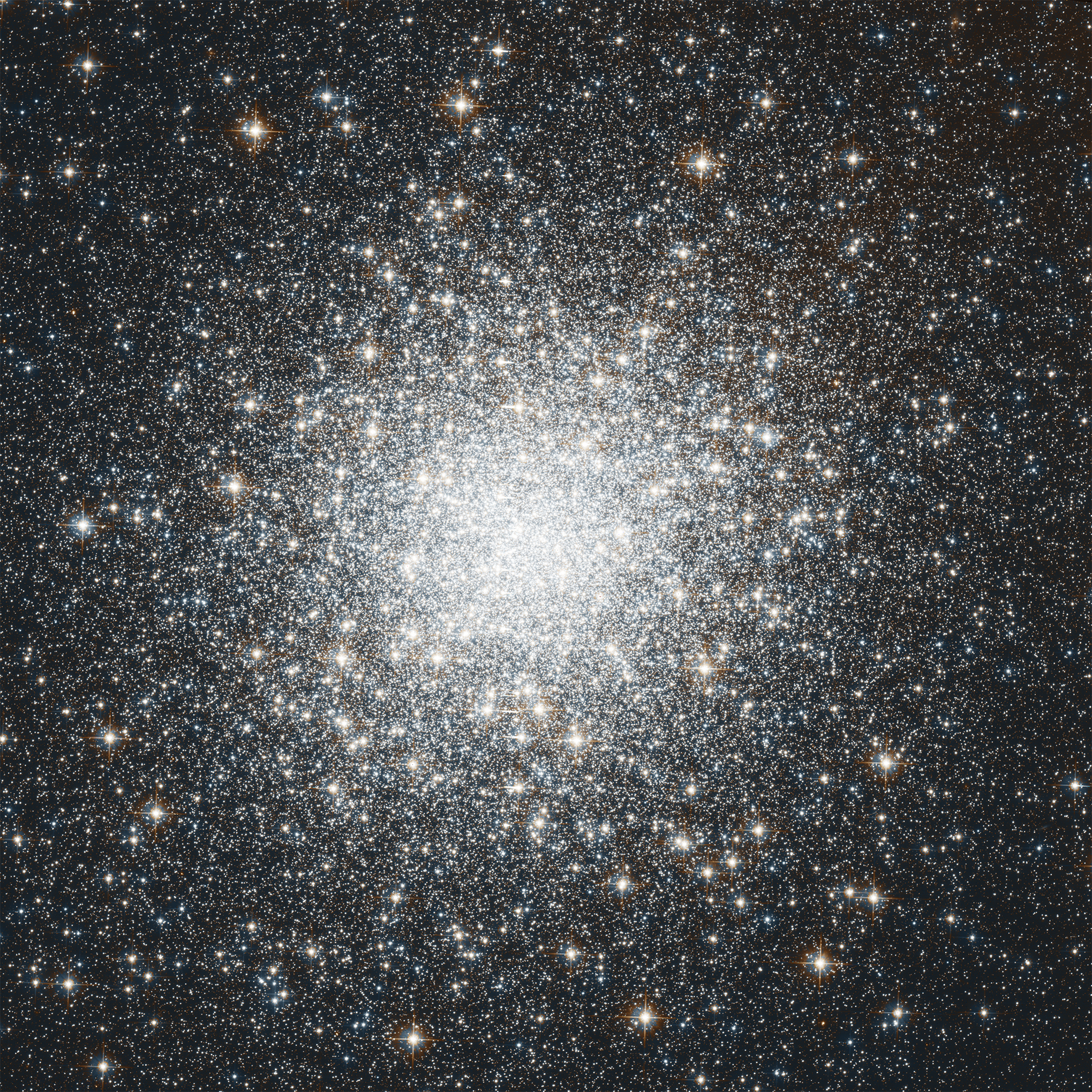
The problem with that statement is that it doesn't actually say anything.The incomprehensible numbers of galaxies pales in comparison to level of knowledge we have thus far.
Wasn't Lone Star born in the Ford Galaxy?Was there a 460 Galaxie? Or better a 427?


