Hey guys, am a newbie here, sorry if this is posted in the wrong section.
My name's Phil and I'm from New Zealand I have a 1993 Mitsubishi Galant with a 6A12 'MIVEC' 2.0L V6 engine which is rated at 200hp in N/A form.
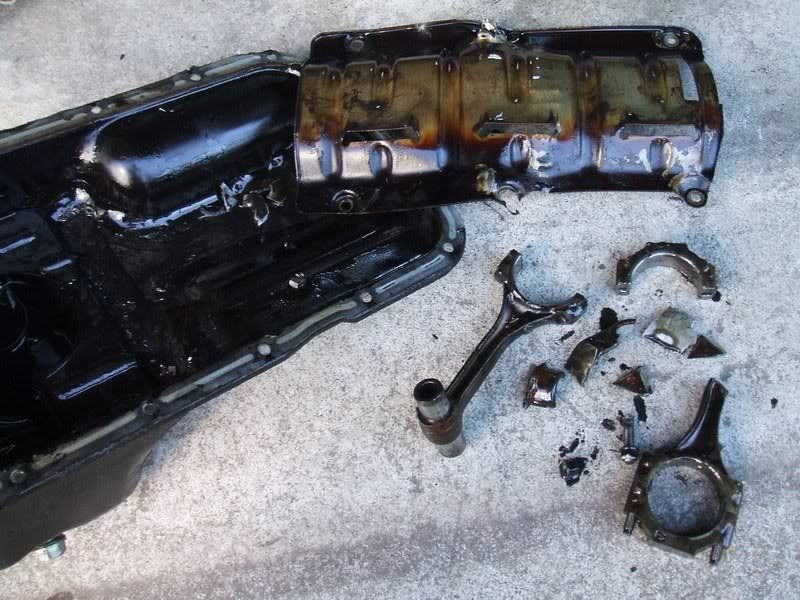
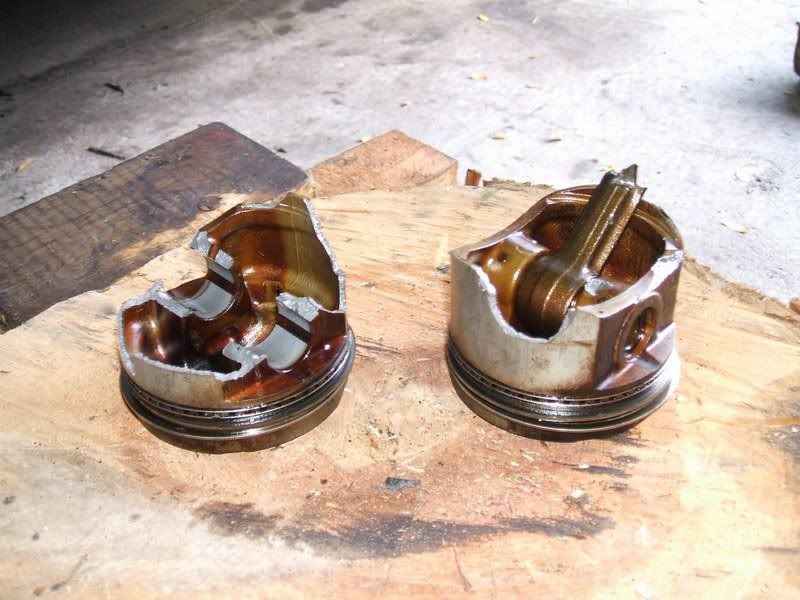
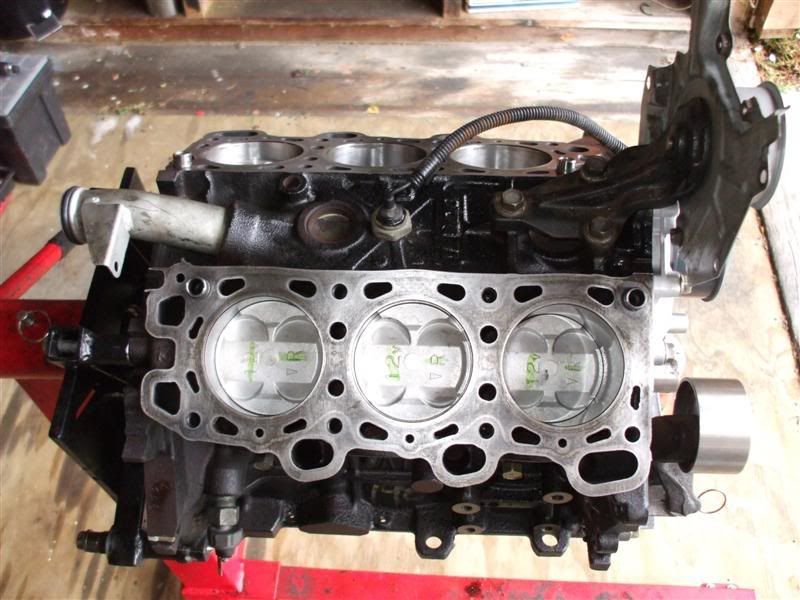
Long story short the engine suffered catastrophic rod failure so I stripped down the engine and replaced the rods, crank, pistons and had the heads looked over. I had the local engine rebuilder hone the bores and measure (ended up being standard size) and polish the replacement crank. I had assembled the engine with Penrite engine and camshaft assembly grease and the crank did spin freely in the block with no binding or tight spots with the pistons and rods attached before the cylinder heads were bolted down. Once the engine was back into the car it was cranked for a few moments with no spark in order to gain oil pressure, and then proceeded to be started. I ran it in on Penrite running in oil for the first 100km, then switched to a full mineral 20W40 for the next 500kms when switched to another full mineral 15W40 for the next 5000kms then changed to semi-synthetic 10W40 and have been running that ever since.
The bearings I used were ACL 'Dura-Glide' bearings, as new genuine bearings from Mitsubishi themselves were going to cost three times as much and would have been a two week delay from Japan.
Fast forward 20,000kms and it turns out I had not tightened up the crank pulley bolt enough (oops!) and as a result the keyway in the crank had worn out. I decided I didn't want to fluff around with reparing the crank in place with some kind of epoxy, so a spare crank was sourced and new ACL bearings purchased. When I pulled the old crank out I was shocked by the amount of wear on the old bearings, especially the main bearings. Remember this engine only had 20,000kms (12,000 miles) on it.
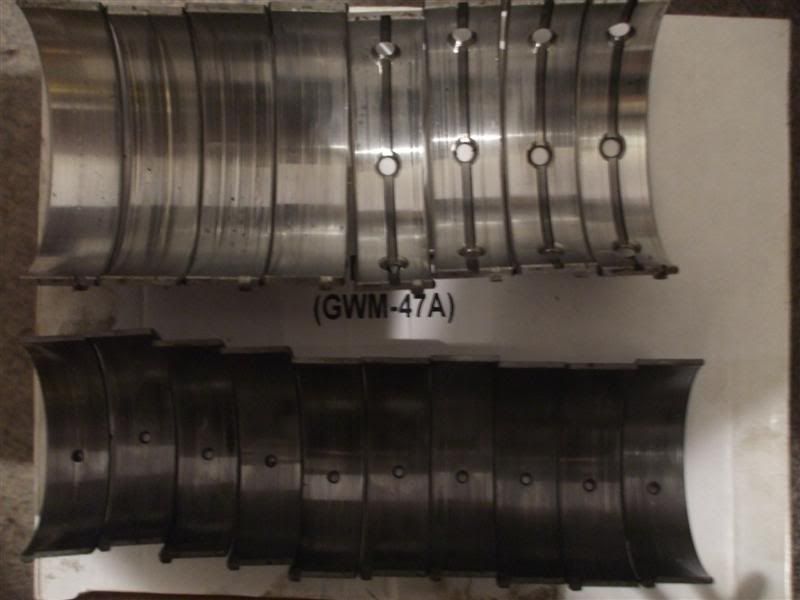


Surely that amount of wear does not correspond with only 20,000kms of use?
I'm no expert on bearings, but does that wear signal that perhaps there was contamination in the oil on initial startup? I had thought I had cleared out all the oil galleries, oil pump, sump, heads etc of any left over engine bearing material when the engine initially threw a rod.
Just a note on the bearings, the ones I had got are 'one size fits all' type bearings for the 6A11 SOHC 1.8L V6 (140hp), the 6A12 SOHC 2.0L V6 (155hp) and the 6A12 DOHC 2.0L V6 (170hp), there was no specific listing for my MIVEC 6A12 which is rated at 200hp. While speaking to ACL they specifically said the bearings are not suitable for the 240hp twin turbo variant of the 6A12 engine, but did not specifically say they weren't suitable for the MIVEC engine. Could it also be the case that perhaps these bearings weren't up to the task?
Now I've purchased some ACL bearings to put in with the new crank, but I'm a little hesitant to do so if this is going to happen again after another 20,000kms. I should probably mention that in that 20,000kms I did not hear any bearing noise of any kind.
Any thoughts on this matter would be greatly appreciated!
My name's Phil and I'm from New Zealand I have a 1993 Mitsubishi Galant with a 6A12 'MIVEC' 2.0L V6 engine which is rated at 200hp in N/A form.
Long story short the engine suffered catastrophic rod failure so I stripped down the engine and replaced the rods, crank, pistons and had the heads looked over. I had the local engine rebuilder hone the bores and measure (ended up being standard size) and polish the replacement crank. I had assembled the engine with Penrite engine and camshaft assembly grease and the crank did spin freely in the block with no binding or tight spots with the pistons and rods attached before the cylinder heads were bolted down. Once the engine was back into the car it was cranked for a few moments with no spark in order to gain oil pressure, and then proceeded to be started. I ran it in on Penrite running in oil for the first 100km, then switched to a full mineral 20W40 for the next 500kms when switched to another full mineral 15W40 for the next 5000kms then changed to semi-synthetic 10W40 and have been running that ever since.
The bearings I used were ACL 'Dura-Glide' bearings, as new genuine bearings from Mitsubishi themselves were going to cost three times as much and would have been a two week delay from Japan.
Fast forward 20,000kms and it turns out I had not tightened up the crank pulley bolt enough (oops!) and as a result the keyway in the crank had worn out. I decided I didn't want to fluff around with reparing the crank in place with some kind of epoxy, so a spare crank was sourced and new ACL bearings purchased. When I pulled the old crank out I was shocked by the amount of wear on the old bearings, especially the main bearings. Remember this engine only had 20,000kms (12,000 miles) on it.
Surely that amount of wear does not correspond with only 20,000kms of use?
I'm no expert on bearings, but does that wear signal that perhaps there was contamination in the oil on initial startup? I had thought I had cleared out all the oil galleries, oil pump, sump, heads etc of any left over engine bearing material when the engine initially threw a rod.
Just a note on the bearings, the ones I had got are 'one size fits all' type bearings for the 6A11 SOHC 1.8L V6 (140hp), the 6A12 SOHC 2.0L V6 (155hp) and the 6A12 DOHC 2.0L V6 (170hp), there was no specific listing for my MIVEC 6A12 which is rated at 200hp. While speaking to ACL they specifically said the bearings are not suitable for the 240hp twin turbo variant of the 6A12 engine, but did not specifically say they weren't suitable for the MIVEC engine. Could it also be the case that perhaps these bearings weren't up to the task?
Now I've purchased some ACL bearings to put in with the new crank, but I'm a little hesitant to do so if this is going to happen again after another 20,000kms. I should probably mention that in that 20,000kms I did not hear any bearing noise of any kind.
Any thoughts on this matter would be greatly appreciated!
Last edited: