Diagnosing soft / low brake pedal

Status
Not open for further replies.

NJC

Joined
Apr 28, 2005
Messages
3,051
Location
Vancouver BC
Trying to diagnose a long-standing soft / low brake pedal on my 1989 Volvo wagon (4 wh disk / ABS).

Here's what has been done:

- Removed lines, plugged and tested master cyl. Tests fine, pedal is solid.
- Bled all 4 wheels: FL -> FR - LR -> RR
- no visible leaks at wheel cylinders, pads all OK.

Clamped all 4 lines and pedal is decently firm; remove front 2 clamps and softness returns.

I will try again to bleed front wheels. Anything else that is being missed?
 
Could the rubber brake hoses be stretched and degraded? Could the master cylinder be bad? You said you tested it, but it could be replaced since they arent that expensive.

Just throwing some ideas out.
 
Is the pedal still soft with lots of travel, if you pumped the pedal several times with the engine OFF?
 
Not soft after pumping with engine off - but not sure that indicates any problem with vacuum diaphragm.
 
Update: Pedal is solid with front 2 lines clamps ... maybe I'll leave it like that.
grin2.gif


Anything to check beyond bleeding the front 2 lines?
 
I would try replacing the front soft lines, actually might as well do the rear while you are at it.

Does your Volvo have the multi piston front calipers? I seem to remember some bricks of that vintage having a funky looking front caliper.
 
Is this a new problem? I have rarely run across a car where someone has installed calipers on the wrong side and the bleeders are not at the top of the calipers
 
Originally Posted By: Billbert
Is this a new problem? I have rarely run across a car where someone has installed calipers on the wrong side and the bleeders are not at the top of the calipers

Yes I did check that - both bleeders at top.

And they are the 2 piston calipers - Girling in the front and ATE rear IIRC.

I bled the front and after about 7 bleeds on the right side, was still getting air.
21.gif
 
Assuming you're doing a two-man bleed, pull the bleeder valve out and make sure that both the valve and it's seat appear to be clean and undamaged. If they look good you may have a leaking o-ring inside the caliper.
 
Believe it or not,I have seen compressible pads.Yes,pads that acted like sponges and compressed under clamping pressure.Maybe replace front pads.
 
It could be something mechanical like the pads binding up or the caliper sliders.

My 940 has dual piston rears and single piston fronts. Weird. My fronts have these little rubber bellows that age and let the sliders inside corrode leading to jamming and hilarity.

If you find binding, make sure your pads are flat: straightedge them. Usually if you get binding you get slightly curved or wedged pads which will flex and feel and work poorly.
 
This car is over 20 years old. It is irresponsible to leave the original rubber lines on there. Replace them and let us know how it feels after you have done that.

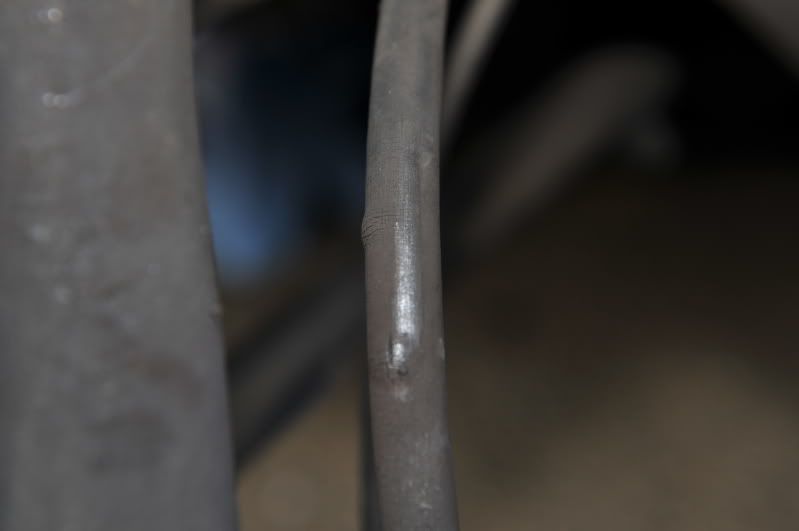
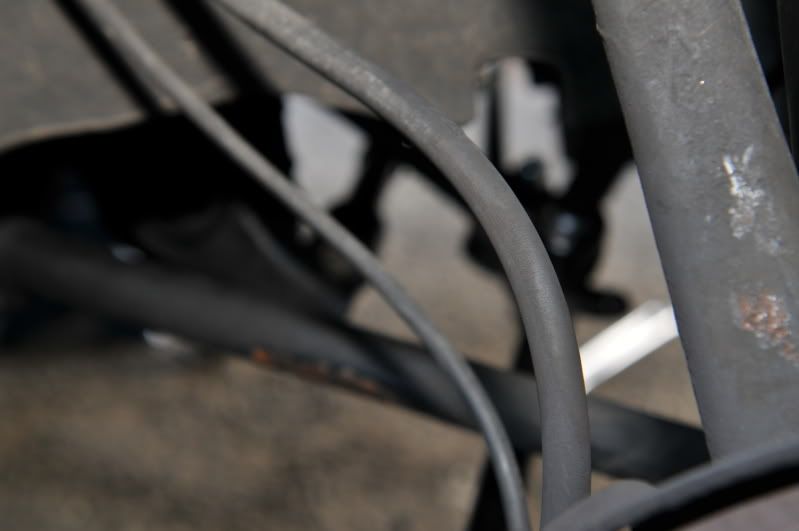
IK3_9872.jpg


IK3_9873.jpg
 
Originally Posted By: NJC
Update: Pedal is solid with front 2 lines clamps ... maybe I'll leave it like that.
grin2.gif


Where did you put the clamps on? Is it at the end of the flexible hose or at the beginning? You have come up with a clever scheme to isolate the problem. Why not take it further and determine exactly which portion of the braking system or which side is causing the soft pedal by playing with the clamp points?

You came up with the idea and I am just giving you encouragement to follow it logically before starting to change parts randomly or worse as suggested by other guys here. Don't listen to them
grin.gif
 
Those were nice links! I learned something new today!! Thanks for providing them. Your link even reminds to NOT drive away with the hard pedal (i.e. with the clamps still on the brake line :-)
 
Last edited:
Status
Not open for further replies.
Back
Top Bottom