

CAFE and synthetic oil requirements.

Status
Not open for further replies.

wemay

Site Donor 2023
Joined
Apr 4, 2012
Messages
18,896
Location
A stone's throw from the Everglades
For the many that believe CAFE is the only reason the U.S. market has moved towards lower viscosity oils, are you of the same opinion concerning the move to towards synthetics - CAFE driven as well?

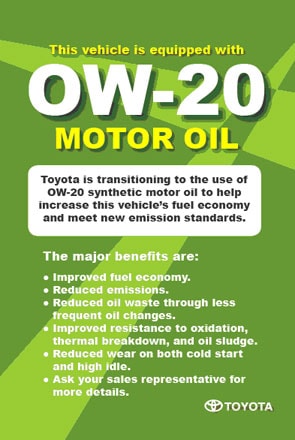
Also, bullet point number eight says lower wear....on high idle? How so?
b650bb174046387201e965e925efb857.jpg
 
Last edited:
For the bullet point on "Reduced wear on both cold start and high idle" they are probably referring to the fact that a 0w20 vs say a 10w30 or even a 5w30 will be quicker to flow up up the head and around the engine, thus reducing wear. Now I have a question for you, why a 15w40 in your 4 cylinder turbo?
 
If the starting temps are below 0F for example the 0W20 will be able to be travel from the sump to the oil pump quicker etc. here is no doubt that EPA regulations has all to do with Xw-20 oils
 
Originally Posted By: gregk24
For the bullet point on "Reduced wear on both cold start and high idle" they are probably referring to the fact that a 0w20 vs say a 10w30 or even a 5w30 will be quicker to flow up up the head and around the engine, thus reducing wear. Now I have a question for you, why a 15w40 in your 4 cylinder turbo?
why not 15w40?
 
Originally Posted By: gregk24
For the bullet point on "Reduced wear on both cold start and high idle" they are probably referring to the fact that a 0w20 vs say a 10w30 or even a 5w30 will be quicker to flow up up the head and around the engine, thus reducing wear. Now I have a question for you, why a 15w40 in your 4 cylinder turbo?


Good question. It was the left over remnants from my tuned Mitsubishi Evolution (turbo). My brother brought it over from his garage since i forgot it was there. Running it 'til it's done. I don't foresee any issues. Hyundai even shows it as an option in some 2.0T manuals. I may even use it again.
 
Last edited:
Originally Posted By: gregk24
For the bullet point on "Reduced wear on both cold start and high idle" they are probably referring to the fact that a 0w20 vs say a 10w30 or even a 5w30 will be quicker to flow up up the head and around the engine, thus reducing wear. Now I have a question for you, why a 15w40 in your 4 cylinder turbo?


Yet we know that's inaccurate. Cold oil maintains a thicker oil wedge until the oil thins with heat. Wear increases when the oil isn't hot enough to activate the anti-wear adds.
Friction modifiers function cold however exactly what toyota actually means by lees wear is known only to them as far as the metric they are using to measure
 
Originally Posted By: CT8
If the starting temps are below 0F for example the 0W20 will be able to be travel from the sump to the oil pump quicker etc. here is no doubt that EPA regulations has all to do with Xw-20 oils


Nope.
Well not if the oil pump is a typical positive displacement type.
 
Originally Posted By: wemay
Also, bullet point number eight says lower wear....on high idle? How so?


The answer is right there in the image:

"Ask your sales representative for more details"

grin.gif
 
Originally Posted By: Clevy
Originally Posted By: CT8
If the starting temps are below 0F for example the 0W20 will be able to be travel from the sump to the oil pump quicker etc. here is no doubt that EPA regulations has all to do with Xw-20 oils


Nope.
Well not if the oil pump is a typical positive displacement type.
Well actually we need do do a little experiment cause you need to figure this out for your self. As the oil thickens as the temp drops. We are talking well below freezing . The big thing is how long it takes for the oil to reach the pump. The oil pump creates a vacuum then the oil flows from the sump to the pump. Get a real thick milkshake put a straw in it and suck what happens? Let the milkshake reach room temps then with the same size straw suck. Tell me the results.
 
So I have a question on this subject. Practically everyone here seems to agree that the reason that auto manufacturers are moving towards 0W-X0 oils, is to increase fuel economy. This makes sense to me. Mobil uses this as the major marketing for their AFE line of M1.

But at the same time, when someone here on BITOG claims to have improved fuel economy by switching to a lower viscosity oil, the overwhelming majority will jump on board to tell the OP how wrong he must be, that any increase in fuel efficiency would be so small as to be immeasurable, and that the OP is only dreaming this up. That if he is seeing a change in fuel efficiency, it must b related to some other unidentified factor, such as change in season, or change in driving practices.

So are the OEMs right or are they blowing smoke up our proverbial skirts? Or are all the naysayers here on BITOG wrong? What say ye all?
 
Originally Posted By: CT8
Originally Posted By: Clevy
Originally Posted By: CT8
If the starting temps are below 0F for example the 0W20 will be able to be travel from the sump to the oil pump quicker etc. here is no doubt that EPA regulations has all to do with Xw-20 oils


Nope.
Well not if the oil pump is a typical positive displacement type.
Well actually we need do do a little experiment cause you need to figure this out for your self. As the oil thickens as the temp drops. We are talking well below freezing . The big thing is how long it takes for the oil to reach the pump. The oil pump creates a vacuum then the oil flows from the sump to the pump. Get a real thick milkshake put a straw in it and suck what happens? Let the milkshake reach room temps then with the same size straw suck. Tell me the results.


Never thought of it this way....hmmmmm.
 
Originally Posted By: Clevy
Originally Posted By: CT8
If the starting temps are below 0F for example the 0W20 will be able to be travel from the sump to the oil pump quicker etc. here is no doubt that EPA regulations has all to do with Xw-20 oils


Nope.
Well not if the oil pump is a typical positive displacement type.
YEP I know how oil pumps work .
 
There is no data to support fuel economy improvement from conventional 5W20 to synthetic 0W20. There are data to support MPG improvement from XW30 to xW20, but by no more than 1-2% for the same brand(Ex, Mobil Super 5W30 to Mobil 1 0W20)
 
Originally Posted By: BHopkins
So I have a question on this subject. Practically everyone here seems to agree that the reason that auto manufacturers are moving towards 0W-X0 oils, is to increase fuel economy. This makes sense to me. Mobil uses this as the major marketing for their AFE line of M1.

But at the same time, when someone here on BITOG claims to have improved fuel economy by switching to a lower viscosity oil, the overwhelming majority will jump on board to tell the OP how wrong he must be, that any increase in fuel efficiency would be so small as to be immeasurable, and that the OP is only dreaming this up. That if he is seeing a change in fuel efficiency, it must b related to some other unidentified factor, such as change in season, or change in driving practices.

So are the OEMs right or are they blowing smoke up our proverbial skirts? Or are all the naysayers here on BITOG wrong? What say ye all?


Manufacturer mpg improvement results are under highly controlled conditions. An individual driver cannot reliably replicate such conditions.

So the manufacturer is right. The individual may be right but their testing is not controlled enough to be sure.
 
Originally Posted By: CT8
Originally Posted By: Clevy
Originally Posted By: CT8
If the starting temps are below 0F for example the 0W20 will be able to be travel from the sump to the oil pump quicker etc. here is no doubt that EPA regulations has all to do with Xw-20 oils


Nope.
Well not if the oil pump is a typical positive displacement type.
Well actually we need do do a little experiment cause you need to figure this out for your self. As the oil thickens as the temp drops. We are talking well below freezing . The big thing is how long it takes for the oil to reach the pump. The oil pump creates a vacuum then the oil flows from the sump to the pump. Get a real thick milkshake put a straw in it and suck what happens? Let the milkshake reach room temps then with the same size straw suck. Tell me the results.


That's the purpose of the MRV test.
 
Originally Posted By: CT8
Originally Posted By: Clevy
Originally Posted By: CT8
If the starting temps are below 0F for example the 0W20 will be able to be travel from the sump to the oil pump quicker etc. here is no doubt that EPA regulations has all to do with Xw-20 oils


Nope.
Well not if the oil pump is a typical positive displacement type.
Well actually we need do do a little experiment cause you need to figure this out for your self. As the oil thickens as the temp drops. We are talking well below freezing . The big thing is how long it takes for the oil to reach the pump. The oil pump creates a vacuum then the oil flows from the sump to the pump. Get a real thick milkshake put a straw in it and suck what happens? Let the milkshake reach room temps then with the same size straw suck. Tell me the results.


If the pick up tube is submerged in oil and the pump is primed then it makes no difference whether you measure volume before or after the pump,each stroke moves the same volume of oil.
Unless there is cavitation or the pump lost its prime. Then it'll suck air.
 
Originally Posted By: Clevy

If the pick up tube is submerged in oil and the pump is primed then it makes no difference whether you measure volume before or after the pump,each stroke moves the same volume of oil.
Unless there is cavitation or the pump lost its prime. Then it'll suck air.

BUT there is a pressure relief valve in pump or maybe block that dumps a portion of the oil back into pan if it can't be pushed through the oiling system...
 
Well, I do my part to increase sales of 0w20, Mobil 1, AFE.

I'm currently running a blended mix of 3 quarts of Mobil 1 Advanced Fuel Economy 0w20 with 3 quarts of M1, 15w50, and I notice the difference immediately.
 
Originally Posted By: BHopkins
So are the OEMs right or are they blowing smoke up our proverbial skirts?


Not in my wardrobe, never has been, never will be. Speak for yourself.
 
Status
Not open for further replies.
Back
Top Bottom