Bore vs Stroke

Status
Not open for further replies.
I'd prefer it square to slightly undersquare. But I'm not sure how much it would matter; the difference in efficiency between those two types of engines is probably pretty narrow these days.

I would think longer strokes would be more efficient. More torque too. Friend had a really long stroke VW 2.0 litre; mileage was phenomenal and low end torque super; only at higher rpms my subie performed better.

My EJ18 engine is only slightly oversquare; same stroke as the EJ22 wich has 22/18 times the bore's area. Given the relatively short stroke the EJ22 has (very oversquare engine), it's still an incredibly efficient engine across a wide range of rpms--as long as you keep the throttle over half open:

Subaru-ej22-bsfc.png

link to various bsfc maps
 
Back in the 1920s, Sir Harry Ricardo was getting 0.45lb/hphr (200grammes per HPhr) out of 4.5:1 compression, running on basically kerosene, through his crosshead 200hp tank Spark Ignition engine.

Admittedly it took 6 off 3L cylinders to make the 200hp.
 
Originally Posted By: artificialist
Many cars were being built with narrower bores because the combustion flame more easily burns the gasoline in the chamber. In short narrow bores are for reducing HC and CO.

No matter what Ford did with the 5.0, 5.8, and 7.5 V8, they could not get it to pass smog without an air pump. All engines had wide bores. Almost no Ford 4.6, 5.4, or 6.8 uses an air pump. Their bores are far narrower. Their exist other examples with other auto builders, but the is the easiest one for me to remember.


Errrrmmm...not quite.

The push to smaller bores in the 40s and 50s was due to the "rated" power problem, that the manufacturers found they could skirt as metallurgy improved and they could increase piston speed markedly over what the standard rating was based on...that's why a Pommie Standard 8 (8hp) was more like 35-40 or something like that.

Longer flame travels increase the chance for the end gasses to auto-ignite (flame travels across the chamber at 15m/s (50fps??), while the pressure travels at the local speed of sound, which increases even with temperature SQRt(KRT).

So to get around it, many try to centralise the plug, which on a standard architecture V-8 doesn't work really well, there's other stuff in the way.

So the next trick is that there is such a thing as quench, where a fire won't pass down a narrow opening, of approximately 60 thou (1.5mm), nor autoignite. That allowed them to make a "small" chamber on a large bore, with the flame only having to traverse the (often kidney shaped) small chamber...another phenomenon called "squish" violently forces the last bit of air and fuel into the bulk gasses/flame creating turbulence and mixing, and good flame propogation with less chance of detonation, allowing way higher compression ratios...oft called "closed chamber" heads...epitome of such a design was a circular chamber centred on the exhaust valve, with a flat head and inlet valve.

However, the bit of gas trapped in the quench area doesn't get burned, or burned completely, and has to be added to the other bit that's trapped between the piston top and the top ring, increasing HC and CO emmissions drastically.

As emissions regs tightened, engines went to more open chambers (quiescent, or slow gas mixing), reducing the HC and CO, but with lower compressions, less timing, less power, and more fuel used.
 
Well, you can have a lot of valves or a couple of big ones, but it is how they are operated that makes all the difference.

Once again the camshaft/valve TIMING is the 'heart' of the motor and determines most of it's observable characteristics.
 
Originally Posted By: Cujet
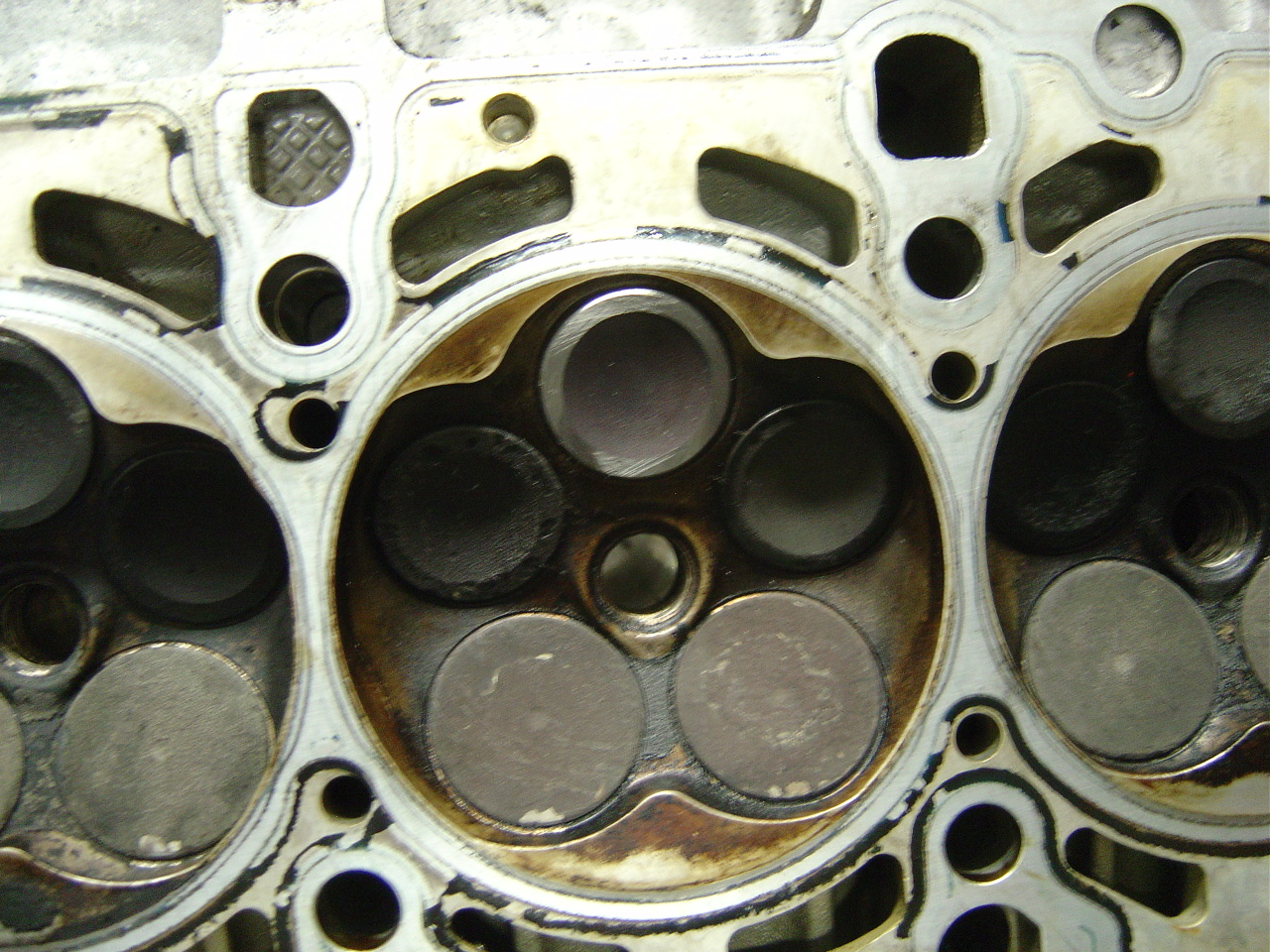
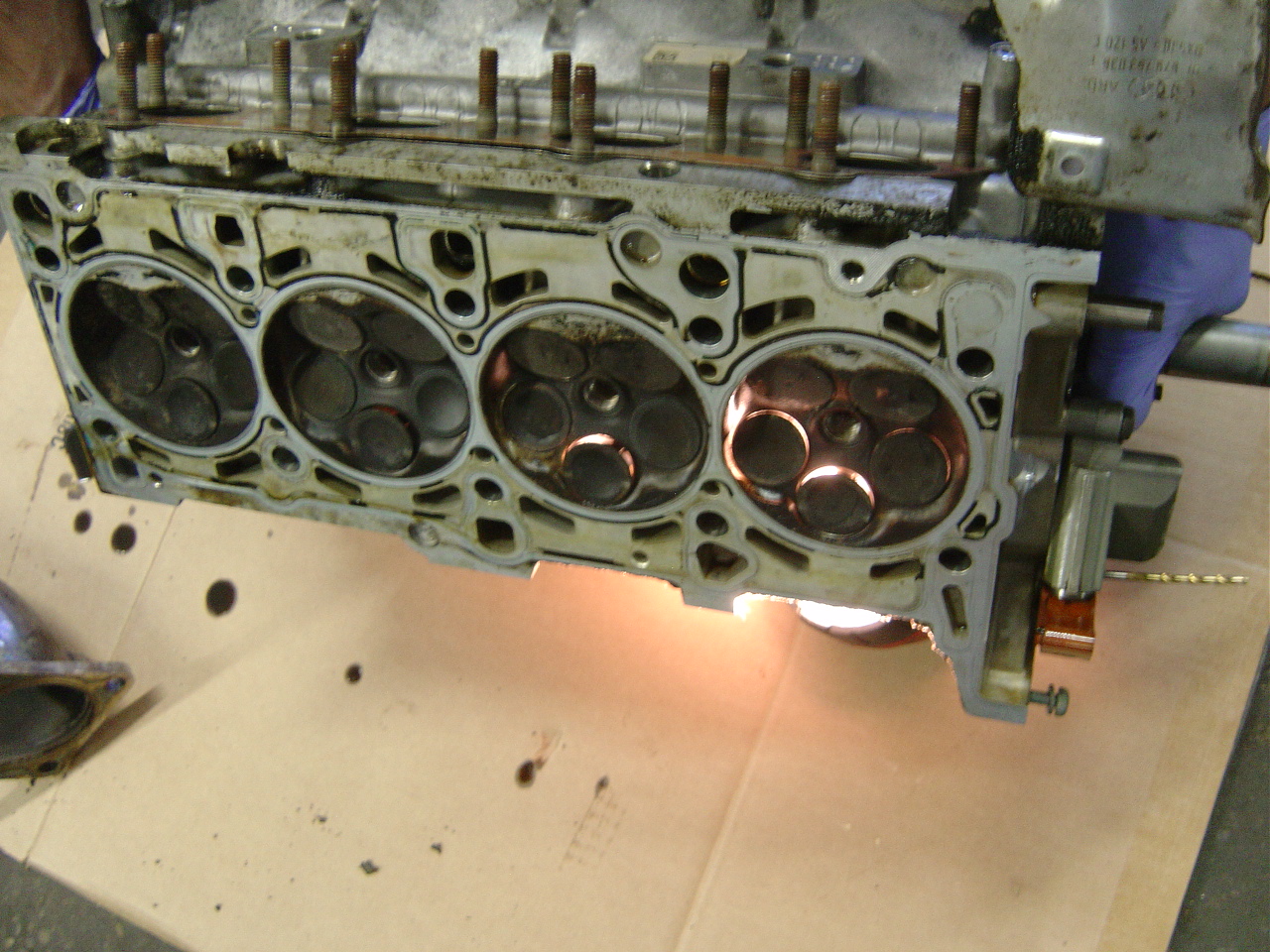
Minutia aside, bore and stroke relationships have no affect on torque. Valve size does.


In that case, what do I win?


4107928625_4db3d94ee6_o.jpg


3613588824_3974949655_o.jpg
 
Originally Posted By: dparm
Originally Posted By: Cujet
Minutia aside, bore and stroke relationships have no affect on torque. Valve size does.


In that case, what do I win?


4107928625_4db3d94ee6_o.jpg


3613588824_3974949655_o.jpg


What the heck car is that off of?
 
Originally Posted By: Nick R
Was doing some reading on the internet tonight, and something I've been curious about. In an engine, would you prefer longer stroke, smaller bore, or vice versa? ….

I wonder what you all think. Longer bore = more low end torque? Or does it not really matter all that much? I'm curious to hear what you think about this.


There are a number of reasons why you might want to use a longer stroke. Generally combustion is more complete, and therefore emissions lower, in a long stroke engine than a short stroke engine, all things being otherwise equal. Honda, for example, has favored longer strokes in their four cylinder engines.

On the other hand, as you increase stroke you also increase reciprocating mass, which limits rpm, and you increase piston travel – the distance the piston travels for each revolution of the engine.

You might choose a shorter stroke in a boxer engine because any increase in stroke length increases engine width.

Formula One race cars favor short strokes since the rules limit displacement so that power can only be achieved through high engine speeds, and those speeds require low reciprocating mass.

As to torque, the work performed by an engine during the movement of the piston through a single power stroke is determined by the quantity of energy released by the combustion of fuel and by the compression ratio. Any compression ratio can be achieved for a given stroke by shortening the distance between the piston face and the cylinder head. Length of stroke does not determine either the compression ratio or the amount of energy released in the combustion, so the quantity of work performed during a crank rotation is independent of the length of the stroke.
 
Originally Posted By: dparm
It's my Audi S4's 4.2L SFI 40V V8. :-)


Holy bent valves batman!!! What happened there???
crazy2.gif
 
Originally Posted By: SteveSRT8
Once again the camshaft/valve TIMING is the 'heart' of the motor and determines most of it's observable characteristics.


I'll disagree.

The architecture of the engine determines what it CAN be. Cam is crucial to the final package, but if the rest of the equation is wrong, cam doesn't fix it.
 
Originally Posted By: Shannow
Originally Posted By: SteveSRT8
Once again the camshaft/valve TIMING is the 'heart' of the motor and determines most of it's observable characteristics.


I'll disagree.

The architecture of the engine determines what it CAN be. Cam is crucial to the final package, but if the rest of the equation is wrong, cam doesn't fix it.


This is almost exactly the words of wisdom spoken by my cam grinder a number of times in the past.
 
Originally Posted By: dparm
Originally Posted By: Cujet
Minutia aside, bore and stroke relationships have no affect on torque. Valve size does.


In that case, what do I win?]


Sir Harry Ricardo was playing with 5 valve heads in 1927.

Vauxhaul circa 1930 F1 engine had DOHC, 4 valves per cylinder and pentroof chambers.
 
Originally Posted By: Shannow
Originally Posted By: SteveSRT8
Once again the camshaft/valve TIMING is the 'heart' of the motor and determines most of it's observable characteristics.


I'll disagree.

The architecture of the engine determines what it CAN be. Cam is crucial to the final package, but if the rest of the equation is wrong, cam doesn't fix it.


Agreed and understood. But the valve events can drastically alter an engine's characteristics. Thus my example of the little honda long strokers that feel rev happy when you drive them. Due more to their valve gear than anything else.
 
Originally Posted By: OVERK1LL
Originally Posted By: dparm
It's my Audi S4's 4.2L SFI 40V V8. :-)


Holy bent valves batman!!! What happened there???
crazy2.gif


Perhaps I should've clarified that it isn't my exact motor, it's someone else's...
 
Originally Posted By: dparm
Originally Posted By: OVERK1LL
Originally Posted By: dparm
It's my Audi S4's 4.2L SFI 40V V8. :-)


Holy bent valves batman!!! What happened there???
crazy2.gif


Perhaps I should've clarified that it isn't my exact motor, it's someone else's...


Ahhh, OK
grin.gif
 
If you need 5-valves then you really need a bigger bore/shorter stroke lol. I think 5-valves is the max and if you add more you get diminishing returns. But it is an example of how you could have a longer stroke and still have some of the potentional advantages of both a bigger bore (airflow) and shorter stroke (thermal/combustion efficiency).
 
Status
Not open for further replies.
Back
Top Bottom