Are oversized filters worth it?

Status
Not open for further replies.
Originally Posted By: CT8
If to spec it can't hurt, but once Lead was taken out of the gasoline the filters size shrunk with out any decrease in engine life. Actually the unleaded worked better . Add the strict epa rules for long term emissions the engines last better than ever .


So the lead additive would get into the oil? I thought lead would help lubrication?
 
Lead had little to do with it.

In our fleet trucks the smaller filters coincided with a new engine family built in a far more sophisticated facility with better quality.

Unleaded fuel was available when I was a kid!

Lead is not a lubricant, just an octane booster. It typically cushioned cheap valve seats and helped the heads last longer, other than that it is/was not a necessity...
 
Back on topic^^

OP its up to you to decide what's best but a larger filter is always worth it IMO, as it gives more media for dirt holding(longer OCI), in theory should be less restrictive(by pass activates less often) , a slight increase in oil capacity and to a degree the larger can cools the oil somewhat better. Larger sump capacity is always good no matter how small the increases is.

I never run stock size filters.
 
The oversized filter for my truck is the same price as the oem so I use the larger filter. If there was a price difference, I would buy the less expensive filter
 
I occasionally buy oversized filters, but only under a couple conditions. Sometimes, the proper size isn't available, and I don't enjoy running around the city on a filter hunt. Other times, with Wix notably, the larger filters for the G37 are cheaper than the specified filter. Nonetheless, one does so at one's own risk, and as Dave already pointed out, it depends upon how one defines "worth it."
 
^ Good point. I have noticed the FL1A WIX filter is actually 50 cents cheaper at Oreillys than the OEM filter for my Jeep.

Fram and Purolators at the simple grocery store seem to be the same price whether it be the FLA1 size or the tiny 9688 size. Lol.
 
I'd add that there's oversize, and there's OVERSIZE. As HerrStig noted, the 14476 to 14477 and their metric thread cousins the 14612/6607 to 14610/7317 (Wix/NG 57356), they're ~.5" longer with the same specs otherwise. Means more media for generally the same price, they are what I'd call a sensible upsize. If room permitted I'd not hesitate to use the upsize.

Not always true though that the larger filter has more media area. The PL14610 has more media than the somewhat larger PL14459, though ironically the latter has the higher rated efficiency.

That said, if the OP has a chance to get the oem size for ~$2 for a 5k mi. oci, no reason not to go for it.
 
Originally Posted By: HKPolice
I have a chance to pick up some Wix OEM sized filters for a really good price, around $2 each. Should I give up the oversize filters?

You should give up the oversize filters if you can get Wix OEM sized filters for around $2 each.

Same price then I go with oversize.
 
Last edited:
Originally Posted By: Dyusik
I use an oversized on on my jeep and bike and my reasoning behind it is to reduce the oil pressure. I can hear the people gasping now.. but seriously, if there is more media, there is more pores for the oil to seep through thus reducing resistance to flow without sacrificing filtration. So the oversized pure 1 I run with (claimed) higher efficiency media should not, and doesn't (in my Jeep) raise the oil pressure at all. NAPA gold is the 2 (ish) dollar WIX filter you are talking about is the best bang for buck I have ever seen.


With a positive displacement oil pump, the ONLY time you would see any oil pressure difference due to using different oil filters is when the oil pump is at pressure relief (ie, the pump is bypassing oil back to the sump or pump inlet). That only happens at high RPM with thick oil.
 
Originally Posted By: HerrStig
Perhaps we should FIRST establish the parameters used by auto makers to pick the size of the filter which they then call "OEM". Is it just adequate for the application and sugggested milage, OR does it have some reserve built in. I can tell you that a filter engineer who now runs his own race car oiling system company told me the manufacturers are constantly demanding filter companies produce to a cetain filter spec in smaller and lighter packages because of underhood contraints and the desire to shed weight, ANY weight. . Draw your own conclusions from that, or just ignore it and repeat your oldwives tales to yourself.
I'm lucky enough to be able to use PL 14477s instead of 14476 on my Toyota engines. The COMPANY back specified the 77s to the engines using the 76s some time ago. The bigge filter is just a few cents more.


well thats could be bad , think about can cause longer dry starts....


personaly for my honda i like the smaller oil filter the 7317 fram size

the smaller filter seems to get faster oil pressure at start.
 
Originally Posted By: SteveSRT8
Lead had little to do with it.

In our fleet trucks the smaller filters coincided with a new engine family built in a far more sophisticated facility with better quality.

Unleaded fuel was available when I was a kid!

Lead is not a lubricant, just an octane booster. It typically cushioned cheap valve seats and helped the heads last longer, other than that it is/was not a necessity...


my grandpa on my mothers side worked at GM in the expermental department for 23 years and he use to tell me stories about how when they were testing engines to go to unleaded from leaded and he said they had big problem valve seats... My grandpa said

leaded gas was used to help stop knocking and each time they used unleaded it would knock and the engines needed valve jobs however this was in early tests.


also this is a good read if you have 10 minutes to read it.

why lead used to be added to gasoline, it’s necessary to understand a little bit more about gasoline and what properties make it a good combustion material in car engines. Gasoline itself is a product of crude oil that is made of carbon atoms joined together into carbon chains. The different length of the chains creates different fuels. For example, methane has one carbon atom, propane has three, and octane has eight carbon atoms chained together. These chains have characteristics that behave differently under various circumstances; characteristics like boiling point and ignition temperature, for instance, can vary greatly between them. As fuel is compressed in a motor’s cylinder, it heats up. Should the fuel reach its ignition temperature during compression, it will auto-ignite at the wrong time. This causes loss of power and damage to the engine. Fuels such as heptane (which has 7 carbon atoms chained together) can ignite under very little compression. Octane, however, tends to handle compression extremely well.

The higher the compression in the cylinders a car’s motor can produce, the greater the power it can get out of each stroke of the piston. This makes it necessary to have fuels that can handle higher compression without auto-igniting. The higher the octane rating, the more compression the fuel can handle. An octane rating of 87 means the fuel is a mixture of 87% octane and 13 percent heptane, or any mixture of fuels or additives that have the same performance of 87/13.

In 1919, Dayton Metal Products Co. merged with General Motors. They formed a research division that set out to solve two problems: the need for high compression engines and the insufficient supply of fuel that would run them. On December 9, 1921 chemists led by Charles F. Kettering and his assistants Thomas Midgley and T.A. Boyd added Tetraethyl lead to the fuel in a laboratory engine. The ever present knock, caused by auto-ignition of fuel being compressed past its ignition temperature, was completely silenced. Most all automobiles at the time were subject to this engine knock so the research team was overjoyed. Over time, other manufacturers found that by adding lead to fuel they could significantly improve the octane rating of the gas. This allowed them to produce much cheaper grades of fuel and still maintain the needed octane ratings that a car’s engine required.

Another benefit that became known over time was that Tetraethyl lead kept valve seats from becoming worn down prematurely. Exhaust valves, in early model cars, that were subject to engine knocking tended to get micro-welds that would get pulled apart on opening. This resulted in rough valve seats and premature failure. Lead helped fuel ignite only when appropriate on the power stroke, thus helping eliminate exhaust valve wear and tear.

The problems with Tetraethyl lead were known even before major oil companies began using it. In 1922, while plans for production of leaded gasoline were just getting underway, Thomas Midgley received a letter from Charles Klaus, a German scientist, stating of lead, “it’s a creeping and malicious poison” and warned that it had killed a fellow scientist. This didn’t seem to faze Midley, who himself came down with lead poisoning during the planning phase. While recovering in Miami, Midgley wrote to an oil industry engineer that public poisoning was “almost impossible, as no one will repeatedly get their hands covered in gasoline containing lead…” Other opposition to lead came from a lab director for the Public Health Service (A part of the US Department of Health and Human Services ) who wrote to the assistant surgeon general stating lead was a “serious menace to public health”.

Despite the warnings, production on leaded gasoline began in 1923. It didn’t take long for workers to begin succumbing to lead poisoning. At DuPont’s manufacturing plant in Deepwater New Jersey workers began to fall like dominoes. One worker died in the fall of 1923. Three died in the summer of 1924 and four more in the winter of 1925. Despite this, public controversy didn’t begin until five workers died and forty-four were hospitalized in Oct. of 1924 at Standard Oils plant in Bayway NJ.

The Public Health Service held a conference in 1925 to address the problem of leaded gasoline. As you would expect, Kettering testified for the use of lead, stating that oil companies could produce alcohol fuels that had the benefits that were provided by lead, however the volumes needed to supply a growing fuel hungry society could not be met. Alice Hamilton of Harvard University countered proponents of leaded gasoline and testified that this type of fuel was dangerous to people and the environment. In the end, the Public Health Service allowed leaded gasoline to remain on the market.

In 1974, after environmental hazards began to become overwhelmingly apparent, the EPA (Environmental Protection Agency) announced a scheduled phase out of lead content in gasoline. One way manufacturers met these and other emission standards was to use catalytic converters. Catalytic converters use a chemical reaction to change pollutants, like carbon monoxide and other harmful hydrocarbons, to carbon dioxide, nitrogen and water. Tetraethyl lead would tend to clog up these converters making them inoperable. Thus, unleaded gasoline became the fuel of choice for any car with a catalytic converter.

The requirements by the EPA, emission control mechanisms on cars, and the advent of other octane boosting alternatives spelled the end for widespread leaded gasoline use. Manufacturers soon found that cars could no longer handle such a fuel; public tolerance of the environmental and health hazards would not allow it; and it became cost prohibitive to continue producing it. On January 1, 1996, the Clean Air Act completely banned the use of leaded fuel for any on road vehicle. Should you be found to possess leaded gasoline in your car you can be subject to a $10,000 fine.

This hasn’t completely gotten rid of leaded gasoline. You are still permitted to use it for off road vehicles, aircraft, racing cars, farm equipment, and marine engines, in the United States.

Bonus Facts:

Since the reduction of leaded gas in the United States, the average level of lead in the blood of Americans has decreased by over 75%.
In 1985, the EPA estimated that over 5,000 Americans died every year from heart disease caused by lead poisoning.
In 1988, a report was given to Congress by the Agency for Toxic Substances and Disease Registry on childhood lead poisoning in America. It concluded that every year from 1970-1987, as the EPA’s phase out of lead in gasoline was taking place, 2 million children a year had their blood-lead levels reduced to below toxic levels. The report estimated that, from 1927-1987, a total of 68 million children had a toxic exposure to lead from leaded gasoline.
Since lead is a naturally occurring heavy metal, unlike carcinogens like pesticides, waste oils and radioactive materials, it will not break down over time. It does not vaporize or disappear.
Just because you seem healthy does not mean you do not have high levels of lead in your blood. Signs and symptoms usually don’t present themselves until the accumulation of lead has reached dangerous amounts. These signs and symptoms include: High blood pressure, declines in mental functioning, pain, numbness and tingling of the extremities, muscular weakness, headache, abdominal pain, memory loss, mood disorders, reduced sperm count, abnormal sperm, and miscarriage or premature birth in pregnant women.
Treatment for lead poisoning consists of treatment for symptoms and the use of Dimercaptosuccinic acid, which is an organosulfur compound, or Dimercaprol, also known as British anti-Lewisite.
On October 27, 2011, the United Nations Environment Program announced that the global use of leaded gasoline would be eradicated by 2013. The use of leaded gasoline is still allowed in 6 nations. These nations are Afghanistan, Algeria, Iraq, North Korea, Myanmar and Yemen. The U.N. is assisting those nations in a phase-out of its use.

 
Originally Posted By: dlundblad
Even if you prefer an over-sized over OEM, the $2 OEM WIX filters are a deal you shouldn't pass up. Your engine won't know the difference.

From what I can see, the only real "benefit" to running an over-sized filter is the extra filter media. As said above, they are normally the same price so also that makes it worth considering. Even though it may not be necessary, an over-sized filter might be a good idea for a heavily sludged engine. If your engine is clean, an over-sized filter is unnecessary IMO.

You'll have the extra oil capacity, but that won't prolong your engine's life whatsoever. OEM filters will get you just as far as over-sized ones.
Once again I ask, WHAT specifications determine the size of an OEM, and thus what's "Oversize"?
 
Originally Posted By: David1
Originally Posted By: SteveSRT8
Lead had little to do with it.

In our fleet trucks the smaller filters coincided with a new engine family built in a far more sophisticated facility with better quality.

Unleaded fuel was available when I was a kid!

Lead is not a lubricant, just an octane booster. It typically cushioned cheap valve seats and helped the heads last longer, other than that it is/was not a necessity...


my grandpa on my mothers side worked at GM in the expermental department for 23 years and he use to tell me stories about how when they were testing engines to go to unleaded from leaded and he said they had big problem valve seats... My grandpa said

leaded gas was used to help stop knocking and each time they used unleaded it would knock and the engines needed valve jobs however this was in early tests.


also this is a good read if you have 10 minutes to read it.

why lead used to be added to gasoline, it’s necessary to understand a little bit more about gasoline and what properties make it a good combustion material in car engines. Gasoline itself is a product of crude oil that is made of carbon atoms joined together into carbon chains. The different length of the chains creates different fuels. For example, methane has one carbon atom, propane has three, and octane has eight carbon atoms chained together. These chains have characteristics that behave differently under various circumstances; characteristics like boiling point and ignition temperature, for instance, can vary greatly between them. As fuel is compressed in a motor’s cylinder, it heats up. Should the fuel reach its ignition temperature during compression, it will auto-ignite at the wrong time. This causes loss of power and damage to the engine. Fuels such as heptane (which has 7 carbon atoms chained together) can ignite under very little compression. Octane, however, tends to handle compression extremely well.

The higher the compression in the cylinders a car’s motor can produce, the greater the power it can get out of each stroke of the piston. This makes it necessary to have fuels that can handle higher compression without auto-igniting. The higher the octane rating, the more compression the fuel can handle. An octane rating of 87 means the fuel is a mixture of 87% octane and 13 percent heptane, or any mixture of fuels or additives that have the same performance of 87/13.

In 1919, Dayton Metal Products Co. merged with General Motors. They formed a research division that set out to solve two problems: the need for high compression engines and the insufficient supply of fuel that would run them. On December 9, 1921 chemists led by Charles F. Kettering and his assistants Thomas Midgley and T.A. Boyd added Tetraethyl lead to the fuel in a laboratory engine. The ever present knock, caused by auto-ignition of fuel being compressed past its ignition temperature, was completely silenced. Most all automobiles at the time were subject to this engine knock so the research team was overjoyed. Over time, other manufacturers found that by adding lead to fuel they could significantly improve the octane rating of the gas. This allowed them to produce much cheaper grades of fuel and still maintain the needed octane ratings that a car’s engine required.

Another benefit that became known over time was that Tetraethyl lead kept valve seats from becoming worn down prematurely. Exhaust valves, in early model cars, that were subject to engine knocking tended to get micro-welds that would get pulled apart on opening. This resulted in rough valve seats and premature failure. Lead helped fuel ignite only when appropriate on the power stroke, thus helping eliminate exhaust valve wear and tear.

The problems with Tetraethyl lead were known even before major oil companies began using it. In 1922, while plans for production of leaded gasoline were just getting underway, Thomas Midgley received a letter from Charles Klaus, a German scientist, stating of lead, “it’s a creeping and malicious poison” and warned that it had killed a fellow scientist. This didn’t seem to faze Midley, who himself came down with lead poisoning during the planning phase. While recovering in Miami, Midgley wrote to an oil industry engineer that public poisoning was “almost impossible, as no one will repeatedly get their hands covered in gasoline containing lead…” Other opposition to lead came from a lab director for the Public Health Service (A part of the US Department of Health and Human Services ) who wrote to the assistant surgeon general stating lead was a “serious menace to public health”.

Despite the warnings, production on leaded gasoline began in 1923. It didn’t take long for workers to begin succumbing to lead poisoning. At DuPont’s manufacturing plant in Deepwater New Jersey workers began to fall like dominoes. One worker died in the fall of 1923. Three died in the summer of 1924 and four more in the winter of 1925. Despite this, public controversy didn’t begin until five workers died and forty-four were hospitalized in Oct. of 1924 at Standard Oils plant in Bayway NJ.

The Public Health Service held a conference in 1925 to address the problem of leaded gasoline. As you would expect, Kettering testified for the use of lead, stating that oil companies could produce alcohol fuels that had the benefits that were provided by lead, however the volumes needed to supply a growing fuel hungry society could not be met. Alice Hamilton of Harvard University countered proponents of leaded gasoline and testified that this type of fuel was dangerous to people and the environment. In the end, the Public Health Service allowed leaded gasoline to remain on the market.

In 1974, after environmental hazards began to become overwhelmingly apparent, the EPA (Environmental Protection Agency) announced a scheduled phase out of lead content in gasoline. One way manufacturers met these and other emission standards was to use catalytic converters. Catalytic converters use a chemical reaction to change pollutants, like carbon monoxide and other harmful hydrocarbons, to carbon dioxide, nitrogen and water. Tetraethyl lead would tend to clog up these converters making them inoperable. Thus, unleaded gasoline became the fuel of choice for any car with a catalytic converter.

The requirements by the EPA, emission control mechanisms on cars, and the advent of other octane boosting alternatives spelled the end for widespread leaded gasoline use. Manufacturers soon found that cars could no longer handle such a fuel; public tolerance of the environmental and health hazards would not allow it; and it became cost prohibitive to continue producing it. On January 1, 1996, the Clean Air Act completely banned the use of leaded fuel for any on road vehicle. Should you be found to possess leaded gasoline in your car you can be subject to a $10,000 fine.

This hasn’t completely gotten rid of leaded gasoline. You are still permitted to use it for off road vehicles, aircraft, racing cars, farm equipment, and marine engines, in the United States.

Bonus Facts:

Since the reduction of leaded gas in the United States, the average level of lead in the blood of Americans has decreased by over 75%.
In 1985, the EPA estimated that over 5,000 Americans died every year from heart disease caused by lead poisoning.
In 1988, a report was given to Congress by the Agency for Toxic Substances and Disease Registry on childhood lead poisoning in America. It concluded that every year from 1970-1987, as the EPA’s phase out of lead in gasoline was taking place, 2 million children a year had their blood-lead levels reduced to below toxic levels. The report estimated that, from 1927-1987, a total of 68 million children had a toxic exposure to lead from leaded gasoline.
Since lead is a naturally occurring heavy metal, unlike carcinogens like pesticides, waste oils and radioactive materials, it will not break down over time. It does not vaporize or disappear.
Just because you seem healthy does not mean you do not have high levels of lead in your blood. Signs and symptoms usually don’t present themselves until the accumulation of lead has reached dangerous amounts. These signs and symptoms include: High blood pressure, declines in mental functioning, pain, numbness and tingling of the extremities, muscular weakness, headache, abdominal pain, memory loss, mood disorders, reduced sperm count, abnormal sperm, and miscarriage or premature birth in pregnant women.
Treatment for lead poisoning consists of treatment for symptoms and the use of Dimercaptosuccinic acid, which is an organosulfur compound, or Dimercaprol, also known as British anti-Lewisite.
On October 27, 2011, the United Nations Environment Program announced that the global use of leaded gasoline would be eradicated by 2013. The use of leaded gasoline is still allowed in 6 nations. These nations are Afghanistan, Algeria, Iraq, North Korea, Myanmar and Yemen. The U.N. is assisting those nations in a phase-out of its use.
When North Korea claims they've ended the use of leaded fuet I'll be sure to believe then. Perhaps it will mean less lead particles on the grass the general population has to eat.
 
Originally Posted By: HerrStig
Once again I ask, WHAT specifications determine the size of an OEM, and thus what's "Oversize"?


Top factors most likely involved when sizing an OEM oil filter:

1) Filtering efficiency
2) Expected engine debris generation rate
3) Required holding capacity
4) Filter change interval

Obviously, the designer doesn't want the filter to load up and become restrictive to the point the bypass valve opens up when it really shouldn't.
 
Originally Posted By: ZeeOSix
Originally Posted By: HerrStig
Once again I ask, WHAT specifications determine the size of an OEM, and thus what's "Oversize"?


Top factors most likely involved when sizing an OEM oil filter:

1) Filtering efficiency
2) Expected engine debris generation rate
3) Required holding capacity
4) Filter change interval

Obviously, the designer doesn't want the filter to load up and become restrictive to the point the bypass valve opens up when it really shouldn't.
You forgot one-
5) PRICE! (As in the minimum size the engine can handle)
 
Originally Posted By: ZeeOSix
Originally Posted By: HerrStig
Once again I ask, WHAT specifications determine the size of an OEM, and thus what's "Oversize"?


Top factors most likely involved when sizing an OEM oil filter:

1) Filtering efficiency
2) Expected engine debris generation rate
3) Required holding capacity
4) Filter change interval

Obviously, the designer doesn't want the filter to load up and become restrictive to the point the bypass valve opens up when it really shouldn't.
YOu left out "lighter and smaller". But, now that we've defined THAT, what constitutes "oversize"? Taller, wider, heavier, more stuff inside...more expensive?
 
Originally Posted By: HerrStig
...what constitutes "oversize"? Taller, wider, heavier, more stuff inside...more expensive?

One that physically fits in lieu of OE-specification, has similar ADBV criteria and bypass ratings, ostensibly has more filtering medium and looks sexier?

For my engines there's no actual or quantifiable rationale other than twisting 'em on makes me feel good.
smile.gif


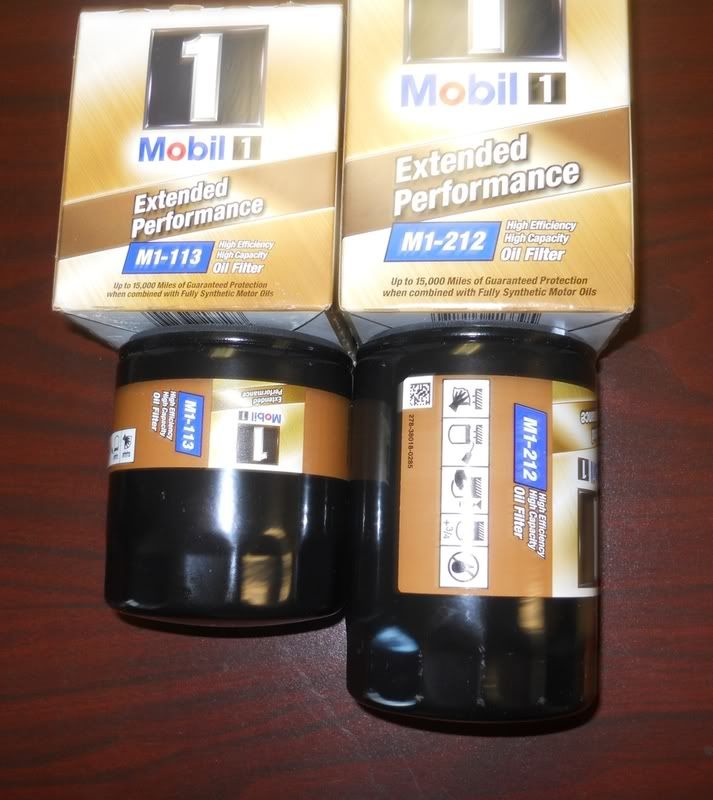
M1-212.jpg
 
Originally Posted By: bullwinkle
Originally Posted By: ZeeOSix
Originally Posted By: HerrStig
Once again I ask, WHAT specifications determine the size of an OEM, and thus what's "Oversize"?


Top factors most likely involved when sizing an OEM oil filter:

1) Filtering efficiency
2) Expected engine debris generation rate
3) Required holding capacity
4) Filter change interval

Obviously, the designer doesn't want the filter to load up and become restrictive to the point the bypass valve opens up when it really shouldn't.
You forgot one-
5) PRICE! (As in the minimum size the engine can handle)


Yes, of course smaller probably means less cost for the OE to make more money on.
grin.gif
I was focusing on performance specs, not economic which probably is a larger factor for the OE in the end.
 
Originally Posted By: HerrStig
Originally Posted By: ZeeOSix
Originally Posted By: HerrStig
Once again I ask, WHAT specifications determine the size of an OEM, and thus what's "Oversize"?


Top factors most likely involved when sizing an OEM oil filter:

1) Filtering efficiency
2) Expected engine debris generation rate
3) Required holding capacity
4) Filter change interval

Obviously, the designer doesn't want the filter to load up and become restrictive to the point the bypass valve opens up when it really shouldn't.
YOu left out "lighter and smaller". But, now that we've defined THAT, what constitutes "oversize"? Taller, wider, heavier, more stuff inside...more expensive?


Making an oil filter smaller to make the car lighter would be like getting your hair trimmed a millimeter to save weigh less on the scale. LOL

"Oversized" is anything larger than the specified oil filter by the OEM. I tend to think of total media area instead of "can size", because as pointed out there are a few instances where the larger filter based on the can actually has less filtering media than a smaller looking filter.
 
You all already know how I stand on this. I'm telling you as sure as I sit here: There was startup valve noise when I went from PF48 to PF63. For that reason I went back to the 48. Now I have to unload this whole carton of 63s.
 
Status
Not open for further replies.
Back
Top Bottom