$22 Catch Can!!! (Pictures)

Status
Not open for further replies.
That's a sick looking/performing machine you have there... NICE!
thumbsup2.gif


20.gif
 
Originally Posted By: GrampsintheSand
So there is a baffle of sorts between the in/out? Got it. I see what your doing...that will force air down into the wire mesh. Looked just like a straight thru "T"..thanks for explaining.


Exactly...

No worries, I wish the pictures were a bit better because I could have shown the top piece and how it forces the gas downwards into the wire mesh...
 
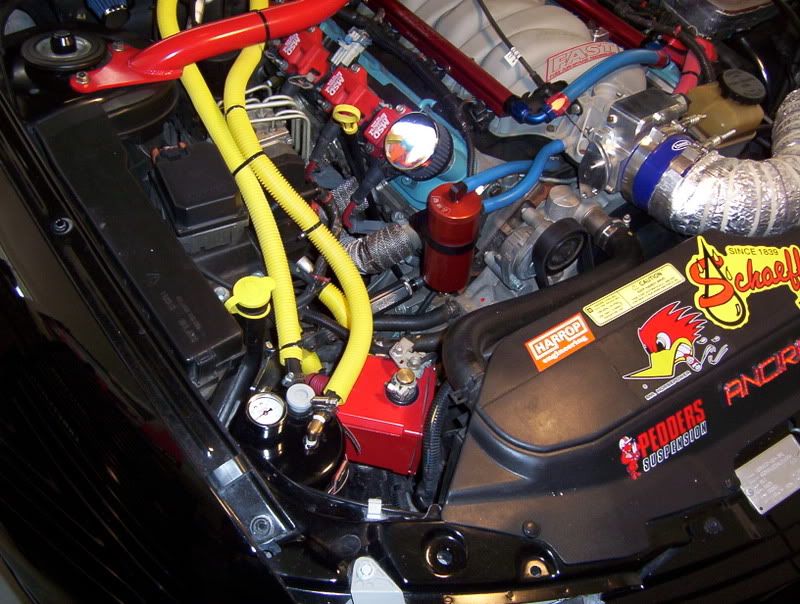
I can assure you that the "$20 catch can" works, it keeps excess oil out of my TB and Intercooler. I have just under $20 in my set up and that includes the brass barbed fittings and the rubber hose.


CopyofP4111778A1.jpg
 
Quote:
I fail to see how the oil will be separated from the air stream as the gentlemen above pointed out.You have to force the oil mist/air through the mesh and the fresh/clean air back to the intake.

I like the idea, and the cost, but unless I am missing something, I do not see a lot of oil dropping out of the air stream here.
Let us know how it works, as I have an LS6 that would enjoy this

Steve


Changes in velocity. How does a shop vac manage to fill up with debris? High velocity in ..DEAD SPACE ..heavier particles drop out since there's no velocity to keep them in suspension ..they drop out ...clean(er) air exits at the same high velocity.

It's how stuff gets clarified. It's how spray dryers work. Dust collectors.

You can often just change the diameter and/or length of the hose. It's the same thing if you put too big a muffler or pipe on your exhaust. Make it big enough and it just goes still in the muffler and doesn't have enough velocity to exit out the tail pipe on its own.

The best way to do it, if possible, is to have it drain back to the valve cover. You can run two lines, the "IN' flow will balance out and you'll still get the mass in the bottom. You'll just have a static column of oil to one of the hoses (may be smaller). When the engine shuts off, it drains back. Maintenance free.

This can be done on either end.


Clean piece there, SteveC!

Just add another inlet hose to see what I'm talking about.

ef510dbc534ca957vp2.jpg
 
Gary I could drill a hole and put a fitting on the bottom of the can part and run this to the engine so that it drains back the fluid and only the gases get into the air box.

Maybe I will build one using your diagram above for my Santa Fe. I will feed the Breather (w/o c-valve) and PCV into the in side and the out to the Throttle body. Then when the car is shut off it will drip down the breather hose into the crankcase.

Thanks Gary!
wink.gif
 
Effectively you spray a liquid into a hot air stream (usually a down draft) through a tube. At the bottom of the tube, when the liquid is now a dust, you hit a chamber and reverse direction

Down tube inside a BIG TUBE (vessel) with open space at the bottom (shaped like a funnel). The majority drops out when the air velocity drops to near zero and you reverse directions. The rest gravity may claim on the up current. The remainder gets collected by what are called "cyclones" in the exit draft.

One alternative to spray drying is "freeze drying".

It's sorta a wet vac with heated air to reduce the stuff to powder that collects in the LARGE CAN.
 
The Kobalt air filter I bought has a turbine wheel looking thing that swirls the air at a high velocity to help extract the oil. When there's about 1/4oz of oil in the can, you can really see it swirling at the bottom.
 
Originally Posted By: Gary Allan
Effectively you spray a liquid into a hot air stream (usually a down draft) through a tube. At the bottom of the tube, when the liquid is now a dust, you hit a chamber and reverse direction

Down tube inside a BIG TUBE (vessel) with open space at the bottom (shaped like a funnel). The majority drops out when the air velocity drops to near zero and you reverse directions. The rest gravity may claim on the up current. The remainder gets collected by what are called "cyclones" in the exit draft.

One alternative to spray drying is "freeze drying".

It's sorta a wet vac with heated air to reduce the stuff to powder that collects in the LARGE CAN.


So Confused!
54.gif
 
Originally Posted By: StevieC
Originally Posted By: Gary Allan
Effectively you spray a liquid into a hot air stream (usually a down draft) through a tube. At the bottom of the tube, when the liquid is now a dust, you hit a chamber and reverse direction

Down tube inside a BIG TUBE (vessel) with open space at the bottom (shaped like a funnel). The majority drops out when the air velocity drops to near zero and you reverse directions. The rest gravity may claim on the up current. The remainder gets collected by what are called "cyclones" in the exit draft.

One alternative to spray drying is "freeze drying".

It's sorta a wet vac with heated air to reduce the stuff to powder that collects in the LARGE CAN.


So Confused!
54.gif


This wasn't how ours was oriented/configured. Our air outlet was a larger cylinder that the down tube in the diagram sat within. Ours had a smaller footprint ..but was 5 stories tall.

Labspraydryer.jpg


Wiki
 
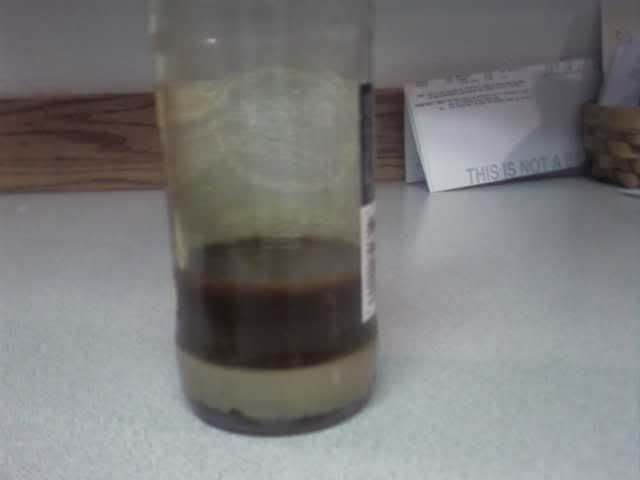
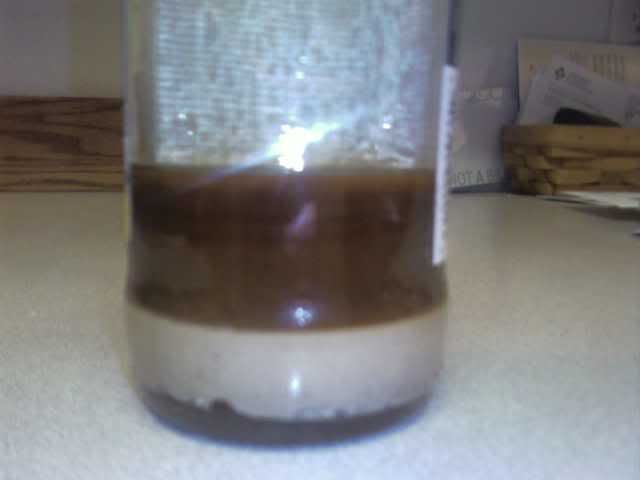
This is what I dumped out of my catch can earlier today. It has been sitting for a couple hours, and im not sure what layer is fuel/moisture and which is the oil/fuel mix. Either way, this gunk would have ended up in the bottom of my intercooler, or coating the inside of my intake manifold. This is about 3500 miles worth, probably 3ounces worth.


CC1.jpg


CC2.jpg
 
Originally Posted By: GrampsintheSand
I fail to see how the oil will be separated from the air stream as the gentlemen above pointed out.You have to force the oil mist/air through the mesh and the fresh/clean air back to the intake.
100_1093.jpg


So how long do those headers last with that wrap on them
wink.gif
 
My can would collect a lot of slime in it during the winter, but the hot air would eventually cook all the water out and I was left with a thick-ish dark oil and a tiny bit of sediment in the bottom.
 
Originally Posted By: Buffman
Originally Posted By: GrampsintheSand
I fail to see how the oil will be separated from the air stream as the gentlemen above pointed out.You have to force the oil mist/air through the mesh and the fresh/clean air back to the intake.
100_1093.jpg


So how long do those headers last with that wrap on them
wink.gif

Those have been wrapped since 2004. Lot of people still hold onto the "wrapped headers rust" theory left over form the day when headers were just steel. Stainless Steel wrapped headers outlast the car.
 
Originally Posted By: GrampsintheSand
Originally Posted By: Buffman
Originally Posted By: GrampsintheSand
I fail to see how the oil will be separated from the air stream as the gentlemen above pointed out.You have to force the oil mist/air through the mesh and the fresh/clean air back to the intake.
100_1093.jpg


So how long do those headers last with that wrap on them
wink.gif

Those have been wrapped since 2004. Lot of people still hold onto the "wrapped headers rust" theory left over form the day when headers were just steel. Stainless Steel wrapped headers outlast the car.


well u didnt say they were stainless
wink.gif
Most headers are still made from mild steel, and even then stainless steel can rust under certain conditions. And it is fact that wrapped mild steel headers will rust compared to ceramic coating.
 
Status
Not open for further replies.
Back
Top Bottom