I just picked up a '91 MTD snowblower with a Tecumseh 2-stroke engine. The manual recommends a 32:1 mix in the fuel. With the new oils, is that ratio still necessary? I currently run Stihl (Orange bottle) 50:1 in all of my handheld equipment. Would that mix work in the blower without causing problems? Any info would be appreciated.

You are using an out of date browser. It may not display this or other websites correctly.
You should upgrade or use an alternative browser.
You should upgrade or use an alternative browser.
2-Stroke mix ratio for '91 snowblower
- Thread starter BSLMS
- Start date
- Status
- Not open for further replies.
40 or 50:1 would work perfect yes,with todays quality oil's a rich mix is not needed.
i run 40:1 in my Stihl saws and 50:1 in all my snowmobiles.
i run 40:1 in my Stihl saws and 50:1 in all my snowmobiles.
32:1 to 50:1 is quite a stretch and would make me uncomfortable. Why not contact the manufacture?
The ratio is not determined by the engine, it's determined by the oil. Today's 50;1 ratio will work fine.
Yes, the Stihl oil will work fine for you.
Yes, the Stihl oil will work fine for you.
I ve heard Oil mix ratio affects fuel mixture - more oil = lean.

Would 40:1 or 50:1 be acceptable for a Lawnboy mower? I just use cheap Walmart 2 stroke and 91 octane ethanol-free gas in it. I don't want to take a chance on burning it up.
There are people who will tell you that you can go as high as 100:1 with boutique oils. Don't do it. If the thing says 32:1, then that's what you should use. If it says 16:1, that's what you should use. Maybe it's overkill, but we're talking about equipment that is no longer made. Use ethanol-free gas if it's available, but that's getting harder to come by these days.
I'm using MX2T and Saber at 32:1 in my stuff. I don't care what the oil label says, I care about what the equipment says. Maybe it's unnecessary, but I just think of it as a extra large safety net. No problems with damaged or fouled engines yet.
I'm using MX2T and Saber at 32:1 in my stuff. I don't care what the oil label says, I care about what the equipment says. Maybe it's unnecessary, but I just think of it as a extra large safety net. No problems with damaged or fouled engines yet.
I have a assortment of two stroke lawn equipment. Everything from Lawnboys, that state 32:1 to Toro that states 50:1, plus weedeaters that state 40:1 and blowers. I would say after experience, if you use 32:1/40:1/50:1 you will not have any problems. It would determine what oil you were using. If you were using a synthetic Stihl oil, 50:1 would be fine, if you were using Castrol two stroke oil, go with 32;1. I agree I would not exceed 50:1. But none of these engines are going to be high performance, high rpm running and a snow blower wont even have heat to contend with. I ussually split the difference and go with 40:1 and have had no problems with fouling plugs or carbon or siezures.
I run numerous two cycle engines and happen to own two single stage snow throwers with the Tecumseh two stroke engine in them. First thing I'd like to say is that it's a great engine and can take far more stress than it's rated 3600 rpm. I've modified the governors on both my engines so that I can over-speed them. I often run them between 5000 to 6500 rpm while under load and they don't seem to mind. They go from lackluster performers in stock form to serious snow movers when sped up.
Now, as far as oil and oil ratios are concerned, I've been using Canadian Tire TC3 Motomaster brand two cycle oil for decades. It's excellent oil for a very reasonable price.
If you have multiple two cycle machines with different oil ratio requirements, always adjust the oil ratio toward the higher oil concentration. For instance, if you have a 32:1 machine and a 50:1 machine, mix up a batch of 35 or 40:1 to use in both. Not only will it provide more lubrication, higher oil concentrations in the 32:1 range will produce more power.
There is truth in high oil concentration creating a lean fuel condition but the amount of oil required to do this to any appreciable degree would likely cause hard starting and plug fouling. On OPE, oil ratios mixed within reasonable parameters will provide more than sufficient lubrication.
I'd say go with 40:1 in everything.
Now, as far as oil and oil ratios are concerned, I've been using Canadian Tire TC3 Motomaster brand two cycle oil for decades. It's excellent oil for a very reasonable price.
If you have multiple two cycle machines with different oil ratio requirements, always adjust the oil ratio toward the higher oil concentration. For instance, if you have a 32:1 machine and a 50:1 machine, mix up a batch of 35 or 40:1 to use in both. Not only will it provide more lubrication, higher oil concentrations in the 32:1 range will produce more power.
There is truth in high oil concentration creating a lean fuel condition but the amount of oil required to do this to any appreciable degree would likely cause hard starting and plug fouling. On OPE, oil ratios mixed within reasonable parameters will provide more than sufficient lubrication.
I'd say go with 40:1 in everything.
Originally Posted By: boraticus
If you have multiple two cycle machines with different oil ratio requirements, always adjust the oil ratio toward the higher oil concentration. For instance, if you have a 32:1 machine and a 50:1 machine, mix up a batch of 35 or 40:1 to use in both. Not only will it provide more lubrication, higher oil concentrations in the 32:1 range will produce more power.
This is wrong. Again, engines don't have ratios, the ratio is determined by the oil.
And what makes you think that more oil in the fuel produces more power? The exact opposite is true, because more fuel to burn equals more power.
If you have multiple two cycle machines with different oil ratio requirements, always adjust the oil ratio toward the higher oil concentration. For instance, if you have a 32:1 machine and a 50:1 machine, mix up a batch of 35 or 40:1 to use in both. Not only will it provide more lubrication, higher oil concentrations in the 32:1 range will produce more power.
This is wrong. Again, engines don't have ratios, the ratio is determined by the oil.
And what makes you think that more oil in the fuel produces more power? The exact opposite is true, because more fuel to burn equals more power.
Originally Posted By: hate2work
Originally Posted By: boraticus
If you have multiple two cycle machines with different oil ratio requirements, always adjust the oil ratio toward the higher oil concentration. For instance, if you have a 32:1 machine and a 50:1 machine, mix up a batch of 35 or 40:1 to use in both. Not only will it provide more lubrication, higher oil concentrations in the 32:1 range will produce more power.
This is wrong. Again, engines don't have ratios, the ratio is determined by the oil.
And what makes you think that more oil in the fuel produces more power? The exact opposite is true, because more fuel to burn equals more power.
You got the last part of your statement correct, in which more fuel includes MORE OIL. If the machine is jetted properly for a richer oil to gas ratio it will make more power because of the extra energy that comes from combustion of the oil. As well as decreased friction from having more oil in the fuel. Certain machines ARE jetted for certain ratios...usually 50:1 now because of emission standards and far better oils than in the past.
Originally Posted By: boraticus
If you have multiple two cycle machines with different oil ratio requirements, always adjust the oil ratio toward the higher oil concentration. For instance, if you have a 32:1 machine and a 50:1 machine, mix up a batch of 35 or 40:1 to use in both. Not only will it provide more lubrication, higher oil concentrations in the 32:1 range will produce more power.
This is wrong. Again, engines don't have ratios, the ratio is determined by the oil.
And what makes you think that more oil in the fuel produces more power? The exact opposite is true, because more fuel to burn equals more power.
You got the last part of your statement correct, in which more fuel includes MORE OIL. If the machine is jetted properly for a richer oil to gas ratio it will make more power because of the extra energy that comes from combustion of the oil. As well as decreased friction from having more oil in the fuel. Certain machines ARE jetted for certain ratios...usually 50:1 now because of emission standards and far better oils than in the past.
Originally Posted By: hate2work
Originally Posted By: boraticus
If you have multiple two cycle machines with different oil ratio requirements, always adjust the oil ratio toward the higher oil concentration. For instance, if you have a 32:1 machine and a 50:1 machine, mix up a batch of 35 or 40:1 to use in both. Not only will it provide more lubrication, higher oil concentrations in the 32:1 range will produce more power.
This is wrong. Again, engines don't have ratios, the ratio is determined by the oil.
And what makes you think that more oil in the fuel produces more power? The exact opposite is true, because more fuel to burn equals more power.
Don't want to be rude but your comments are obviously unfounded. The engine manufacturer recommends the oil ratio. Period.
I don't mix according to oil propaganda. I mix according to the manufacturers instructions or err toward a bit more oil.
If you owned or operated any high performance air cooled two cycle motorcycles, you'd know that more oil equals more power within reasonable jetting/oil ratios.
I own and ran an air cooled race bike that required 25:1 oil 30 years ago. I also own a number of modified two cycle road bikes that make serious power however, they have oil injection.
Air cooled engines, which we're talking about, will benefit from slightly richer oil mixtures. I own and operate probably 25 or more pieces of two cycle equipment of which I do all maintenance and personally feel I have fairly extensive experience and pretty good understanding.
I've also read considerably on two cycle theory, porting fuel/oil ratios and racing. I suggest you do the same.
Start with this excellent read written by Graham Bell:
http://www.amazon.com/Two-Stroke-Performance-Tuning-Theory-Practice/dp/0854293299
Originally Posted By: boraticus
If you have multiple two cycle machines with different oil ratio requirements, always adjust the oil ratio toward the higher oil concentration. For instance, if you have a 32:1 machine and a 50:1 machine, mix up a batch of 35 or 40:1 to use in both. Not only will it provide more lubrication, higher oil concentrations in the 32:1 range will produce more power.
This is wrong. Again, engines don't have ratios, the ratio is determined by the oil.
And what makes you think that more oil in the fuel produces more power? The exact opposite is true, because more fuel to burn equals more power.
Don't want to be rude but your comments are obviously unfounded. The engine manufacturer recommends the oil ratio. Period.
I don't mix according to oil propaganda. I mix according to the manufacturers instructions or err toward a bit more oil.
If you owned or operated any high performance air cooled two cycle motorcycles, you'd know that more oil equals more power within reasonable jetting/oil ratios.
I own and ran an air cooled race bike that required 25:1 oil 30 years ago. I also own a number of modified two cycle road bikes that make serious power however, they have oil injection.
Air cooled engines, which we're talking about, will benefit from slightly richer oil mixtures. I own and operate probably 25 or more pieces of two cycle equipment of which I do all maintenance and personally feel I have fairly extensive experience and pretty good understanding.
I've also read considerably on two cycle theory, porting fuel/oil ratios and racing. I suggest you do the same.
Start with this excellent read written by Graham Bell:
http://www.amazon.com/Two-Stroke-Performance-Tuning-Theory-Practice/dp/0854293299
( Caps are just for emphasis, not shouting
 )
)
2cycleguy- Two cyle machines are not "jetted for a richer oil to gas ratio", they are jetted to precisely match the volume of air coming through the venturi of the carburetor, the ratio is about 14.7:1, that is 14.7 parts air to 1 part gas. If you put in a larger jet, it will run richer, and a smaller jet will cause it to run leaner. My point is that the jet has nothing to do with the gas/oil ratio, and everything to do with the 14.7:1 stoich ratio. The stoich ratio is completely different than the gas/oil mix ratio.
Boraticus- Thank you for not being rude, I will try to do the same.
Air cooled two cycle engines "requiring" or "not requiring" a specific oil ratio is probably the number one most confusing thing about these engines. I have been selling and servicing these engines for more than three decades, and we STILL get asked "What ratio does my engine take?"
In fact, this was a very confusing concept EVEN TO OTHER SMALL ENGINE SHOPS. We would get calls from customers telling us that they talked to a different repair shop, and get this, they told the customer the ratio was DETERMINED BY THE COLOR OF THE ENGINE. Can you believe that? It wasn't done out of malice, it was simply ignorance.
In the early days of 2 cycles, before specific oil was developed for them, a 16:1 ratio was widely used with 30 weight standard engine oil. In fact, that ratio was molded right into the gas cap of many/most chain saws, and it provided plenty of lubrication for the early slow revving saws. Then in the late 50s and early 60s some of the manufacturers came out with some like-branded two cycle oils. That is to say there was McCullogh oil, Homelite oil, etc. The idea being, of course, that you would naturally want to run the same brand oil in the same brand saw, right?
Flash forward to the mid seventies, and you have all kinds of different oil brands and ratios floating around. Homelite had a 16:1 oil. a 32:1 oil and a 40:1 oil, as did many other brands. NO WONDER THE CUSTOMERS WERE CONFUSED. And because the ratio is determined by the oil, you could have used any of them mixed at the ratio on the bottle and done well. Why did they have three diff ratios? Very simple, there was a move to leaner ratios but they didn't want to alienate/lose customers. Eventually, the richer mixes were dropped and people have now embraced the leaner mixes.
OK, as to your 30 yo race bike that "required" 25:1. Point number 1)-When a manufacturer develops and then sells a piece of equipment like that, they have to tell the public SOMETHING about what ratio to use, right? And this was back in late 70s and early 80s when there were several diff oils and ratios being used, so they simply picked one of the richer ratios ( 25:1 ) and adopted that as a fallback position. MANY companies would put a ratio sticker right on the engine, implying that was the only ratio you could use. Point number 2)- It was VERY COMMON to see a given manufacturer recommend an oil ratio and then offer that exact ratio to the consumer in their brand. And why not? It's another way to make a buck, get the customer buying a consumable item from you and only you, because you're the only one with that ratio. Genius move, really. All the manufacturers did the same thing, they convinced the public that you had to use their brand at that ratio. Special emphasis was used when talking about warranty.
Another point, I have seen dozens of small engines plugged with carbon because the owner used some 32:1 oil and mixed it 16:1, BECAUSE HE THOUGHT HIS ENGINE REQUIRED A RATIO OF 16:1, when he should have mixed it 32:1, which is how the oil was designed to be mixed. Again, the ratio comes with the oil, not the engine.
Also, how is it that I have dozens and dozens of customers that are still running their 30-40 yo equipment that are using the modern 50:1 ratio with Stihl oil? I mean, according to you these engines were "designed" to run on rich ratios( the engine determines the ratio, according to you ), and yet they are thriving on the leaner ratio? I still have a guy with a Homelite EZ that says 16:1 right on the cap, he's doing just fine with the 50:1 oil. Just today I put a chain on an old Craftsman that has a 32:1 sticker on it. Guess what oil this guy is running? That's right, Stihl oil at 50:1.
I have rebuilt more AC two cycle engines than I care to admit, and guess what? They are all built with the same exact tolerances, and have the same basic lubrication requirements. Very similar to the lube requirements of my Toyota and my Mustang, basically the same.
And btw, I'm talking about typical air cooled equipment here, not racing stuff or exotics.
Your belief in different equipment requiring diff ratios is rooted in your long experience. Back then that's what people were told, "if you buy this mini-bike, then you have to run X ratio." Those long held beliefs are the hardest to break, I get that. It's very similar to people hanging on to the 3k oil change, that's what they grew up doing and it's deeply rooted in their belief system.
There used to be( maybe there still are ) some 2 cycle oils that you bought in a quart bottle that had a ratio chart right on the back of them. Big fail, because you can't mix a given oil at different ratios and have them all be optimal. THERE IS ONLY ONE OPTIMAL RATIO FOR A GIVEN OIL. You can't take a given oil and mix it at diff ratios and have them all be the optimal mix. You get that, right?
Lastly, why do all modern oil mixes tell you exactly how much gas to put with a given amount of their oil? The bottle will say "Mix this oil with one gallon of gasoline", for example. It's because the oil manufacturer/blender has determined the correct ratio.
The mix ratio is determined by the oil. Period.
This will be my last post in this thread, take care
2cycleguy- Two cyle machines are not "jetted for a richer oil to gas ratio", they are jetted to precisely match the volume of air coming through the venturi of the carburetor, the ratio is about 14.7:1, that is 14.7 parts air to 1 part gas. If you put in a larger jet, it will run richer, and a smaller jet will cause it to run leaner. My point is that the jet has nothing to do with the gas/oil ratio, and everything to do with the 14.7:1 stoich ratio. The stoich ratio is completely different than the gas/oil mix ratio.
Boraticus- Thank you for not being rude, I will try to do the same.
Air cooled two cycle engines "requiring" or "not requiring" a specific oil ratio is probably the number one most confusing thing about these engines. I have been selling and servicing these engines for more than three decades, and we STILL get asked "What ratio does my engine take?"
In fact, this was a very confusing concept EVEN TO OTHER SMALL ENGINE SHOPS. We would get calls from customers telling us that they talked to a different repair shop, and get this, they told the customer the ratio was DETERMINED BY THE COLOR OF THE ENGINE. Can you believe that? It wasn't done out of malice, it was simply ignorance.
In the early days of 2 cycles, before specific oil was developed for them, a 16:1 ratio was widely used with 30 weight standard engine oil. In fact, that ratio was molded right into the gas cap of many/most chain saws, and it provided plenty of lubrication for the early slow revving saws. Then in the late 50s and early 60s some of the manufacturers came out with some like-branded two cycle oils. That is to say there was McCullogh oil, Homelite oil, etc. The idea being, of course, that you would naturally want to run the same brand oil in the same brand saw, right?
Flash forward to the mid seventies, and you have all kinds of different oil brands and ratios floating around. Homelite had a 16:1 oil. a 32:1 oil and a 40:1 oil, as did many other brands. NO WONDER THE CUSTOMERS WERE CONFUSED. And because the ratio is determined by the oil, you could have used any of them mixed at the ratio on the bottle and done well. Why did they have three diff ratios? Very simple, there was a move to leaner ratios but they didn't want to alienate/lose customers. Eventually, the richer mixes were dropped and people have now embraced the leaner mixes.
OK, as to your 30 yo race bike that "required" 25:1. Point number 1)-When a manufacturer develops and then sells a piece of equipment like that, they have to tell the public SOMETHING about what ratio to use, right? And this was back in late 70s and early 80s when there were several diff oils and ratios being used, so they simply picked one of the richer ratios ( 25:1 ) and adopted that as a fallback position. MANY companies would put a ratio sticker right on the engine, implying that was the only ratio you could use. Point number 2)- It was VERY COMMON to see a given manufacturer recommend an oil ratio and then offer that exact ratio to the consumer in their brand. And why not? It's another way to make a buck, get the customer buying a consumable item from you and only you, because you're the only one with that ratio. Genius move, really. All the manufacturers did the same thing, they convinced the public that you had to use their brand at that ratio. Special emphasis was used when talking about warranty.
Another point, I have seen dozens of small engines plugged with carbon because the owner used some 32:1 oil and mixed it 16:1, BECAUSE HE THOUGHT HIS ENGINE REQUIRED A RATIO OF 16:1, when he should have mixed it 32:1, which is how the oil was designed to be mixed. Again, the ratio comes with the oil, not the engine.
Also, how is it that I have dozens and dozens of customers that are still running their 30-40 yo equipment that are using the modern 50:1 ratio with Stihl oil? I mean, according to you these engines were "designed" to run on rich ratios( the engine determines the ratio, according to you ), and yet they are thriving on the leaner ratio? I still have a guy with a Homelite EZ that says 16:1 right on the cap, he's doing just fine with the 50:1 oil. Just today I put a chain on an old Craftsman that has a 32:1 sticker on it. Guess what oil this guy is running? That's right, Stihl oil at 50:1.
I have rebuilt more AC two cycle engines than I care to admit, and guess what? They are all built with the same exact tolerances, and have the same basic lubrication requirements. Very similar to the lube requirements of my Toyota and my Mustang, basically the same.
And btw, I'm talking about typical air cooled equipment here, not racing stuff or exotics.
Your belief in different equipment requiring diff ratios is rooted in your long experience. Back then that's what people were told, "if you buy this mini-bike, then you have to run X ratio." Those long held beliefs are the hardest to break, I get that. It's very similar to people hanging on to the 3k oil change, that's what they grew up doing and it's deeply rooted in their belief system.
There used to be( maybe there still are ) some 2 cycle oils that you bought in a quart bottle that had a ratio chart right on the back of them. Big fail, because you can't mix a given oil at different ratios and have them all be optimal. THERE IS ONLY ONE OPTIMAL RATIO FOR A GIVEN OIL. You can't take a given oil and mix it at diff ratios and have them all be the optimal mix. You get that, right?
Lastly, why do all modern oil mixes tell you exactly how much gas to put with a given amount of their oil? The bottle will say "Mix this oil with one gallon of gasoline", for example. It's because the oil manufacturer/blender has determined the correct ratio.
The mix ratio is determined by the oil. Period.
This will be my last post in this thread, take care
Ive run 32:1 up to 100:1 with expensive oils, and have never run into an issue. Currently mixing stihl HP ultra at 50:1 and using it in everything. It runs so clean I see no need to go to lower oil ratios, and i know it protects just fine, so no need to mix more oils.
I mix supertech two stroke oil into sump jet fuel at 100:1 and run it in diesel engines at work. It's a great way to dispose of the fuel, and saves us money on disposal as well as purchasing diesel of the equipment.
I really ignore manufacturer recommendations for the most part, especially if they recommend 32:1, or on an old two stroke 3.5hp outboard I have, it calls for 20:1. it runs great at 50:1
I mix supertech two stroke oil into sump jet fuel at 100:1 and run it in diesel engines at work. It's a great way to dispose of the fuel, and saves us money on disposal as well as purchasing diesel of the equipment.
I really ignore manufacturer recommendations for the most part, especially if they recommend 32:1, or on an old two stroke 3.5hp outboard I have, it calls for 20:1. it runs great at 50:1

"There used to be( maybe there still are ) some 2 cycle oils that you bought in a quart bottle that had a ratio chart right on the back of them. Big fail, because you can't mix a given oil at different ratios and have them all be optimal. THERE IS ONLY ONE OPTIMAL RATIO FOR A GIVEN OIL. You can't take a given oil and mix it at diff ratios and have them all be the optimal mix. You get that, right?"
No. I don't get that.
Oil can be and is mixed according to engine demands. Hence the oil ratio scale found on many brands of oil containers. To say that oil manufacturers are either incorrect or wrong due to printing various oil ratios on their container labels is, well, quite a statement. One would assume that oil manufacturers might have some idea of what their products are capable of.
People can mix their oil any way they want.
I mix mine according to the machine's requirements or reasonably close to it.
No. I don't get that.
Oil can be and is mixed according to engine demands. Hence the oil ratio scale found on many brands of oil containers. To say that oil manufacturers are either incorrect or wrong due to printing various oil ratios on their container labels is, well, quite a statement. One would assume that oil manufacturers might have some idea of what their products are capable of.
People can mix their oil any way they want.
I mix mine according to the machine's requirements or reasonably close to it.
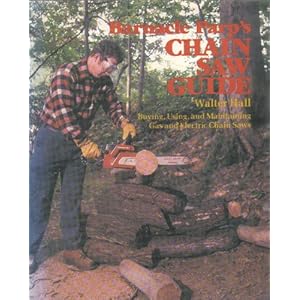
I started my career on Homelites at 16:1 while reading Barnacle Parp's "wisdom". I now run Stihls at 50:1.
My belief sways towards hate2works ideas. What he implies (I think) is that today's 50:1 oil is more "concentrated" than the old 16:1 (30wt) oils of yesteryear.
Is that a correct assumption??? So, mixing the old Homelite oil at 16:1 gave you the "same" amount of lubrication as today's Stihl oil mixed 50:1. Of course this is over simplified. Today's engines are different and the lubricants are better in many ways.
So, what hate2work is saying is that mixing today's 50:1 formulation at 16:1 will give you a much too "rich" mixture even in a saw that recommends 16:1.
Interesting debate. I still have this book...tucked away with my Mother Earth News magazines...!!! Mid 1970's.
My belief sways towards hate2works ideas. What he implies (I think) is that today's 50:1 oil is more "concentrated" than the old 16:1 (30wt) oils of yesteryear.
Is that a correct assumption??? So, mixing the old Homelite oil at 16:1 gave you the "same" amount of lubrication as today's Stihl oil mixed 50:1. Of course this is over simplified. Today's engines are different and the lubricants are better in many ways.
So, what hate2work is saying is that mixing today's 50:1 formulation at 16:1 will give you a much too "rich" mixture even in a saw that recommends 16:1.
Interesting debate. I still have this book...tucked away with my Mother Earth News magazines...!!! Mid 1970's.
Hi doitmyself, I don't think the oils are more concentrated. I feel that much improved refining methods and computer controls give the oil makers more confidence to specify higher oil/fuel ratios without deleterious effects on an engine and meet pollution concerns.
- Status
- Not open for further replies.
Similar threads

- Replies
- 38
- Views
- 20K
- Replies
- 32
- Views
- 25K
- Replies
- 12
- Views
- 26K
- Replies
- 19
- Views
- 43K