I may be purchasing a 1963 Ford Falcon van with the 240 I6. The van has 36K miles, and the temperature will be above zero before the next oil change will come due. What do you guys recommend for oil?

You are using an out of date browser. It may not display this or other websites correctly.
You should upgrade or use an alternative browser.
You should upgrade or use an alternative browser.
1963 Ford Falcon Van, 240 I6
- Thread starter milesdriven
- Start date

- Status
- Not open for further replies.
very interesting. we used to have them as work trucks. I;m guessing back then they called for 10w-40. I dont see a problem running 10-30 or 10-40.

Pennzoil Conventional 10w30 or 10w40. Wix/Napa Gold Filter.
Originally Posted By: milesdriven
I may be purchasing a 1963 Ford Falcon van with the 240 I6. The van has 36K miles, and the temperature will be above zero before the next oil change will come due. What do you guys recommend for oil?
Wow,a 240 cid? I never even heard of that.Pre 300 cid I presume.
I may be purchasing a 1963 Ford Falcon van with the 240 I6. The van has 36K miles, and the temperature will be above zero before the next oil change will come due. What do you guys recommend for oil?
Wow,a 240 cid? I never even heard of that.Pre 300 cid I presume.
cool! how about some pictures??
HDEO [diesel oil] in 15-40 .
Cheap and really really good.
Most of us don't use it because it is too thick for modern engines, but that's the only reason.
Cheap and really really good.
Most of us don't use it because it is too thick for modern engines, but that's the only reason.
Originally Posted By: lexus114
Wow,a 240 cid? I never even heard of that.Pre 300 cid I presume.
Ford has had a bunch of 6 cylinders in the past. 144(?),170,200,240,250 and the 300 that I can think of off the top of my head.
Wow,a 240 cid? I never even heard of that.Pre 300 cid I presume.
Ford has had a bunch of 6 cylinders in the past. 144(?),170,200,240,250 and the 300 that I can think of off the top of my head.
- Joined
- Sep 28, 2002
- Messages
- 39,793
The 240 was the predecessor to the 300. It's a truck block. Side covers ..I had one in a (iirc) mid 60's E100 ex-U-haul van. Suicide center seat ...etc..
I don't see this requiring a 40 weight, but given the vintage...
I don't see this requiring a 40 weight, but given the vintage...
Put in google to just see what the old van would look like... found one and this:

(click for bigger)
Holy tolleto..
(click for bigger)
Holy tolleto..
Last edited:
Eric, That's a later generation van. His 63 would look like this.

From Wikipedia commons
Originally Posted By: Gary Allan
The 240 was the predecessor to the 300. It's a truck block. Side covers ..I had one in a (iirc) mid 60's E100 ex-U-haul van. Suicide center seat ...etc..
I don't see this requiring a 40 weight, but given the vintage...
The 240 was also used in mid-late 1960s full size passenger cars
From Wikipedia commons
Originally Posted By: Gary Allan
The 240 was the predecessor to the 300. It's a truck block. Side covers ..I had one in a (iirc) mid 60's E100 ex-U-haul van. Suicide center seat ...etc..
I don't see this requiring a 40 weight, but given the vintage...
The 240 was also used in mid-late 1960s full size passenger cars
Oh I know just had to post a pic of that van.. the 63 I found didn't look as good as the one you posted though.
- Joined
- Sep 28, 2002
- Messages
- 39,793
Quote:
The 240 was also used in mid-late 1960s full size passenger cars
I saw one in a Galaxie (iirc). It had the vertical headlights ..so I guess it was a 66 or later.
The 240 was also used in mid-late 1960s full size passenger cars
I saw one in a Galaxie (iirc). It had the vertical headlights ..so I guess it was a 66 or later.
Delo 400 30 weight and a motorcraft filter
The 240 was a "big block" six cylinder. It is the same basic engine as the 300.
I'm almost certain that the old van did not use the "big block". It would have used the "small block" which was used on Falcons and Mustangs. It was built in 144, 170, 200 and 250 variants. The 200 and 250 engines had more main bearings, overcoming on of the weakness of the older/smaller engines.
At the time, I used 10W40 in the family 65 Mustang 200.
I'm almost certain that the old van did not use the "big block". It would have used the "small block" which was used on Falcons and Mustangs. It was built in 144, 170, 200 and 250 variants. The 200 and 250 engines had more main bearings, overcoming on of the weakness of the older/smaller engines.
At the time, I used 10W40 in the family 65 Mustang 200.
I agree with the HDEO 15W40 comments, flat tappet cam being one reason.
You might also consider that the head on this engine was designed when leaded gasoline was available everywhere.
Lead content in the gas helped lubricate the relatively soft metal in the exhaust valve seats.
Today's unleaded may (or may not) result in accelerated exhaust valve seat wear in the heads.
There are lead substitutes available, and the effectiveness of these lead substitutes is debatable.
Cut and paste from Yahoo autos.......
"Valve Recession
A condition known as "valve recession" can allow the valves to recede or sink into the head because of excessive seat wear. This causes the valve lash to be lost which allows the valves to leak and burn. It occurs primarily in older engines (mostly those built prior to 1975) that were not designed to run on unleaded gasoline. When leaded gasoline was still around, lead acted like a lubricant to reduce valve seat wear. But when lead was eliminated, it meant engines had to be made with harder seats. These older engines didn't have hard seats, so many began to experience valve wear problems when switched to unleaded fuel. If you're driving an antique or classic car, therefore, you should either use some type of lead substitute fuel additive to protect the valves or have the seats replaced with hard seats when the engine is overhauled."
At 36K miles I assume that the engine has never been opened.
Should a valve job ever be necessary; hardened exhaust valve seats could be installed at that time.
My dad had a Ford van similar to to this back in the 60's.
As I remember it had some some tendency to overheat.
Rickey.
You might also consider that the head on this engine was designed when leaded gasoline was available everywhere.
Lead content in the gas helped lubricate the relatively soft metal in the exhaust valve seats.
Today's unleaded may (or may not) result in accelerated exhaust valve seat wear in the heads.
There are lead substitutes available, and the effectiveness of these lead substitutes is debatable.
Cut and paste from Yahoo autos.......
"Valve Recession
A condition known as "valve recession" can allow the valves to recede or sink into the head because of excessive seat wear. This causes the valve lash to be lost which allows the valves to leak and burn. It occurs primarily in older engines (mostly those built prior to 1975) that were not designed to run on unleaded gasoline. When leaded gasoline was still around, lead acted like a lubricant to reduce valve seat wear. But when lead was eliminated, it meant engines had to be made with harder seats. These older engines didn't have hard seats, so many began to experience valve wear problems when switched to unleaded fuel. If you're driving an antique or classic car, therefore, you should either use some type of lead substitute fuel additive to protect the valves or have the seats replaced with hard seats when the engine is overhauled."
At 36K miles I assume that the engine has never been opened.
Should a valve job ever be necessary; hardened exhaust valve seats could be installed at that time.
My dad had a Ford van similar to to this back in the 60's.
As I remember it had some some tendency to overheat.
Rickey.
I know rickey,alot of people with old vehicles either try not to think about it.Or they don`t realize it.
Allegedly the leaded gas was supposed to provide protection for a while, I've heard people putting the stellite hardened valve seats in older engines, but I never heard of anyone needing a valve job from ruining the old ones.
the 240 I-6 was a common engine in this vintage van/light trucks. it is an earlier version of the light truck motor and was replaced by the 300 in the late 60's.
LOL, a '63 Falcon van here is a panel van version of one of these, a Ford Falcon XL
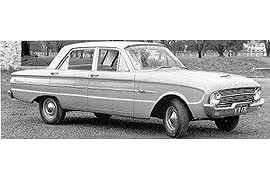
http://www.uniquecarsandparts.com.au/falcon_XL_technical_specifications.htm
Although they only used the 140 and 170 cu in versions of the old six here at the time.
The old engines were regularly run on 20W-50 here, then as they were updated (stretched to 250 cu. in., cross flow head, then alloy head, then OHC, etc) later ones used either xW-40 or xW-50, and to this day Ford recommends xW-40 in the straight six here.
Yes, the 4.0 litre, DOHC, turbo inter-cooled fire breather available in the current Falcon is a greet, great, great, great grand daughter of that old Ford engine, although I suspect it's a little like Grandpa's axe

http://www.uniquecarsandparts.com.au/falcon_XL_technical_specifications.htm
Although they only used the 140 and 170 cu in versions of the old six here at the time.
The old engines were regularly run on 20W-50 here, then as they were updated (stretched to 250 cu. in., cross flow head, then alloy head, then OHC, etc) later ones used either xW-40 or xW-50, and to this day Ford recommends xW-40 in the straight six here.
Yes, the 4.0 litre, DOHC, turbo inter-cooled fire breather available in the current Falcon is a greet, great, great, great grand daughter of that old Ford engine, although I suspect it's a little like Grandpa's axe
- Status
- Not open for further replies.
Similar threads
- Replies
- 16
- Views
- 736
- Replies
- 7
- Views
- 1K
- Replies
- 28
- Views
- 2K

- Replies
- 27
- Views
- 987