Your Understading Of "Severe" Driving ?

Status
Not open for further replies.
*Again , interesting to note that my average speed is ONLY 26MPH ... There is enough of a sample size to know that based on my driving habits it will stay this way through the life of this oil change . Makes me think twice to just automatically say : "yeah , I'll just run a 5,000 mile OCI because it sounds about right" . Yes , I will get an Oil analysis done to be sure .
Originally Posted By: demarpaint
Originally Posted By: ChrisD46
Interesting to note I have 1,100 miles so far on this oil and average only 26 MPH speed (forgot to note the number of hours) . When I'm not slowed by traffic I'm clipping along at approx. 45 MPH . * To only average 26 mph on this oil change - I must be slowed by suburban traffic around the ATL more than I thought !


Oh yea, when you start crunching numbers you'll see you're really not driving as fast as you think when you average things out.
 
*Interesting read - as many say , only getting a used oil analysis will tell you the truth (more often than not) .
Originally Posted By: dnewton3
"Severe" service factors are things that exist in the mind of OEMs.

I find no credible evidence that wear rates are grossly affected by "severe" conditions. I have about every conceivable use factor in my macro database of used oil analysis. If there were any correlation I would see it. But I don't. used oil analysis show quite the opposite; despite "severe" conditions, the wear is totally "normal".

To understand this topic, it really only takes a simple look from the OEMs perspective ...
It is a win-win-win for them. They tell folks to OCI more often and they don't pay a dime for it. The frequent OCIs don't stop or positively alter wear. The only thing frequent OCIs would do from an OEMs point of view is IF there were a problem, it would flush out the residual of concern quicker. If there were contamination, the frequent OCIs would eliminate the contributor (and evidence) sooner. However, if things are operating properly (air filtration good, fuel system not overtly dousing the lube with raw fuel, coolant system not leaking internally), then where's the advantage to the OCIs happening often???? The lower OCI duration is a hedge against things that should not be happening in the first place, but if they do, it milks the problem along until you're out of warranty, and then they can charge you to fix things that should have not been happening! So, you get to pay for more oil changes (a win for the OEM in that they don't pay for your maintenance costs), and then if there is a problem, you pay them to fix it down the road. And, if you choose to not follow warranty conditions (not do the frequent OCIs), then they can claim you neglected service and shove any costs back on you (yet another win for them). Simply put, the OEMs tell you to OCI more often as a hedge against their mistakes, but then get to charge you to fix those issues later on, should they arise. That's maddening! Luckily, failures really do not happen often.


Again - real world used oil analysis data shows that if your equipment is in good working order, the wear rates essentially are unaffected by "severe" use. If you're under warranty, it behooves you to consider the consequences if you don't follow the OCI schedule. Sadly, that same effect of OEM viewpoint carries over to the lube makers as well. Most of them state to follow the OEM maintenance schedule.


The irony here? OEMs and lube makers are continually telling us (nay ... bombarding us) with claims about how wonderfully robust and manly and tough their products are. Truck ads and lube ads in particular claim such boastful benefits of how capable their products can be. "Look at my big truck pulling a monster boat or excavator!" "Look at the syn lube combating the "heat" of towing!" And yet, the OEMs and lube makers force us to OCI more often because their products apparently cannot handle the real world stress of typical use. What is defined as "normal use" in the OEM maintenance schedule really isn't "normal" at all. To the contrary, their vision of "normal" is essentially cruising down a state highway in North Dakota in fall, where the temps are moderate, the stop signs are non-existent, and the speeds are steady-state. That is not "normal"; that's exceptionally fortuitous. The VAST majority of us don't operation in those conditions.
What's "normal" in reality?
- trucks being used for their designed intent purpose; hauling and pulling big loads
- cars sitting still in endless traffic with the a/c on in a 1+ hour commute
- high speeds in intensely hot areas in summer
- bitter cold frequent starts in winters
These are all things the bulk of vehicles and equipment encounter in daily living. These happen all the time. "Severe" is just another way of saying "totally expected daily living". And so, the OEMs and lube makers are really talking out of both sides of their marketing mouths! "Hey - buy our product; it's really wicked-tough. Oh - but if you use it in anything but a gingerly-babied manner, you've got to over-dose it with frequent oil changes just to cover our fear of warranty claims."

Anecdotally, I have personally run OCIs at 2x and 3x the "normal" rate; even going so far as ending up at 5x the "severe" rate (15k miles actually ran where 3x miles was "severe" recommendation). Ran that experiment in my wife's old Villager. Total soccer-mom abuse that fully entailed every "severe" condition in the maintenance log. And yet, the used oil analysis came back totally normal and very desirable. Despite all the concerns of conditional input stress, the output was totally benign. Did the same with my diesel truck also; flogged it mercilessly pulling the RV; even let the oil level get all the way down on the dipstick to bottom of "add" range. Again - used oil analysis showed totally normal wear rates, despite the WOT runs in the Rockies where EGTs were maxed out for miles at a time running uphill. The Ford/Conoco SAE wear study (2007-01-4133) clearly showed that despite the "severe" conditions (taxi service in Las Vegas heat), when they extended OCIs out to 15k miles, the wear rates continued to drop, despite the "severe" nature of taxi service in summer Vegas! All these examples on conventional oil no less!
 
Originally Posted By: ChrisD46
*Again , interesting to note that my average speed is ONLY 26MPH ... There is enough of a sample size to know that based on my driving habits it will stay this way through the life of this oil change . Makes me think twice to just automatically say : "yeah , I'll just run a 5,000 mile OCI because it sounds about right" . Yes , I will get an Oil analysis done to be sure .
Originally Posted By: demarpaint
Originally Posted By: ChrisD46
Interesting to note I have 1,100 miles so far on this oil and average only 26 MPH speed (forgot to note the number of hours) . When I'm not slowed by traffic I'm clipping along at approx. 45 MPH . * To only average 26 mph on this oil change - I must be slowed by suburban traffic around the ATL more than I thought !


Oh yea, when you start crunching numbers you'll see you're really not driving as fast as you think when you average things out.


That's one of the reasons why I did a used oil analysis. Smart move!
thumbsup2.gif
Why guess?
 
Of course city driving counts as relatively severe application. Its even stated in my owners manual that way, if more than 50% is city driving, it counts as severe application. Engines heat up the most while they are standing still, anyone with a broken thermostat can confirm that. Have you ever seen a cooling fan activate while driving steady on the highway?

You stop at a red light, then you accelerate to the next red light, then a stopsign, then a turn.. I advise everyone to count how many shifts your transmission does while driving 10 minutes city vs. 10 minutes highway.
The OCI calculation computers measure all those parameters, city driving drains the Intervall 6 times faster than normal Highway cruising for Mercedes-Benz models, I suspect its sinilar for other brands.

The worst case scenario for an engine is idling with hot oil, the oil is hot, thin and oil pressure minimal inside the bearings. This means extreme stress on the oil, more than at steady cruising speed. Of course, manufacturers are trying to weaken this problem with the use of electric waterpumps and oilpumps but those bring some other problems.
 
Another typical scenario is to be on a freeway that is jammed for 20-25 miles or more. Stop and go, maybe getting up to 10-15 mph at times then stopping again. The engine rpms really don’t get much higher than idle.

This is typical in my neck of the woods and likely in many metro areas around the US and beyond. I’ve been in backups of over 50 miles.

I will still call this severe service as the amount of time the engine is up to cruising rpms versus the stop and go is skewed to the stop and go.
 
Originally Posted By: dnewton3
"Severe" service factors are things that exist in the mind of OEMs.

I find no credible evidence that wear rates are grossly affected by "severe" conditions. I have about every conceivable use factor in my macro database of used oil analysis. If there were any correlation I would see it. But I don't. used oil analysis show quite the opposite; despite "severe" conditions, the wear is totally "normal".

To understand this topic, it really only takes a simple look from the OEMs perspective ...
It is a win-win-win for them. They tell folks to OCI more often and they don't pay a dime for it. The frequent OCIs don't stop or positively alter wear. The only thing frequent OCIs would do from an OEMs point of view is IF there were a problem, it would flush out the residual of concern quicker. If there were contamination, the frequent OCIs would eliminate the contributor (and evidence) sooner. However, if things are operating properly (air filtration good, fuel system not overtly dousing the lube with raw fuel, coolant system not leaking internally), then where's the advantage to the OCIs happening often???? The lower OCI duration is a hedge against things that should not be happening in the first place, but if they do, it milks the problem along until you're out of warranty, and then they can charge you to fix things that should have not been happening! So, you get to pay for more oil changes (a win for the OEM in that they don't pay for your maintenance costs), and then if there is a problem, you pay them to fix it down the road. And, if you choose to not follow warranty conditions (not do the frequent OCIs), then they can claim you neglected service and shove any costs back on you (yet another win for them). Simply put, the OEMs tell you to OCI more often as a hedge against their mistakes, but then get to charge you to fix those issues later on, should they arise. That's maddening! Luckily, failures really do not happen often.


Again - real world UOA data shows that if your equipment is in good working order, the wear rates essentially are unaffected by "severe" use. If you're under warranty, it behooves you to consider the consequences if you don't follow the OCI schedule. Sadly, that same effect of OEM viewpoint carries over to the lube makers as well. Most of them state to follow the OEM maintenance schedule.


The irony here? OEMs and lube makers are continually telling us (nay ... bombarding us) with claims about how wonderfully robust and manly and tough their products are. Truck ads and lube ads in particular claim such boastful benefits of how capable their products can be. "Look at my big truck pulling a monster boat or excavator!" "Look at the syn lube combating the "heat" of towing!" And yet, the OEMs and lube makers force us to OCI more often because their products apparently cannot handle the real world stress of typical use. What is defined as "normal use" in the OEM maintenance schedule really isn't "normal" at all. To the contrary, their vision of "normal" is essentially cruising down a state highway in North Dakota in fall, where the temps are moderate, the stop signs are non-existent, and the speeds are steady-state. That is not "normal"; that's exceptionally fortuitous. The VAST majority of us don't operation in those conditions.
What's "normal" in reality?
- trucks being used for their designed intent purpose; hauling and pulling big loads
- cars sitting still in endless traffic with the a/c on in a 1+ hour commute
- high speeds in intensely hot areas in summer
- bitter cold frequent starts in winters
These are all things the bulk of vehicles and equipment encounter in daily living. These happen all the time. "Severe" is just another way of saying "totally expected daily living". And so, the OEMs and lube makers are really talking out of both sides of their marketing mouths! "Hey - buy our product; it's really wicked-tough. Oh - but if you use it in anything but a gingerly-babied manner, you've got to over-dose it with frequent oil changes just to cover our fear of warranty claims."

Anecdotally, I have personally run OCIs at 2x and 3x the "normal" rate; even going so far as ending up at 5x the "severe" rate (15k miles actually ran where 3x miles was "severe" recommendation). Ran that experiment in my wife's old Villager. Total soccer-mom abuse that fully entailed every "severe" condition in the maintenance log. And yet, the used oil analysis came back totally normal and very desirable. Despite all the concerns of conditional input stress, the output was totally benign. Did the same with my diesel truck also; flogged it mercilessly pulling the RV; even let the oil level get all the way down on the dipstick to bottom of "add" range. Again - UOA showed totally normal wear rates, despite the WOT runs in the Rockies where EGTs were maxed out for miles at a time running uphill. The Ford/Conoco SAE wear study (2007-01-4133) clearly showed that despite the "severe" conditions (taxi service in Las Vegas heat), when they extended OCIs out to 15k miles, the wear rates continued to drop, despite the "severe" nature of taxi service in summer Vegas! All these examples on conventional oil no less!


As maddening as this may be, the OEM's hold all the cards while you are under warranty.
 
The engine wear/mls curve typically is a bathtub formed curve meaning:

At each oilchange some oil (usually like quarter - half quart) of the old oil remains inside the engine.
This means there are also some contaminants left inside which make the wear/mile rating skyrocket, at mile 0 after the oilchange this value infinite. Then with each miles driven this rating goes down continuously for a certain period of time until the oil is “done”, then the values go up again, when excessive wear is caused by old oil.
Of course severe application (higher piston ring temperatures, low oil pressure, dillution by gasoline from short distance driving) makes this point when the oil needs replacement arrive faster. The question is “when?”...

In Europe all newer cars have dynamic longlife intervals of 8000-20000mls according to the usage of the vehicle, but I wouldn’t wanna max this out unless I am doing constant Highway driving...
A standard OCI for older vehicles is about 10000mls and those are driven way harder here with higher speed limits, so I think the oil, especially if you choose a good one, has some reserves. To be honest, I also don’t understand why you guys change so extremely often (some synthetic at 3000mls...)
But that’s partly a good thing for me, I wouldn’t feel safe maxingg out the life of every component in my car. I also don’t drive with a 25 year old timing belt just because it still looks good.
The report about the taxis in Nevada also doesn’t take oil dilution by gasoline into consideration. Taxis nearly never do coldstarts and maintain operating temperature basically all day... How long does it take for those cabs to drive 15kmls with that oil? 2-4 months?
 
“...The report about the taxis in Nevada also doesn’t take oil dilution by gasoline into consideration. Taxis nearly never do coldstarts and maintain operating temperature basically all day... How long does it take for those cabs to drive 15kmls with that oil? 2-4 months?...”


I believe the taxi companies go by hours and not miles though I may be mistaken on this.
 
To be honest, I dont know myself.
That’s undoubtedly the more important number to consider than mileage.
Concerning the engine-hours I found a diagram used for the VW 650h stress test that is required for VW 504/507.


It gets clear how capable those new engine oils are, the test is performed under high load. Sadly I didnt find more specifications as to what oils the different lines refer. However, the drastic difference in quality becomes apparent. Notice that this test has rather theoretic character and doesn’t resemble normal use conditions in an automotive engine.

For myself I find it best to change before the 250 hours mark, most of them show a significant incline there, usually I go with 150-200 hours of service, this equals roughly 5000 miles. Like this I feel the most confident, but it also shows that with the right oil 400-500 hours of service mustn’t be a problem...
 
*No oil life manager with Hyundai Sonata ...
Originally Posted By: Mitsu_Joe
Of course city driving counts as relatively severe application. Its even stated in my owners manual that way, if more than 50% is city driving, it counts as severe application. Engines heat up the most while they are standing still, anyone with a broken thermostat can confirm that. Have you ever seen a cooling fan activate while driving steady on the highway?

You stop at a red light, then you accelerate to the next red light, then a stopsign, then a turn.. I advise everyone to count how many shifts your transmission does while driving 10 minutes city vs. 10 minutes highway.
The OCI calculation computers measure all those parameters, city driving drains the Intervall 6 times faster than normal Highway cruising for Mercedes-Benz models, I suspect its sinilar for other brands.

The worst case scenario for an engine is idling with hot oil, the oil is hot, thin and oil pressure minimal inside the bearings. This means extreme stress on the oil, more than at steady cruising speed. Of course, manufacturers are trying to weaken this problem with the use of electric waterpumps and oilpumps but those bring some other problems.
 
Originally Posted By: demarpaint
Originally Posted By: fdcg27
OTOH, Mobil warranties even the basic M1 product for a year or 10K, whichever comes first.
Do they know something that we might not?
What bad things might happen with oil run in slow traffic?
What did you see in your used oil analysis that made you think that shorter drains were indicated?
Care to share these used oil analysis?


I ran Ultra, not Mobil 1, not that that matters much. After 1,974 miles and about 2 years it had a tbn of 3.6. Do you think that oil would have made 10K miles? My bet is between 4-5K miles. That's one that really stuck out. Doing the math and realizing these things don't track linear imo my other two vehicles wouldn't have made 10K miles either. Mobil would be off the hook with the one year claim, so would some of the others. My beef is the comments that a good synthetic can go 10k miles, conventional 5K. The oil doesn't know how long it's in the sump........
wink.gif


I think that we basically agree even if we differ in semantics.
A vehicle that does 2K in two years is obviously not in normal service and your UOA results reflect this. Drive that puppy enough to accumulate 2K in five weeks and any good syn should be up to the task.
This is the reason that vehicle manufacturers recommend both a time and a mileage OCI for their vehicles as do some oil blenders. Oil may not be able to tell time, but it will show vehicle use as your 2K UOA results demonstrate.
Just for the sake of comparison, I saw the same TBN with PP in a 7K run in one of our old Accords, so 10K would have been realistic. The difference was that the Accord was daily driven a decent distance on each cold start.
I posted this UOA here but don't exactly remember when and don't feel like searching for it.
 
Originally Posted By: Brigadier
Originally Posted By: dparm
Originally Posted By: Brigadier
Given the unknowns with GDI, severe service OCI seems prudent.


What unknowns? DI has been around for quite a while.


How much fuel dilution is too much?

How much timing chain wear occurs due to the ultra fine soot that gets in the oil and is too small for the filter to catch?

How much calcium in the oil contributes to valve deposits?


Wow. All these supposed oil gurus on here an no one dares answer this?
 
*I've always wondered how the number of hours plays into an OCI ? At 1,200 miles into my OCI I have 46 hours on the oil - it appears from this graph that at about the 150 ~ 200 hour mark you might want to think about changing the oil ... **It could be that the number of hours is a better indicator of when to change oil rather than mileage ?
Originally Posted By: Mitsu_Joe
To be honest, I dont know myself.
That’s undoubtedly the more important number to consider than mileage.
Concerning the engine-hours I found a diagram used for the VW 650h stress test that is required for VW 504/507.


It gets clear how capable those new engine oils are, the test is performed under high load. Sadly I didnt find more specifications as to what oils the different lines refer. However, the drastic difference in quality becomes apparent. Notice that this test has rather theoretic character and doesn’t resemble normal use conditions in an automotive engine.

For myself I find it best to change before the 250 hours mark, most of them show a significant incline there, usually I go with 150-200 hours of service, this equals roughly 5000 miles. Like this I feel the most confident, but it also shows that with the right oil 400-500 hours of service mustn’t be a problem...
 
A german oil company called ROWE once stated in an interview that more than about 2% gasoline inside the engine oil is the critical point.
Furthermore they claimed that their oils are safe to use under full load/high RPM from 60 degrees celsius onwards.
I dont know if you guys can get your hands on those ROWE oils, but they have some pretty interesting fully synthetic oils and are a very big oil producer and sponsor in touring car racing.
 
Last edited:
Originally Posted By: Mitsu_Joe
A german oil company called ROWE once stated in an interview that more than about 2% gasoline inside the engine oil is the critical point.
Furthermore they claimed that their oils are safe to use under full load/high RPM from 60 degrees celsius onwards.
I dont know if you guys can get your hands on those ROWE oils, but they have some pretty interesting fully synthetic oils and are a very big oil producer and sponsor in touring car racing.


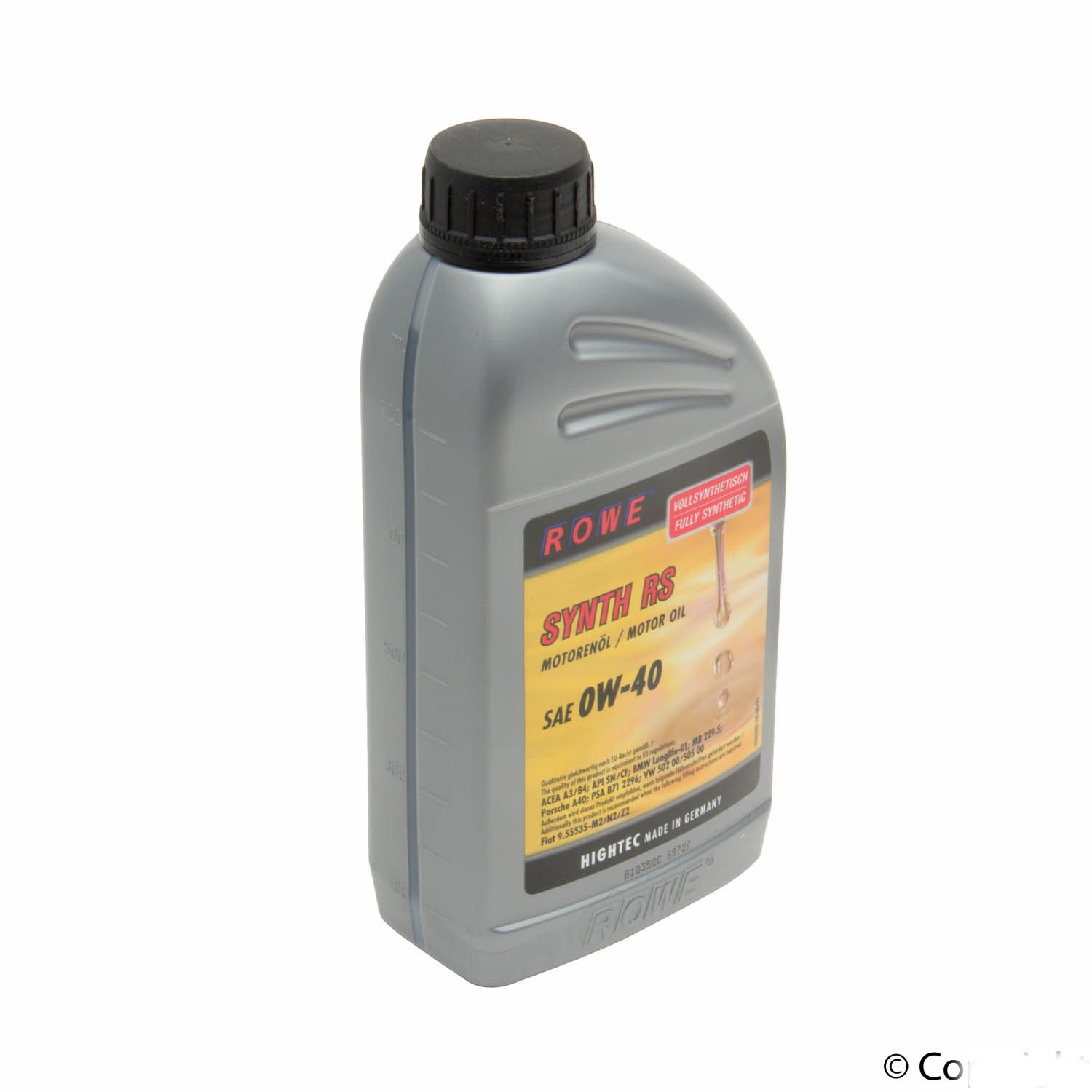
Amazon And FCPEuro has some.

61VJJw4DE3L._SL1500_.jpg


https://www.fcpeuro.com/products/0w-40-s...tBoC2QgQAvD_BwE
 
Last edited:
Originally Posted By: 123Saab

Amazon And FCPEuro has some.

61VJJw4DE3L._SL1500_.jpg


https://www.fcpeuro.com/products/0w-40-s...tBoC2QgQAvD_BwE


Its the old bottle design, but that besaid oil did fantastically in a virgin oil analysis that confirmed a flashpoint of 453 Fahrenheit, pourpoint of -58 fahrenheit and noak of 7,4. It also isnt that expensive here and its fully synthetic (PAO based), so thats what many tuners/car enthusiasts use here.

https://oil-club.de/index.php?attachment/3360-rowe-synth-0w-40-png/

They have some other interesting products, for example a heavy duty 10w-40 for fleet-use that offers ACEA E7 level wear protection (commonly used for heavy semi-trucks) that is suitable also for passenger vehicles.
 
Last edited:
Status
Not open for further replies.
Back
Top Bottom