

Varnish

Status
Not open for further replies.
Originally Posted By: zerosoma
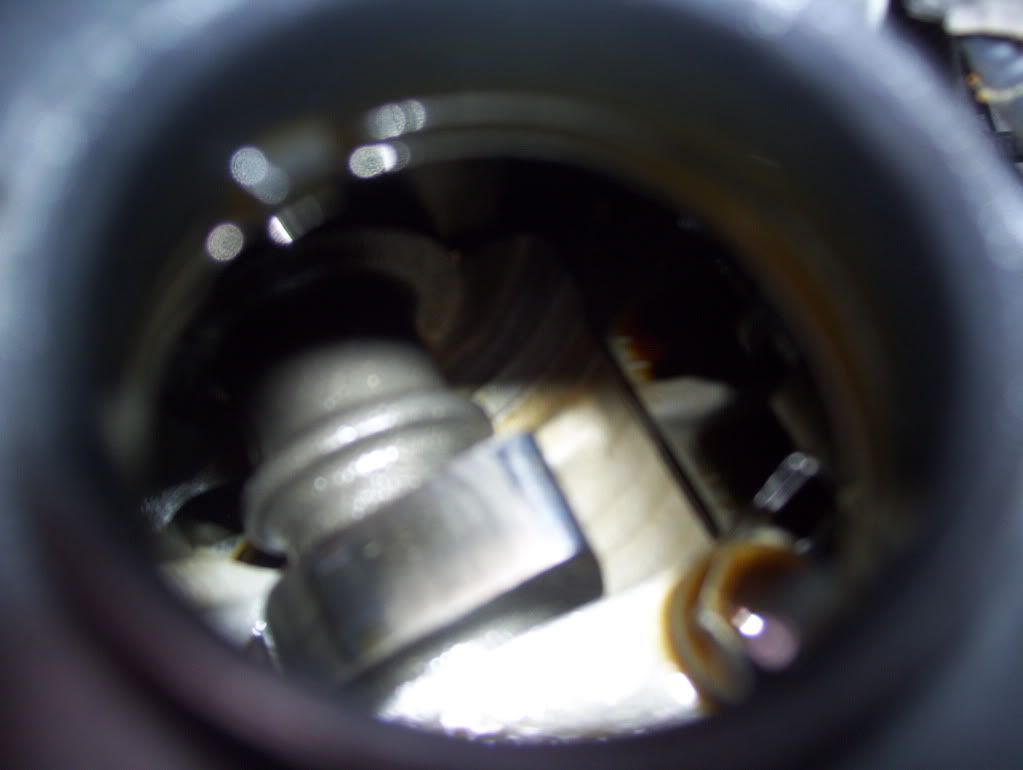
Tell me now, what can be said about engine varnish? When I look down the oil fill hole I can see no sludge (good!), but some light varnish. Is this absolutely normal with all engines over 80k? Is there any reason I should try and get rid of the varnish off by running a strong oil?


Pull the valve cover. Do not go by looking down the oil fill.
 
Originally Posted By: volk06
So the question is, how can varnish be removed effectively? PU? MMO?


Just use a good oil with enough detergent and dispersants combined with a sensible OCI. The major brand full synthetics or High Mileage oils are great at keeping an engine clean. Remember some very clever folks wrote don't use oil additives in almost every maintenance manual or document and one big reason for older engines is that varnish might well be helping your oil seals and gaskets function. That is why you need to think twice before changing from conventional to full synthetic with an old engine that has a high oil consumption or leaks.
 
Last year I had the occasion to pull the valve cover on my wife's '00 Kia Sportage. I've been running Mobil 1 Extended Performance 10w30 since I could get in '03 I think. I've been using a pure 1 filter. She drives 30 miles a day mostly city, and the inside of the valve cover and head looked like it was put together last week. Super clean with no sign of varnish build up. The car only has 98k miles on it, but I was impressed with how clean it was.,,
 
Originally Posted By: A_Harman
Mobil doesn't recommend that you leave M1 in your engine forever.


Amsoil try much harder in that respect!!
It is worth folks remembering that regardless of the advertising hype if an oil is contaminated by anti freeze or some nasty additive based on the latest NASA rocket fuel, the detergents in the oils add pack fail and a G4 full synthetic will then form sludge faster than a conventional oil.
Whilst I am on the varnish topic, don't forget that varnish can form due to overheating, so make sure that you know the correct normal temp range for your engine.
 
Originally Posted By: skyship
Originally Posted By: volk06
So the question is, how can varnish be removed effectively? PU? MMO?


Just use a good oil with enough detergent and dispersants combined with a sensible OCI. The major brand full synthetics or High Mileage oils are great at keeping an engine clean. Remember some very clever folks wrote don't use oil additives in almost every maintenance manual or document and one big reason for older engines is that varnish might well be helping your oil seals and gaskets function. That is why you need to think twice before changing from conventional to full synthetic with an old engine that has a high oil consumption or leaks.


Thats funny both my vehicles were over 100k when I switched them to synthetic. And I have logged about 15k with additives in my sump and no ill effects. It must be some fluke that my truck is still running great at 158 THOUSAND MILES...
 
Originally Posted By: electrolover
Originally Posted By: skyship
Originally Posted By: volk06
So the question is, how can varnish be removed effectively? PU? MMO?


Just use a good oil with enough detergent and dispersants combined with a sensible OCI. The major brand full synthetics or High Mileage oils are great at keeping an engine clean. Remember some very clever folks wrote don't use oil additives in almost every maintenance manual or document and one big reason for older engines is that varnish might well be helping your oil seals and gaskets function. That is why you need to think twice before changing from conventional to full synthetic with an old engine that has a high oil consumption or leaks.


Thats funny both my vehicles were over 100k when I switched them to synthetic. And I have logged about 15k with additives in my sump and no ill effects. It must be some fluke that my truck is still running great at 158 THOUSAND MILES...


I changed from Mobil conventional to LM Synthoil at 160K and my oil consumption fell slightly, so I agree if an engine is in good condition changing to a real G4 synthetic is perfectly OK. It is something to be careful about as quite a number of folks have developed oil leaks or made them worse, although some of the cheaper HC synthetics don't clean as well os the real McCoy ones that were designed for long OCI's.
 
Originally Posted By: zerosoma
Originally Posted By: tig1
Originally Posted By: volk06
So the question is, how can varnish be removed effectively? PU? MMO?


Mobil 1 claims it can be very effective with varnish removal. Here's a link.

http://www.mobiloil.com/USA-English/MotorOil/Synthetics/Mobil_1_Sludge_Protection.aspx


Is that true when Mobil 1 says,

"all conventional and semi-synthetic oils oxidize and turn to sludge. Mobil 1 does not." ?

If that's true, why change Mobil 1 at all? Why not leave it in forever?


Actually you mis quoted the article. It says" At very high temperatures all conventional and semi synthetic oils start to oxidze and turn to sludge'.
Mobil 1 oils are very good at preventing varnish as we all know.

100_1479.jpg


The Focus.
 
Last edited:
Originally Posted By: Donald
Originally Posted By: zerosoma
Tell me now, what can be said about engine varnish? When I look down the oil fill hole I can see no sludge (good!), but some light varnish. Is this absolutely normal with all engines over 80k? Is there any reason I should try and get rid of the varnish off by running a strong oil?


Pull the valve cover. Do not go by looking down the oil fill.


Always the best idea if you have serious black death concerns, although on some engines taking the sump off and cleaning it and the most important oil pump feed screen is easier.
What you can see down the oil fill pipe does vary and I can't see a thing down mine as it's far too narrow for some silly French design reason.
 
Originally Posted By: skyship
Originally Posted By: electrolover
Originally Posted By: skyship
Originally Posted By: volk06
So the question is, how can varnish be removed effectively? PU? MMO?


Just use a good oil with enough detergent and dispersants combined with a sensible OCI. The major brand full synthetics or High Mileage oils are great at keeping an engine clean. Remember some very clever folks wrote don't use oil additives in almost every maintenance manual or document and one big reason for older engines is that varnish might well be helping your oil seals and gaskets function. That is why you need to think twice before changing from conventional to full synthetic with an old engine that has a high oil consumption or leaks.


Whats the diff between a cheapo syn and the real thing??? Please elaborate. Tell us about these cheap wanna be synthetics


Thats funny both my vehicles were over 100k when I switched them to synthetic. And I have logged about 15k with additives in my sump and no ill effects. It must be some fluke that my truck is still running great at 158 THOUSAND MILES...


I changed from Mobil conventional to LM Synthoil at 160K and my oil consumption fell slightly, so I agree if an engine is in good condition changing to a real G4 synthetic is perfectly OK. It is something to be careful about as quite a number of folks have developed oil leaks or made them worse, although some of the cheaper HC synthetics don't clean as well os the real McCoy ones that were designed for long OCI's.
 
Originally Posted By: A_Harman
Mobil doesn't recommend that you leave M1 in your engine forever.


Well of course they wouldn't. They'd have lawsuits.
happy2.gif
But, by the look of things, if some unsuspecting person were to see that and think a-doy, perhaps I can leave it in to my heart's content, that would be a bit misleading don't you think?
 
Wow I opened a can of worms with my "Viscosity Modifiers leave varnish" post.
Originally Posted By: zerosoma
If that's true, why change M1 at all? Why not leave it in forever?
Because the oil absorbs acids from the engine and eventually it's TBN goes to nothing. Therefore it needs to be changed.
 
Originally Posted By: blackman777
Wow I opened a can of worms with my "Viscosity Modifiers leave varnish" post.
Originally Posted By: zerosoma
If that's true, why change M1 at all? Why not leave it in forever?
Because the oil absorbs acids from the engine and eventually it's TBN goes to nothing. Therefore it needs to be changed.


yeah, my quote was half serious half facetious.
 
Originally Posted By: volk06
So the question is, how can varnish be removed effectively? PU? MMO?


Varnish lays down on surfaces when either the oil is saturated in it, or the oil locally is saturated in it (see the video on the page back)...then varnish attracts varnish.

So where it lays down is not necessarily the spot in the engine that it's being formed, it can be dissolved in 90% of places, and drop out in a cool spot, like oil splash on a rocker cover or the like.

When a new oil is introduced, that isn't saturated in varnish, it will solve some of the laid down deposits off surfaces, however, once the oil becomes saturated, the process starts again, laying it down.

Frequent oil changes (to take out the picked up varnish) will remove it from the engine. Gr II and III (and IV) basestocks aren't the best at this, but are additised such that they can be pretty good.

If you really want it to go, an HDMO, with a GrI base, changed every 1,000 miles is probably as good as it gets...or an ester based/additised oil, but that's expensive...

I think (and it's only a think) that a depth media filter, with supply cooled to 100F or less would drop out the varnish as per the video, and collect it...the returned oil will again try to reach an equilibrium with the varnish, picking it up from the internals and transporting it to the filter.

There are electrostatic devices industrially that can pull varnish out of oil.
 
Originally Posted By: Shannow
Frequent oil changes (to take out the picked up varnish) will remove it from the engine. Gr II and III (and IV) basestocks aren't the best at this, but are additised such that they can be pretty good.


How frequent? Like a conventional every 2k?
 
Originally Posted By: Garak
Originally Posted By: tig1
The Focus.


Tig1 carries that picture in his wallet, just behind those of the grandkids.
wink.gif


Have you seen the insides of his engines. I'd be carrying around pics too,showing them off.
Darned tig
 
Originally Posted By: Shannow
Originally Posted By: volk06
So the question is, how can varnish be removed effectively? PU? MMO?


Varnish lays down on surfaces when either the oil is saturated in it, or the oil locally is saturated in it (see the video on the page back)...then varnish attracts varnish.

So where it lays down is not necessarily the spot in the engine that it's being formed, it can be dissolved in 90% of places, and drop out in a cool spot, like oil splash on a rocker cover or the like.

When a new oil is introduced, that isn't saturated in varnish, it will solve some of the laid down deposits off surfaces, however, once the oil becomes saturated, the process starts again, laying it down.

Frequent oil changes (to take out the picked up varnish) will remove it from the engine. Gr II and III (and IV) basestocks aren't the best at this, but are additised such that they can be pretty good.

If you really want it to go, an HDMO, with a GrI base, changed every 1,000 miles is probably as good as it gets...or an ester based/additised oil, but that's expensive...

I think (and it's only a think) that a depth media filter, with supply cooled to 100F or less would drop out the varnish as per the video, and collect it...the returned oil will again try to reach an equilibrium with the varnish, picking it up from the internals and transporting it to the filter.

There are electrostatic devices industrially that can pull varnish out of oil.


Wow so a gr I is better at absorbing varnish? Why? And which HDEOs are gr 1?
 
Status
Not open for further replies.
Back
Top Bottom