
You are using an out of date browser. It may not display this or other websites correctly.
You should upgrade or use an alternative browser.
You should upgrade or use an alternative browser.
overfilled is overhyped
- Thread starter Merkava_4
- Start date

- Status
- Not open for further replies.

Originally Posted By: turtlevette
Originally Posted By: MolaKule
With baffles or dry sumps,
As far as your "smartness" statement I have no idea as to what you are referring.
How many here have baffles and dry sumps. Raise your hand if you have these.
If you have no idea, then don't worry about it
My 911SC has a dry sump.
Originally Posted By: MolaKule
With baffles or dry sumps,
As far as your "smartness" statement I have no idea as to what you are referring.
How many here have baffles and dry sumps. Raise your hand if you have these.
If you have no idea, then don't worry about it
My 911SC has a dry sump.
Originally Posted By: turtlevette
How many here have baffles...?
No extra charge in a lowly OE GM LS pan these days:
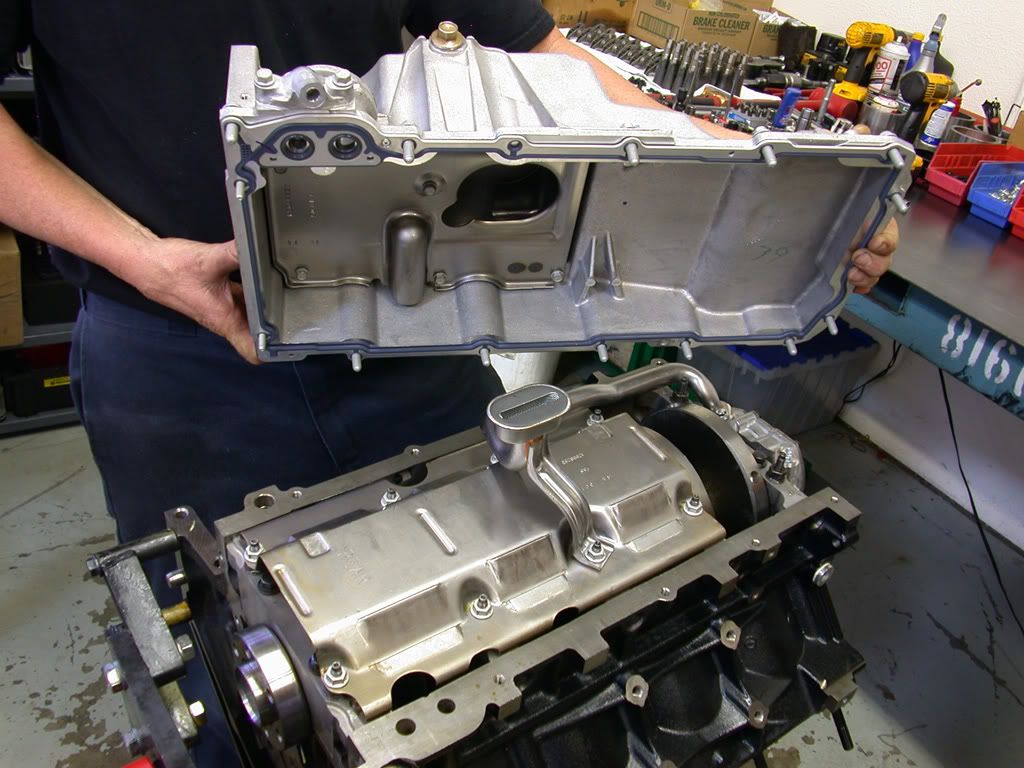
How many here have baffles...?
No extra charge in a lowly OE GM LS pan these days:
Originally Posted By: Doug Hillary
It is a great pity that some BITOG Posters steal Topics and Posts and the incidence of aggression does nothing for the image of BITOG IMO
I wish I could feel sorry for orig poster but don't in the least... Why would anyone purposelessly over fill a engine without good reason??? Yes it may well be OK, but still totally unnecessary...
Originally Posted By: hatt
Wouldn't an oil cooler be easier and more effective than a keg of oil?
In true competition engine, not by a long shot, in a Camery totally useless... As mentioned oil is scavenged from various areas of the engine so there is very little if any splash in the crankcase that robs HP... Have to remember many racing engines turn well in excess of 12-14,000 RPMs... A rod crashing into oil at those speeds sees a great opposing force so power is wasted... Assuming no damage to rods/crank, probably wouldn't be a big deal but all the competition has same in their engine, so without it might as well stay home... Also it's generally easy to remote locate a regulated oil cooler that keeps oil temps within a certain range...
It is a great pity that some BITOG Posters steal Topics and Posts and the incidence of aggression does nothing for the image of BITOG IMO
I wish I could feel sorry for orig poster but don't in the least... Why would anyone purposelessly over fill a engine without good reason??? Yes it may well be OK, but still totally unnecessary...
Originally Posted By: hatt
Wouldn't an oil cooler be easier and more effective than a keg of oil?
In true competition engine, not by a long shot, in a Camery totally useless... As mentioned oil is scavenged from various areas of the engine so there is very little if any splash in the crankcase that robs HP... Have to remember many racing engines turn well in excess of 12-14,000 RPMs... A rod crashing into oil at those speeds sees a great opposing force so power is wasted... Assuming no damage to rods/crank, probably wouldn't be a big deal but all the competition has same in their engine, so without it might as well stay home... Also it's generally easy to remote locate a regulated oil cooler that keeps oil temps within a certain range...
Originally Posted By: MolaKule
Originally Posted By: turtlevette
Originally Posted By: MolaKule
Originally Posted By: turtlevette
An extra quart provides extra heat sink. I don't think oil froths anymore. They put in additives to prevent that.
The siloxane polymers only makes the bubbles burst quicker, they do not prevent the oil from frothing due to overfilling.
Air does not lubricate.
The oil will finally come to an equilibrium temperature, whether it is 4 quarts or 10 quarts.
Regarding temperature, you are thinking about it wrong, just like shannow. You need as much thermal reserve as possible. That reserve is the difference between lite cruise and wot. Around 100 deg f. One more quart is not the holy grail, but it will help a bit on wot blasts. The way performance cars are used.
There is some "smartness" going back and forth here BOTH ways. This forum is unique in that you cannot edit or delete overzealous statements. I could envision deleting the first sentence and last paragraph.
Quote:
I'd like to see this. Are there any setups with a clear oil pan? I don't think the bottom couple of inches in the pan will be foam. Foaming will clear quickly. The majority of road racers overfill by a quart to lessen the chance the pickup will uncover. This puts your philosophy at odds with common practice.
With baffles or dry sumps, you don't need an extra quart, unless the engine is consuming an inordinate amount of oil during racing, and then an oil reservoir should be designed into the lubricating system.
Anytime the oil dumps into a wet sump, the turbulence of the oil picks up air and the bubbles go to the bottom and eventually rise due to something called "buoyancy." Basic fluid dynamics.
Quote:
Regarding temperature, you are thinking about it wrong, just like shannow. You need as much thermal reserve as possible. That reserve is the difference between lite cruise and wot. Around 100 deg f. One more quart is not the holy grail, but it will help a bit on wot blasts. The way performance cars are used.
I don't think you are viewing the complete thermodynamic picture. An extra quart of oil only means the oil takes a fractional longer amount of time to reach thermal equilibrium. You're right, an extra quart is NOT the holy grail.
Quote:
There is some "smartness" going back and forth here BOTH ways. This forum is unique in that you cannot edit or delete overzealous statements. I could envision deleting the first sentence and last paragraph.
When one does this, "..." it means there are other words or sentences before of after this, so when one uses "..." it does not infer anyone is ignoring anything. On the contrary, it means one is only addressing pertinent points in order to stay on topic and not go off on tangents.
As far as your "smartness" statement I have no idea as to what you are referring.
His smartness statement refers to his incorrect assumption that his points are valid in relation to the posts opposing his.
His use of the word smartness says all that needs to be said. He is a petty little child who actually believes his own bull. Sadly he learns nothing here and is no more than a troll as I'm sure you've noticed.
Soon his IP address will be banned and we will no longer have to tolerate the stupidity that are his posts.
Til then I've got him on ignore. Like a child he screams til he's noticed. Someone should have spanked him more.
Or forgotten him at the beach perhaps...
Originally Posted By: turtlevette
Originally Posted By: MolaKule
Originally Posted By: turtlevette
An extra quart provides extra heat sink. I don't think oil froths anymore. They put in additives to prevent that.
The siloxane polymers only makes the bubbles burst quicker, they do not prevent the oil from frothing due to overfilling.
Air does not lubricate.
The oil will finally come to an equilibrium temperature, whether it is 4 quarts or 10 quarts.
Regarding temperature, you are thinking about it wrong, just like shannow. You need as much thermal reserve as possible. That reserve is the difference between lite cruise and wot. Around 100 deg f. One more quart is not the holy grail, but it will help a bit on wot blasts. The way performance cars are used.
There is some "smartness" going back and forth here BOTH ways. This forum is unique in that you cannot edit or delete overzealous statements. I could envision deleting the first sentence and last paragraph.
Quote:
I'd like to see this. Are there any setups with a clear oil pan? I don't think the bottom couple of inches in the pan will be foam. Foaming will clear quickly. The majority of road racers overfill by a quart to lessen the chance the pickup will uncover. This puts your philosophy at odds with common practice.
With baffles or dry sumps, you don't need an extra quart, unless the engine is consuming an inordinate amount of oil during racing, and then an oil reservoir should be designed into the lubricating system.
Anytime the oil dumps into a wet sump, the turbulence of the oil picks up air and the bubbles go to the bottom and eventually rise due to something called "buoyancy." Basic fluid dynamics.
Quote:
Regarding temperature, you are thinking about it wrong, just like shannow. You need as much thermal reserve as possible. That reserve is the difference between lite cruise and wot. Around 100 deg f. One more quart is not the holy grail, but it will help a bit on wot blasts. The way performance cars are used.
I don't think you are viewing the complete thermodynamic picture. An extra quart of oil only means the oil takes a fractional longer amount of time to reach thermal equilibrium. You're right, an extra quart is NOT the holy grail.
Quote:
There is some "smartness" going back and forth here BOTH ways. This forum is unique in that you cannot edit or delete overzealous statements. I could envision deleting the first sentence and last paragraph.
When one does this, "..." it means there are other words or sentences before of after this, so when one uses "..." it does not infer anyone is ignoring anything. On the contrary, it means one is only addressing pertinent points in order to stay on topic and not go off on tangents.
As far as your "smartness" statement I have no idea as to what you are referring.
His smartness statement refers to his incorrect assumption that his points are valid in relation to the posts opposing his.
His use of the word smartness says all that needs to be said. He is a petty little child who actually believes his own bull. Sadly he learns nothing here and is no more than a troll as I'm sure you've noticed.
Soon his IP address will be banned and we will no longer have to tolerate the stupidity that are his posts.
Til then I've got him on ignore. Like a child he screams til he's noticed. Someone should have spanked him more.
Or forgotten him at the beach perhaps...
Interesting thread, it started out a bit wayward in my opinion but I'm glad I read on, even though the original topic got a bit derailed and there was a little bit of argy bargy which the young bloke helped straighten out, some of the BITOG big guns as I consider them have been involved at different stages particularly later on and some good solid info and opinions came through and hopefully will continue to.
In a standard vehicle with a standard engine and oil pan running slightly overfull for everyday use although mostly pointless, probably isn't going to cause any real harm and in some cases may even be an advantage if you know the characteristics of the individual vehicle.
High performance/racing engines are a whole different kettle of fish as some here obviously know and really need to be treated very differently. More specialist oiling systems and oils/viscosities that will help improve both power and engine reliability are no brainers really if you're in the know. However, I'm certain there's plenty of poorly designed set ups being used and abused all over the world in both standard and racing applications going just fine, no doubt more through good luck than good management.
Best wishes,
Jason.
In a standard vehicle with a standard engine and oil pan running slightly overfull for everyday use although mostly pointless, probably isn't going to cause any real harm and in some cases may even be an advantage if you know the characteristics of the individual vehicle.
High performance/racing engines are a whole different kettle of fish as some here obviously know and really need to be treated very differently. More specialist oiling systems and oils/viscosities that will help improve both power and engine reliability are no brainers really if you're in the know. However, I'm certain there's plenty of poorly designed set ups being used and abused all over the world in both standard and racing applications going just fine, no doubt more through good luck than good management.
Best wishes,
Jason.
True Jason, but that is not good enough.
It kinda' sounds like rule of thumb logic to me.
How does this sound?
As a rule of thumb, I over-fill my crankcase by one liter.
I plug the filter by-pass with a cap screw and remove
the thermostat on my Chevy motors.
As a rule of thumb, I run the thinnest or thickest oil
I can get away with.
I'm sure you can think of a thousand more, and you know
what that sounds like to me?
It sounds like the sportsman section in the pits at a drag race.
The guys who bring 850 Sonny's to a super gas race.
It kinda' sounds like rule of thumb logic to me.
How does this sound?
As a rule of thumb, I over-fill my crankcase by one liter.
I plug the filter by-pass with a cap screw and remove
the thermostat on my Chevy motors.
As a rule of thumb, I run the thinnest or thickest oil
I can get away with.
I'm sure you can think of a thousand more, and you know
what that sounds like to me?
It sounds like the sportsman section in the pits at a drag race.
The guys who bring 850 Sonny's to a super gas race.
Good ole Turtle, he's a real sport. He knows it all and can snark with the best of them. Insulting members and misinforming are his primary modes.
Enjoy!
Enjoy!
Originally Posted By: MolaKule
The problem with "overfilling" is the potential for air entrainment which reduces the lubricating ability of the fluid. The manf. wants to try and avoid as much "whipping" of the oil and air entrainment as possible.
One of the areas of whipping they try to avoid is obviously the crankshaft lobes hitting the oil in the sump under many dynamic conditions. Tappet action in the head also can also foam the oil.
Add to this piston squirters that cool the underside of the piston crowns, and you have many areas in the engine creating a lot of bubbles.
The best oil level is an indication on the dipstick of between add and full.
A video of oil foaming around the camshaft of a Porsche 928 operating on a race track that is worth a flick through.
My eyes were opened!
https://www.youtube.com/watch?v=SmjQn3IBsP8
The problem with "overfilling" is the potential for air entrainment which reduces the lubricating ability of the fluid. The manf. wants to try and avoid as much "whipping" of the oil and air entrainment as possible.
One of the areas of whipping they try to avoid is obviously the crankshaft lobes hitting the oil in the sump under many dynamic conditions. Tappet action in the head also can also foam the oil.
Add to this piston squirters that cool the underside of the piston crowns, and you have many areas in the engine creating a lot of bubbles.
The best oil level is an indication on the dipstick of between add and full.
A video of oil foaming around the camshaft of a Porsche 928 operating on a race track that is worth a flick through.
My eyes were opened!
https://www.youtube.com/watch?v=SmjQn3IBsP8
Last edited:

I never got why keeping oil at the full mark or close to it was such a big deal for some people. I hear friends complaining sometimes about it. Years ago I would overfill my Aerostar by half a qt. I did that because I was lazy and didn't want extra qt bottles around. No big deal, I sent her to the junkyard with over 200K miles and it still ran good. Rot, broken glass, needing an exhaust system, suspension, and tires were the reasons. Not a bad engine or transmission. Then when it started leaking oil, if I popped the hood and it was half a qt. low on the stick I'd top it up, with half a qt. keeping an open qt. bottle. Fast forward to today. My 00 Century has a small oil leak, if I see it down one hole on the dipstick I add oil. That's about 8 ounces of oil give or take. Some would say why bother? If I went through the effort to pop the hood and its down a bit on oil, I add it. Having an open qt. of oil doesn't bother me anymore.
Originally Posted By: Peter_M
Originally Posted By: MolaKule
The problem with "overfilling" is the potential for air entrainment which reduces the lubricating ability of the fluid. The manf. wants to try and avoid as much "whipping" of the oil and air entrainment as possible.
One of the areas of whipping they try to avoid is obviously the crankshaft lobes hitting the oil in the sump under many dynamic conditions. Tappet action in the head also can also foam the oil.
Add to this piston squirters that cool the underside of the piston crowns, and you have many areas in the engine creating a lot of bubbles.
The best oil level is an indication on the dipstick of between add and full.
A video of oil foaming around the camshaft of a Porsche 928 operating on a race track that is worth a flick through.
My eyes were opened!
https://www.youtube.com/watch?v=SmjQn3IBsP8
Isn't that an interesting video.
Shows me that even the worlds best designed engines aren't infaillable and even they require every possible advantage in the oil department.
Thanks for posting.
Originally Posted By: MolaKule
The problem with "overfilling" is the potential for air entrainment which reduces the lubricating ability of the fluid. The manf. wants to try and avoid as much "whipping" of the oil and air entrainment as possible.
One of the areas of whipping they try to avoid is obviously the crankshaft lobes hitting the oil in the sump under many dynamic conditions. Tappet action in the head also can also foam the oil.
Add to this piston squirters that cool the underside of the piston crowns, and you have many areas in the engine creating a lot of bubbles.
The best oil level is an indication on the dipstick of between add and full.
A video of oil foaming around the camshaft of a Porsche 928 operating on a race track that is worth a flick through.
My eyes were opened!
https://www.youtube.com/watch?v=SmjQn3IBsP8
Isn't that an interesting video.
Shows me that even the worlds best designed engines aren't infaillable and even they require every possible advantage in the oil department.
Thanks for posting.
Originally Posted By: SteveSRT8
Good ole Turtle, he's a real sport. He knows it all and can snark with the best of them. Insulting members and misinforming are his primary modes.
Enjoy!
Yep.
But needs validation so badly he starts a thead about the thumbs up he gets driving his car.
Trying to show us all how cool he is because he's driving whatever it is,but at every possible opportunity repulses those he wants to think he's cool.
You just can't make up a more absurd story.
Poor turtlevette
Good ole Turtle, he's a real sport. He knows it all and can snark with the best of them. Insulting members and misinforming are his primary modes.
Enjoy!
Yep.
But needs validation so badly he starts a thead about the thumbs up he gets driving his car.
Trying to show us all how cool he is because he's driving whatever it is,but at every possible opportunity repulses those he wants to think he's cool.
You just can't make up a more absurd story.
Poor turtlevette
Last edited by a moderator:

Originally Posted By: Clevy
Originally Posted By: Peter_M
Originally Posted By: MolaKule
The problem with "overfilling" is the potential for air entrainment which reduces the lubricating ability of the fluid. The manf. wants to try and avoid as much "whipping" of the oil and air entrainment as possible.
One of the areas of whipping they try to avoid is obviously the crankshaft lobes hitting the oil in the sump under many dynamic conditions. Tappet action in the head also can also foam the oil.
Add to this piston squirters that cool the underside of the piston crowns, and you have many areas in the engine creating a lot of bubbles.
The best oil level is an indication on the dipstick of between add and full.
A video of oil foaming around the camshaft of a Porsche 928 operating on a race track that is worth a flick through.
My eyes were opened!
https://www.youtube.com/watch?v=SmjQn3IBsP8
Isn't that an interesting video.
Shows me that even the worlds best designed engines aren't infaillable and even they require every possible advantage in the oil department.
Thanks for posting.
My big takeaway was how much heat that splashing oil on the rocker covers could move..hot agitated, thin film forced convection....can't get much better heat transfer wise.
Originally Posted By: Peter_M
Originally Posted By: MolaKule
The problem with "overfilling" is the potential for air entrainment which reduces the lubricating ability of the fluid. The manf. wants to try and avoid as much "whipping" of the oil and air entrainment as possible.
One of the areas of whipping they try to avoid is obviously the crankshaft lobes hitting the oil in the sump under many dynamic conditions. Tappet action in the head also can also foam the oil.
Add to this piston squirters that cool the underside of the piston crowns, and you have many areas in the engine creating a lot of bubbles.
The best oil level is an indication on the dipstick of between add and full.
A video of oil foaming around the camshaft of a Porsche 928 operating on a race track that is worth a flick through.
My eyes were opened!
https://www.youtube.com/watch?v=SmjQn3IBsP8
Isn't that an interesting video.
Shows me that even the worlds best designed engines aren't infaillable and even they require every possible advantage in the oil department.
Thanks for posting.
My big takeaway was how much heat that splashing oil on the rocker covers could move..hot agitated, thin film forced convection....can't get much better heat transfer wise.
My takeaway was if that's what's happening with the camshaft, can you imagine the crankcase running at twice the speed with bigger "blades" (ie big ends and counterweighted crank throws) chopping at the streams of oil coming from the mains and the big ends and other locations such the return drains.
The 928 engine featured has a conventional wet sump unlike most 911's. However the 928 engines suffered from occasional big end failures on No.2 and 3 cylinders when raced.
The usual bush mechanic reasons given for the failure is the lack of oil viscosity and ZDDP or more lately, too soft an embeddable bearing surface on the slipper shells or distorting rods(!)
However I think it's more probably that the geometry of the oil way drillings in the crank and the oil pump arrangement results in aerated oil going to this journal in preference to the other journals
I understand Porche modified the oil pump bypass arrangements and oil pressures over the life of this engine, maybe to address this issue, I don't know.
Be interesting to hear Doug's thoughts.
The 928 engine featured has a conventional wet sump unlike most 911's. However the 928 engines suffered from occasional big end failures on No.2 and 3 cylinders when raced.
The usual bush mechanic reasons given for the failure is the lack of oil viscosity and ZDDP or more lately, too soft an embeddable bearing surface on the slipper shells or distorting rods(!)
However I think it's more probably that the geometry of the oil way drillings in the crank and the oil pump arrangement results in aerated oil going to this journal in preference to the other journals
I understand Porche modified the oil pump bypass arrangements and oil pressures over the life of this engine, maybe to address this issue, I don't know.
Be interesting to hear Doug's thoughts.
Last edited:
Above or below the mark has never concerned me on my own cars...customers I get it right. But I had a Honda C50 stepthrough, it said 500ml capacity on the crankcase, which was slightly over on the dipstick. At that level it couldn't get up my drive in the mornings, I'd have to scoot it up with my leg. With the level spot on the dipstick mark it'd go straight up my drive without help.
With that much HP, you notice anything that cuts speed.
With that much HP, you notice anything that cuts speed.
Originally Posted By: hatt
Wouldn't an oil cooler be easier and more effective than a keg of oil?
Originally Posted By: TFB1
In true competition engine, not by a long shot, in a Camery totally useless... As mentioned oil is scavenged from various areas of the engine so there is very little if any splash in the crankcase that robs HP... Have to remember many racing engines turn well in excess of 12-14,000 RPMs... A rod crashing into oil at those speeds sees a great opposing force so power is wasted... Assuming no damage to rods/crank, probably wouldn't be a big deal but all the competition has same in their engine, so without it might as well stay home... Also it's generally easy to remote locate a regulated oil cooler that keeps oil temps within a certain range...
I'm not talking about the dry sump. I'm talking about "5 gallons" of oil the turtle was talking about. Sounds like a lot of bulk and weight.
Wouldn't an oil cooler be easier and more effective than a keg of oil?
Originally Posted By: TFB1
In true competition engine, not by a long shot, in a Camery totally useless... As mentioned oil is scavenged from various areas of the engine so there is very little if any splash in the crankcase that robs HP... Have to remember many racing engines turn well in excess of 12-14,000 RPMs... A rod crashing into oil at those speeds sees a great opposing force so power is wasted... Assuming no damage to rods/crank, probably wouldn't be a big deal but all the competition has same in their engine, so without it might as well stay home... Also it's generally easy to remote locate a regulated oil cooler that keeps oil temps within a certain range...
I'm not talking about the dry sump. I'm talking about "5 gallons" of oil the turtle was talking about. Sounds like a lot of bulk and weight.
Originally Posted By: Triton_330
Thank you, bbhero. (I should have remembered to put MolaKule in my list there, too.)
Mola and Doug go without saying!

Turtlevette: I do know that Vettes specifically allow overfilling for track usage. With other vehicles, I'd want to at least know the geometry of the oil pan and so forth. And, as Mola mentioned, and we've discussed before, there are alternatives to overfilling.
Oh, and I figured out that Merk isn't in California at all. He's right here, and he's a buddy of mine who insisted upon adding 100 mL of oil to his John Deere tractor because the oil was a tiny fraction of an inch below the actual fill line.
Thank you, bbhero. (I should have remembered to put MolaKule in my list there, too.)
Mola and Doug go without saying!
Turtlevette: I do know that Vettes specifically allow overfilling for track usage. With other vehicles, I'd want to at least know the geometry of the oil pan and so forth. And, as Mola mentioned, and we've discussed before, there are alternatives to overfilling.
Oh, and I figured out that Merk isn't in California at all. He's right here, and he's a buddy of mine who insisted upon adding 100 mL of oil to his John Deere tractor because the oil was a tiny fraction of an inch below the actual fill line.

MolaKule
Staff member
Originally Posted By: Peter_M
Originally Posted By: MolaKule
The problem with "overfilling" is the potential for air entrainment which reduces the lubricating ability of the fluid. The manf. wants to try and avoid as much "whipping" of the oil and air entrainment as possible.
One of the areas of whipping they try to avoid is obviously the crankshaft lobes hitting the oil in the sump under many dynamic conditions. Tappet action in the head also can also foam the oil.
Add to this piston squirters that cool the underside of the piston crowns, and you have many areas in the engine creating a lot of bubbles.
The best oil level is an indication on the dipstick of between add and full.
A video of oil foaming around the camshaft of a Porsche 928 operating on a race track that is worth a flick through.
My eyes were opened!
https://www.youtube.com/watch?v=SmjQn3IBsP8
No No, No, those are not bubbles, there are no baffles/windage trays, there is no Santa Clause, there is no Easter Bunny.

Just for Turtlevette:
https://www.youtube.com/watch?v=mlCiDEXuxxA

Originally Posted By: MolaKule
The problem with "overfilling" is the potential for air entrainment which reduces the lubricating ability of the fluid. The manf. wants to try and avoid as much "whipping" of the oil and air entrainment as possible.
One of the areas of whipping they try to avoid is obviously the crankshaft lobes hitting the oil in the sump under many dynamic conditions. Tappet action in the head also can also foam the oil.
Add to this piston squirters that cool the underside of the piston crowns, and you have many areas in the engine creating a lot of bubbles.
The best oil level is an indication on the dipstick of between add and full.
A video of oil foaming around the camshaft of a Porsche 928 operating on a race track that is worth a flick through.
My eyes were opened!
https://www.youtube.com/watch?v=SmjQn3IBsP8
No No, No, those are not bubbles, there are no baffles/windage trays, there is no Santa Clause, there is no Easter Bunny.
Just for Turtlevette:
https://www.youtube.com/watch?v=mlCiDEXuxxA
Originally Posted By: MolaKule
Quote:
Despite possible variations in answers for those questions between one vehicle and another, is there a set "safe maximum" of overfill for all vehicles - possibly half a quart?
~ Triton
Each manufacturer sets the level of oil in the sump to cover many "dynamic" conditions such as acceleration, cornering, volume expansion of the fluid due to heating, hill climbing, valley drop, etc.
The problem with "overfilling" is the potential for air entrainment which reduces the lubricating ability of the fluid. The manf. wants to try and avoid as much "whipping" of the oil and air entrainment as possible.
One of the areas of whipping they try to avoid is obviously the crankshaft lobes hitting the oil in the sump under many dynamic conditions. Tappet action in the head also can also foam the oil.
Add to this piston squirters that cool the underside of the piston crowns, and you have many areas in the engine creating a lot of bubbles.
The best oil level is an indication on the dipstick of between add and full.
Of course. But I was just wondering if there was any variation from vehicle to vehicle, since sometimes the dipsticks aren't always completely accurate, and since not all oil sumps are made the same.
---
Originally Posted By: Garak
Originally Posted By: Triton_330
Thank you, bbhero. (I should have remembered to put MolaKule in my list there, too.)
Mola and Doug go without saying!
Indeed.
---
To the OP,
It seems no definitive answer has been said about the 3.8L V6 in question.
I'm not sure if I said this earlier on or not, but my dad has a 1998 Buick LeSabre with the 3800 Series II, and we always just pour in a 5qt jug. Which, is half a quart over the 4.5qt capacity. We've never had any issues, but then again my dad doesn't drive it like a bat outta heck, either.
And this is why I asked about the variation from vehicle to vehicle. Is half a quart over the end of the world for a 3.8L, or is it okay? I don't know.
I think the real question is why the heck car companies even make oil sumps with capacities that are something and a half quart - why not just make it exactly x amount of quarts?
Seems like a naive design, IMO.
~ Triton
Quote:
Despite possible variations in answers for those questions between one vehicle and another, is there a set "safe maximum" of overfill for all vehicles - possibly half a quart?
~ Triton
Each manufacturer sets the level of oil in the sump to cover many "dynamic" conditions such as acceleration, cornering, volume expansion of the fluid due to heating, hill climbing, valley drop, etc.
The problem with "overfilling" is the potential for air entrainment which reduces the lubricating ability of the fluid. The manf. wants to try and avoid as much "whipping" of the oil and air entrainment as possible.
One of the areas of whipping they try to avoid is obviously the crankshaft lobes hitting the oil in the sump under many dynamic conditions. Tappet action in the head also can also foam the oil.
Add to this piston squirters that cool the underside of the piston crowns, and you have many areas in the engine creating a lot of bubbles.
The best oil level is an indication on the dipstick of between add and full.
Of course. But I was just wondering if there was any variation from vehicle to vehicle, since sometimes the dipsticks aren't always completely accurate, and since not all oil sumps are made the same.
---
Originally Posted By: Garak
Originally Posted By: Triton_330
Thank you, bbhero. (I should have remembered to put MolaKule in my list there, too.)
Mola and Doug go without saying!
Indeed.
---
To the OP,
It seems no definitive answer has been said about the 3.8L V6 in question.
I'm not sure if I said this earlier on or not, but my dad has a 1998 Buick LeSabre with the 3800 Series II, and we always just pour in a 5qt jug. Which, is half a quart over the 4.5qt capacity. We've never had any issues, but then again my dad doesn't drive it like a bat outta heck, either.
And this is why I asked about the variation from vehicle to vehicle. Is half a quart over the end of the world for a 3.8L, or is it okay? I don't know.
I think the real question is why the heck car companies even make oil sumps with capacities that are something and a half quart - why not just make it exactly x amount of quarts?
Seems like a naive design, IMO.
~ Triton
Originally Posted By: SteveSRT8
Good ole Turtle, he's a real sport. He knows it all and can snark with the best of them. Insulting members and misinforming are his primary modes.
Enjoy!
In Feb there was a thread where you say you have been overfilling for 40 years. But since this is really a social site rather than technical, it's much better not to mention that and just beat the ole black sheep.
Good ole Turtle, he's a real sport. He knows it all and can snark with the best of them. Insulting members and misinforming are his primary modes.
Enjoy!
In Feb there was a thread where you say you have been overfilling for 40 years. But since this is really a social site rather than technical, it's much better not to mention that and just beat the ole black sheep.
- Status
- Not open for further replies.
Similar threads
- Locked
- Replies
- 29
- Views
- 25K
- Replies
- 15
- Views
- 3K
- Replies
- 29
- Views
- 36K
- Locked
- Replies
- 38
- Views
- 10K

- Locked
- Replies
- 21
- Views
- 6K