Moly is what kills wet clutches.
Negative... Moly will not defeat a wet clutch in good working order...
Mileage not Moly is the objective truth why our wet clutch begin to loose their grip...
Under scrutiny you'll find that clutch slip was due to normal glazing and contaminates...
To remove the effects of high mileage the savoy rider will employ good old sweat equity...
Start with inspecting and measuring the friction plates to make sure you have plenty
of material to work with... your shop manual should state minimal clutch thickness
in thousands of an inch or mm...
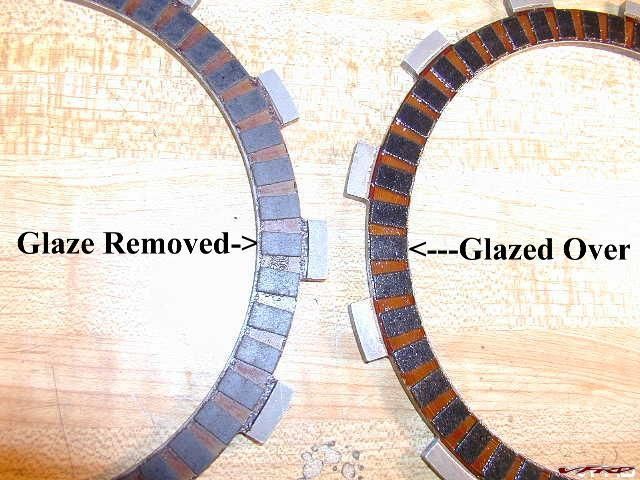
Next remove oily contaminants with Acetone... Bust the glaze with a sheet of
600 grit black dry emery paper resting on a hard surface... rotate the clutch plate in a
circle motion... go easy... you're just busting the surface glaze... don't get carried away
remove too much material... You should end up with a friction plate looks dull like a
new one as opposed to a shinny glazed one... recheck thickness...
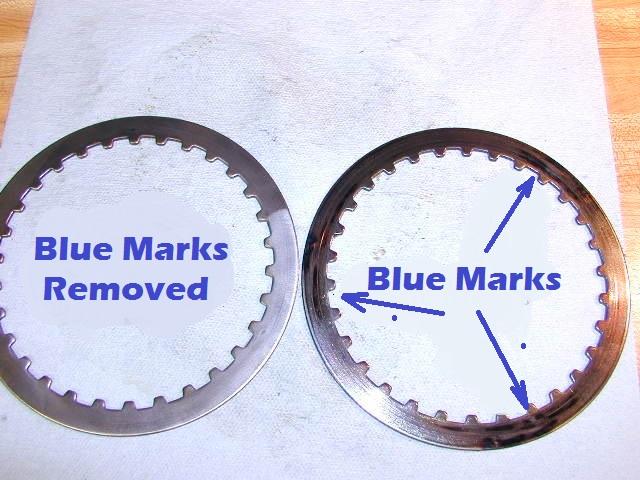
Finally check the steel plates for bluing caused by localized heat... check for warpage... consult the manual for ranger of thickness... flush away the contaminants with Acetone and wire wheel the surface to erase the blue marks and also to generally scuff up the surface... all in all aim for a dull surface free of Blue marks...