Galaxies Underestimated

MolaKule

Staff member
Joined
Jun 5, 2002
Messages
25,661
Location
Iowegia - USA
Two trillion galaxies fill the observable universe- ten times the old estimate- and most are too faint for any telescope to see:

https://spacedaily.com/s-at-least-t...ny-telescope-today-to-see-a-2016-study-found/

Just as the JWST is looking further back into space and seeing more and more galaxies, this tends to negate the Dark Matter hypothesis. The missing matter may simply be the galaxies we have not seen as yet.
 
Last edited:
Two trillion galaxies fill the observable universe- ten times the old estimate- and most are too faint for any telescope to see:

https://spacedaily.com/s-at-least-t...ny-telescope-today-to-see-a-2016-study-found/

Just as the JWST is looking further back into space and seeing more and more galaxies, this tends to negate the Dark Matter hypothesis. The missing matter may simply be the galaxies we have not seen yet.
The dark matter theory has always felt wrong to me.
 
The visible edge of the universe is just a visible limit. There are most likely galaxies so far away that the light and other forms of radiation have not even reached us yet. And, with the expansion rate of the universe, may not during the existence of planet Earth.
 
Last edited:
"Makes you feel so, sort of, insignificant, doesn't it?"

"Can we have your liver?"
I already knew that one... ;)

Actually, I find "us" perhaps important and perhaps unique (withing some relevant range), because we codify our thoughts. Ya never know who might wanna take a look long after we are gone...
 
The visible edge of the universe is just a visible limit. There are most likely galaxies so far away that the light and other forms of radiation have not even reached us yet. And, with the expansion rate of the universe, may not during the existence of planet Earth.
That visible limit very likely is moving away from us at faster than the speed of light with absolutely no hope of its light ever reaching us.
 
IMG_3211.webp

Beyond our ability to comprehend.
 
Two trillion galaxies fill the observable universe- ten times the old estimate- and most are too faint for any telescope to see:

https://spacedaily.com/s-at-least-t...ny-telescope-today-to-see-a-2016-study-found/

Just as the JWST is looking further back into space and seeing more and more galaxies, this tends to negate the Dark Matter hypothesis. The missing matter may simply be the galaxies we have not seen as yet.
A theory is always only as good as what we can test it with.

To this day we have only enough technology to observe what we can and that limit what we can understand. IMO the "dark energy" and "infinite universe" theories are just people throwing every unsolved variables into a hypothesis people cannot disprove, IMO just a lazy science to explain things.
 
Two trillion galaxies fill the observable universe- ten times the old estimate- and most are too faint for any telescope to see:

https://spacedaily.com/s-at-least-t...ny-telescope-today-to-see-a-2016-study-found/

Just as the JWST is looking further back into space and seeing more and more galaxies, this tends to negate the Dark Matter hypothesis. The missing matter may simply be the galaxies we have not seen as yet.
Preaching to the choir, but....

So.... what we are looking at, is the past. Sometimes, vastly in the past. By looking at the light from the galaxy, depending on how far it is away, there is a great possibility that said galaxy is no longer there.

Question is, what does this say? Trillions of galaxies out there. Ok, we can't get there, and even if we could, for us humans, is a one way ticket due to time dilation......amongst countless other engineering and biological hurdles......

What practical value does this new finding have?
 
Ok, we can't get there, and even if we could, for us humans, is a one way ticket due to time dilation......amongst countless other engineering and biological hurdles......

What practical value does this new finding have?
Tomorrow, probably no practical value. Next few years, I'd guess quite a bit. The quest for knowledge should probably not be limited to practical applications. This search pushes technology, data processing and software to the absolute limit. Requiring new methods to image, scan, and display what we find. As I am sure you know pure fundamental research has a stunningly impressive ROI. General Relativity comes to mind. Useless when conceived, but essential for today's GPS (as an example).

Your question is very valid. And I really don't have a way to answer it. Other than to say, the more we learn the more we can do.

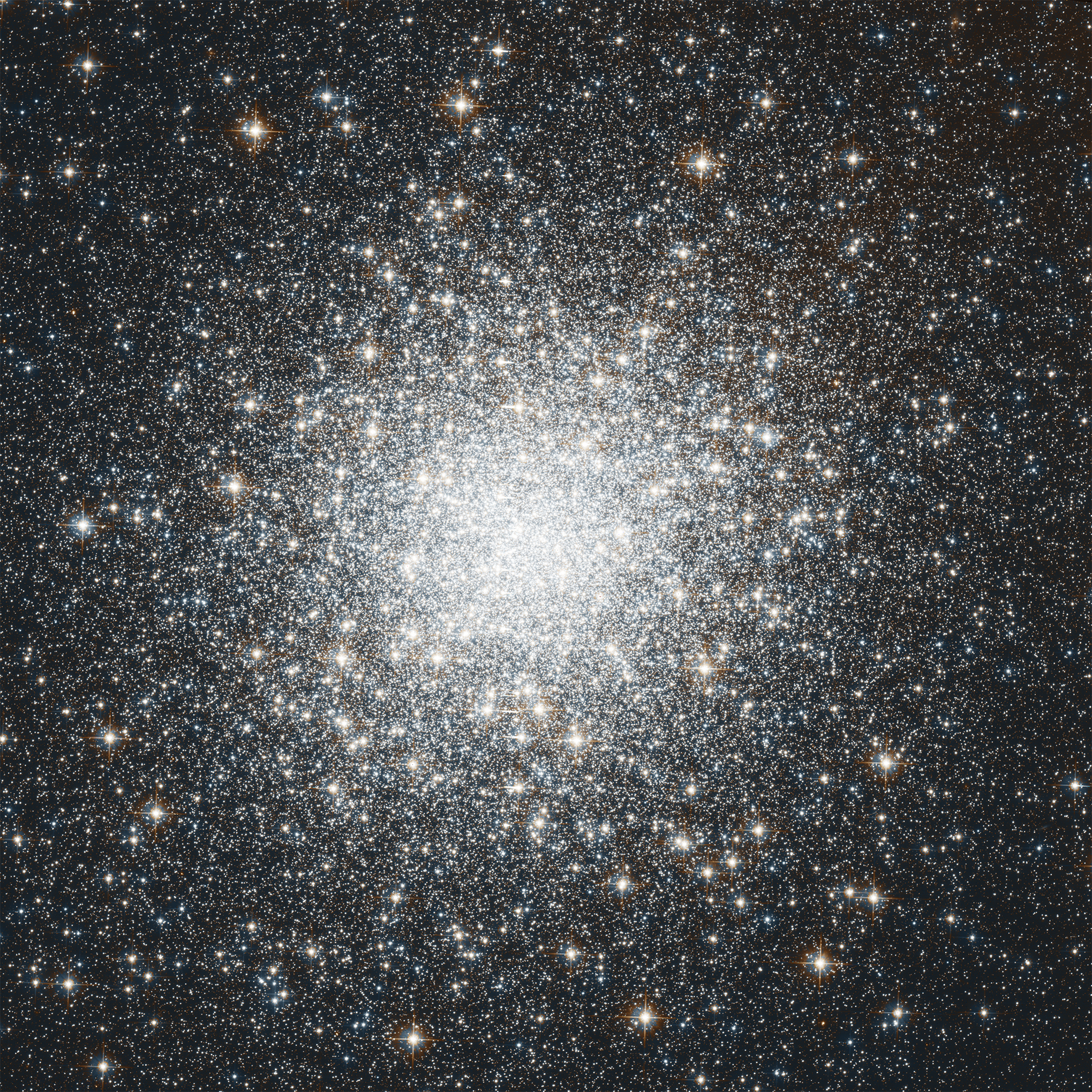
As a rank amateur astronomer with a 10" Meade telescope, I truly love a clear dark night to observe what is and what was from this rotating and orbiting ball in space. My eye on the eyepiece receives actual photons from the object in question. To me that is a reality-check that is far beyond an electronic image. My very favorite observable 'thing' are globular clusters. Millions of stars resolved as pinpoints of light. A picture just can't come close to what the eye sees. To the eye, all the stars are the same size. Resolving each pinpoint perfectly.

Globular_Cluster_M2.jpg
 
Preaching to the choir, but....

So.... what we are looking at, is the past. Sometimes, vastly in the past. By looking at the light from the galaxy, depending on how far it is away, there is a great possibility that said galaxy is no longer there.
Do we know how long galaxies exist? I don't think we do. Every time JWST looks at wide-view space fields, we see more and more galaxies further and further out in space.

In 2021, Alexia Lopez discovered the ‘Giant Arc’ (the Big Ring) which is 3.3 Billion LY in diameter. It is invisible to the naked eye and even to telescopes, discoverable only by measuring the absorption of magnesium from quasar light.
from: NASA SpaceNews, youtube.com, 16 Jan 2024

How many other celestial objects are to be discovered that are this large with this much mass?
What practical value does this new finding have?
The value is that these new finds run counter to the cosmological principle and that we need to recognize alternative hypotheses.
 
Last edited:
Do we know how long galaxies exist? I don't think we do. Every time JWST looks at wide-view space fields, we see more and more galaxies further and further out in space.

In 2021, Alexia Lopez discovered the ‘Giant Arc’ (the Big Ring) which is 3.3 Billion LY in diameter. It is invisible to the naked eye and even to telescopes, discoverable only by measuring the absorption of magnesium from quasar light.
from: NASA SpaceNews, youtube.com, 16 Jan 2024

How many other celestial objects are to be discovered that are this large with this much mass?

The value is that these new finds run counter to the cosmological principle and that we need to recognize alternative hypotheses.
Your a stupidly smart man. To see 👀 this and it has your head 🤯 means that its serious business. I never tell you thank you again enough for what you bring to the table. 😍
 
Back
Top Bottom