fixing rust with POR-15

Status
Not open for further replies.
I think you're right about its intended use. Though I question the longevity of its effectiveness. I'm a believer in the greasy rustproofing compounds such as wool grease, which do penetrate rust, and seep into cracks, forming an effective barrier between the metal and the environment for a lot less money.
 
Rustproofing is still around, people stopped automatically doing it when manufacturers started galvanizing the steel. Around here 10-15 years before rust, pretty good considering the amount of salt we use. I remember when I was young my grandpa went to have his car oiled for winter. Was like a deck sprayer. suffocated the oil spots. Pretty much what this paint does, along with other chemicals. They keep engineering better and better anti-rust paints all the time. I suspect eventually rust wins, but if a paint can give us an extra 5 years, why not use it. So far I've used it at the bottom of doors in the jams and undercarriage that does not require actual paint. Its down there that the rust starts, creeps up the fender wells and doors. I just grind and roller the stuff, second coat a month later. On the body where its visible that's a different story. Not sure how a base coat of acrylic enamel will behave over the stuff, maybe that's why shops don't use it. For that I still do a complete grind putty or bondo like the shops do. Main reason for cancer spots on the body is people dont touch up stone chipped paint till its too late.
 
Originally Posted By: LeakySeals
Main reason for cancer spots on the body is people dont touch up stone chipped paint till its too late.


Surface chips are the easy ones to take care of. I touch up the rock dings annually on my vehicle.

The really tough body rust in Michigan gets started in between welded sheet metal seems that are on all the doors, hoods, trunks, fender edges, and elsewhere. It grows undetected from the inside, then appears as blistered paint. Once you detect it, it is already a major problem. Just putting a coating over it does little to stop it from progressing.

Quality control at the manufacturing stage seems to vary a lot also. I think Chrysler digressed on my '05 Caravan....makes me sick. Rust proofing establishments disappeared 15 years ago because the auto mfg. made so much progress against rust. Now....it's hit or miss.

Again, in Michigan winters you might as well be driving your car everyday in the ocean.
 
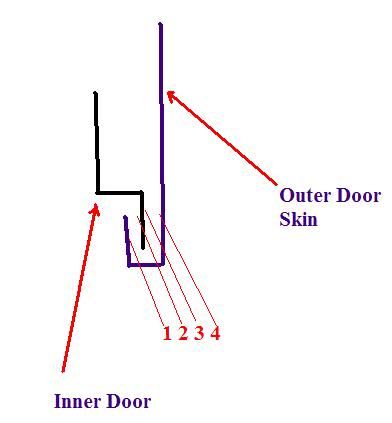
The rust I have is in the pinch seam. Not all of the 4 doors have it. One I just wire brused and used the eastwood Rust Encapsulator and the other I used a naval jelly clone and then will use the Eastwood RE.

Its been awhile since I have done much with a car's paint. Is acetone safe to clean up the car paint with? It will not damage the paint?

I think the pinch seam sealant is the cause here. Pulled that away in areas with rust.
 
Originally Posted By: Donald
Is acetone safe to clean up the car paint with? It will not damage the paint?


With a modern 2 step (base color/clearcoat) paint job the concern is the top coat clear. Some chemicals will cloud or haze the clear. If the paint job has cured or is factory acetone might be ok diluted. Try on a lower panel to verify. I have good luck with goof off and goo gone, not sure whats in it.
 
Clarification. What I said was for areas near the fenderwells, tar, etc. To clean surface of your entire car i would use one of the meguires buffing (not polishing) products that has a combination of mild abrasives and chemicals for oxidation. Follow that with your favorites wax/sealer.
 
I need to clean the area I coated with a naval jelly clone. Eastwood suggests their Pre Painting Prep or acetone. This area is surrounded by normal car paint, but on the inside edge of the door. I think the goal is to remove any dried naval jelly that has not reacted with rust yet. I did wipe the area with a very wet rag after 30 minutes.
 
Originally Posted By: Donald
I need to clean the area I coated with a naval jelly clone. Eastwood suggests their Pre Painting Prep or acetone. This area is surrounded by normal car paint, but on the inside edge of the door. I think the goal is to remove any dried naval jelly that has not reacted with rust yet. I did wipe the area with a very wet rag after 30 minutes.


You can always mask it off as if you were painting to be sure it wont react bad with the paint. For the inside door jam, why not experiment with a close match spray acrylic enamel after your done. I'd give it a high pressure spray down at the local car wash spray booth to be sure its gone before over coating with anything..
 
Originally Posted By: Kestas
Originally Posted By: ted s
you aint going to stop it

I too am skeptical, especially if you think the treatmenet will last for a long time. If this treatment works so well, why don't we treat new cars with it? Why aren't there shops buying POR-15 in bulk and catering to this business?

I think this product is intended only for cars that are retired from salt duty.


some smart people do use this stuff on their new cars. it's a great investment. I really mean Krown and Rustcheck
 
Last edited:
Originally Posted By: Donald
Originally Posted By: doitmyself
Often times the rust on door bottoms is coming from the inside out. Moisture and salt vapor (rust belt) works into the seams from the inside and the rust grows out. This needs to be addressed along with the exterior rust.
d2babce2.jpg


I did one door today. One of the problems is they had a line of caulk or sealant between 1 & 2 on the bottom and up about 6" on each side. I pulled it away and it came away like a line of caulk. It was holding rust around and under it. So I wire brushed that area and cleaned it and put on Eastwood RE.

They tell you to pour some out, or spoon some out. So I spooned some out into a plastic cup. Then using a tiny brush, painted on the Eadtwood RE along the rust line.

What they don't tell you: don't use a plastic cup, after 10 minutes it will be dissolved and leak. Also if you do use a plastic cup don't hold it over your pants.

How long does Eastwood RE take to dry, on my pants that is so I can wash them?


I need to carefully look over all the doors I did. I do see a light rust colored stain over the white paint on at least one door. I meant to take some notes on what doors were done what way. I think I did some doors with just Eastwood Rust Encapsulater and others first with naval jelly and then with the Eastwood RE. I also have some Loctite Extend to work with. I live near Albany NY and this winter there was little snow and little salt on the roads.

 
Status
Not open for further replies.
Back
Top Bottom