
Electric dryer won’t start. Any suggestions?

bought a lot of washer and dryer parts off of amazon and online places . non oem seem to work as good as oem at a fraction of the price .

Depends on the part and the store of course, I couldn’t fine anything cheaper than what I paid for the OEM thermal fuse.

And after a bit of drama (like messed up assembly and wondering about getting a seal all around the door/bulkhead interface, I got it all in, plugged it in, and fired it up. Then I had to connect the exhaust tube, which didn’t seem to want to stay on the pipe. But it’s working now. Might need a new belt, but I can do that now.
 
Depends on the part and the store of course, I couldn’t fine anything cheaper than what I paid for the OEM thermal fuse.

And after a bit of drama (like messed up assembly and wondering about getting a seal all around the door/bulkhead interface, I got it all in, plugged it in, and fired it up. Then I had to connect the exhaust tube, which didn’t seem to want to stay on the pipe. But it’s working now. Might need a new belt, but I can do that now.
Good job! If the women don't found you handsome, at least you should be handy.
 
I believe that the reviews/comments you are seeing online are confusing because of the incorrect terminology being used by the posters. The actual "thermal fuse" is the white plastic fusible link that looks like this:
View attachment 306037

Just like a true fuse, if this blows, it must be replaced. Most dryer thermal fuses will control power to everything but the interior light.

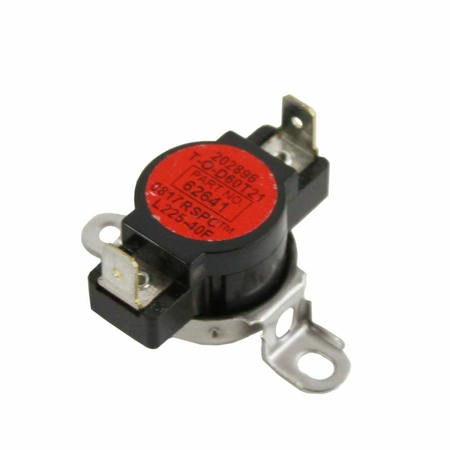
The other metal button-like thermal sensors are "thermal limit switches", which will trip when it senses temperatures above a specific threshold (e.g., 350 degrees F). When working properly, they will typically reset automatically when the temperature drops below a set point (e.g., 150 degrees F). They are also used in HVAC furnaces and some "thermal limit switches" have a manual reset button like a circuit breaker. The video in Post #5 refers to them as "thermostats".


A blocked vent will cause restricted flow resulting in elevated temperatures in the exhaust plenum. This can frequently cause a thermal limit switch to trip offline...typically the one closest to the heating element coil (which is the one you have determined to be defective).

Yeah. I figured that cleaning out the exhaust path was probably going to fix all of this. Couldn't get everything out, but my arm wasn't so buff that I couldn't reach into the exhaust tube.

This model only has a high-limit thermostat and a single thermal fuse. They're mounted pretty close to each other. And for whatever reason, the thermal fuse location is right next to a pulley where it requires some sort of extension, deep socket, or socket/nut handle to access one screw. The pulley blocks a ratchet head. I ended up using a 1/4" socket, a 1/4" to 3/8" adapter, and 2" inch long 3/8" extension.

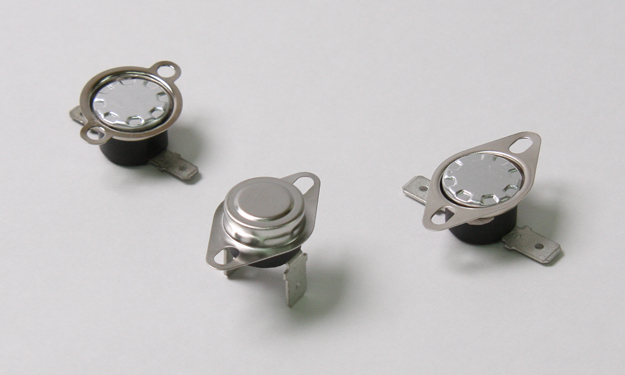
The thermal fuse seems to be a two bladed piece riveted to the mounting body. The factory one was Lina, but the replacement was a Clinac CS-7. Looks like it's available in multiple configurations for how the blades are bent. This photo has different bases.

https://www.wako-clinac.co.jp/product_en/cs-7_en/index.html

cs-7.jpg


Didn't replace the hi-limit thermostat. The place I bought the thermal fuse has that for $53.99.

https://www.reliableparts.com/wpl-wpw10116735.html

17711201-820e-4b0d-a343-3719e2ee36ca_small.webp


In any case, I kind of feel bad for someone who needs to replace one of the fuses, and spends $200+ on an in-house visit to replace a part that costs less than $10.
 
Yeah. I figured that cleaning out the exhaust path was probably going to fix all of this. Couldn't get everything out, but my arm wasn't so buff that I couldn't reach into the exhaust tube.
Here is a little trick I learned a long time ago: You can dislodge much of the lint by routinely using an electric leaf blower to blow out the exhaust hose through the opening in the back of the dryer/drum. Don't use a gas-powered leaf blower which will put combustion fumes inside your house.
 
Mom said it wasn’t working any more. Stopped mid-cycle again. So I went over to have a look. This time disassembly was almost trivially simple to pop the top, pull the connectors, remove the front, remove the bulkhead, and take off the drum. Checked the resistance and the thermal fuse is open. I suspect it’s because I pushed it back and squeezed the dryer vent duct where it pinched like a kinked garden hose. Took about 1-1/2 loads to blow. But I can get another fuse and maybe this time replace the belt. And make sure this time the duct isn’t pinched.
 
Got the parts (fuse + belt) today during lunch and managed to fix it under 15 minutes. Hoping it keeps on working. Made sure to lengthen the duct to remove any kinking. It sounds a bit different with the new belt.
 
You are in a conundrum about the belt. If it looks good, I would leave it alone since my experience is that new replacement belts are made with cheaper, less durable material. However, with Murphy's Law, the old belt will probably break in a week! :ROFLMAO:

I ended up getting a new OEM belt since I was going in to replace the thermal fuse again (screwed up by blocking the duct). I can't be 100% sure, but it looks to be totally identical other than the age and condition. I suspect the replacement was made by the same supplier, and it was labelled as made in the US. Not sure who makes dryer belts, but I'd think they don't make them in-house but buy from a company like Gates or Bando.
 
how long of a path does it take to go outside? if its long you might have a restriction in the tube and need a vent brush to clear out
 
how long of a path does it take to go outside? if its long you might have a restriction in the tube and need a vent brush to clear out

Less than two feet. Can reasonably get the vent to wall horizontal distance from six inches to 18 inches, but too far from the wall (with the outlet) and the dryer blocks a door. Goes right to an outlet with slats. I guess they’re technically called louvers. But it was scrunched up pretty tight and there’s about a 6 inch height difference. I previously tried to get it as far in as I could. But now I figure snaking it is preferable to squeezing it where it might restrict the flow.

My house has a gas dryer with a semi-rigid aluminum duct with an outlet about 15 inches higher than the dryer outlet. But that’s not in a restricted cutout.

My parents got theirs’ custom built with a sink and cabinet between two cutouts for the washer and dryer. Supposedly got a gas connection too, only she bought a gas dryer and there was no heat. The installer concluded that whoever installed it probably didn’t connect it to the actual gas line (although maybe there’s a valve cutoff that we don’t know about). But there’s a shutoff valve there. So she ended up returning the dryer (return policy allowed it) and got a gas dryer, where the 240V outlet was connected.
 
Last edited:
Put a metal elbow on the back of the dryer to stop vent kinking if you have room. Dryers are light weight and slide back easily over time just from normal use.
 
Less than two feet. Can reasonably get the vent to wall horizontal distance from six inches to 18 inches, but too far from the wall (with the outlet) and the dryer blocks a door. Goes right to an outlet with slats. I guess they’re technically called louvers. But it was scrunched up pretty tight and there’s about a 6 inch height difference. I previously tried to get it as far in as I could. But now I figure snaking it is preferable to squeezing it where it might restrict the flow.

My house has a gas dryer with a semi-rigid aluminum duct with an outlet about 15 inches higher than the dryer outlet. But that’s not in a restricted cutout.

My parents got theirs’ custom built with a sink and cabinet between two cutouts for the washer and dryer. Supposedly got a gas connection too, only she bought a gas dryer and there was no heat. The installer concluded that whoever installed it probably didn’t connect it to the actual gas line (although maybe there’s a valve cutoff that we don’t know about). But there’s a shutoff valve there. So she ended up returning the dryer (return policy allowed it) and got a gas dryer, where the 240V outlet was connected.

Sorry. Bad proofreading. She got an electric dryer.
 
Put a metal elbow on the back of the dryer to stop vent kinking if you have room. Dryers are light weight and slide back easily over time just from normal use.

I was thinking of maybe putting in a semi-rigid duct, other than it might be difficult to get it in place with no room to work with. The existing duct is the really flexible style with a spring that’s like a big Slinky. But it’s maybe 4 ft long where I can pull out the dryer to connect it then shove it into the cutout.

But I think I know what you mean. I guess mostly to avoid an S bend that might squish the flexible duct. I found this, spelling errors and everything.

https://www.homedepot.com/p/GE-Close-Dryer-Elbow-PM08X10078/205472311#overlay

GE​


Close Dryer Elbow​

  • Rotating collars help prevent pipe kicks
images
 
When our quit it was the timer that was the problem (Admiral-Whirlpool). I took the dryer outside and removed the cabinet and used the leaf blower on it and the vent line Great gobs of lint came out.
 
Here is a little trick I learned a long time ago: You can dislodge much of the lint by routinely using an electric leaf blower to blow out the exhaust hose through the opening in the back of the dryer/drum. Don't use a gas-powered leaf blower which will put combustion fumes inside your house.

I found my old Homelite blower. Probably haven't used it in over a decade, but I can't see why it shouldn't still work. I'll give it a try. One of the things that's really hard to get rid of is all the lint that's stuck in the flexible duct.
 
Don't leave the vent hose too long for sliding it out to help prevent kinking of the hose. I would just make the hose long enough so it can be attached by tipping the dryer forward and leaning over to attach it. That's how we techs deal with all kinds of crazy venting setups when we needed rear panel access and reattaching the vent. You get good at one handed reattaching the vent with the other hand holding up the dryer. And sometimes while laying on top of the washer. :D
 
Don't leave the vent hose too long for sliding it out to help prevent kinking of the hose. I would just make the hose long enough so it can be attached by tipping the dryer forward and leaning over to attach it. That's how we techs deal with all kinds of crazy venting setups when we needed rear panel access and reattaching the vent. You get good at one handed reattaching the vent with the other hand holding up the dryer. And sometimes while laying on top of the washer. :D

It’s located in a cutout with absolutely no access other than maybe over the top for a seven footer. But right now the total distance of the duct is maybe 18 inches with the back of the dryer maybe 12 inches from the wall.
 
Back
Top Bottom