Does this sound logical?

Status
Not open for further replies.
Joined
Apr 29, 2012
Messages
205
Location
East Tennessee
I was coming home the other morning in my Fiat Spider and noticed the engine temperature started to get progressively hotter. When I got to the first red light, it really started to heat up and by the time I got home, it was almost in the red and the radiator fan would not kick on.

Long story short but I discovered that the engine was low on coolant and the recovery tank was empty.

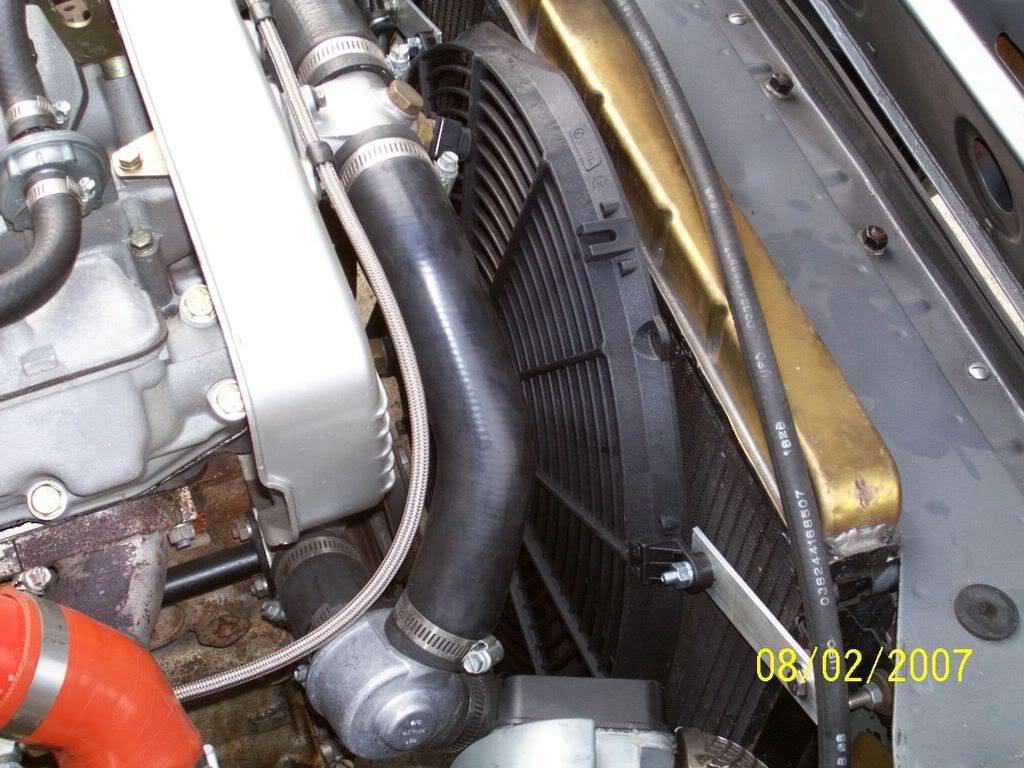
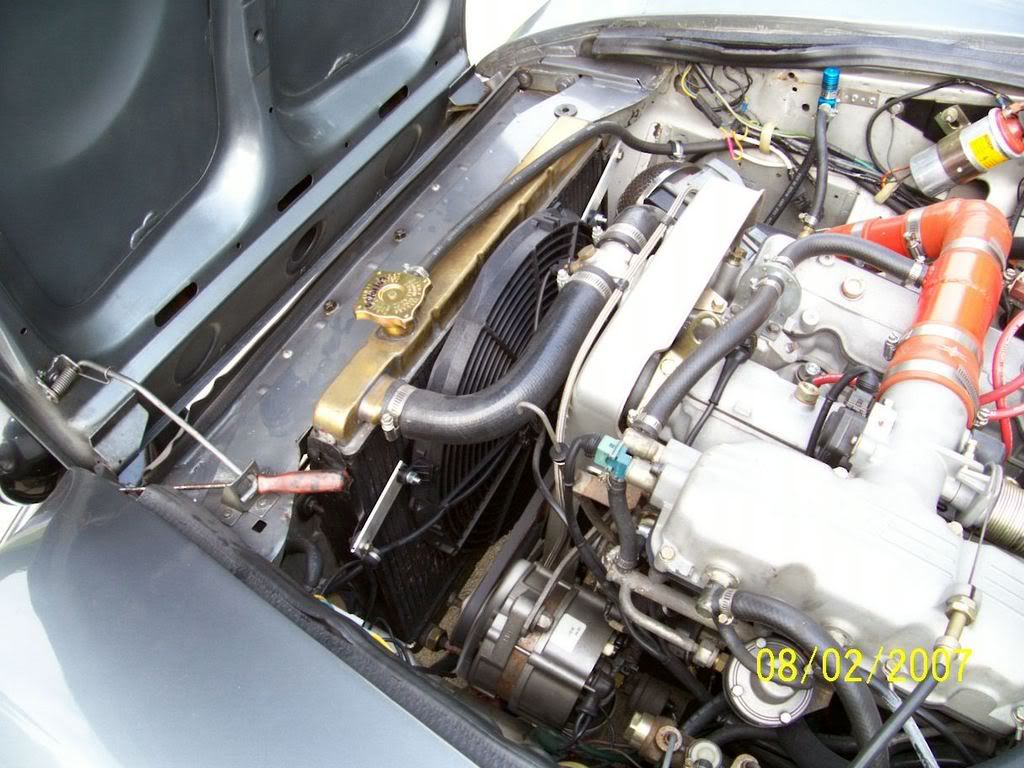
This cooling system on this car is unique (and a poor design). The top of the radiator is lower than the cylinder head. Which makes bleeding required. I added a flush tee not only to help get the air out but also to fill the engine through the cylinder head. I open the bleeder screw on the upper hose tee (four radiator hoses and an external thermostat!) and poor coolant into the flush tee. I added almost 3 cups or around 700 ml. I let the engine idle until the fan kicked on, removed the funnel, replaced the radiator cap and let the engine idle some more with the fan cycling on and off for about 30 minutes. The car never got above 190F.

I use this no-spill funnel which makes filling and bleeding easier:

7343774-21.jpg


Years ago when I built my first turbo system, I had to fabricate a coolant tank out of a Marvel's Mystery oil can which only holds 1 quart if completely full. The hose from the radiator goes into a 90 degree fitting at the bottom of the tank.
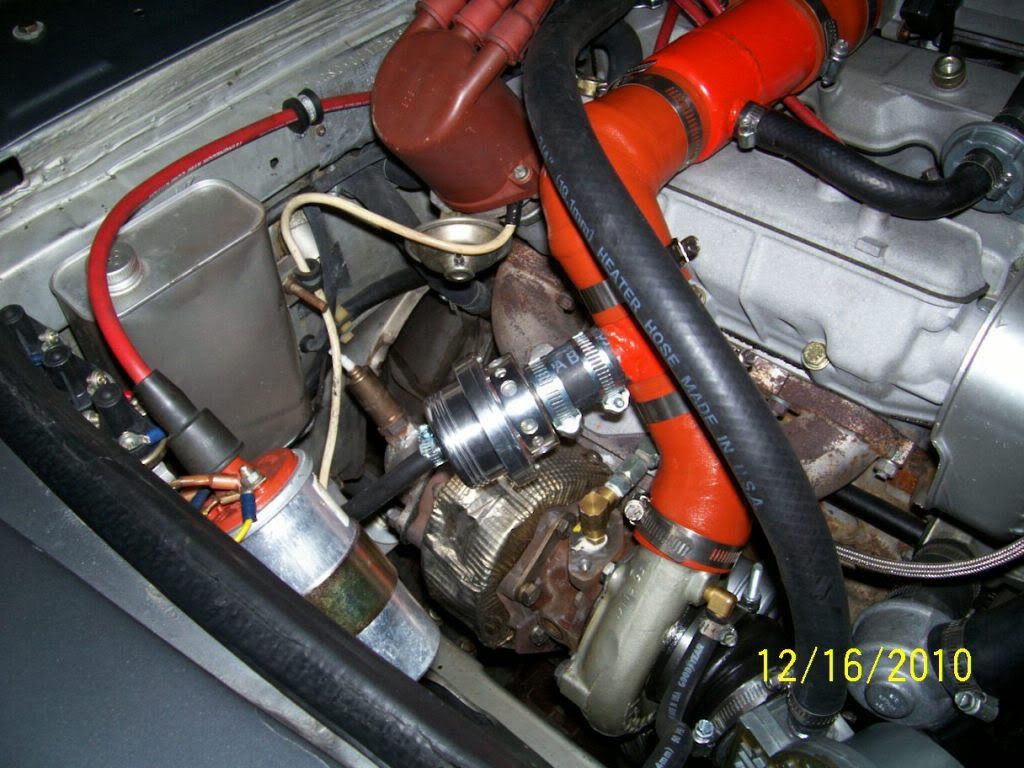
RebuiltT33.jpg


About 2 years ago I had to replace the gasket between the cylinder head and exhaust cambox housing which required draining the cooling system to get the timing belt off.

I'm not sure if I either did not get all the air purged out of the system and what was left in the recovery tank got sucked back in what it needed and that resulted in an empty tank or what. I do recall adding some coolant to the recovery tank which I always do when I top off the cooling system.

Some of the Fiat folks say my car is using coolant due to a blown headgasket.

While the funnel was still attached to the radiator, I was letting the engine heat up and did not notice any bubbles so is that safe to assume there is no gasses getting into the cooling system?

I guess my main question is, if the recovery tank goes empty, wouldn't over time as the radiator cap pukes out excess coolant, what coolant is left in the tank would eventually evaporate and eventually the coolant would go low in the engine?

I could possibly have a leak from the tank itself. I noticed a bit of coolant on the bottom of the tank.

The original turbo system used an external wastegate so that was why I came up with this tank. Now that I have a Garrett T3 which is much smaller, I *think* the original recovery tank will fit. I just have to dig it out of the barn loft to get it.

The MMO can holds 1 quart and the original tank holds about 3.5 quarts.
 
Originally Posted By: TurboFiat124


While the funnel was still attached to the radiator, I was letting the engine heat up and did not notice any bubbles so is that safe to assume there is no gasses getting into the cooling system?


I'm assuming this was done at idle? It is possible to fail a head gasket to where it will only leak coolant at higher cylinder pressures and appear fine with idling to warm up. You can look for combustion gas in the coolant with a test kit that is sold at most auto parts stores.

I will leave the other questions for those that have more expertise in the other areas.
 
Originally Posted By: 09_GXP
Originally Posted By: TurboFiat124


While the funnel was still attached to the radiator, I was letting the engine heat up and did not notice any bubbles so is that safe to assume there is no gasses getting into the cooling system?


I'm assuming this was done at idle? It is possible to fail a head gasket to where it will only leak coolant at higher cylinder pressures and appear fine with idling to warm up. You can look for combustion gas in the coolant with a test kit that is sold at most auto parts stores.

I will leave the other questions for those that have more expertise in the other areas.


When the head gasket in my 03 Civic started to fail, it was fine at idle and warming up and even driving around town. But after a longer highway drive it, would leak exhaust into the coolant and overheat after exiting the highway. So I don't think the assumption that seeing no bubbles at idle means the head gasket is fine is valid.
 
How do you control maximum pressure in your system when you don't have proper expansion bottle and release valve on the cap? Try to find proper expansion tank from a modern European car.
 
Also check for coolants leaks (I had one so imperceptible that cooling system stayed in pressure and coolant evaporated so I didn't see it at first).
 
I've got the original tank, I just have to find the clamp that goes with it. Also unlike more modern cars, the radiator cap is mounted on the radiator itself, not the expansion tank.

Providing it will clear the turbo.
 
Last edited:
No coolant leaks I can find other than perhaps at the bottom of the recovery tank.

Normally when a headgasket blows on a Fiat twin cam motor, the usually start leaking oil below the distributor. No the distributor itself, just that area. This seems to be a hot spot for some reason. Then eventually they will start leaking coolant in the same area.

When the headgasket blew back in 1992, it was doing this as well as dumping coolant into the engine causing it to surge at times almost throwing me into the dashboard!

I'm not seeing any external leaks. Not saying that is the rule of thumb, I've just owned several of these cars and that seems to be the case before a headgasket blows. I guess they can leak internally.
 
Originally Posted By: 09_GXP
Originally Posted By: TurboFiat124


While the funnel was still attached to the radiator, I was letting the engine heat up and did not notice any bubbles so is that safe to assume there is no gasses getting into the cooling system?


I'm assuming this was done at idle? It is possible to fail a head gasket to where it will only leak coolant at higher cylinder pressures and appear fine with idling to warm up. You can look for combustion gas in the coolant with a test kit that is sold at most auto parts stores.

I will leave the other questions for those that have more expertise in the other areas.


I drove the car to work this morning. About 8 miles at 45 mph maximum and the temperature stayed at 190F the whole time and when I got to work, the radiator fan kicked on. So maybe I am in good shape.
 
So is a expansion tank just a overflow tank like in Japanese vehicles or is a real pressurised tank. IIRC those had pressurised tanks but I could be wrong. If former you do need cap with release valve (one way) set to OEM values. Otherwise you risk over pressurized system that can lead to gaskets problem eventually.

Nice funnel kit you got there.
 
Originally Posted By: chrisri
So is a expansion tank just a overflow tank like in Japanese vehicles or is a real pressurised tank. IIRC those had pressurised tanks but I could be wrong. If former you do need cap with release valve (one way) set to OEM values. Otherwise you risk over pressurized system that can lead to gaskets problem eventually.

Nice funnel kit you got there.


No, it's basically just a "catch can". It catches anything the radiator cap pukes out then as the engine cools back down, it's suppose to suck coolant that was pushed out by expansion back into the system.

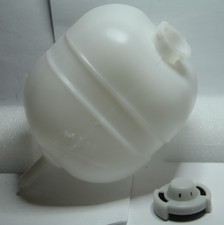
This is the type of reservoir (non pressurized) that's supposed to go on my car:

s-l225.jpg


This is probably what your talking about:

attachment.php
 
Originally Posted By: TurboFiat124
I've got the original tank, I just have to find the clamp that goes with it. Also unlike more modern cars, the radiator cap is mounted on the radiator itself, not the expansion tank.

Providing it will clear the turbo.


With that kind of setup, in my experience a blown headgasket pushes fluid to the overflow tank (which will be full) and the radiator/engine will be low.

Since you have an empty tank, I think you got a slow leak somewhere, likely only when the engine is hot/pressurised. Check the radiator itself, or the hose connections.
 
When I got off work I checked the level in the overflow tank and the level seemed roughly the same but then I noticed antifreeze on the splash pan and fan of the grill. I don't know if this was where I put the radiator cap back on and it ran off or the radiator is leaking. I did not have time to fully spray the engine compartment down.

I did spray the fan and splash pan down with water from a spray bottle and will check when I get off work to see if it's still there.

So right now I'm leaning toward a small leak in the radiator.
 
Found the source of the leak!

Last night I got out my spray bottle and hosed off the splash pan. This morning the water had dried. When I got to work, I popped the hood after driving the car and once again noticed coolant on the splash pan and the back of my SPAL radiator in the same area. But no coolant at the base of the radiator where the core and lower cap meet.

So I got out my flashlight and started looking about and there is was: The coolant temperature sensor in the upper hose TEE was coated with antifreeze! So it was blowing coolant forward. I guess the reason I did not see it until now was by the time I got around to checking it, the engine had cooled down and the sensor had dried off.

I wouldn't have suspected the leak from this sensor. I have not disturbed or removed the sensor but I guess the copper washer or aluminium tee may have developed some corrosion over time perhaps? Or maybe the sensor itself is busted and is leaking. Good news, they are less than $25.

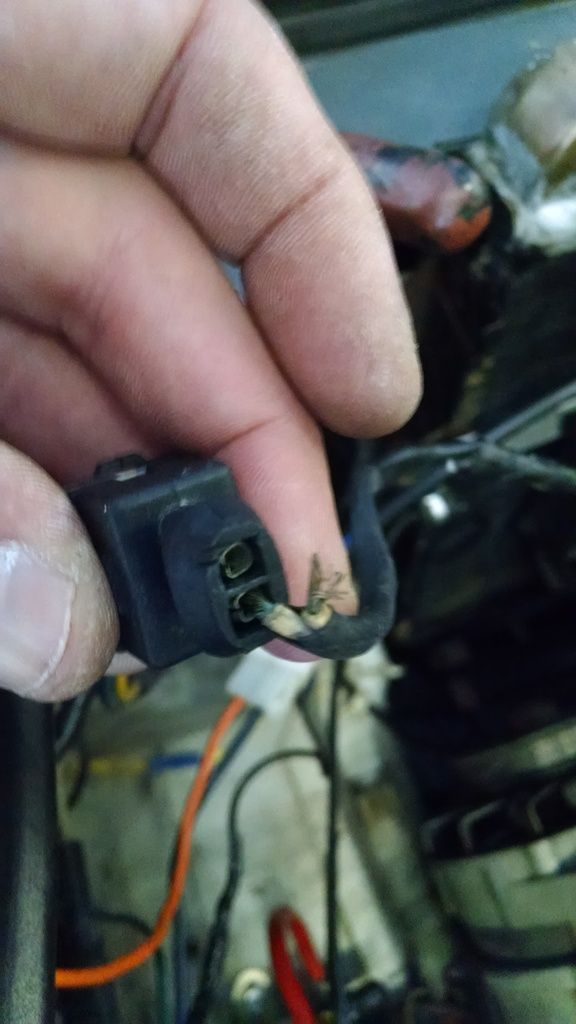
However about a year ago I was having these misfire issues that I could not seem to track down then discovered as long as the hood was up, the car ran fine but as soon as I shut the hood the car started running rough and discovered this:

IMG_20160612_112449312_zpsyu47nsjs.jpg


So I cleaned off the corrosion on the pins of the sensor and replaced the connector. So maybe wiggling the connector off loosened it?

I'm going to tighten it up when I get off work and if that doesn't fix it, sand the mating surfaces and replace the copper gasket.

This sensor has been the only real source of trouble on the fuel injection system. This makes the second time I've replaced the connector due to corrosion or frayed wires (can't remember the first time). Although it's on the underside of the tee, it's still near the hood. It's below the bleeder screw so if there is any leakage there, coolant drips onto the sensor and causes corrosion.

You can see if in the TEE where the two upper radiator hoses meet. Yes this car has four radiator hoses and an external thermostat. The only other

fan2.jpg


fan1.jpg


Also, I once bought an 82 Spider that did not run and turns out the connector had somehow popped off the sensor causing the engine to run rich which fouled the spark plugs. And I've heard of this happening to other Spiders. What's weird is usually I have to wiggle and just about break the connector to get it off so it's odd that particular connector can pop off for no apparent reason.

I'll probably have to check this out for myself on a spare engine I have (unless someone knows right off hand) but I thought about moving the FI coolant temperature sensor in place of the overheat switch at the back of the cylinder head. That is if the overheat switch and the sensor use the same size and thread pitch. Something like M16 X 1.5.

All I'd need to do is solder an extra length of wires in between the ECU and connector. If the sensor will fit this hole.
 
Last edited:
Told you to look at these sensors
wink.gif
Glad you found the issue.

Funny, on my two Fiat, they also have proved to be problematic over time, leaking or delivering false information which lead to bad engine management. After various try, I now use teflon tape when replacing them, it seems aftermarket sensors are not that good machined (in my case).
 
Well there seems to be more to this story that meets the eye!

When I got off work I took a second look. I started the engine and observed the sensor and noticed coolant leaking from the end of the sensor where the connector plugs in and not the O-ring!

I seem to recall oil pressure light switches and possible oil pressure sending units doing this but have never know a coolant temperature sensor on the fuel injection system to spring a leak. Perhaps the plastic or epoxy that is poured into the sensor has cracked. Well you can't expect a 36 year old part to last forever!

I stopped by O'Reily's autoparts on the way home from work and picked one up for $25. I have not installed it yet. I got up a bit too late this morning (the shower felt good....) so I drove my Trabbi instead.
 
I've seen it happen, and I've seen it destroy an engine ecu (located inside the cabin). Through capillary action the coolant went through the wiring all the way to the ecu and shorted it. That was 10 years ago on a then recent car.
 
Status
Not open for further replies.
Back
Top Bottom