Braided Faucet Supply Line Durability?

Status
Not open for further replies.
Joined
Jan 31, 2006
Messages
4,690
Location
Idaho
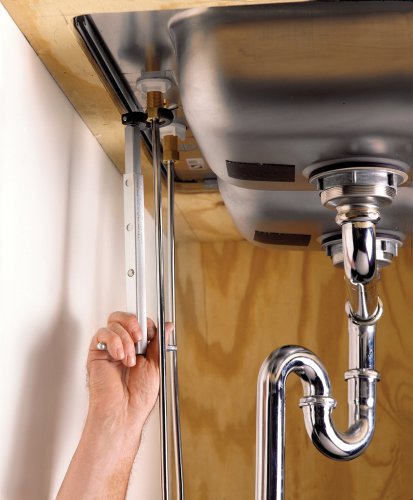
I'm installing a new faucet on the kitchen sink, and bought a pair of Watts stainless steel braided supply lines at Home Depot. The label does not indicate the material used for the inner liner.

All the plumbing fixtures in my 20 year old house have solid copper supply lines, and none have leaked even a drop. Of course, they are not as easy to install as flexible lines.

Are these flexible lines at the point now that they are just as durable as solid copper supply lines?
 
I have several in the house that are 17 years old now. No issues.
Same for the clothes washer. We have hard well water.
I also used them as the toilet supply lines.
 
I wouldn't put them in the same league as a copper supply line. But I have them feeding a pedestal sink in one of my bathrooms, and two toilets. After 19 years I have no problems and no intentions of replacing them. HTH
 
I use them and have never had an issue. Some are probably pushing 20 years old now. I did replace one (toilet) when I re-did the bathroom floor recently, because it felt a bit stiffer than I liked. I bent it around and it didn't make crunching noises, but I replaced it anyway, "just because." As others have said, they aren't like solid copper, but they're probably pretty close. And they don't fatigue crack from connecting and disconnecting the way copper can.
 
Most of these are a rubber or nylon inner liner with the braided outer liner. I've never had a problem with these failing. I'm sure they do -- but it's got to be pretty rare.
 
I don't trust the braided supply lines as much as the copper lines but the savings in time installing them are so much that I use them a lot.

Age is the enemy of the rubber inner hose and any time I have to disconnect one of those hoses for whatever reason I replace the braided hose if it is more than three years old.
 
Originally Posted By: Hokiefyd
Most of these are a rubber or nylon inner liner with the braided outer liner. I've never had a problem with these failing. I'm sure they do -- but it's got to be pretty rare.


Yep. I've never seen one that wasn't some sort of nylon/plastic hose, wrapped in braided metal or braided plastic. I too have never had one fail, but know of people who have had flex lines fail on them. They're so cheap, it makes sense to swap them out any time you have to remove one.
 
They are very durable. I have them on my toilet, bathroom faucets,kitchen faucet, washing machine, and even the water heater - dont tell code enforcement
smile.gif


I find that you end up replacing bathroom/kitchen faucets every 10-15 years due to wear and tear, so just replace the lines at the same time. Same goes for the washer, replace the line every 10 years or so when you replace the washer.
 
Originally Posted By: demarpaint
I wouldn't put them in the same league as a copper supply line. But I have them feeding a pedestal sink in one of my bathrooms, and two toilets. After 19 years I have no problems and no intentions of replacing them. HTH

OP,
i replaced all the '97 installed braided (all from a plumber supply store) in my apartment. all looked still good.
problem would most likely faucets and valves (could not close a couple/disintegrated in my hands)
 
Originally Posted By: SubLGT
I'm installing a new faucet on the kitchen sink, and bought a pair of Watts stainless steel braided supply lines at Home Depot...


I did the job this morning. Not a whole lot of working room under the kitchen sink. It would have been a lot easier for me if I was 30 years younger, weighed 105lb, and was a contortionist!
lol.gif
 
I know exactly what you mean. I'm 59 yrs old and recently upgraded the kitchen faucet and ended up removing the entire sink instead of doing from down below. It would have taken a 100lb kid to get in there. Probably a good idea because the plumbers putty around the sink was completely disintegrated.
 
What type of cabinets do you guys have that make access so difficult? Kitchen sink cabinets are generally very open with easy access.

There is a very inexpensive basin wrench ($10-$15) to use up under there:

51gUbYf-4fL.jpg
 
Copper can have issues too, especially if able to be knocked or bent, say from slamming a cabinet door shut with a bunch of bottles of dish soap right against it, wedged in there...

The stainless outer liner notionally prevents bulges from releasing, giving some longevity.

In an installation like under a cabinet, where notionally a tray can be installed to keep cleaners and chemicals from leaking and ruining the cabinet ( a higher risk IMO), and where any leak from a flex line could be channeled to a place where one can see it... IMO they're low risk and a superior idea to something more easily bent.

For other out of sight locations, the risk must be considered. For example, though copper can be easily damaged, I chose it over a flex line from my supply to the ice maker in our refrigerator.

I think hard lines look better than flex lines, so I use them for toilets, since they are exposed.

No one size fits all answer, but under the sink I think they are the better choice, especially if a lot of bending is necessary from the valve to the fixture. Not that bending is difficult, but the longer the run, the greater chance of it being harmed...
 
just watch out, Wal-Mart sells a stainless supply line "look-a-like" very cheap.


Also, make [censored] sure that there is no tension on the end crimps, the supply lines MUST have slack.


A local Church had a supply line blow off the mens toilet, flooded the entire sanctuary.
 
Originally Posted By: tom slick
Hook the hoses to the faucet before you install the faucet. Then you don't have to fiddle with getting them tight behind the sink.


Not possible most times. The mounting nuts have to be threaded on before the supply lines can be attached.
 
Status
Not open for further replies.
Back
Top Bottom