You guys should check this out.

You are using an out of date browser. It may not display this or other websites correctly.
You should upgrade or use an alternative browser.
You should upgrade or use an alternative browser.
Thread on Royal Purple oil filter
- Thread starter CougarRed
- Start date
- Status
- Not open for further replies.
WOW. if it isn't a fluke I might have to buy some RP filters!!
would be interesting to see how a fram xtended guard does since it has similar construction
would be interesting to see how a fram xtended guard does since it has similar construction
Here's a flow curve for the Ford 820S equivalent RP filter. This looked pretty good. There's also some beta ratio information listed in their FAQ. The only question I couldn't get answered was the bypass location and setting:
http://freepdfhosting.com/43097ffd23.pdf
These are averages, not for this specific filter:
Average beta rating based on ISO 4548-12 multi-pass test methods:
* B100 = 25 (which means at 25 or greater micron; media is 99% efficient.)
* B75 = 20 (which means at 20 or greater micron; media is 98.7% efficient. Also considered absolute rating.)
* B5 = 10 (which means at 10 micron or greater; media is 80% efficient.)
Sorry, for some reason the PDF is only coming up in link form. If someone wants to post it, feel free.
http://freepdfhosting.com/43097ffd23.pdf
These are averages, not for this specific filter:
Average beta rating based on ISO 4548-12 multi-pass test methods:
* B100 = 25 (which means at 25 or greater micron; media is 99% efficient.)
* B75 = 20 (which means at 20 or greater micron; media is 98.7% efficient. Also considered absolute rating.)
* B5 = 10 (which means at 10 micron or greater; media is 80% efficient.)
Sorry, for some reason the PDF is only coming up in link form. If someone wants to post it, feel free.
Awesome!

Originally Posted By: JOD
Here's a flow curve for the Ford 820S equivalent RP filter. This looked pretty good. There's also some beta ratio information listed in their FAQ. The only question I couldn't get answered was the bypass location and setting:
http://freepdfhosting.com/43097ffd23.pdf
That Royal Purple filter is a very good flower. 12 GPM with a 2 PSID at 20 cSt would be hard to beat IMO and still have that good filtering efficiency.
Here's a flow curve for the Ford 820S equivalent RP filter. This looked pretty good. There's also some beta ratio information listed in their FAQ. The only question I couldn't get answered was the bypass location and setting:
http://freepdfhosting.com/43097ffd23.pdf
That Royal Purple filter is a very good flower. 12 GPM with a 2 PSID at 20 cSt would be hard to beat IMO and still have that good filtering efficiency.
Originally Posted By: CougarRed
You guys should check this out.
So does anyone know how the UOA testers come up with the "ISO Particle Count" efficiency info in their report on the listed oil filters used in the report?
You guys should check this out.
So does anyone know how the UOA testers come up with the "ISO Particle Count" efficiency info in their report on the listed oil filters used in the report?
Originally Posted By: ZeeOSix
So does anyone know how the UOA testers come up with the "ISO Particle Count" efficiency info in their report on the listed oil filters used in the report?
Are you just questioning the way the ISO Filter code works? Like 14/13/11?
This explains it:
https://www.ont.fluidlife.com/serv_iso_particle_count.html
the 14 means that there are between 1300 and 2500 particles larger than 4 microns.
13 means there are between 320 and 640 particles larger than6 microns.
11 means there are between 10 and 20 particles larger than 14 microns.
They always measure at 4, 6, and 14 microns in the ISO cleanliness code.
Lower numbers are better.
So does anyone know how the UOA testers come up with the "ISO Particle Count" efficiency info in their report on the listed oil filters used in the report?
Are you just questioning the way the ISO Filter code works? Like 14/13/11?
This explains it:
https://www.ont.fluidlife.com/serv_iso_particle_count.html
the 14 means that there are between 1300 and 2500 particles larger than 4 microns.
13 means there are between 320 and 640 particles larger than6 microns.
11 means there are between 10 and 20 particles larger than 14 microns.
They always measure at 4, 6, and 14 microns in the ISO cleanliness code.
Lower numbers are better.
Originally Posted By: Al
Originally Posted By: ZeeOSix
So does anyone know how the UOA testers come up with the "ISO Particle Count" efficiency info in their report on the listed oil filters used in the report?
Are you just questioning the way the ISO Filter code works? Like 14/13/11?
This explains it:
https://www.ont.fluidlife.com/serv_iso_particle_count.html
the 14 means that there are between 1300 and 2500 particles larger than 4 microns.
13 means there are between 320 and 640 particles larger than6 microns.
11 means there are between 10 and 20 particles larger than 14 microns.
They always measure at 4, 6, and 14 microns in the ISO cleanliness code.
Lower numbers are better.
Yes, thanks for that info ... just what I was looking for.
Originally Posted By: ZeeOSix
So does anyone know how the UOA testers come up with the "ISO Particle Count" efficiency info in their report on the listed oil filters used in the report?
Are you just questioning the way the ISO Filter code works? Like 14/13/11?
This explains it:
https://www.ont.fluidlife.com/serv_iso_particle_count.html
the 14 means that there are between 1300 and 2500 particles larger than 4 microns.
13 means there are between 320 and 640 particles larger than6 microns.
11 means there are between 10 and 20 particles larger than 14 microns.
They always measure at 4, 6, and 14 microns in the ISO cleanliness code.
Lower numbers are better.
Yes, thanks for that info ... just what I was looking for.
I wish river_rat could have run his oil filter tests on the Royal Purple oil filter. He tested just about every other filter.
- Joined
- Dec 30, 2006
- Messages
- 29,558
Who sells them? I`ve never seen them in any of the parts stores I go to.
Pepboys i think
I purchased mine at Pep Boys.
Originally Posted By: FZ1
Right. I checked 'em out at Pep Boys. I recomend that anyone buying a filter open the box and inspect the filter. I opened the boxes and looked at the RP filters and they seemed to be older stock,compared to the Mobil 1 filters I looked at.
Is there a shelf-life on oil filters? Do they go moldy or something??
Anyway, they've only made those things for about 2 years. How old could they be? If the Pep Boys was an open air market or something, I might be more concerned...
Right. I checked 'em out at Pep Boys. I recomend that anyone buying a filter open the box and inspect the filter. I opened the boxes and looked at the RP filters and they seemed to be older stock,compared to the Mobil 1 filters I looked at.
Is there a shelf-life on oil filters? Do they go moldy or something??
Anyway, they've only made those things for about 2 years. How old could they be? If the Pep Boys was an open air market or something, I might be more concerned...
All,
I brought the unusually low results for the Royal Purple filter to the attention of Blackstone, who graciously re-ran the Particle Count test. The updated results are shown below. As you can see, the Royal Purple now scores among the bottom of the others. Sorry to get everyone's hopes up!
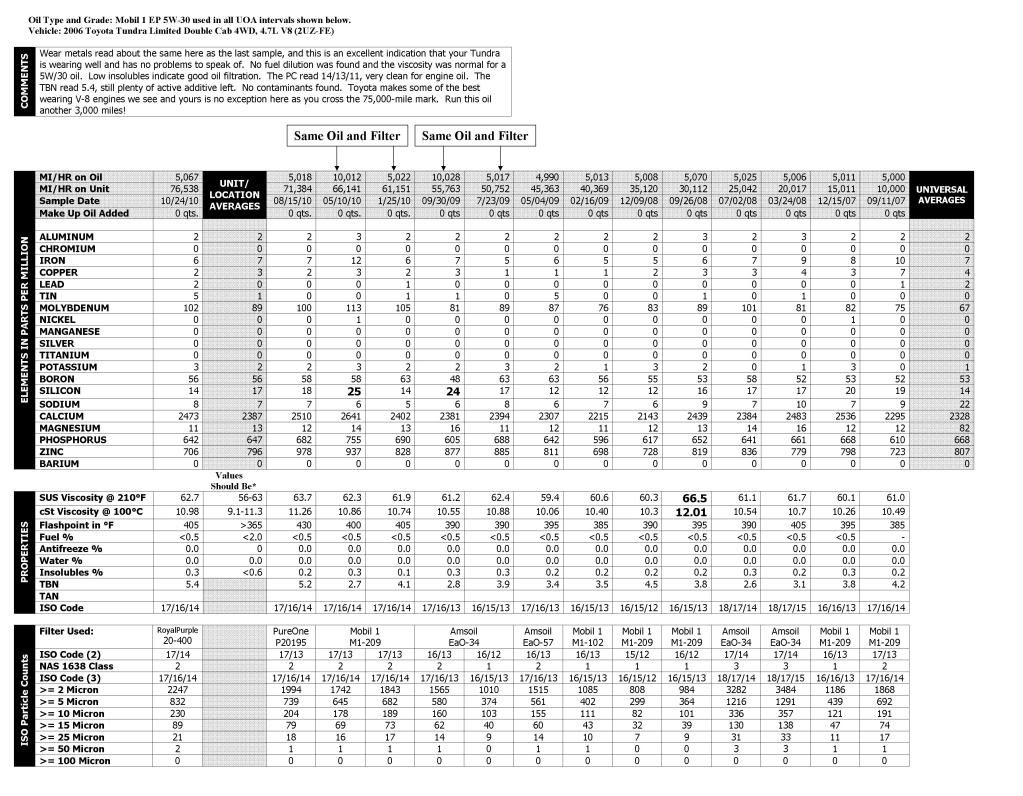
I brought the unusually low results for the Royal Purple filter to the attention of Blackstone, who graciously re-ran the Particle Count test. The updated results are shown below. As you can see, the Royal Purple now scores among the bottom of the others. Sorry to get everyone's hopes up!
Originally Posted By: btanchors
All,
I brought the unusually low results for the Royal Purple filter to the attention of Blackstone, who graciously re-ran the Particle Count test. The updated results are shown below. As you can see, the Royal Purple now scores among the bottom of the others. Sorry to get everyone's hopes up!
It seemed the first reported results were "too good to be true" when compared to the likes of the PureOne, M1, etc. Thanks for the update
All,
I brought the unusually low results for the Royal Purple filter to the attention of Blackstone, who graciously re-ran the Particle Count test. The updated results are shown below. As you can see, the Royal Purple now scores among the bottom of the others. Sorry to get everyone's hopes up!
It seemed the first reported results were "too good to be true" when compared to the likes of the PureOne, M1, etc. Thanks for the update
awww that sucks... knew it was to good to be true
Last edited:
What are we talking as far as how was this sample retested? Sort of as with evidence in a crime. What is the chain of custody and was the evidence ever compromised?
Did you have some of the oil from the OC left over and sent another sample for them to test again or did they have some of the oil they tested initially still there? How do you know the 2nd test was actually your sample if they tested your original one again? Are you sure the sample was not contaminated as well( yours or theirs )?
Seems odd they get one result in the initial test that was so good then a 2nd test shows a different result that put the filter right there with all the others.
I know I am an RP fan but I question both results now. I would not put faith into either test. I would do another UOA using an RP filter under the same set of conditions and mileage to get an accurate set of results. I place zero faith good or bad in this test.
I will say it probably is closer to the 2nd test but still it does not inspire any faith in me that it is accurate.
Did you have some of the oil from the OC left over and sent another sample for them to test again or did they have some of the oil they tested initially still there? How do you know the 2nd test was actually your sample if they tested your original one again? Are you sure the sample was not contaminated as well( yours or theirs )?
Seems odd they get one result in the initial test that was so good then a 2nd test shows a different result that put the filter right there with all the others.
I know I am an RP fan but I question both results now. I would not put faith into either test. I would do another UOA using an RP filter under the same set of conditions and mileage to get an accurate set of results. I place zero faith good or bad in this test.
I will say it probably is closer to the 2nd test but still it does not inspire any faith in me that it is accurate.
Last edited:
Originally Posted By: NHHEMI
Seems odd they get one result in the initial test that was so good then a 2nd test shows a different result that put the filter right there with all the others.
On the contrary. Seeing results in the first report showing the Royal Purple was leaps and bounds above all the others seemed odd since it's advertised filtering efficiency is really no better than a PureOne of Mobil 1 filter.
I don't think any normal car filter is going to give you particulate count results like was seen in the first report. I doubt Blackstone Labs has seen any UOA with counts that low on a normal car. They should have raised eyebrows as soon as they saw those results IMO.
Seems odd they get one result in the initial test that was so good then a 2nd test shows a different result that put the filter right there with all the others.
On the contrary. Seeing results in the first report showing the Royal Purple was leaps and bounds above all the others seemed odd since it's advertised filtering efficiency is really no better than a PureOne of Mobil 1 filter.
I don't think any normal car filter is going to give you particulate count results like was seen in the first report. I doubt Blackstone Labs has seen any UOA with counts that low on a normal car. They should have raised eyebrows as soon as they saw those results IMO.
- Status
- Not open for further replies.
Similar threads
- Replies
- 15
- Views
- 16K
- Replies
- 25
- Views
- 11K