Yeah its probably like running bottom tier oil. Hey as long as its free bottom tier oil.I have a shelf full of of TropArtic 10w-40 that i know is least 20 years old. It was given to me during a barn clean out. It works fantastic in my little Ford Ranger.
I just bought 24qt of Pennzoil Platinum 10w-30 from AutoZone that was made in 2014. I plan to run that in my LQ4 Silverado and have zero concerns.
Shake it up and send it…bothers me not at all.

You are using an out of date browser. It may not display this or other websites correctly.
You should upgrade or use an alternative browser.
You should upgrade or use an alternative browser.
Stocking Up On Motor Oil
- Thread starter tbw2459
- Start date

Probably so…but that Ranger’s odometer stopped working at 259k miles five years ago…all on “bottom tier oil.” I figure it’ll be ok.Yeah its probably like running bottom tier oil. Hey as long as its free bottom tier oil.
Anecdotes and all.
When I try to organize my stash some I need to do some date code decoding and write some easier version on them. This way I can at least rotate FIFO a bit better between brand / viscosity / purpose.

CleanSump
Site Donor 2026
We had drums that were 10 years old.Oh I already did.
Last year I sacrificed some mobil1 0w-20 as flush oil that was probably 8 years old. It had a red tint to it.
If anything 5 years in a plastic bottle is being optimistic.
When I was active duty sealed barrels of 15w-40 were only good for 3 to 4 years. I have no doubt the government throws an alarming amount of tax payer money at figuring out how long stored oil stays good.
Again, where's the VOA of that ols oil you're avoiding posting?
You are arguing a bogus position with no supporting data.
CleanSump
Site Donor 2026
3 years + extension after lot testing for the US Gov. Half truths aren't the whole truth.3 years appears to be good enough for John deere and the US government.
That begs the question then why did the government need to test it after 3 to 4 years?3 years + extension after lot testing for the US Gov. Half truths aren't the whole truth.
Last time I did it there could only be 1 or 2 extensions and they were only for 1 year.
Only person who seems to have bothered to test the oxidization value of old oil:We had drums that were 10 years old.
Again, where's the VOA of that ols oil you're avoiding posting?
You are arguing a bogus position with no supporting data.
If you think its still good after 3 to 5 years send off a sample and get it tested prove everyone wrong.
Im just not going to run old oil to a full oci in a daily driver that im keeping.
Ill use it in flush oil, run it in a chain saw, put it in something im selling, etc.

When comparing oils like this, have you ever stopped to think that the original virgin oil samples didn't have very good oxidation resistance to begin with? What about improvements in the additives, the formulations, and even the processing of the currently sold base stacks?If you search on here "used motor oil looks red" there's tons of posts from about 2016 to 2020 about people posting their used motor oil looks red.
I had unopened mobil1 from 2018 that had a reddish tint to it. Why would it do that? Basic chemistry....
Nissans also appear to be highly tolerant of neglect.
I think you're taking a lot for granted with this type of comparison.
The only YouTube video that I've seen here looked to me that someone had Automatic Transmission fluid in that filter. Others had also agreed on that assesment.
A great point and absolutely a possibility.When comparing oils like this, have you ever stopped to think that the original virgin oil samples didn't have very good oxidation resistance to begin with? What about improvements in the additives, the formulations, and even the processing of the currently sold base stacks?
I think you're taking a lot for granted with this type of comparison.
The only YouTube video that I've seen here looked to me that someone had Automatic Transmission fluid in that filter. Others had also agreed on that assesment.
Been waiting for someone to point this out.
To test it all someone needs to do is buy multiple containers of the same date code of oil, test the oxidization value and wait, open a fresh one every year or so and test it, untilthey run out of fresh containers to open. I'll wait...
And also you just made the case for not using old oil. If as you claim its not a fair to compare the old oil to new oil then why bother with that old oil at all if the new stuff is always improving?
Here's how I would test it.
Buy say 12 containers of oil with matching date codes. Open 1 of them, send off a sample to test oxidization value, open a second one like a month later send it to the same lab, same test, make sure the results are really close. Take both of those open containers, pull samples, put them each in a flask, under a high vacuum in a flask, pull out all the air then fill and seal the flask with argon, put that flask inside a metal paint also purged with argon, maybe put one flask in the freezer just for good measure. Then every year or so open a new jug of oil and send off to be tested.
After 8 to 10 years once all the jugs have been tested, break out those vacuum sealed flasks and test them.
Post it on here and have people still tell me im wrong or did it wrong no matter what the results.
The old oil would be perfectly fine.A great point and absolutely a possibility.
Been waiting for someone to point this out.
To test it all someone needs to do is buy multiple containers of the same date code of oil, test the oxidization value and wait, open a fresh one every year or so and test it, untilthey run out of fresh containers to open. I'll wait...
And also you just made the case for not using old oil. If as you claim its not a fair to compare the old oil to new oil then why bother with that old oil at all if the new stuff is always improving?
Here's how I would test it.
Buy say 12 containers of oil with matching date codes. Open 1 of them, send off a sample to test oxidization value, open a second one like a month later send it to the same lab, same test, make sure the results are really close. Take both of those open containers, pull samples, put them each in a flask, under a high vacuum in a flask, pull out all the air then fill and seal the flask with argon, put that flask inside a metal paint also purged with argon, maybe put one flask in the freezer just for good measure. Then every year or so open a new jug of oil and send off to be tested.
After 8 to 10 years once all the jugs have been tested, break out those vacuum sealed flasks and test them.
Post it on here and have people still tell me im wrong or did it wrong no matter what the results.

I have no idea why it looks red. Oil jugs have been hermetically sealed for decades. There is only a tiny amount of air left in the container which only contains less than 21% oxygen. The idea that a tiny amount of oxygen in the top of the jug causes oxidization is laughable.If you search on here "used motor oil looks red" there's tons of posts from about 2016 to 2020 about people posting their used motor oil looks red.
I had unopened mobil1 from 2018 that had a reddish tint to it. Why would it do that? Basic chemistry....
Nissans also appear to be highly tolerant of neglect.
I think this place has become less believable than Reddit.
Does this look like an abused Nissan to you? 395K at this point, first time valve cover off.
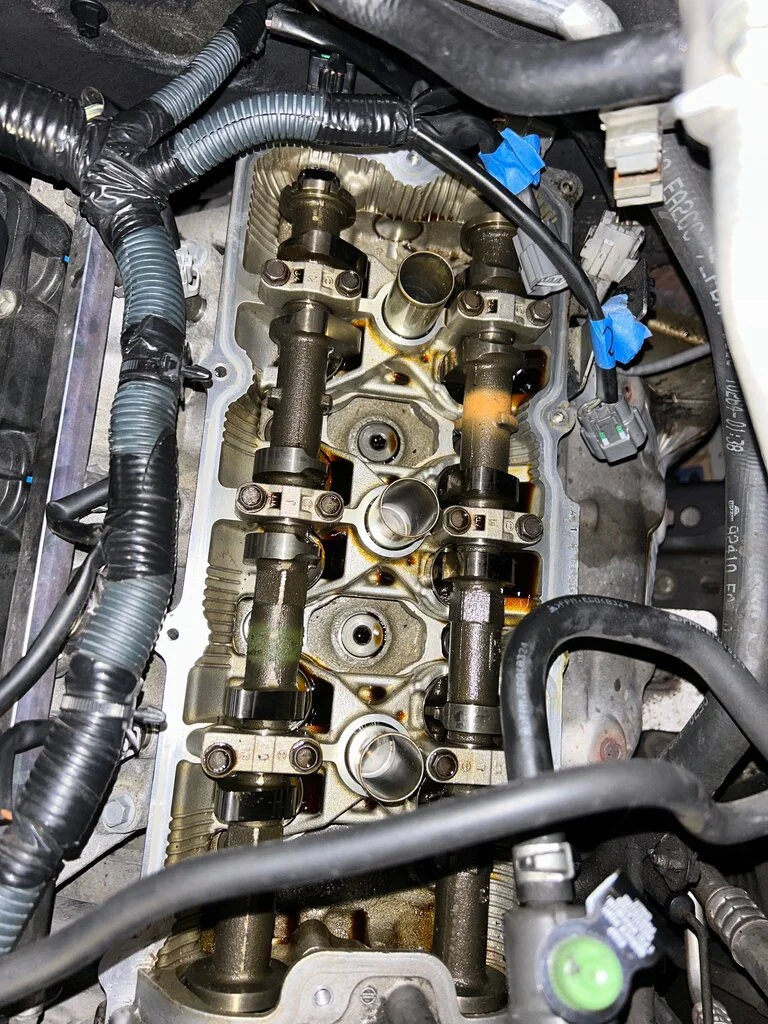
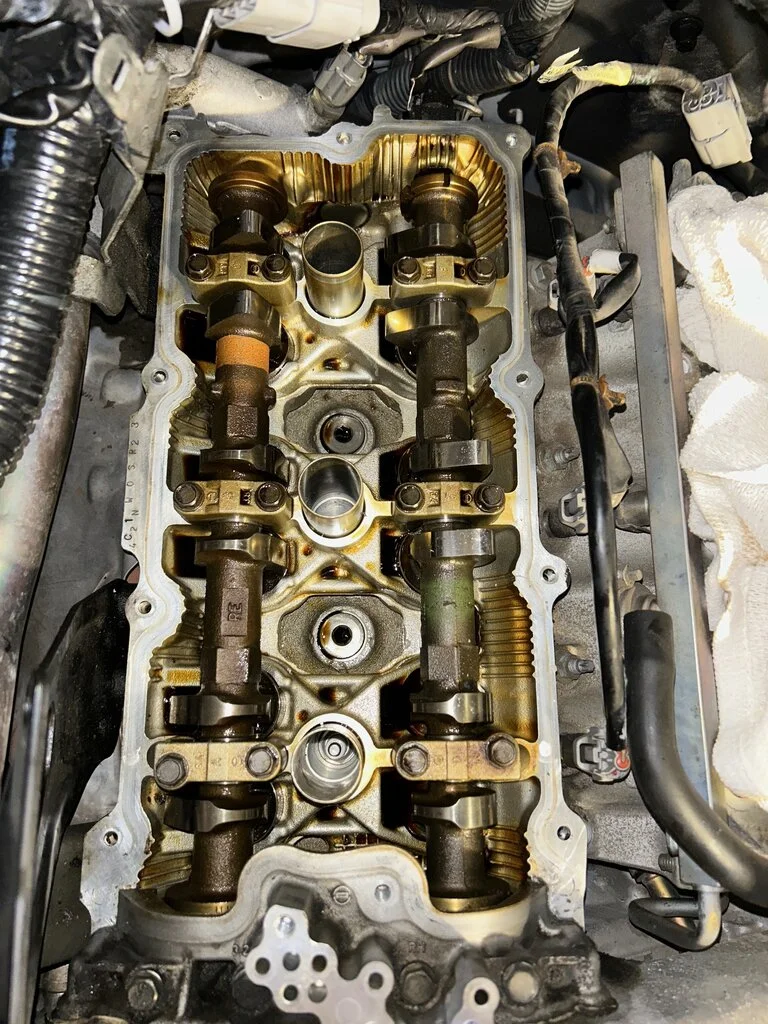
You obviously didn’t use Restore and Protect or it would be so sparkling clean it would be impossible to look directly at.I have no idea why it looks red. Oil jugs have been hermetically sealed for decades. There is only a tiny amount of air left in the container which only contains less than 21% oxygen. The idea that a tiny amount of oxygen in the top of the jug causes oxidization is laughable.
I think this place has become less believable than Reddit.
Does this look like an abused Nissan to you? 395K at this point, first time valve cover off.
Yeah for use in a chainsaw, as flush oil or to put in something im planning on getting rid of.The old oil would be perfectly fine.
I have no idea why it looks red. Oil jugs have been hermetically sealed for decades. There is only a tiny amount of air left in the container which only contains less than 21% oxygen. The idea that a tiny amount of oxygen in the top of the jug causes oxidization is laughable.
I think this place has become less believable than Reddit.
Does this look like an abused Nissan to you? 395K at this point, first time valve cover off.
The same appears to apply to oil sealed in metal containers too...
Its either the air in the container or the chemistry is inherently unstable, maybe both.
Johnnyg made a great point that better oil will be available in the future and there's no point in running old oil unless its free.
Can't argue with free oil.

And gearheads!Only greedy people hoard oil 🛢
Similar threads
- Replies
- 6
- Views
- 1K
- Locked
- Replies
- 42
- Views
- 3K

- Replies
- 70
- Views
- 7K
- Replies
- 4
- Views
- 2K
