
You are using an out of date browser. It may not display this or other websites correctly.
You should upgrade or use an alternative browser.
You should upgrade or use an alternative browser.
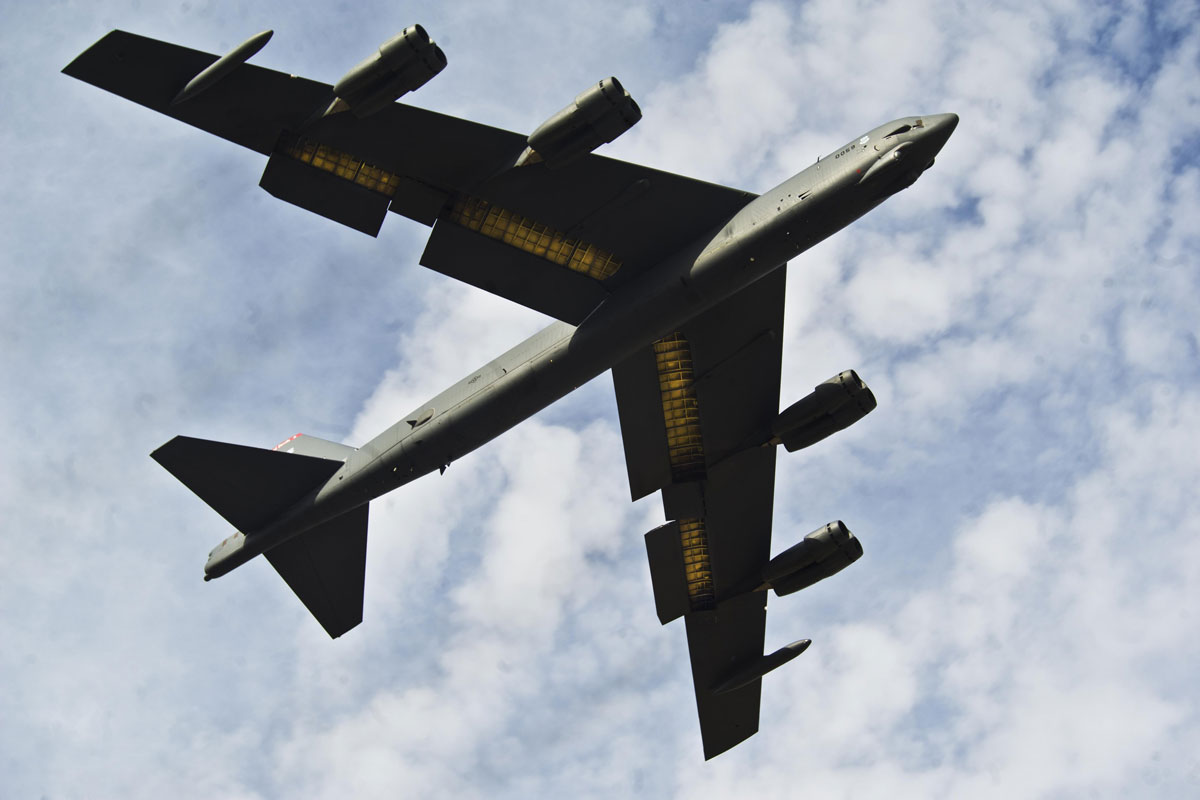
B-52s to be re-engined by Rolls Royce!
- Thread starter 19074
- Start date
- Status
- Not open for further replies.


Looks more like an advertisement than an official announcement.
Good for them. I suppose they know a thing or two about making quality products. 
I see that the B-52s were introduced in the early 1950s.
How old are the air force's current planes? Are the original models from the 50s still flying? Or have they been replaced?
This article implies that the current planes are the originals from the 1950s and 60s: https://www.veteranaid.org/blog/5-oldest-us-aircraft-still-in-operation
I see that the B-52s were introduced in the early 1950s.
How old are the air force's current planes? Are the original models from the 50s still flying? Or have they been replaced?
This article implies that the current planes are the originals from the 1950s and 60s: https://www.veteranaid.org/blog/5-oldest-us-aircraft-still-in-operation
the oldest versions got retired, but even the B-52H was introduced in 1961
Last edited:
So when that article mentioned a 90 year life cycle, they were referring to the program itself, and not individual aircraft.
So the 52Hs from that time, are still flying?
So the 52Hs from that time, are still flying?
the oldest versions got retired, but even the B-52H was introduced in 1961
I suppose so, but they got modernised a few times by now.
The russian bears (TU-95) are probably of a similar age
The russian bears (TU-95) are probably of a similar age
Gonna share my B52 memories that no one else cares about (old person syndrome). I started my career in the mid 70's in Michigan's eastern upper peninsula, less than 5 miles away from Kincheloe Air Base and 2 hours away from K.I. Sawyer Air Base, both SAC units. I was living the dream, often working in remote forest areas, only to have huge B52's occasionally rumble directly overhead so low that one imagined they could see the pilots! Very magnificent!
Last edited:
The last B-52 was delivered in 1962So when that article mentioned a 90 year life cycle, they were referring to the program itself, and not individual aircraft.
So the 52Hs from that time, are still flying?
https://www.af.mil/About-Us/Fact-Sheets/Display/Article/104465/b-52h-stratofortress/
Looks like total of 8 still:Will the new engines be one per pylon (total of4) or 2 per pylon (total of 8)
Announced on 24 September, the initial indefinite-delivery/indefinite-quantity (ID/IQ) award is valued at USD500.9 million over six years. If all options are exercised, the value will rise to USD2.6 billion, encompassing 608 commercial engines (76 aircraft at eight engines each), spare engines, support equipment, and related data and services.
Kinda looks like it'll be the stock configuration, check out their video:Will the new engines be one per pylon (total of4) or 2 per pylon (total of 8)
RR fb

4wd
$50 site donor 2026
Guess the overall feasibility was not there - sticking with 8 - but better engines … ?The original engines are 17,000 lb thrust per engine thus 34,000 per pair. That can now be realized with a single engine. Previous plans (which never got budget approval) were to use 4 engines.
I was reading something about how they designed the nacelle mounting points on the wings and how it would take a big redesign so they found engines that should theoretically fit in the same size/spot as what's currently on there.Guess the overall feasibility was not there - sticking with 8 - but better engines … ?
4wd
$50 site donor 2026
Yeah … assumed the structural mods on old equipment would be crazy expensive … and I’m sure loaded heavy with bombs and having one engine go down (with 4) is a big deal …I was reading something about how they designed the nacelle mounting points on the wings and how it would take a big redesign so they found engines that should theoretically fit in the same size/spot as what's currently on there.
The existing TF 33s have been out of production since the mid-80s and maintenance is becoming more and more of a headache. TF-33s are a low-bypass engine and far less fuel-efficient than the RR replacements, so the re-engined aircraft will have much increased range and less demand for tanker support. TF-33s require expensive overhauls at 6,000 hour intervals while RR expects their engines will not require removal over the B-52s lifespan.
This result was the outcome of a three-way competition (RR, GE and Pratt & Whitney) using off-the shelf, proven hardware, so seems like a low-risk proposition.
This result was the outcome of a three-way competition (RR, GE and Pratt & Whitney) using off-the shelf, proven hardware, so seems like a low-risk proposition.
As I recall, they did fit a B-52 with the engine that was going to be solely forGuess the overall feasibility was not there - sticking with 8 - but better engines … ?
the Boeing 747, One engine replacing the two on that pylon as a 'test bed'.
IIRC, the one big engine used less fuel than the two it replaced. Don't quote me.
My 2¢
- Status
- Not open for further replies.
Similar threads

- Replies
- 28
- Views
- 775

